A powerful magnitude-6.6 earthquake struck western Indonesia on Thursday, rattling large parts of Sumatra island, including areas near Aceh Province, at a time when the region is already overwhelmed by extreme weather disasters. According to the national geophysics agency, the quake originated at a shallow depth of about 10 kilometers, making the tremors strongly felt across nearby districts. Despite the intensity, authorities confirmed that the quake did not trigger any tsunami threat, bringing some relief to communities already facing severe weather-related emergencies.
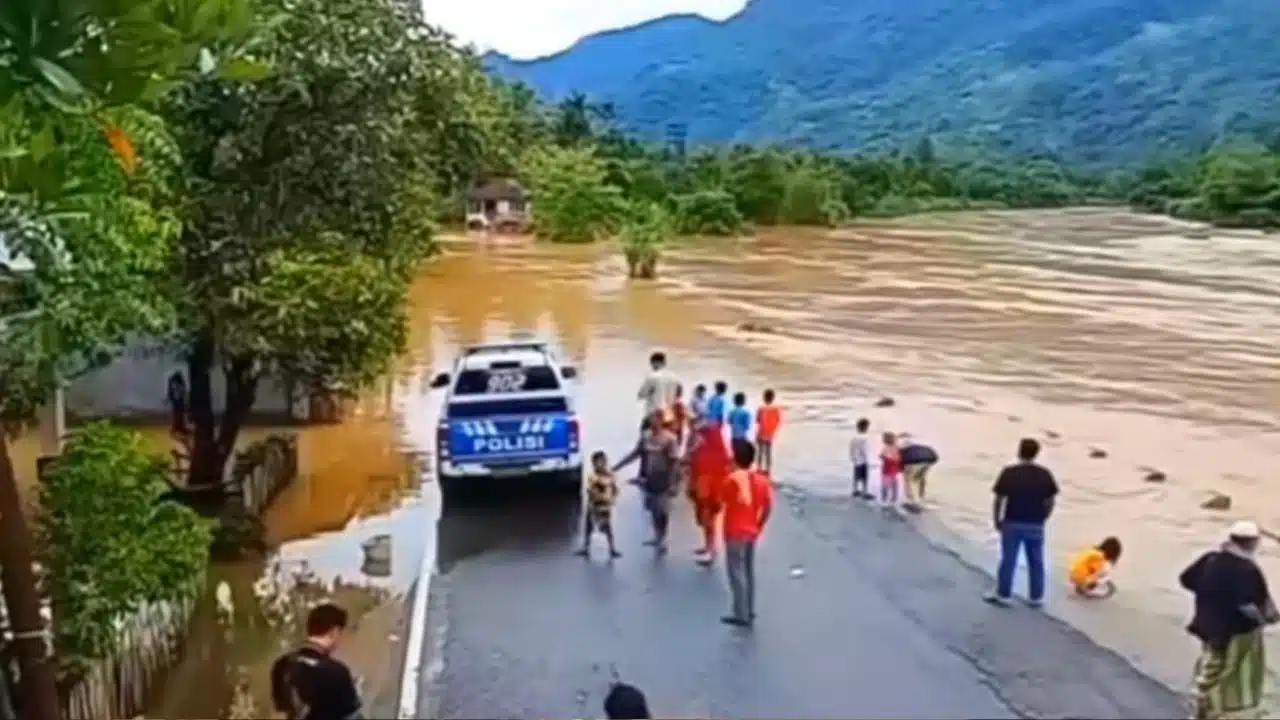
But for millions of residents across Sumatra, the earthquake was yet another blow in what has become one of the region’s most difficult weeks in recent memory. In several districts of North Sumatra Province, continuous torrential rain has caused massive floods and destructive landslides, washing away roads, collapsing bridges and crippling communication lines. Local officials say the flooding began earlier in the week after days of nonstop rainfall overwhelmed rivers and saturated mountain slopes, setting the stage for widespread destruction.
So far, at least 28 people have been confirmed dead, with the toll expected to rise as authorities continue search-and-rescue operations in isolated areas. Many victims were swept away by sudden flash floods or buried under mud and rocks as hillsides collapsed. Survivors described scenes of panic, with water rushing into homes within minutes, forcing families to flee in the dark as electricity lines failed. Emergency shelters have been set up in schools, mosques and public buildings, but reaching these safe zones has become increasingly difficult because major access routes are blocked by debris.
Rescue teams face enormous challenges. A senior disaster-management official described the situation as a “total cut-off”, explaining that several towns are now unreachable due to washed-out roads and landslides that have buried entire sections of highways. Heavy machinery cannot be transported into the region, and helicopters face difficulty landing because of strong winds, ongoing rain and low visibility. Communication networks have also collapsed in several districts, forcing teams to rely on satellite radios and community volunteers for updates on missing people.
Complicating the disaster response is the arrival of Cyclone Senyar, a rare tropical system that swept across parts of Sumatra on Wednesday. Tropical cyclones in this region are uncommon, and their impact can be severe because infrastructure and housing are not built to handle such conditions. As Cyclone Senyar passed over the Strait of Malacca and brushed the western coastline of Sumatra, it brought intense rainfall, strong winds and coastal inundation, worsening the flooding that was already crippling communities.
Meteorologists warned earlier in the week that the cyclone would likely increase rainfall across the island, but the combination of a cyclone, ongoing monsoon rains and now a significant earthquake has created a complex and dangerous situation. Several rivers have overflowed multiple times, low-lying areas remain submerged, and with the ground heavily saturated, the risk of additional landslides remains extremely high.
For residents, the back-to-back disasters have created a sense of fear and uncertainty. Many have abandoned damaged homes or are living on upper floors, worried that more landslides could strike without warning. Local authorities have urged people to stay alert and move to higher ground whenever possible, although crowded shelters limit how many evacuees can be accommodated.
While Indonesia frequently experiences earthquakes — being located along the Pacific “Ring of Fire”, one of the most active seismic zones on the planet — the convergence of severe flooding, landslides and a rare tropical cyclone makes this crisis particularly alarming. Disaster-response agencies say they are coordinating with the military, local administrations and humanitarian organizations to deliver food, water and medical supplies. However, with transport routes destroyed and communication disrupted, relief efforts may take days to reach the most isolated communities.
As the region continues to grapple with the aftermath of these overlapping disasters, authorities remain focused on restoring access roads, repairing power lines and locating individuals who are still unaccounted for. The earthquake, though not the most destructive element of this crisis, has added pressure to a system already overwhelmed by extreme weather. For many in Sumatra, this week has become a stark reminder of how vulnerable the island is to a combination of natural hazards — and how urgently long-term infrastructure resilience and early-warning systems are needed to mitigate future risks.