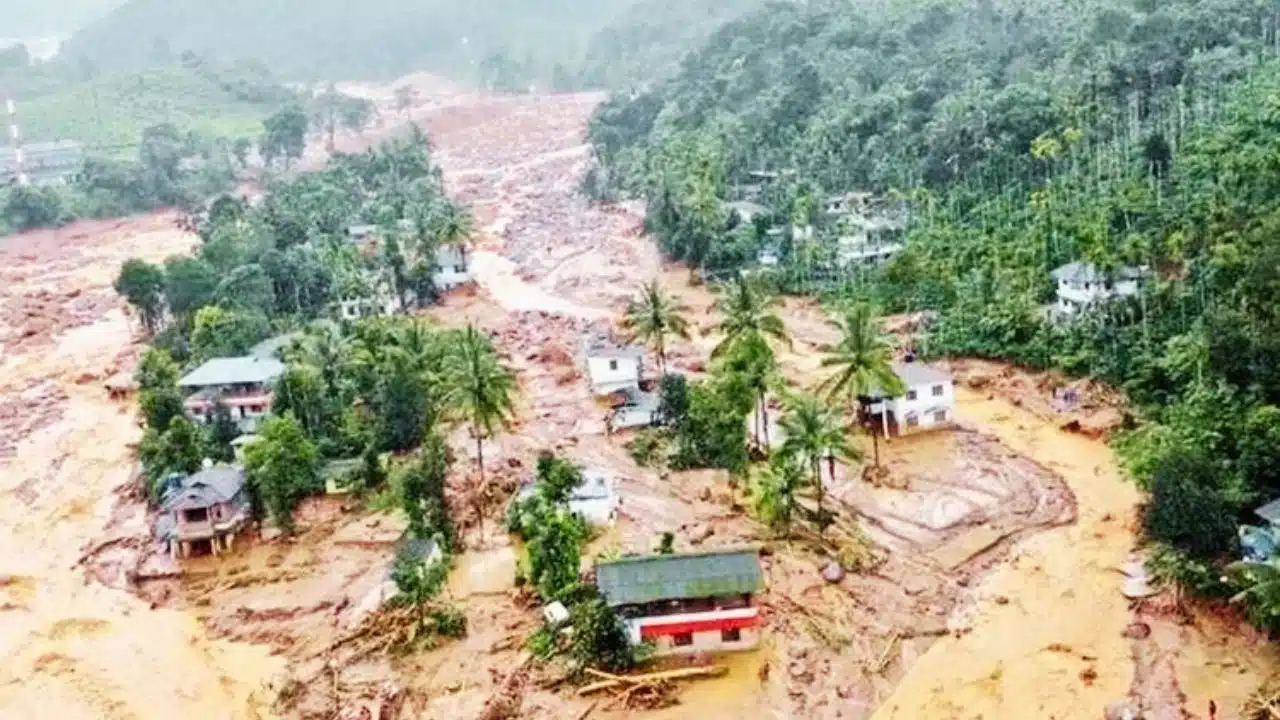
In Kerala, a state in southern India, relentless monsoon rains have triggered devastating landslides, leading to a significant loss of life and extensive damage to property. As of Wednesday, rescue operations are ongoing, with officials reporting that the death toll has surpassed 150. Many of the victims drowned, and authorities fear that the number of casualties will continue to rise. The most affected area is the northeastern Wayanad district, where at least two landslides occurred in the early hours of Tuesday, causing widespread destruction.
Challenging Rescue Conditions
Rescue teams are facing extremely difficult conditions. Continuous heavy rainfall, power outages, and the destruction of bridges and roads have severely hampered their efforts. Trees uprooted by the landslides have blocked many access routes, making it challenging for rescuers to reach survivors and assess the full extent of the disaster. Kerala’s Minister for Forest and Wildlife, A. K. Saseendran, emphasized the gravity of the situation, saying, “We are doing our best to rescue people. We are leaving no stone unturned.”
Grim Scenes at the Landslide Sites
At the landslide sites, emergency responders are confronted with a grim and chaotic scene. The landscape is covered in mud and debris, with fallen trees and toppled structures complicating the rescue efforts. Rescue workers, wearing protective gear, are seen carrying bodies in tarps and assisting residents to safety amid the pouring rain. The scenes are heart-wrenching, with families desperately searching for their loved ones. Videos posted on social media by India’s National Disaster Response Force show rescue workers navigating through muddied waters on inflatable boats, trying to reach people trapped by the landslides.
Weather and Power Issues Hamper Efforts
The adverse weather conditions have made the rescue operations even more challenging. State Health Minister Veena George mentioned that helicopters have been deployed to assist in the rescue efforts, but the inclement weather has hindered their effectiveness. “There are many challenges there because there is no electricity,” she said. Despite these difficulties, the Indian Army’s southern command announced that up to 1,000 people have been rescued so far, showcasing the resilience and determination of the rescue teams.
Personal Accounts of the Disaster
The landslides have left a trail of devastation, and the personal accounts of the survivors highlight the harrowing nature of the disaster. Janaki, a local resident, described the terrifying moments when her family was awakened by a loud noise coming from the river, followed by water flooding into their yard. Seeking refuge, they took shelter in a neighbor’s home, only to be hit by another landslide. “Large stones and logs came in while everyone was standing in a room in fear,” she recounted. Janaki’s family survived, but their neighbors were not as fortunate. Rescue workers arrived at 6 a.m. and evacuated them to the hospital. Her husband, Vasu, expressed their gratitude, saying, “God saved us.”
Medical Response and Injuries
The medical response to the disaster has been swift but challenging. Dr. Manoj Narayanan, the medical superintendent at Moopens Medical College Hospital, reported that patients began arriving at the hospital around 3 a.m. on Tuesday. By then, the hospital had treated approximately 100 patients, with around 10 arriving already dead. Dr. Narayanan noted that many of the injuries included fractures, abrasions, and lacerations, with some patients having mud in their lungs. He highlighted the urgent need for rescuing more people, including residents of a village with 400 households that remain inaccessible due to the landslides. “The injuries they are coming with include fractures, abrasions, lacerations, and quite a number of them have mud in their lungs,” Narayanan said, emphasizing the severity of the situation.
Widespread Rainfall and Climate Impact
Kerala has experienced widespread rainfall totals of 150 mm (6 inches), with some areas receiving almost 250 mm (10 inches) of rain in a 24-hour period, according to Weather. Kerala’s summers are typically very wet, and these rainfall totals are standard for this time of year. However, the frequency and intensity of such extreme weather events have been increasing. Scientists attribute this trend to the ongoing climate crisis, which has exacerbated the severity of monsoon rains, making them more destructive and deadly. The recent flooding and mudslides in Kerala are part of a broader pattern of extreme weather events affecting South Asia, which have resulted in hundreds of deaths, the displacement of millions, and significant damage to infrastructure. Similar weather patterns have also caused devastating floods and landslides in other parts of Asia, including China.
Government Response and Aid
In response to the disaster, Indian Prime Minister Narendra Modi expressed his distress over the landslides in Wayanad. In a post on social media, he offered condolences to the families who lost loved ones and prayers for those injured. His office has announced financial assistance of about $2,400 for the next of kin of those killed and about $600 for the injured. The government’s response includes deploying additional rescue teams, providing medical aid, and ensuring that essential supplies reach the affected areas. The Prime Minister’s office is coordinating with state officials to monitor the situation and provide the necessary support.
The Broader Impact of Climate Change
This tragic event highlights the ongoing challenges posed by extreme weather conditions and underscores the urgent need for effective disaster management and climate resilience strategies. The increasing frequency and intensity of extreme weather events, driven by climate change, demand a coordinated global response. Governments, scientists, and communities must work together to mitigate the impacts of climate change, enhance disaster preparedness, and build resilient infrastructure to protect vulnerable populations.
Community Support and Resilience
Despite the devastation, the community’s resilience and solidarity shine through. Local organizations, volunteers, and neighbors have come together to support the rescue and relief efforts. Shelters have been set up to accommodate those displaced by the landslides, and donations of food, clothing, and other essentials are pouring in from across the country. The spirit of cooperation and compassion is evident as people rally to help those in need.
As rescue operations continue, the focus will gradually shift to recovery and rebuilding. The immediate priority is to locate and rescue all survivors, provide medical care to the injured, and ensure that those displaced have access to safe shelter and essential services. In the longer term, efforts will be needed to rebuild homes, repair infrastructure, and support the affected communities in their recovery. This disaster serves as a stark reminder of the importance of investing in climate resilience and disaster preparedness to safeguard lives and livelihoods in the face of increasingly frequent and severe extreme weather events.