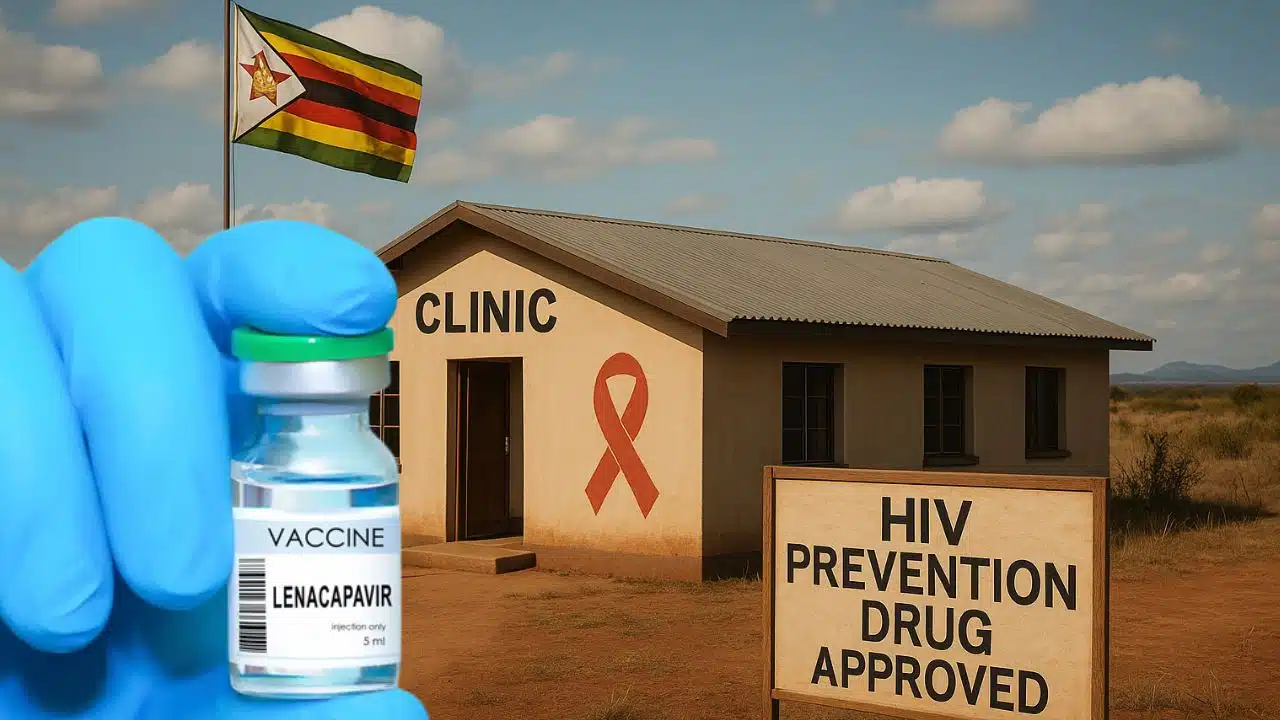
Zimbabwe has taken a major step in public health by approving lenacapavir, a long-acting injectable drug that prevents HIV infection and is administered only twice a year. The Medicines Control Authority of Zimbabwe (MCAZ) authorized the drug after completing one of the fastest regulatory reviews in the nation’s history—just 23 days from the submission of the application on October 29 to the approval announcement on November 22. The rapid decision places Zimbabwe among the earliest countries globally—and the first wave in Africa—to adopt this next-generation HIV prevention option designed to reduce new infections and ease pressure on overstretched health systems.
Lenacapavir, developed by Gilead Sciences, is aimed at adults and adolescents who weigh at least 35 kilograms and are HIV-negative but considered at substantial risk of contracting the virus. The drug involves an initial oral dosing regimen followed by a subcutaneous injection that protects against HIV for six months at a time. In large multi-country clinical trials known as PURPOSE 1 and PURPOSE 2, the medication demonstrated extremely high success rates—around 99.9% effectiveness—making it one of the most promising tools ever developed for HIV prevention.
MCAZ Director-General Richard Rukwata described the decision as a “major advancement” for Zimbabwe, emphasizing that the regulatory fast-track demonstrated the agency’s commitment to accelerating access to trustworthy, high-quality medical products. He noted that the reliance model used—drawing on external scientific reviews, including assessments from the World Health Organization’s Prequalification Programme—allowed Zimbabwe to complete an efficient yet rigorous evaluation of the drug’s safety, quality, and efficacy. This means that even though the review was swift, it adhered to strict global regulatory standards.
The approval comes at a pivotal moment for the country. Zimbabwe has roughly 1.3 million people living with HIV, representing an adult prevalence rate of around 11%. While the nation has made notable progress toward reducing HIV transmission over the past decade, new infections continue to pose a significant threat. Ministry of Health data shows that in the first half of 2025, there were 5,932 AIDS-related deaths—an increase from 5,712 recorded in the first half of 2024. Public health experts warn that such numbers reflect underlying gaps in both prevention and treatment access, particularly among young women, adolescents, and marginalized communities. A long-acting option like lenacapavir, which removes the need for daily adherence, may help close some of those gaps.
One of the main challenges in HIV prevention has been ensuring consistent adherence to daily oral PrEP (pre-exposure prophylaxis), which remains highly effective but difficult for many people to take consistently due to stigma, privacy concerns, busy schedules, or interruptions in medication supply. By contrast, a twice-yearly injection offers a discreet, convenient alternative that allows users to stay protected without managing pills every day. Health officials believe this shift may especially benefit groups that have historically been underrepresented in prevention programs, including individuals in rural communities, adolescents who may fear parental discovery, and women facing social pressure or partner-related barriers.
The approval also positions Zimbabwe alongside other African nations adopting the drug shortly after international authorization. South Africa approved lenacapavir in October 2025, followed by Zambia in early November. The first shipments of the prevention formulation have already arrived in Zambia and Eswatini, indicating that distribution channels in the region are beginning to mobilize. Broader commercial and donor-supported rollout across sub-Saharan Africa is expected to begin in 2026, with early access prioritized for high-risk groups and areas with elevated infection rates.
However, expanding access will require substantial logistical preparation. Health facilities must be equipped to store and administer injections safely, community health workers need additional training, and public awareness campaigns will be essential to ensure people understand what the drug does, who qualifies for it, and how it differs from existing prevention methods. Experts also stress the importance of community engagement to counter misinformation, build trust, and encourage uptake among populations most at risk. Long-term success will depend not only on availability but also on strong outreach, communication, and monitoring systems.
Funding is another critical factor. While initial supplies may be supported by major global donors, such as the Global Fund and PEPFAR, long-term sustainability will require integrating lenacapavir into Zimbabwe’s broader health financing strategy. National planners and partners must ensure that the cost of procurement, distribution, training, and follow-up remains manageable. Without stable funding models, the benefits of the drug may be limited to a small portion of the population, undermining its potential to significantly reduce national HIV prevalence.
Despite these challenges, the approval marks a transformative moment for Zimbabwe’s HIV response. Health authorities view the introduction of long-acting PrEP as a powerful tool that complements the country’s existing prevention strategies, which include widespread condom distribution, voluntary medical male circumcision, community-driven awareness efforts, and expanded access to antiretroviral treatment for people living with HIV. With lenacapavir now added to the lineup, Zimbabwe is better positioned to accelerate progress toward global targets, including the UNAIDS goal of ending AIDS as a public health threat by 2030.
Globally, the introduction of long-acting HIV prevention signals a broader shift in the future of HIV medicine—away from daily pills and toward longer-lasting, more convenient formulations. For individuals, this can mean fewer clinic visits, fewer interruptions due to stigma or daily barriers, and more control over their health choices. For national health systems, it creates opportunities to streamline services and reduce long-term transmission rates. For communities at risk, it offers renewed hope amid ongoing battles against stigma, misinformation, and socioeconomic inequalities that often shape exposure to infection.
Zimbabwe’s rapid and decisive action demonstrates both national leadership and a willingness to embrace scientific innovation for public benefit. As rollout plans unfold in the months ahead, the country could become a model for other low- and middle-income nations seeking to adopt next-generation HIV prevention tools quickly and safely. If implemented successfully, lenacapavir may help transform the trajectory of Zimbabwe’s epidemic and improve the quality of life for countless people who remain vulnerable to HIV transmission.