You can pick from the 10 apps below, ranging from broad search tools to operator-specific and supporting apps. The best train and bus booking apps for Europe should make route comparison easier without obscuring who sells each ticket or what happens if plans change. Before buying, weigh three things: coverage, booking relevance, and the checks worth making first.
The quick list: Trainline, Omio, Rail Europe, Busbud, FlixBus, DB Navigator, ÖBB, SNCF Connect, TrainPal, and Google Maps.
1. Trainline
A search for multiple train and bus routes will often start with Trainline, which serves as a sensible first comparison point. You’ll see a range of operators and modes in one search, which saves time. Exact route coverage for the legs you’re booking still needs checking, though. Each result shows the selling operator, so you can decide whether to buy through Trainline or go direct.
The total price including seat reservations is the figure worth comparing. An aggregator’s fee is modest on some bookings and costly on others, and booking direct can save several euros per ticket. Refund and change terms are displayed for each leg, and they vary by operator and fare type.
2. Omio
One search on Omio pulls train, bus and flight options for the same journey into a single set of results, with modes and operators sitting side by side. That range is useful when schedules or budgets are tight.
How those results are packaged matters more than how many appear. Some itineraries bundle separate operators into a single purchase. Others keep them apart. Miss a connection and your cover depends on which you bought: one protected booking, or two independent tickets.
Reports from travelers about Omio are mixed. Customer-service difficulties come up, and so do unexpected fees. Read the terms shown for each leg before you book. Then put the final price next to what the operator charges directly. Look closely at cross-border rail-to-bus connections, too, since some count as protected and others as two tickets. On a tight transfer, that gap decides whether you’re covered.
- Omio returns train, bus and flight results for a single route.
- Some bookings combine legs into one protected ticket; others stay separate.
- Traveler reports on customer service vary; final prices are worth comparing against operator sites.
Several of the same flight ticket booking common mistakes apply here: read the fine print before confirming.
3. Rail Europe
Three things decide whether an international rail booking actually works: whether the route is sold at all, whether it needs a reservation, and how the ticket reaches you. Rail Europe often lists cross-border trains that smaller regional apps leave out, which cuts down your research time. Even so, put the price and ticket conditions next to what the operator sells directly.
Delivery is the part people skip. A PDF you print or save to your phone is one option; collection at a station kiosk is another. Decide whether offline storage or a digital wallet matters to you before you travel, in case your phone dies or you lose signal while boarding a connection. And read the delay-compensation rules inside the app before you count on them.
Central European rail routes tend to involve more than one carrier, so knowing where one ticket hands over to the next is worth the effort.
Routes that touch Germany appear in DB Navigator, including journeys run with Deutsche Bahn and its partner carriers. You can search departures from Munich or any German station and see which operator runs each segment. Set that against what aggregator listings show. The operator app sometimes surfaces a cheaper fare, or a seat-reservation option the reseller never mentioned.
Connections involving other carriers need a closer look. A DB ticket may cover the whole journey, or legs outside Germany may need separate bookings. The app’s terms will tell you whether a delay that makes you miss a connection entitles you to board the next train, or whether you’re buying a new ticket instead.
5. ÖBB
ÖBB’s strength is routes that cross Austria, Germany, Switzerland and the borders around them. The app lists train options and ticket conditions for journeys involving several countries. Compare it with the fares and schedules on Trainline or the other operator’s own app.
Itineraries mixing train and bus legs deserve the most attention. A bus connection may appear as part of the route without both segments sitting under one ticket. Work out whether you’re buying a through-booking or two separate tickets. If the train runs late and the bus goes without you, that distinction is your cover.
6. Busbud – one of the best train and bus booking apps for Europe
 Busbud earns its place when bus routes drive your trip. It gathers listings from carriers you have probably never heard of, so you can compare departure points, journey times and prices side by side. Before you pay, read the baggage allowance and the change or cancellation terms. Some carriers will let you rebook for a small fee. Others treat your ticket as final.
Then cross-check the route and schedule against the carrier’s own site. Reseller listings sometimes go stale, and carriers occasionally run a promotional fare the aggregator never shows. If you pair Busbud with one of the top train and bus booking apps for Europe, work out whether your train-to-bus connection is protected or simply counts as two separate bookings. You also want to know which bus company actually operates the route, and whether booking direct would have cost less.
7. FlixBus
Booking straight with the carrier makes sense when FlixBus runs your exact route and you want control over seat selection and trip changes. Look for direct service availability in the app or on the website. Then compare the final fare — seat upgrades and luggage fees included — against what reseller listings show. Booking direct sometimes saves you a euro or two. Sometimes the aggregator bundles in a better discount.
Read the change and refund rules before you confirm, because FlixBus policies differ from those of other coach operators. Think about ticket access too: a QR code cached on your phone is what gets you on board at a remote stop with weak signal, while digital-wallet storage suits travellers who keep passes in Apple Wallet or Google Pay. It is also worth reading up on in-app delay-compensation procedures. Some carriers handle claims inside the app, while others send you to email or a web form.
Most of what applies to railway ticket booking carries over to long-distance coaches.
8. SNCF Connect
SNCF Connect lists French rail schedules. Set it beside a multi-provider search to see whether booking direct covers your whole itinerary. The app gives you ticket conditions and service details straight from the operator. Occasionally it shows a through-ticket that combines SNCF trains with partner services. On other routes it covers only the French segment, and you book the rest yourself.
If that itinerary includes a connection run by a different carrier, confirm the legs are protected as one booking. Otherwise, a delayed first train could leave the operator with no duty to rebook you. Search results rarely make this clear.
Fare structures and terms from SNCF tend to set the baseline that other national operators match or adjust.
9. TrainPal
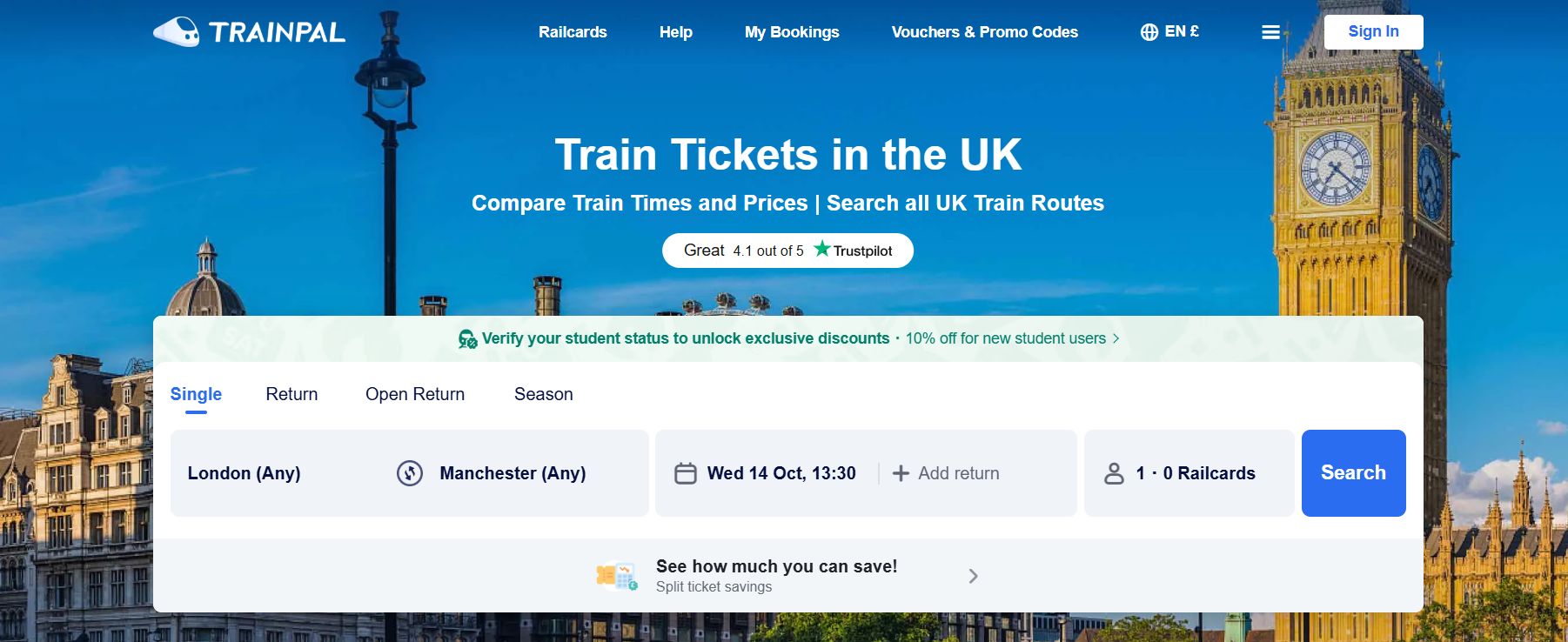
TrainPal deserves the same scrutiny you would give any reseller. Set what the app shows against the operator’s own listing to check route and fare availability. Then compare booking fees and any mandatory reservation charges. A bundled reservation sometimes hides inside the ticket price; other times it appears as a separate line item.
Ticket access needs a decision here too. Some apps cache your ticket offline, while others expect a live connection at the gate, so pick based on how you travel and whether you plan to store passes in Apple Wallet or Google Pay.
10. Google Maps
Google Maps is where you work out station connections and neighborhood context before committing to a route. You can see how far the bus terminal sits from your hotel, or whether a train connection means a quick platform change or a cross-city transfer. The route planner also helps you spot alternative departure points and check whether walking saves time. For live schedules and exact fares, look elsewhere — Google pulls timetable data from many operators, but the prices it displays are often estimates. Use it to orient yourself and compare rough travel times.
Recent updates have added new accessibility features that help travelers with mobility needs plan routes more confidently.
Questions to Check Before Purchase
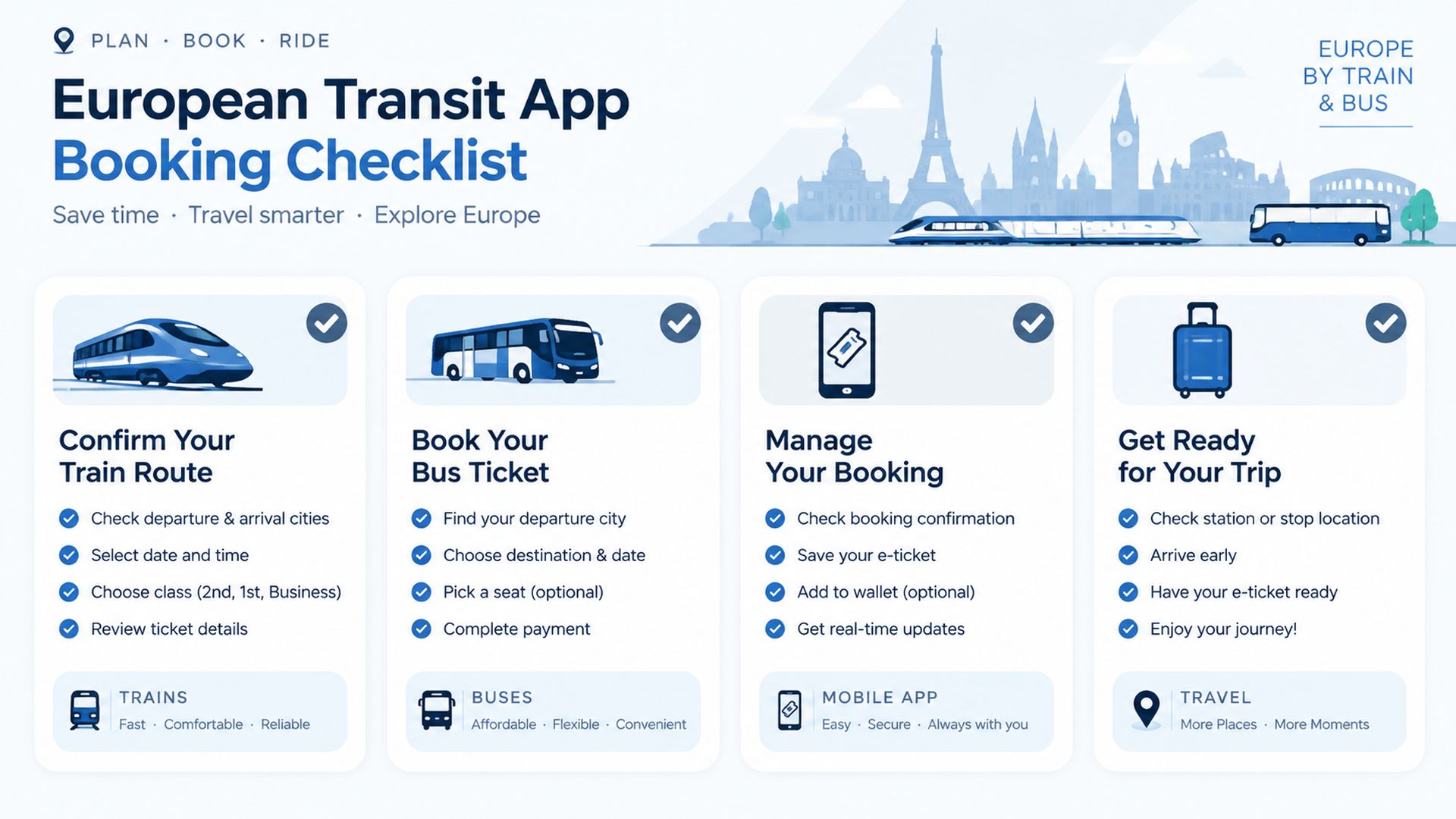
You’ve picked an app. Now two details decide whether the booking holds up: whether a connection is protected, and how you get to your ticket when your phone has no signal.
What protects a rail-to-bus connection?
Was it sold as one protected booking, or two separate tickets? That distinction matters more than the brand on the confirmation email. With a protected booking, the operator rebooks you on the next service when a delay makes you miss the connection. With separate tickets, you’re buying a new one.
How do you access a ticket without data?
Tickets need to work offline, or through your phone’s digital wallet. Download each booking while you still have Wi-Fi, then check that the QR code displays with no live connection.
Which app suits a multicity itinerary?
Look for an app that covers every operator on your route, then compare ticket conditions leg by leg. Aggregators save time on research. Operator apps sometimes save money, or reveal better cancellation terms.
What is the best public transport app for Europe?
It comes down to which carriers serve your route and what each app’s purchase terms say about changes and baggage. FlixBus works well when the carrier runs your route directly. Busbud helps when you need to compare multiple operators.
Choose by Route, Not Brand
Four details are worth confirming before you book: which operator actually runs each leg, the final fare including reservations and fees, how you’ll access the ticket without cell service, and whether your connection is protected or counts as separate bookings. The app that covers one trip perfectly may leave gaps in the next. Check each route on its own terms, because the same app that handles your first trip cleanly can turn awkward the moment a route changes hands.