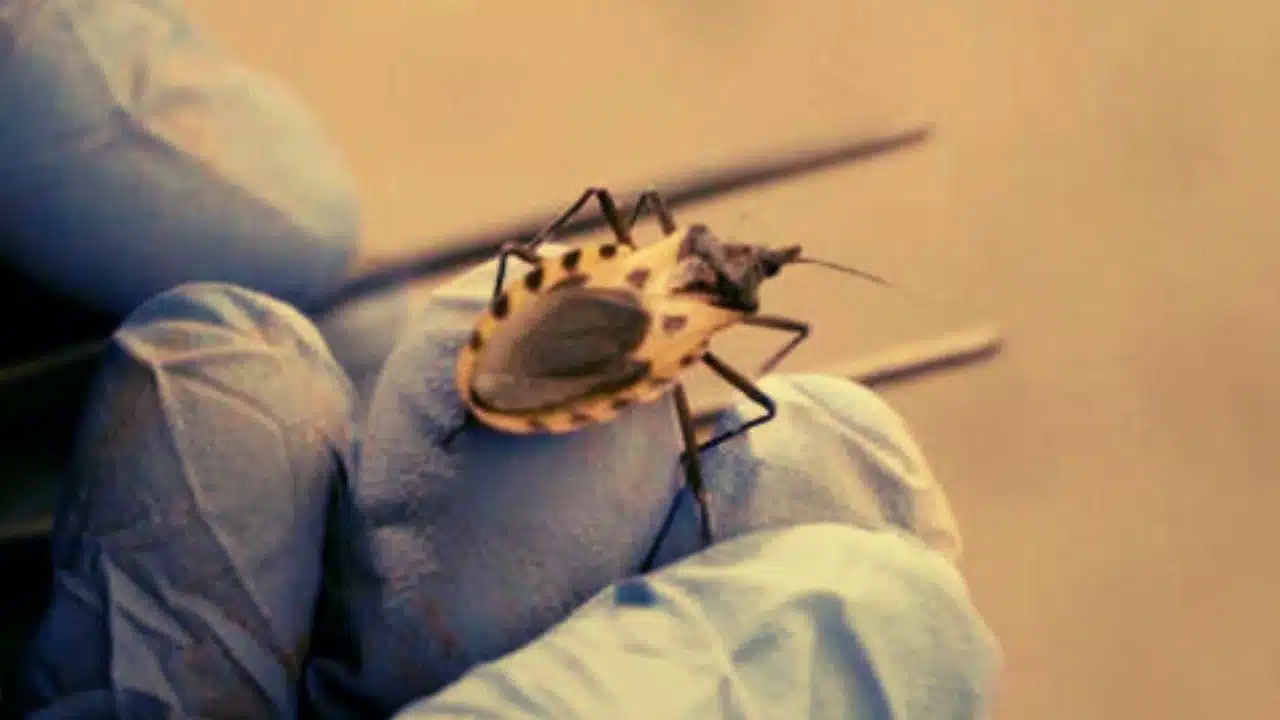
Health officials in the United States are increasingly alarmed as Chagas disease, long considered a tropical illness confined to Latin America, is now being detected more frequently within American borders. Once labeled primarily as an imported infection linked to immigration or travel, the disease is now spreading within the country itself. Confirmed human cases have been reported in at least eight U.S. states, and entomological surveys reveal that the insect vectors responsible are present in more than thirty states.
Researchers at the Centers for Disease Control and Prevention (CDC) are preparing to classify Chagas disease as endemic in the United States. This means it would no longer be considered a rare or foreign condition but instead a health problem that occurs regularly in local populations. Such a classification is far more than a medical technicality—it has wide-reaching implications for surveillance, research funding, diagnostic requirements, treatment availability, and public awareness.
Understanding the Cause: The Kissing Bug and the Parasite
Chagas disease is caused by the protozoan parasite Trypanosoma cruzi. Transmission most often occurs through the bite of triatomine insects, commonly called kissing bugs. These insects have earned their nickname because they typically feed on blood by biting sleeping humans around the face—particularly near the lips and eyelids, where the skin is thinner.
The bite itself is not what causes the infection. The danger comes from the insect’s feces, which contain the parasite. When people scratch the bite site or touch their eyes and mouth, the parasite can enter the bloodstream. Other, less common forms of transmission include blood transfusions, organ transplants, congenital transfer from mother to child during pregnancy, and accidental exposure in laboratory settings.
A Global Disease With Local Consequences
First described in 1907 by Brazilian physician Carlos Chagas, the disease was once thought of as a uniquely Latin American problem. Over time, however, migration patterns, international travel, blood donations, and organ transplants brought the parasite beyond South America. Europe now has thousands of cases, and the United States is estimated to have up to 280,000 infected individuals—many of whom are unaware of their status.
The World Health Organization (WHO) estimates that globally more than seven million people are infected with T. cruzi, and around 10,000 people die each year due to complications. Because it predominantly affects people in poor or rural areas with limited access to medical care, Chagas is officially classified as a neglected tropical disease, meaning it receives less global attention and funding than other major infections.
Symptoms and the Silent Progression of Chagas Disease
One of the most challenging aspects of Chagas disease is that its symptoms are often mild or absent in the beginning. The illness has two distinct stages:
-
Acute Phase: This stage occurs within the first weeks or months after infection. Many patients do not experience noticeable symptoms. Others may develop fever, fatigue, swollen lymph nodes, and inflammation near the bite site. A classic but not universal sign is Romaña’s sign—a painless swelling of one eyelid, often accompanied by conjunctivitis. Symptoms typically resolve within weeks, but the parasite remains in the body.
-
Chronic Phase: Years or even decades later, about 20–30% of patients develop life-threatening complications. These include chronic myocarditis, arrhythmias, heart failure, and digestive disorders such as enlargement of the esophagus (megaesophagus) or colon (megacolon). Once this damage occurs, it is often irreversible.
Without treatment, the disease can be fatal. Infants, children, and people with weakened immune systems are particularly vulnerable.
Diagnosis and Treatment Challenges
Diagnosing Chagas disease requires vigilance.
-
In the acute phase, the parasite can sometimes be identified directly in blood samples under a microscope or with molecular tests.
-
In the chronic phase, doctors rely on serological testing to detect antibodies, usually requiring confirmation with at least two different assays due to variability in sensitivity.
There is no vaccine against Chagas disease. Treatment relies on two antiparasitic drugs: benznidazole and nifurtimox. These medications work best during the acute stage, when the parasite is still circulating in the blood. In chronic infections, they may reduce the risk of progression but often cannot reverse existing heart or digestive damage.
Both drugs can have severe side effects, including gastrointestinal distress and neurological problems, which sometimes limit their use. In the United States, benznidazole and nifurtimox are available under specific FDA approvals, mostly for pediatric patients, but access for adults often requires special approval or inpatient care. This highlights the urgent need for new therapies and better guidelines for adult treatment.
Pets and Wildlife as Hidden Reservoirs
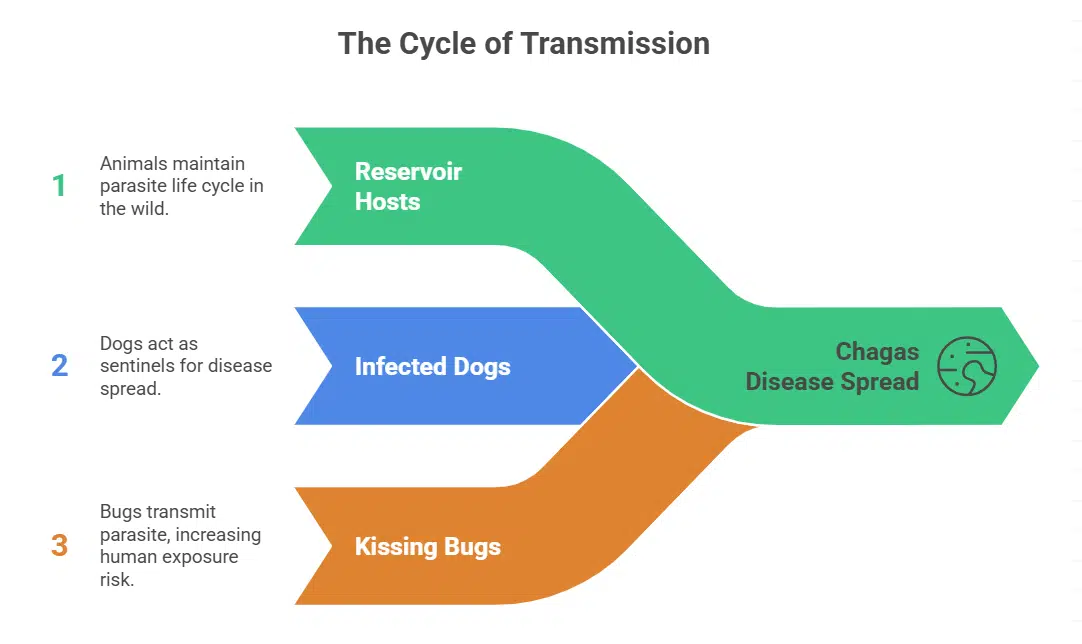
Chagas disease does not only affect humans. Infected dogs, cats, raccoons, armadillos, and opossums act as important reservoir hosts, helping maintain the parasite’s life cycle in the wild. In southern states such as Texas and California, veterinarians are reporting increasing numbers of infected dogs. This is a warning sign that T. cruzi is circulating in local ecosystems, making human exposure more likely.
Dogs are considered particularly important in the cycle because they live close to humans and can attract kissing bugs into households or outdoor spaces. Studies show that canine infections often mirror human risk areas, making them a valuable sentinel species for mapping the spread of the disease.
Preventing Infection
Since there is no vaccine, prevention focuses on reducing exposure to the insect vectors. Key recommendations include:
-
Using bed nets treated with insecticides in areas where kissing bugs are common.
-
Sealing cracks in walls, windows, and roofs of homes to prevent insects from entering.
-
Employing insecticide spraying and pest management in high-risk regions.
-
For pets, veterinarians advise preventive treatments similar to those used against fleas and ticks.
-
Ensuring that blood donations and organ transplants are screened for T. cruzi, a measure that is now routine in the U.S. and many other countries.
Public education is also critical. Many people are unaware that kissing bugs exist in the United States or that they can transmit such a dangerous infection.
Why the “Endemic” Label Matters
Classifying Chagas disease as endemic in the United States would fundamentally change how it is addressed:
-
Surveillance: More states would be required to track and report cases, providing better data on where and how the disease is spreading.
-
Funding: Federal and state governments would likely allocate more resources for research, vector control, and public health campaigns.
-
Treatment Access: Insurance and healthcare providers may expand coverage for antiparasitic drugs, and more physicians would be trained to recognize and manage the disease.
-
Public Awareness: Americans would become more aware of the risks in their own communities, reducing the stigma of Chagas as a “foreign” disease and encouraging earlier testing.
An Emerging U.S. Health Challenge
What was once dismissed as a distant tropical disease has now become a domestic health concern. With triatomine bugs established in over half the country, pets and wildlife acting as reservoirs, and human cases already present in multiple states, Chagas disease is no longer an imported rarity.
For health authorities, declaring it endemic is not just about technical classification—it is a call to action. Without improved surveillance, faster diagnosis, and more effective treatment options, thousands of people in the U.S. could develop life-threatening complications in the coming years.
Chagas disease illustrates how globalization, migration, and environmental factors can reshape public health landscapes, transforming what was once considered a tropical problem into a challenge for the world’s largest economies.