

You want a lush yard, but you fear gaps, bumps, or poor drainage. Picking the wrong installer can ruin your fake grass fast. Fact: installing artificial grass needs skill, tools, and solid base preparation.
This guide covers the Things To Know Before Choosing An Artificial Grass Installer In Australia, from ABN checks to pile height tests and waste pick up. We show you key steps, so you avoid bad seams and soggy spots.
Keep reading.
Key Takeaways
- You look up ABN 89 409 804 059 on the Australian Business Register to check the installer’s license, public liability insurance, and membership in Landscaping Victoria Master Landscapers.
- You test free turf samples for UV resistance, pile height, and face weight; pet-safe synthetic grass often includes a 10-year warranty against fading and wear.
- You ensure the installer builds a 50 mm compacted rock base, sets a 1–2 % slope, adds 20 mm of gravel, joins seams with tape, applies 1 lb of sand infill per square foot, and removes all waste.
- You get at least three quotes by March 2024, compare costs for base materials and rubbish removal, check deposit and payment terms, and review 10–15 year warranty details.
Verify Installer Credentials and Licenses
A quick ABN lookup on the Australian Business Register reveals a business’s details. Reelgrass shows registration number 89 409 804 059. The site shows license status and insurance cover.
This trick works for any artificial grass or synthetic turf installer.
Verify membership in a group like Landscaping Victoria Master Landscapers. Ask installers at both Melbourne sites to flash a valid license and public liability cover. Genuine pros carry policy papers like a badge.
They install artificial turf and lay synthetic grass with more certainty.
Assess Turf Quality and Material Options
Good installers send free samples of premium artificial grass. You can run your hand through each swatch. You will see blade color and feel texture. You can note UV resistance to protect against fading in the Australian climate.
Turf with higher face weight and density will stand firm under backyard cricket games. A 10-year warranty often tags higher quality synthetic turf. More warranty years signal a safer long-term investment.
Pet-friendly options block odors and stains after muddy paws roam. Fiber choices shape pile height and thread counts. Select sand infill to add weight and support. Base preparation stays key to lasting performance after professional installation or diy installation.
Homeowners get a lush artificial lawn that cuts routine maintenance costs. This smart choice will suit homeowners’ association rules.
Understand the Installation Process
This part shows each step installers take. You can ask about every phase of installing synthetic turf.
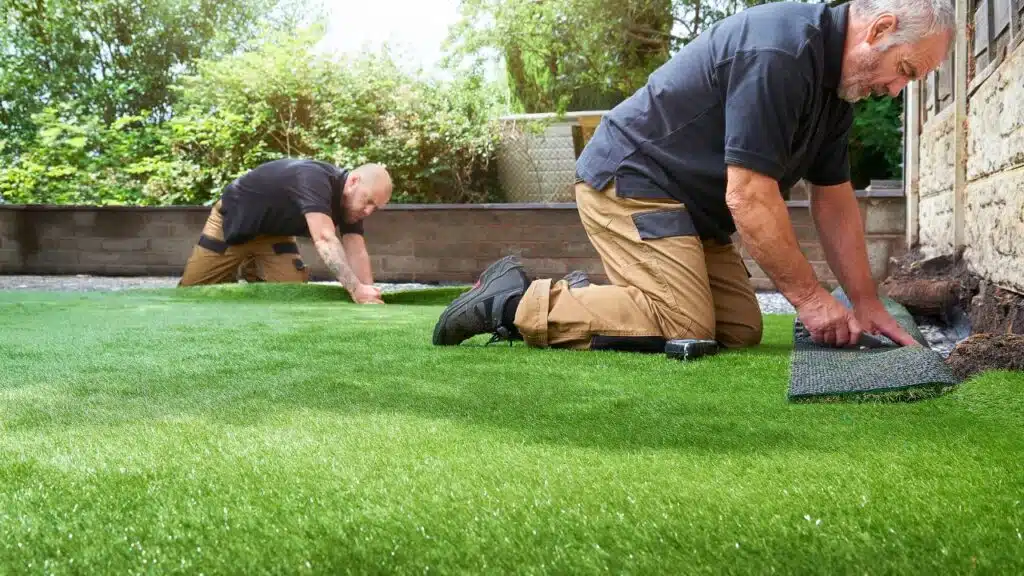
- Inspect and prepare base: Check soil level, add 50 mm of crushed rock, then compact with a vibratory plate compactor for solid base.
- Lay landscape fabric: Spread this weed barrier, then cover with coarse gravel to guide water away.
- Roll out premium artificial grass: Align grain with yard slope, let it rest for two hours to relax.
- Trim edges: Use a turf cutter or utility knife to fit borders and curves, keep cuts tight to walls.
- Join seams: Press cut edges onto joining tape, pull blades together, hide any seam.
- Add sand infill: Scatter kiln-dried sand at one pound per square foot, this holds pile height and stabilizes turf.
- Lift grass fibers: Brush with a rotary broom against the grain, this gives a real grass feel.
- Remove waste: Sweep up scraps, bag cuttings, haul debris off site for a clean finish.
- Confirm install timeline: Get delivery date and work window in writing, include them in the total price to avoid surprises.
Check for Drainage Solutions and Ground Preparation
Ground prep makes a huge difference. Poor drainage ruins an artificial lawn.
- Select a sub-base, with a filter fabric layer, to guide water away under synthetic turf.
- Measure the slope with a laser level to meet a 1% to 2% pitch for rain in Australian climate.
- Compact the soil using a soil tamper after leveling and work in a spade to finish base preparation.
- Spread 20mm of gravel under the artificial lawn to boost water flow under premium artificial grass.
- Install a perforated pipe at low points to cut standing water and protect fake turf from puddles, so you can play backyard cricket hours after rain.
- Apply sand infill or rubber chips at 15mm depth to support pile height and ease artificial turf maintenance.
- Confirm quotes include rubbish removal, base material costs and the expense of professional installation or diy installation.
- Check that installs use galvanized U-pins or synthetic turf adhesive to fix artificial grass edges and lock seams in place.
Review Warranty and Maintenance Services
Secure a clear warranty sheet that spells out years of coverage, parts, and labor. Most premium artificial grass brands offer 10 to 15 year guarantees against fading, wear, and manufacturing flaws.
Skilled teams will walk you through cleaning steps, simple brushing tips, and sand infill checks. They will hand you a guide for scuff tests after backyard cricket sessions under the harsh Australian climate.
Ask about DIY installation troubles and how they affect claims.
Find out if the installer offers seasonal checkups. Insist that maintenance guidance covers fake turf cleaning and artificial turf maintenance checks. A sensor gives you soil dampness data before you start claims.
Save time by having a maintenance schedule to follow after a heavy downpour. You can count on customer support if you spot tears, wear, or fading under the sun.
Compare Multiple Quotes and Pricing Details
Grab a sheet and an adding machine to line up these checks.
| Quote Element | Key Check |
|---|---|
| Quote Count | Obtain three or more bids by March 2024 |
| Total Cost | Include base material and rubbish removal fees |
| Price Outliers | Flag any bid at least 30% below average |
| Timeline Details | Verify delivery and install dates in the package |
| Payment Terms | Check deposit, progress payments, final balance |
| Material & Method | Compare turf grade, infill type, prep technique |
| Warranty Coverage | Note length and conditions across plans |
Look for Customization and Additional Services
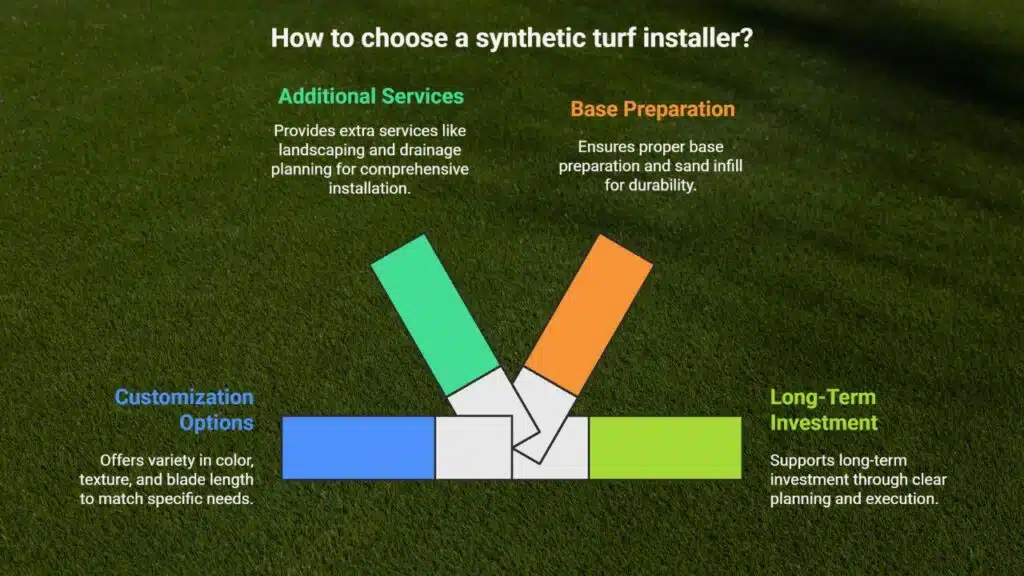
Pick a turf installer that offers choices in color, texture, and blade length. Ask about pile height for backyard cricket pads. Check if they add landscaping and edging. Confirm they walk you through base preparation and sand infill steps.
Look at how they plan a drainage system.
See if they provide extra services like power broom brushing or turf roller compaction. Call Reelgrass at 1300 306 389 or email support for custom quotes. Xtreme Turf fits synthetic turf for homes, offices, or sports fields.
A clear plan cuts surprises and supports long-term investment.
Ask About Environmental and Pet-Friendly Options
Green fields made from reclaimed nylon keep old plastics out of landfills. Professional installation with a recyclable polypropylene mat stops waste and aids future reuse. PVC-free backing blocks toxins from spreading to kids, pets, and the soil.
A 30 mm pile height in synthetic grass cushions each step and drains water fast.
Monofilament turf with antimicrobial yarn fights odors after backyard cricket and dog runs. Silica sand infill locks each blade tight, lets water flow, and keeps stains at bay. A Turfgrass Producers of Australia membership signals a pro who meets pet-safe standards.
A simple pH test kit shows if the base sits neutral for a smooth artificial lawn fit.
Takeaways
This wrap-up lays out the main points to guide your choice. Start with a business number lookup, a grass sample test, and a soil prep review. Next, compare pricing details, ask about drainage fixes, and read the producer warranty.
Talk with installers about pet-safe turf, past projects, and owner contact. Then book a pro who fits your needs, sit back, and watch your yard spring to life.
FAQs
1. What should I ask a professional installer in Australia?
Ask if they prep the soil well. Ask what turf they pick, artificial grass or synthetic turf. Ask how high they set the pile height and if they add sand infill. Check real pics of past jobs. Good pros build to last, and that protects your long-term investment.
2. Can I do a diy installation of artificial turf in Australia?
A DIY installation can cut costs. But the real work lies under the turf. You need level ground, a firm base, proper sand infill, and correct pile height. Skip a step, the turf may shift. For a solid long-term investment, professional installation can save time and headaches.
3. How do I choose the perfect pile height for my artificial lawn?
If you want a lush look, pick taller blades around 30 to 40 mm. For yards that see a lot of foot traffic, go shorter. Taller blades feel soft underfoot. Talk to your installer about artificial lawn options and pile height so you get the right feel.
4. What upkeep does fake turf need in Australia?
Fake turf or synthetic turf needs little work. It never asks for a mow or a drink. Just rinse with a hose, brush up the fibers, and top up sand infill from time to time. That is all. You get a green yard without breaking a sweat.





















