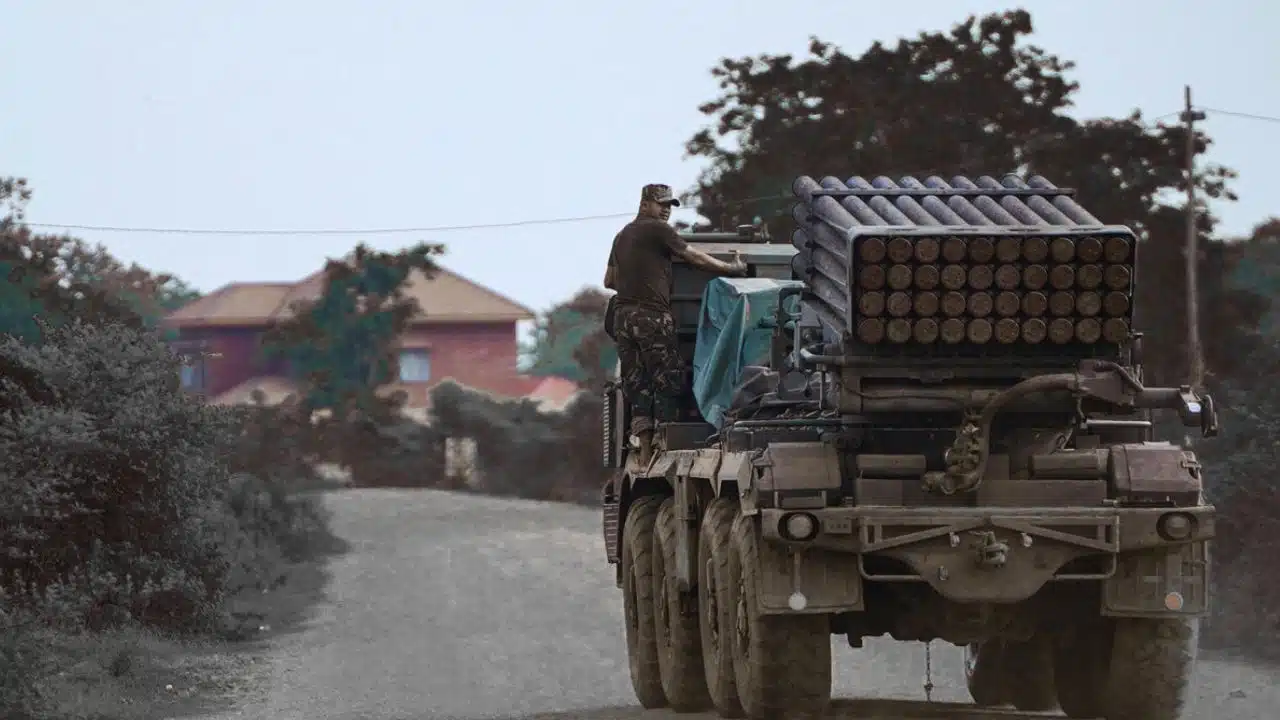
Fierce clashes between the military forces of Thailand and Cambodia have erupted for the second consecutive day, intensifying a long-standing territorial dispute and triggering a large-scale humanitarian crisis. According to official statements from Thai authorities on Friday, July 25, 2025, the confrontation marks the most violent border conflict in a decade, involving artillery, rockets, tanks, and air support, and resulting in the displacement of over 100,000 people.
Day Two of Cross-Border Fighting Involving Heavy Weapons
In the early hours of Friday morning, the Thai military confirmed that Cambodian forces launched extensive artillery bombardments targeting multiple Thai military positions along the disputed border. These attacks reportedly involved BM-21 Grad multiple rocket launchers, a Soviet-designed system known for launching dozens of unguided rockets in quick succession, as well as field artillery and long-range howitzers.
The Thai military responded with coordinated counterattacks using supporting firepower, including ground-based artillery and mechanized units, to defend key border positions. This second day of open combat marks a sharp escalation in hostilities after Thursday’s initial outbreak of violence.
Massive Civilian Displacement and Rising Death Toll
The clashes have prompted a massive civilian evacuation in Thailand. According to the Ministry of Interior, more than 100,000 residents from four provinces near the Cambodian border have been evacuated to safety. Local authorities have activated nearly 300 emergency shelters to house displaced families from provinces such as Surin, Sisaket, Ubon Ratchathani, and Buriram, which lie closest to the frontlines.
Thailand’s Ministry of Public Health confirmed that the death toll has risen to at least 14, including 13 civilians and 1 military personnel. Scores of others have been injured in the shelling, some critically, and field hospitals are being set up near temporary shelters to cope with the surge in casualties.
Medical responders reported several instances where artillery shrapnel struck residential areas, schools, and local infrastructure, further compounding the humanitarian emergency.
Clashes Spark Concern Over 800-Kilometer Disputed Border
The conflict is rooted in a long-running territorial disagreement along the 800-kilometer (500-mile) shared border between the two Southeast Asian nations. The frontier, much of which is poorly demarcated, has been the source of recurring tension for decades. At the heart of the dispute are multiple zones where sovereignty remains contested, particularly areas rich in cultural heritage and strategic resources.
The current violence follows a similar pattern to earlier clashes that occurred between 2008 and 2011, which left at least 28 people dead and displaced tens of thousands. During those years, fighting flared around ancient Hindu temples that both countries claim as national heritage, especially the Preah Vihear Temple—a site of historic and religious significance.
A ruling by the International Court of Justice (ICJ) in 2013 helped ease tensions temporarily by affirming Cambodian sovereignty over the Preah Vihear complex. However, dozens of kilometers of terrain remain in dispute, including forested areas, mountainous paths, and ancient military routes, many of which are difficult to patrol or monitor.
Fresh Tensions Emerge Following May Skirmish
The peace along the border remained fragile, and the situation began to deteriorate again in May 2025 when a Cambodian soldier was killed during a brief firefight. Although both governments initially sought to downplay the incident, troop movements increased steadily on both sides. By mid-July, satellite imagery revealed heavy Cambodian artillery placements near the border, along with increased Thai air patrols.
Observers from the Association of Southeast Asian Nations (ASEAN) warned earlier this month that the region was on the brink of renewed conflict unless both parties agreed to de-escalation measures.
Airstrikes, Tanks, and Civilian Targets in Thursday’s Battle
Thursday’s fighting, which marked the beginning of the current clash, was particularly intense. According to Thai military reports, six strategic zones saw simultaneous conflict, especially areas surrounding two ancient temples.
Cambodian forces reportedly launched rockets and artillery shells deep into Thai territory, striking civilian areas and triggering panic among the local population. A hospital and petrol station were among the confirmed civilian structures damaged by the bombardment. Thai officials said that this aggressive action prompted a military response, with F-16 fighter jets deployed to carry out airstrikes against Cambodian military targets across the border.
On the ground, both sides engaged in mechanized warfare, including the use of tanks and armored personnel carriers, while foot soldiers exchanged gunfire in heavily forested regions. Local witnesses described hours of sustained fighting, with smoke and explosions visible from several kilometers away.
Diplomatic Fallout: Ambassadors Expelled
The military clashes have now spilled over into the diplomatic arena. Late Thursday, the Thai Ministry of Foreign Affairs expelled the Cambodian ambassador from Bangkok in protest over the attack on Thai soil. Hours later, Cambodia retaliated by recalling its own ambassador from Thailand.
This breakdown in diplomatic communication is one of the most serious between the two countries in recent memory and follows an incident where five members of a Thai military patrol unit were seriously wounded by a landmine. Thailand has blamed Cambodian forces for planting the explosive devices in disputed zones, escalating the war of words between the neighboring countries.
Efforts at mediation by ASEAN or bilateral diplomacy appear to have stalled for the moment, as both sides continue to trade accusations and reinforce their military positions along the border.
UN Security Council to Convene Emergency Session
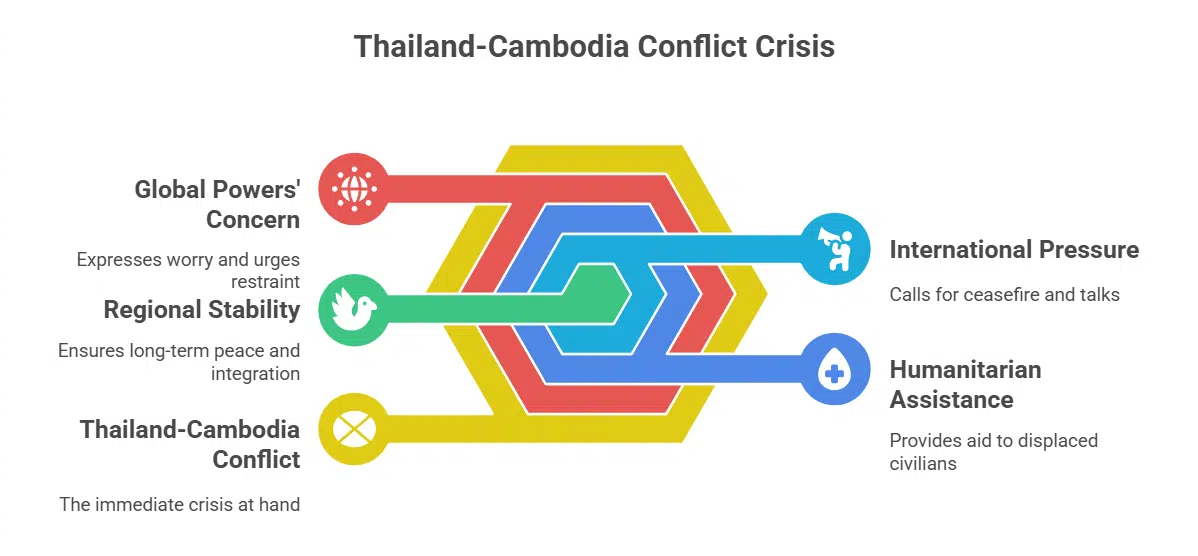
In response to the rapidly unfolding crisis, the United Nations Security Council has scheduled an emergency session to discuss the Thailand-Cambodia conflict. International pressure is mounting for both governments to declare a ceasefire and begin talks to prevent further civilian casualties.
Global powers including the United States, China, and the European Union have all expressed concern over the escalation and called for restraint. Humanitarian agencies such as the International Committee of the Red Cross (ICRC) and UNHCR have begun coordinating with local authorities to provide assistance to displaced civilians.
The situation remains fluid, and international monitors fear that if the fighting continues, it could destabilize a region that has historically been a cornerstone of Southeast Asian trade, tourism, and regional integration.
Wider Impact on Tourism and Regional Stability
Both Thailand and Cambodia are major global tourist destinations, with millions of visitors each year. The resurgence of cross-border violence not only threatens lives but also jeopardizes the fragile economic recovery in the wake of the pandemic and political instability.
Local economies on both sides of the border, which depend heavily on cross-border trade, farming, and small businesses, have already begun to suffer. Transport routes have been disrupted, agricultural fields have been abandoned, and schools have been shut down indefinitely in many of the affected districts.
In the short term, travel advisories have been issued by several foreign embassies, warning their citizens to avoid the border regions. Long-term, experts warn that unless a diplomatic solution is reached, the hostilities could derail years of progress made through ASEAN frameworks.
The Path Ahead
As military tension continues to rise, the focus is now shifting toward international mediation and de-escalation. Both governments face pressure from regional allies and the global community to halt hostilities and resume dialogue.
With thousands displaced, dozens injured or killed, and border communities living in fear, the urgent need for a diplomatic breakthrough has never been more critical. Whether the UN Security Council, ASEAN, or bilateral talks can broker a ceasefire remains to be seen—but for now, the region watches anxiously as two neighbors edge closer to prolonged conflict.