Does your living room feel dusty every morning? You dust, sweep, and vacuum, yet you still see tiny specks on shelves and floors. You may ask, why does my house get so dusty? That constant layer of dust can make you sneeze and feel tired.
Dust in your home holds pollen, dead skin cells, pet dander, and mite droppings. A dirty air filter can push more dust around, and poor airflow in your heating and cooling unit can make things worse.
We will show you the common causes of dust and simple fixes, like swapping filters, using a suction device, sealing windows, and running an air purifier. You will learn easy tips to rid your home of dust.
Keep reading.
Key Takeaways
- House dust holds pollen, skin cells, pet dander, and mite droppings.
- Change HVAC filters every 1–3 months and clear vents; Tony Abate backs pleated filters at 80%–90% efficiency.
- A 2018 study by Becher R found deep-pile rugs trap more dust; swap for low-pile mats and vacuum with a HEPA filter weekly.
- Pets shed skin flakes and fur that feed dust mites; brush pets often and vacuum carpets and furniture twice a week with a HEPA filter.
- Drafty windows and doors let in dust and pollen; seal gaps with weatherstrips and caulk, and run a HEPA purifier (99.97% of 0.3 microns) to trap airborne particles.
Why Does My House Get So Dusty? Common Causes

Clogged vents in your HVAC system whip fine grit and skin flakes into every corner. A cordless stick vacuum helps, yet your rugs still act like dust magnets for pet fur and dander.
Poor Airflow and Ventilation
Blocked vents choke airflow and let dust settle on every surface. A dirty HVAC filter will spew particulates right back into living spaces. Air duct leaks pull in dirt from attics or crawl spaces, cutting indoor air quality.
Routine upkeep clears vents and seals duct leaks to limit dust in your house. Change or clean your air filter every one to three months to stop dust buildup. Aim for forty to fifty percent humidity and open vents fully for better ventilation.
Dirty HVAC Filters
Your furnace filter might sit clogged for months. That grime builds up inside your air conditioning system. Tiny dust particles slip through and crash on your furniture. Your house seems so dusty all the time.
Dirty HVAC filters drive down airflow and raise poor indoor air quality.
Tony Abate says you should change air filters frequently, every one to three months. He backs pleated filters with eighty to ninety percent efficiency. You also need to clean the duct flow and check all system components.
A fresh filter traps more debris and cuts dust accumulation. This easy step helps you get rid of dust around your home.
Pet Dander and Shedding
Pets shed skin flakes and fur; they toss dander into every room. That fur can settle on carpets, sheets, and furniture fabric. Those flakes can make your house so dusty that allergy sneezes can spring up anywhere.
Pet dander feeds house dust mites; they munch on skin fragments and multiply fast.
Frequent brushing trims loose hair; it cuts the amount of dander that falls. Run a cleaning device with a HEPA filter twice a week, it grabs stubborn fur bits. Grooming tools with soft bristles help too; they tame coats and curb shedding.
Carpets, Rugs, and Upholstery
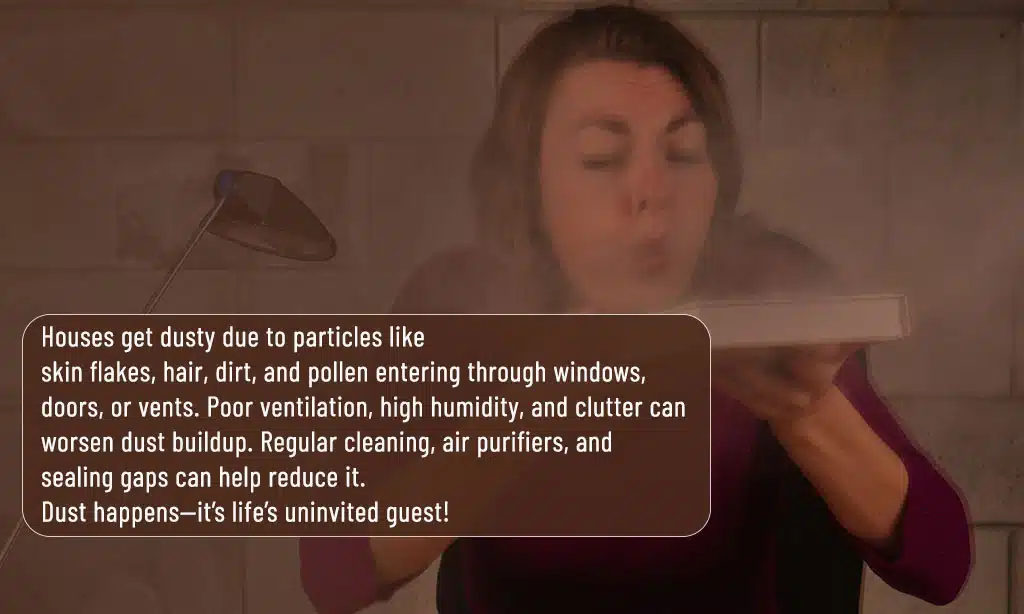
Thick carpets and deep-pile rugs trap household dust, pollen, and pet dander in their fibers. A 2018 study by Becher R, et al. found links between these textiles and poorer indoor air quality, plus more sneezes.
Hard floors like oak or maple collect less dust and shed it fast, but soft mats hold it tight. You often spot dust balls under sofas, which boost dust accumulation in your home.
Clean soft surfaces weekly with a cleaning machine fitted with a HEPA filter, and swipe cushions with a dust wand or soft wipe. Give upholstered chairs and couch pads a seasonal deep bath to flush out embedded dust and allergens.
Swap thick rugs for low-pile mats where dust clears faster, so you reduce dust buildup with less effort.
Drafty Windows and Doors
Gaps in the sill let dust drift inside. They act like highways for outdoor debris. Your home traps that grit on floors, baseboards, and upholstery. A dusty home can feel like a sieve; you chase dust all day.
Apply a seal strip along window tracks, and squeeze a bead of silicone caulk with a sealant tool. That simple fix prevents dust from entering through window and door cracks. Seal cracks in trim with caulk; it stops pollen season grit and debris on windy days.
You will see less buildup on floors and rugs right away.
Tips to Reduce Dust Accumulation
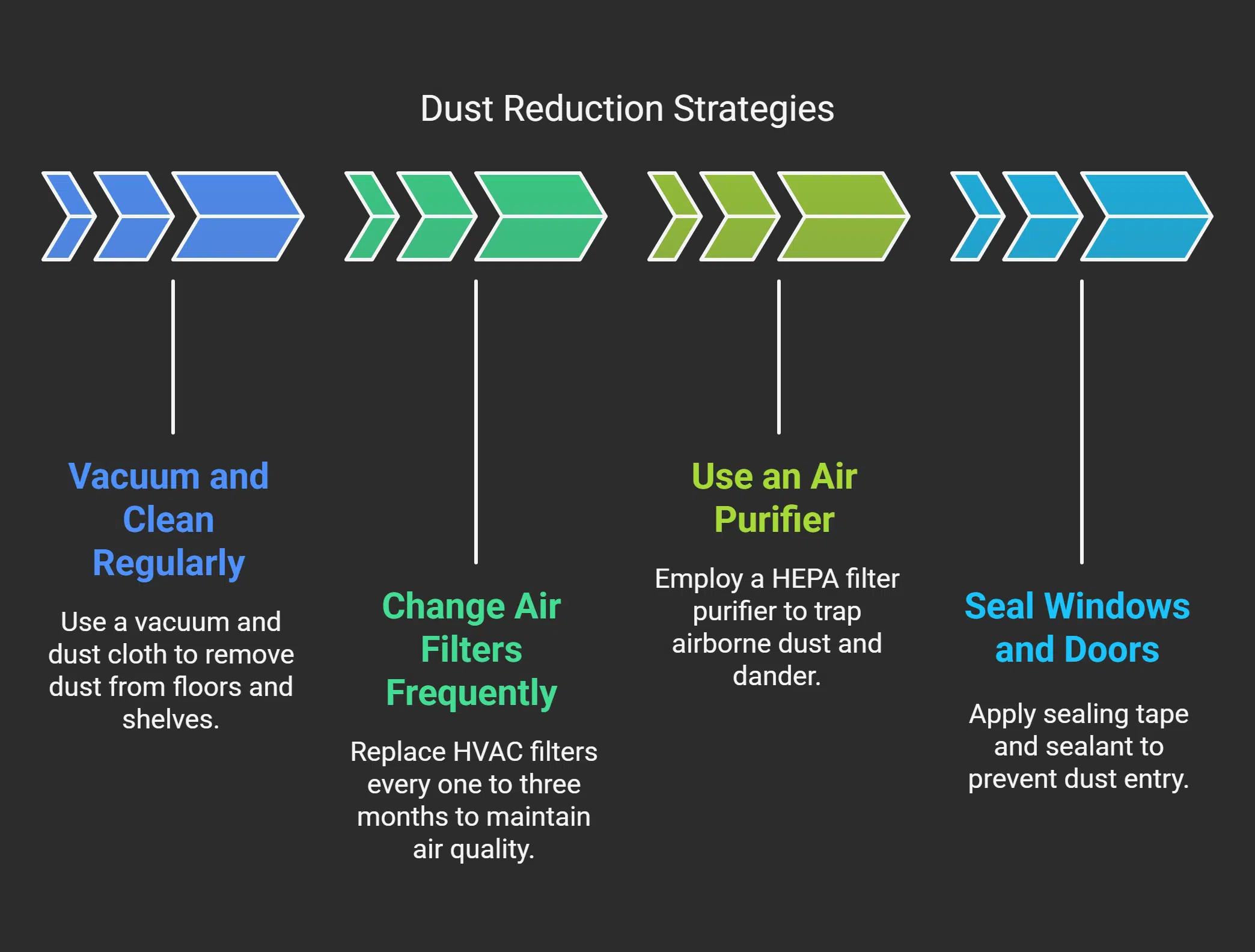
Wield an upright cleaner and dust cloth to zap grit from floors and shelves. Fit door sweeps, spin an air scrubber, and spot dust vanish.
Vacuum and Clean Regularly
Kids tracked dirt and debris throughout the house. Vacuum carpets, rugs, and furniture at least twice a week. Dust lands on ledges and ceiling fans first, so swipe a microfiber cloth before you vacuum.
A filter with HEPA power traps even fine debris.
Try weekly dusting and seasonal deep cleaning for upholstery. Clean from top to bottom so you trap dust in one pass. This simple habit can help reduce dust plumes and boost air quality.
Your living room feels fresher with less work.
Change Air Filters Frequently
Air filters trap dust and stop it from circling through vents. You must swap HVAC filters every one to three months to curb a dust problem. Tony Abate recommends pleated filters with 80% to 90% efficiency.
These filters snare fine dust, pollen, and pet dander. You keep air circulation strong, and you cut down on poor air quality.
Dirty filters slow duct flow, and air moves poorly in your air conditioning system. The house is so dusty and feels stuffy. You pay more on power bills when airflow drops. Clean filters keep the AC unit happy, and they reduce the amount of dust in rooms.
Change them often to prevent dust buildup.
Use an Air Purifier
A purifier with a HEPA filter traps 99.97% of particles down to 0.3 microns. It pulls airborne dust and pet dander from your living rooms and bedrooms. This tool cuts indoor dust and debris.
It fights air pollution and excess dust in your home.
A portable humidifier adds moisture to heavy dust. It makes fine particles fall to floors, so you can vacuum and clean more effectively. You can run one model in kitchens and bedrooms.
It pairs well with a purifier to control indoor dust.
Seal Windows and Doors
Drafty doors and windows let grit and pollen march into your living room. You can spot gaps by holding a lit candle near the frame on a windy day. Sealing tape around the frames stops most outdoor dust from entering your home.
Use sealant to fill cracks before dirt and dust sneak inside.
Seal strips and sealant block most dust during pollen season and windy days. They save you from sweeping sand trails after every storm. Slip the strips behind windowpanes, press them tight, and watch grime stay outside.
Takeaways
You now know why dust sneaks in. Clogged air filters and poor vents send mold and pollen inside. Pet dander and dust mites pile up fast.
A vacuum cleaner and air purifier tackle most of it. Sealing windows, using weatherstripping, and using a dehumidifier also help. Kick dust to the curb with this plan.
FAQs on Why Does My House Get So Dusty
1. What causes so much dust in my house or apartment?
Dust consists of dirt from outside Earth, clothes fibers, plume from cushions, food crumbs, and bug parts. Construction and renovation stir up filler and earth, too. This mix can make your home always dusty.
2. Why do air conditioning and vents add to dust levels?
Your cooler pulls in outdoor fumes, dirty air, and water drops. This lets dirt and dust enter a vent across your home. The heating and air cycles shake loose old dust in vents.
3. Can mold and damp spots increase dust levels?
Mold cells and damp spots shed tiny bits that float. Without a moisture remover, damp spots do not dry. This helps dust to accumulate and lets microbes spread.
4. Do drapes, cushions, and bedding add to dust?
Fabric sheds fibers each time you move or sit down. Cushions spill plume, and bedding drops threads. Your bed can be a dust maker.
5. How do I remove dust more effectively?
Use a cleaning tool, like a vacuum or duster, each week to remove dust and dirt. Wipe surfaces in a straight line. Carpet cleaning helps, too. Good housekeeping cuts down dust levels.
6. What else can I do to avoid dust buildup?
Seal cracks with weatherstripping; fill gaps with filler. Change filters in your cooler; maintain vents. Good ventilation and cleaning practices will significantly reduce dust. These tips help avoid a dusty house and keep your home clean.