Working remotely can feel lonely. Remote employees often miss the chance to chat with coworkers or bond during breaks. This isolation can hurt their mental health and make work stressful.
Building social connections is key, even when working from home. Virtual lunches, team check-ins, and fun online activities can help strengthen bonds between remote workers. These efforts improve teamwork and boost employee well-being.
This blog will show you simple ways to stay connected while working from home. You’ll learn tips for keeping relationships strong and creating a friendly virtual workplace. Keep reading!
Be Intentional About Building Relationships

Strong relationships don’t happen by chance—they need effort and time. Plan moments to connect meaningfully, even through virtual spaces.
Schedule regular check-ins
Building strong relationships at work can be more challenging for remote employees. Scheduling regular check-ins helps connect teams and reduce social isolation.
- Plan one-on-one virtual calls weekly or biweekly. This keeps communication clear and personal.
- Use project management tools to track updates during these meetings. They help structure progress talks and save time.
- Keep video on during check-ins to allow face-to-face interaction. Seeing colleagues builds stronger connections through body language and tone of voice.
- Dedicate a few minutes to informal chats about life or shared interests before addressing tasks.
- Rotate meeting times if your team spans different time zones, ensuring all members feel included.
- Send out reminders with agendas beforehand, so everyone feels prepared and valued.
- Use these moments to talk about challenges, provide employee support, or explore mentorship opportunities for team growth.
This builds trust, enhances well-being, and strengthens social connections for remote employees working from home or teleworkers everywhere!
Set up virtual coffee chats
Talking to coworkers can feel harder during remote work. Virtual coffee chats make it easier to stay connected.
- Schedule a 15 or 30-minute video call with one or more coworkers. Keep it casual and friendly like a real coffee break.
- Use tools like Zoom or Microsoft Teams for these chats. These platforms are simple and widely used by remote employees.
- Talk about topics beyond work, such as hobbies, recent shows, or family updates. This builds stronger relationships and boosts social capital.
- Rotate who you chat with each week to include everyone on the team. It helps create fairness in employee engagement while working remotely.
- Encourage managers or team leads to join, too. Approachable management fosters connection and reduces workplace stress for remote employees.
- Add reminders for these sessions to your calendar so you don’t forget them during busy days of remote work.
Foster Team Engagement
Building trust takes effort, but shared moments make teams stronger. Focus on creativity to keep spirits high and bonds growing.
Organize virtual team-building activities
Team-building can be fun and easy, even remotely. It helps remote employees feel connected and valued.
- Host trivia games online. Use tools like Kahoot or Quizizz to make it interactive and engaging.
- Plan virtual escape rooms. Platforms like Escapely offer collaborative problem-solving games for teams working from home.
- Arrange online Pictionary sessions. These boost creativity while encouraging teamwork.
- Schedule themed dress-up days on video calls. Themes such as “superheroes” or “retro” add excitement and laughter.
- Celebrate national holidays or cultural events together online. Share stories, music, or traditions to build social capital.
- Create a fitness challenge that everyone can join remotely. Track progress using shared documents or apps to foster healthy competition among remote employees.
- Organize talent showcases where employees can perform live for their peers virtually — singing, painting, cooking, etc., bring communities closer.
- Encourage knowledge-sharing workshops led by team members. These boost both innovation and engagement within the group.
- Plan Friday happy hours over Zoom with fun activities like karaoke or mixology lessons to wind down after the week.
- Hold monthly contests tied to recognition programs—example: funniest meme contest—adding layers of support and joy during remote working days!
Celebrate milestones and achievements
Acknowledging wins can strengthen employee engagement. It also boosts morale and reduces social isolation in remote work.
- Highlight birthdays or anniversaries during virtual team meetings. Recognizing personal milestones builds stronger bonds among remote employees.
- Send virtual e-cards or team-wide emails to celebrate promotions or project successes. This small gesture shows appreciation for their dedication.
- Host online gatherings to honor group achievements. For example, a virtual happy hour can be perfect after reaching a big team goal.
- Use recognition programs to reward top performers publicly. Employees feel valued when others see their hard work being noticed.
- Share success stories in chat channels or forums. This promotes knowledge sharing and motivates other members of your community.
- Offer shout-outs during daily or weekly check-ins, such as Friday afternoon meetings, to keep consistent recognition fresh.
- Provide tangible rewards like gift cards for key accomplishments while working remotely—this highlights the value of employees’ contributions.
- Encourage peer-to-peer acknowledgments through asynchronous tools like Slack threads or private messaging systems to drive inclusivity and reciprocity across teams.
Encourage Open and Effective Communication
Clear communication builds trust and connection among remote employees. Share thoughts openly and use tools that suit different needs.
Use both synchronous and asynchronous tools
It is vital to keep communication smooth while working remotely. Using the right tools can help teams stay connected and avoid social isolation.
- Use video call platforms like Zoom for live chats and group meetings. These synchronous tools help remote employees feel part of a team.
- Share updates through email or project boards like Trello. Asynchronous methods allow people to respond on their own time.
- Set clear rules for how each tool is used. Teams need to know when to use Slack for quick chats or emails for detailed messages.
- Mix both live check-ins and written updates daily. This balances real-time conversations with flexible communication.
- Offer training on these tools, especially for new hires or remote employees struggling to adapt. It builds confidence in using them effectively.
- Encourage active listening during live calls by giving each person time to share their thoughts. This promotes inclusivity and boosts engagement.
- Store key information in shared spaces like Google Drive or Notion for easy access later on. It reduces confusion about where important data is kept.
- Use tools with emoji reactions or fun features like polls to make virtual talks more engaging and human-like.
- Plan weekly team video check-ins paired with asynchronous work summaries sent afterward. This keeps everyone informed while respecting different work styles.
- Create opportunities for mentorships via mixed formats, pairing scheduled calls with ongoing chat threads between mentors and mentees over time.
Promote transparency and active listening
Clear communication builds trust. Active listening helps remote employees feel heard and valued.
- Share updates often to prevent confusion. Use tools like Slack or Microsoft Teams for quick messages.
- Set clear expectations for tasks and deadlines with all team members. This avoids misunderstandings in remote work.
- Encourage employees to share ideas freely during meetings. Greet their thoughts with attention and respect.
- Ask follow-up questions to show you understand their concerns or plans fully.
- Use asynchronous tools, like email or shared documents, for detailed updates when live calls are not possible.
- Practice active listening during video calls by making eye contact and nodding.
- Repeat key points back to the speaker during discussions to confirm mutual understanding.
- Avoid multitasking when someone speaks, as divided attention shows a lack of interest.
- Use open channels for feedback where workers can safely express their challenges or wins.
- Stay approachable as an employer so employees feel connected, improving employee well-being at work.
Create Opportunities for Informal Interactions
Casual moments matter, even in remote work. These interactions build trust and help reduce social isolation.
Introduce drop-in office hours
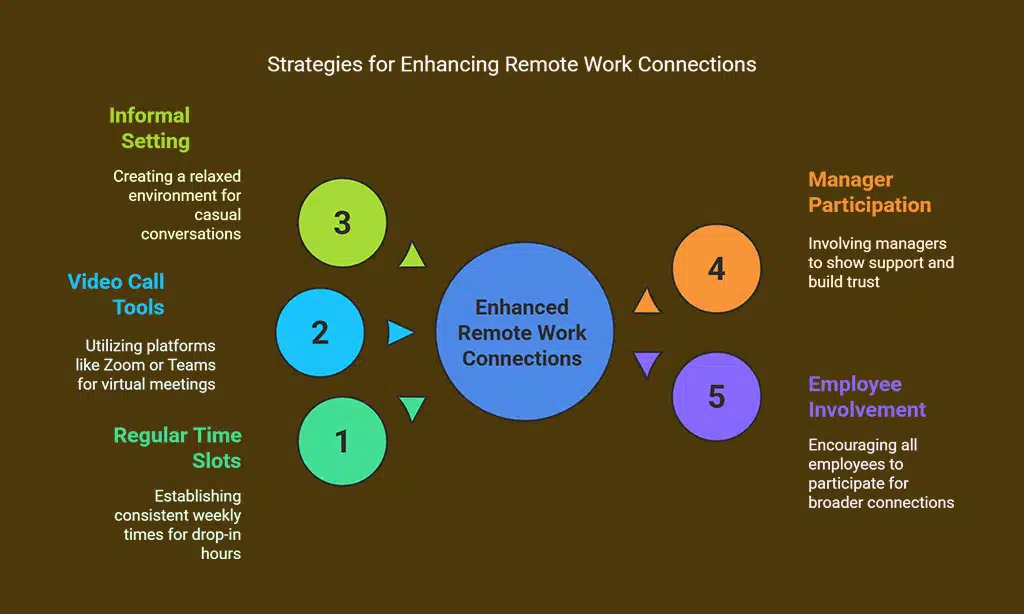
Drop-in office hours can help remote employees feel connected. They create a space for casual chats and sharing ideas.
- Pick a regular time each week for these hours. It helps employees know when they can join without scheduling a meeting.
- Use video call tools like Zoom or Teams to host the sessions. This makes it easy for everyone to join from anywhere.
- Keep the setting informal to reduce pressure on participants. Let them talk about work or personal topics freely during this time.
- Make sure managers also attend these sessions sometimes. This shows support and builds trust with team members.
- Encourage all employees to take part, no matter their role or team size. This helps foster more social connections across the group.
Drop-in hours reduce social isolation while working remotely and improve employee well-being!
Host live co-working sessions
Live co-working sessions can help remote employees feel connected. They create opportunities for informal chats and shared work moments.
- Invite team members to join a video call during work hours. This encourages casual conversation and builds social capital.
- Use tools like Zoom or Microsoft Teams for these group sessions. Make it easy for everyone to attend.
- Encourage participants to share progress on their tasks. This boosts employee engagement and reduces social isolation.
- Allow time for small talk or fun moments, like sharing a joke or a story. These keep the atmosphere light and enjoyable.
- Schedule co-working sessions weekly or bi-weekly to establish consistency and maintain well-being among remote employees.
- Include both structured work periods and breaks for interaction in the session format.
- Recognize participation by highlighting contributions during team meetings or through recognition programs.
Takeaways
Building connections remotely takes effort, but it’s worth it. Regular chats, shared moments, and clear communication keep teams close. Simple steps like virtual coffee breaks or group activities can fight isolation.
Stay intentional about maintaining bonds—it strengthens trust and teamwork. Strong relationships make remote work better for everyone!
FAQs on How to Maintain Social Connections While Working Remotely
Remote employees can join employee resource groups, participate in recognition programs, and engage in both asynchronous and synchronous activities to build social connections.
Employers can create virtual spaces for interaction, encourage work-life balance, and promote employee support through regular check-ins and team-building activities.
Social capital helps maintain strong relationships among colleagues, which boosts employee well-being and engagement even when people work remotely.
4. How do recognition programs improve connections for remote teams?
Recognition programs show appreciation for employees’ efforts, fostering a sense of belonging and strengthening bonds within the team.
5. What role do employers play in maintaining employee engagement during remote work?
Employers should focus on empathetic leadership by offering clear values, supporting employee well-being, and creating opportunities for meaningful interactions among their teams.