Facing a lawsuit against a large corporation can be an overwhelming experience. These entities have extensive legal resources, seasoned attorneys, and the ability to prolong litigation, making it challenging for an individual or small business to succeed.
However, understanding how to handle a lawsuit against a large corporation strategically can significantly increase your chances of obtaining justice.
This guide provides an in-depth roadmap to navigating corporate lawsuits, covering everything from the initial evaluation of your case to settlement negotiations and court proceedings.
By leveraging well-researched strategies, real-world examples, and practical insights, this guide will empower you with the knowledge needed to stand your ground against corporate legal teams.
What Constitutes a Lawsuit Against a Large Corporation?

Lawsuits against corporations often involve a wide range of legal disputes. Some of the most common types include:
- Employment disputes: Wrongful termination, workplace discrimination, unpaid wages, or harassment.
- Consumer protection claims: Misleading advertising, defective products, or breach of warranty.
- Personal injury claims: Workplace injuries, medical malpractice, or environmental harm caused by corporate negligence.
- Corporate fraud and misrepresentation: Securities fraud, unethical financial practices, or breaches of fiduciary duties.
Common Types of Corporate Lawsuits and Legal Grounds
| Type of Lawsuit | Legal Grounds | Potential Outcomes |
| Employment Disputes | Discrimination, retaliation, wrongful termination | Compensation, reinstatement, policy changes |
| Consumer Protection | False advertising, defective products | Refunds, recalls, regulatory fines |
| Personal Injury | Negligence, unsafe work conditions | Medical expenses, damages for pain and suffering |
| Corporate Fraud | Securities fraud, false reporting | Investor compensation, criminal penalties |
Key Challenges When Suing a Large Corporation
Corporations often deploy several tactics to avoid liability, including:
- Prolonged litigation: Delays in court hearings, excessive legal motions, and appeals to exhaust plaintiffs.
- Financial power imbalance: Large corporations can afford top-tier legal teams, making it hard for individuals to keep up with legal costs.
- Intimidation tactics: Sending cease-and-desist letters, counterclaims, or pressuring plaintiffs to drop the case.
- Public relations influence: Using media campaigns to shift public perception in their favor.
Common Corporate Defense Tactics and Counterstrategies
| Corporate Tactic | Description | How to Counter |
| Delaying Motions | Filing repeated motions to extend court proceedings | Request judicial intervention to expedite the process |
| Financial Pressure | Using prolonged litigation to drain plaintiff’s resources | Seek contingency-based legal representation |
| Intimidation | Threatening counterclaims or legal action | Document and report any threats to regulatory authorities |
| PR Manipulation | Using media influence to shape public opinion | Engage media strategically to present your side |
Steps to Take Before Filing a Lawsuit
Before deciding to file a lawsuit, it’s important to take certain preliminary steps to ensure that your case is as strong as possible. Here are some key actions to consider:
- Consult with an Attorney: A legal expert can provide advice on the viability of your case and help you understand the legal process.
- Gather Evidence: Collect all relevant documents, emails, contracts, and any other forms of evidence that support your claim.
- Consider Alternative Dispute Resolution (ADR): Mediation or arbitration may offer a quicker, less costly resolution compared to going to court.
- Evaluate Your Financial Situation: Lawsuits can be expensive, so it’s important to assess your financial ability to handle the costs of litigation.
Evaluating the Strength of Your Case
Before proceeding with legal action, it is crucial to determine whether your claim is strong enough to hold up in court. Ask yourself:
- Do you have documented evidence (emails, contracts, witness statements)?
- Are there past cases that set a legal precedent for your situation?
- Have you consulted legal experts to assess the case’s viability?
Checklist: What You Need to Build a Strong Case
- Signed contracts or agreements related to the dispute
- Emails, text messages, or call logs as evidence
- Witness testimonies to support claims
- Photos, videos, or recordings documenting wrongdoing
- Financial statements, receipts, or proof of financial damages
Seeking Legal Counsel
Choosing the right legal representation is critical. Consider:
- Hiring lawyers specializing in corporate litigation for better case representation.
- Exploring contingency fee arrangements, where attorneys only get paid if you win.
- Verifying lawyer credentials and previous case success rates before hiring.
Exploring Alternative Dispute Resolution (ADR) Options
- Mediation: A neutral mediator helps both parties reach a mutually beneficial agreement.
- Arbitration: A binding process where an arbitrator decides the case’s outcome.
- Negotiation: Direct settlement discussions to resolve disputes outside court.
Pros and Cons of ADR Methods
| ADR Method | Pros | Cons |
| Mediation | Faster, cost-effective | Non-binding unless agreed |
| Arbitration | Legally binding, private | Limited appeal rights |
| Negotiation | Informal, flexible | May not lead to fair resolution |
Filing a Lawsuit Against a Large Corporation
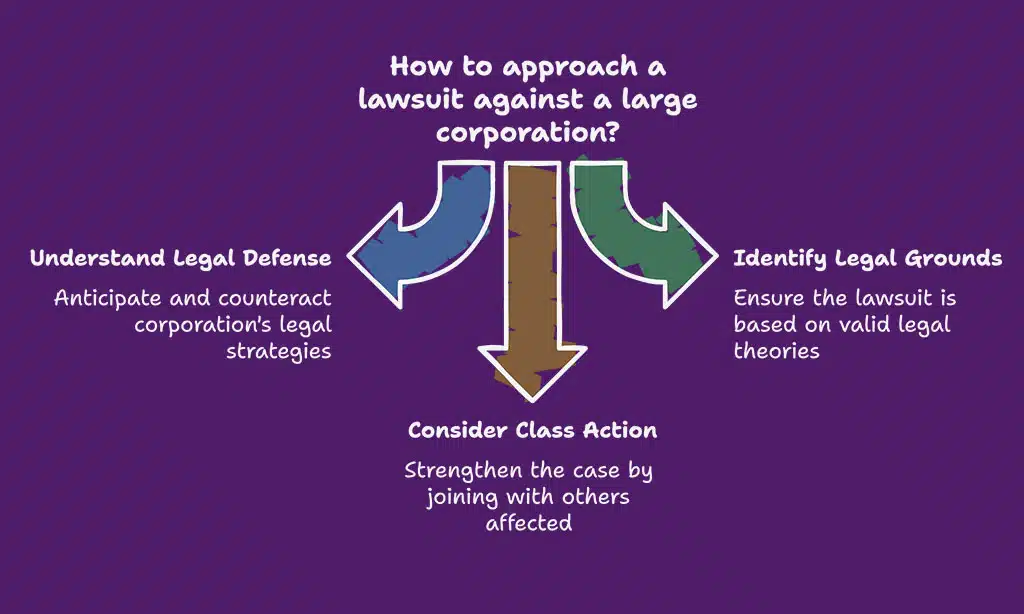
Filing a lawsuit against a large corporation presents unique challenges due to their size, resources, and legal teams. However, with the right approach, it’s possible to hold a corporation accountable. Here are some essential steps:
- Understand the Corporation’s Legal Defense: Large corporations typically have extensive legal teams that will mount a strong defense. Understanding their potential defenses is crucial.
- Identify the Correct Legal Grounds: Ensure that your claim is based on a valid legal theory such as breach of contract, negligence, or wrongful termination.
- Class Action Considerations: If multiple individuals have been affected by the corporation’s actions, you may be eligible to file a class-action lawsuit, which can increase the strength of your case.
- Seek Legal Counsel Experienced in Corporate Lawsuits: Having an attorney with experience in dealing with corporations can greatly increase your chances of success.
Initiating the Legal Process
Once you’ve decided to move forward with your lawsuit, initiating the legal process requires a clear and structured approach:
- File a Complaint: Your first step will be to file a formal complaint with the court, which outlines your legal claims and the relief you seek.
- Serve the Corporation with a Summons: After filing your complaint, you must notify the corporation of the lawsuit through formal service of process.
- Pre-Litigation Negotiations: In many cases, a corporation may offer to settle the case before it goes to trial. Evaluate whether the settlement offer is fair or if proceeding with litigation is in your best interest.
- Discovery Process: The discovery phase allows both parties to gather information and evidence from each other. Expect the corporation to use its resources to conduct thorough investigations.
- Court Filings and Deadlines: Ensure that all necessary filings are submitted on time and in accordance with court procedures to avoid delays or complications in your case.
Corporate Legal Defense Tactics
Corporations often use:
- Delaying tactics to extend litigation.
- Challenging jurisdiction to dismiss the case.
- Counterclaims to intimidate plaintiffs into withdrawing.
Table: How Corporations Defend Themselves and How to Counteract
| Defense Strategy | Corporate Justification | Counteracting Approach |
| Motion to Dismiss | Claims lack merit | Ensure well-documented allegations |
| Settlement Pressure | Offer lowball settlements | Consult legal experts before accepting |
| Counterclaims | File lawsuits against plaintiffs | Prepare defensive legal strategy |
Navigating the litigation process can be complex and time-consuming, especially if you’re unfamiliar with the legal system. It’s essential to follow a clear and strategic path to increase your chances of success. The process starts with pre-trial motions and hearings, where both sides may file motions to dismiss the case or exclude certain evidence. These hearings help set the parameters for the case moving forward.
As the case progresses, both parties will prepare for trial by organizing evidence, preparing witness testimonies, and developing legal arguments. The trial itself is the stage where each party presents its case before a judge or jury. During this time, both sides will call witnesses, present evidence, and make legal arguments.
If the outcome is not in your favor, you may have the option to appeal the decision. Additionally, post-trial motions can be filed to challenge aspects of the judgment or request a new trial. Understanding these phases helps ensure that you are adequately prepared for the entirety of the litigation process.
Discovery Phase: Gathering and Exchanging Evidence
The discovery phase is one of the most critical stages in litigation, as it involves the gathering and sharing of evidence between both parties. This process begins with document requests, where each side requests relevant documents from the other party. These documents can include contracts, emails, financial statements, and any other records related to the case.
Depositions also play a crucial role during discovery. Witnesses, including the opposing party and third parties, are questioned under oath to clarify facts and prepare for trial. Interrogatories are written questions sent to the opposing party that must be answered under oath, and they help gather information and narrow down the issues at hand.
Another component of discovery is requests for admissions, where one party asks the other to admit certain facts. This can streamline the case and focus on the contested issues.
Finally, expert testimony may be used if necessary. Experts, such as medical professionals, forensic accountants, or engineers, may be brought in to provide their professional opinions on complex issues relevant to the case.
Settlement vs. Trial: What’s the Best Strategy?
Corporations often push for settlements to avoid lengthy trials. Plaintiffs should:
- Consider the pros and cons before accepting any offer.
- Assess whether the settlement covers legal costs and damages.
- Weigh the risk-reward of taking the case to trial.
Final Words
Handling a lawsuit against a large corporation requires strategic planning, a strong legal team, and persistence. Corporations may seem invincible, but with thorough preparation, effective legal representation, and public awareness, plaintiffs can achieve justice.
By understanding the process, anticipating corporate defense tactics, and exploring alternative dispute resolution, individuals can maximize their chances of a favorable outcome.
If you’re considering legal action against a corporation, consult with experienced attorneys and leverage all available resources to strengthen your case. Justice is attainable with the right strategy and support.