If you’ve suffered an injury due to someone else’s negligence in Australia, you may be entitled to compensation. However, winning a personal injury lawsuit is not just about filing a claim—it’s about proving specific legal elements.
To ensure success, you must establish that the other party was responsible for your injury and that you suffered damages as a result.
This article breaks down the 8 things you must prove to win a personal injury lawsuit in Australia, helping you navigate the legal process with confidence.
We’ll also provide real-world examples, key details in tables, and actionable insights to strengthen your case.
Understanding Personal Injury Lawsuits in Australia
A personal injury lawsuit is a legal dispute where an injured person seeks compensation from the party responsible for their harm.
These claims can arise from various incidents, including car accidents, workplace injuries, medical negligence, and public liability cases.
Compensation can cover medical expenses, lost wages, and emotional suffering, making these claims essential for financial recovery.
Why Proving Your Case Is Crucial for Compensation
Australian personal injury laws require claimants to provide clear evidence to support their case. Without adequate proof, the court or insurance companies may reject your claim, significantly reducing your chances of receiving fair compensation.
Understanding the burden of proof and collecting substantial evidence is key to winning your case.
Legal Basis for Personal Injury Claims in Australia
Australia follows a fault-based system for personal injury claims, meaning the injured party must demonstrate that another person or entity is legally responsible.
The legal principles vary by state, but the fundamental requirements remain consistent.
Common Types of Personal Injury Cases
| Case Type | Description |
| Motor Vehicle Accidents | Injuries resulting from car, bike, or pedestrian collisions. |
| Workplace Injuries | Work-related injuries eligible for WorkCover claims. |
| Medical Negligence | Cases of misdiagnosis, surgical errors, or incorrect treatment. |
| Public Liability Claims | Injuries in public spaces due to unsafe conditions. |
| Product Liability | Harm caused by defective or dangerous products. |
8 Things You Must Prove to Win Your Case
Winning a personal injury lawsuit in Australia is not just about stating that you have been injured—it is about proving legal elements that establish the liability of the responsible party.
Each of these elements plays a crucial role in ensuring that your claim stands strong in court. Whether it’s a car accident, workplace injury, or medical negligence, demonstrating these factors can make the difference between a successful claim and a dismissed one.
1. Duty of Care – Establishing the Defendant’s Responsibility
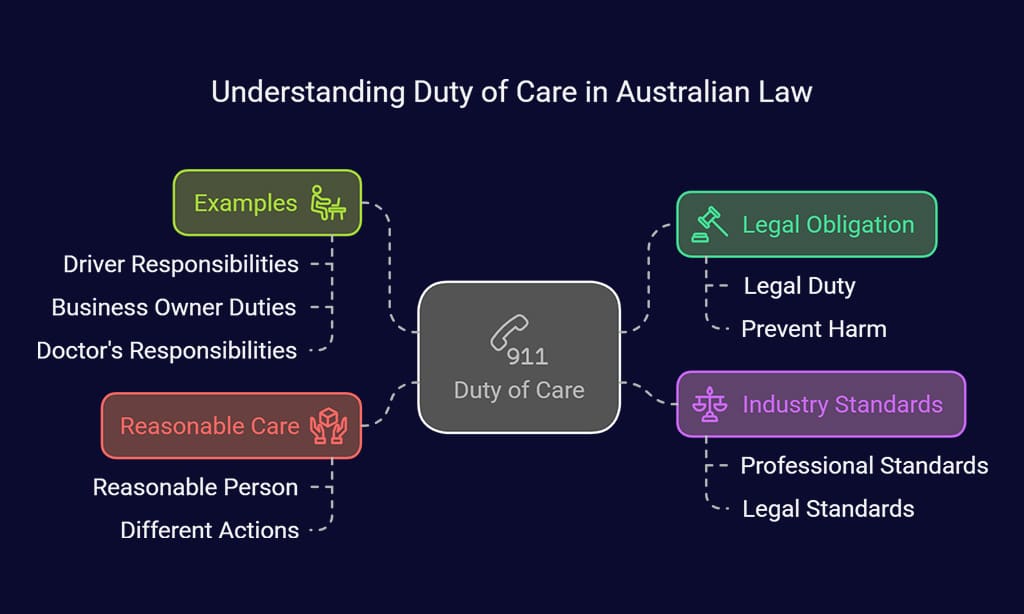
In Australian law, duty of care refers to an obligation imposed on individuals or entities to take reasonable steps to avoid causing harm to others. It forms the foundation of personal injury claims and applies across various situations, including workplaces, roads, public spaces, and healthcare settings.
This duty is not absolute but is measured against what a reasonable person in a similar situation would do.
Failing to uphold duty of care can lead to legal liability, making it crucial for claimants to establish that the defendant had a clear responsibility to act with caution and failed to do so.
How to Prove Duty of Care
| Key Aspect | Details |
| Legal Obligation | The defendant had a legal duty to prevent harm. |
| Industry Standards | Comparing actions against professional and legal standards. |
| Reasonable Care | Whether a reasonable person would have acted differently. |
Examples of Duty of Care
- A driver must obey traffic laws to prevent accidents.
- A business owner must ensure their premises are free from hazards.
- A doctor must provide appropriate medical treatment.
2. Breach of Duty – Showing Negligence or Wrongdoing
Once duty of care is established, you must prove the defendant breached this duty by acting negligently or carelessly.
This means they failed to take opportunesteps to prevent harm, either through direct actions or omissions.
The standard for determining a breach often depends on whether the defendant’s conduct fell below what a reasonable person would have done in a similar situation.
Factors That Help Prove a Breach of Duty
| Factor | Explanation |
| Failure to Act Reasonably | The defendant’s actions were not aligned with what a cautious person would do. |
| Violation of Safety Laws | Breaking legal regulations, such as traffic laws or workplace safety standards. |
| Foreseeability of Harm | The defendant should have reasonably predicted the potential harm their actions could cause. |
| Expert Testimony | Professionals providing insight on how the defendant’s conduct deviated from industry standards. |
A breach of duty can take many forms, including reckless behavior, failing to address a known hazard, or not providing adequate warnings.
For example, a property owner failing to fix a broken staircase despite multiple complaints may be considered negligent.
Similarly, a doctor prescribing incorrect medication that leads to severe health complications may also constitute a breach of duty.
Collecting strong evidence, such as reports, photographs, and expert opinions, strengthens your case and enhances the likelihood of a successful claim.
Key Evidence to Prove Breach of Duty
| Evidence Type | Importance |
| Witness Statements | Confirms negligence from third-party accounts. |
| CCTV Footage | Provides visual proof of the incident. |
| Incident Reports | Official records from authorities. |
| Expert Opinions | Professional testimony supporting the claim. |
3. Causation – Linking Negligence to Your Injury
You must demonstrate that the defendant’s actions (or inaction) directly caused your injury by establishing a clear link between their negligence and the harm you suffered.
This involves presenting compelling evidence, such as medical records, expert testimonies, accident reports, and witness statements, to prove that without the defendant’s actions, the injury would not have occurred.
Courts often consider factors such as pre-existing medical conditions, the timeline of events, and any intervening causes that may have contributed to the injury.
Strengthening your claim with documented proof and expert evaluations will significantly increase your chances of securing compensation.
Understanding Causation
| Legal Concept | Explanation |
| Cause in Fact | The injury would not have occurred “but for” the defendant’s negligence. |
| Proximate Cause | The harm was a foreseeable consequence of their actions. |
4. Proof of Injury – Medical Evidence and Documentation
Medical evidence is crucial to validating your claim. You must present clear documentation of your injuries and how they affect your daily life. This includes obtaining medical reports from doctors, hospital records, diagnostic tests, prescriptions, and rehabilitation plans.
Additionally, keeping a personal health journal detailing pain levels, mobility restrictions, and daily limitations can further support your case. Independent medical examinations may also be required to validate claims, particularly in disputed cases.
The stronger your medical evidence, the higher the likelihood of proving the extent of your injury and securing fair compensation.
Essential Medical Evidence
| Document Type | Purpose |
| Doctor’s Reports | Describes severity and cause of injuries. |
| X-rays & Scans | Provides visual medical proof. |
| Rehabilitation Plans | Shows long-term treatment needs. |
5. Economic Losses – Demonstrating Financial Impact

Your injury may lead to financial losses, including medical bills, lost wages, and rehabilitation costs. Beyond immediate expenses, injuries can also result in long-term financial burdens such as ongoing medical treatments, therapy, home modifications, and even a reduced earning capacity.
Additionally, unexpected costs like transportation to medical appointments and hiring in-home care can further strain your finances.
Keeping detailed records of all these expenses is crucial in strengthening your compensation claim.
How to Prove Economic Losses
| Financial Document | Purpose |
| Pay Stubs & Tax Returns | Verifies lost income. |
| Medical Receipts | Tracks treatment costs. |
| Financial Reports | Calculates overall economic impact. |
6. Non-Economic Damages – Pain and Suffering Claims
Unlike economic losses, non-economic damages compensate for pain, suffering, and reduced quality of life. These damages address the emotional and psychological impact of an injury, including anxiety, depression, loss of enjoyment in life, and trauma.
While they do not have a fixed monetary value like medical expenses, courts consider various factors when determining compensation.
Factors Influencing Non-Economic Damage Compensation
| Factor | Explanation |
| Severity of Injury | More severe injuries typically result in higher compensation. |
| Impact on Daily Life | Loss of mobility or independence can increase the claim value. |
| Emotional & Psychological Trauma | PTSD, depression, and anxiety affect compensation amounts. |
| Duration of Suffering | Long-term or permanent conditions may warrant greater compensation. |
| Precedent Cases | Past similar cases help determine reasonable compensation ranges. |
Since non-economic damages are subjective, maintaining records such as medical evaluations, therapy reports, and personal journals can significantly strengthen your case.
Methods to Prove Non-Economic Damages
| Proof Type | Explanation |
| Psychological Reports | Documents emotional distress. |
| Journals | Personal records of pain levels. |
| Witness Testimony | Statements from family and friends. |
In some cases, the defendant may argue that you were partially at fault. This is known as contributory negligence, and it can reduce your compensation based on your percentage of responsibility in the incident.
Australian courts apply the principle of “comparative negligence,” meaning that if you were partly responsible for your injuries, your compensation may be proportionally reduced.
How Contributory Negligence Affects Compensation
| Degree of Fault | Compensation Reduction |
| 10% at fault | Compensation reduced by 10% |
| 25% at fault | Compensation reduced by 25% |
| 50% at fault | Compensation reduced by 50% |
| 75% or more at fault | Compensation significantly reduced or denied |
To counter such claims, you need strong evidence proving that the defendant was the primary cause of your injuries. Working with a legal expert can help challenge contributory negligence arguments and maximize your settlement.
8. Statute of Limitations – Filing Your Claim on Time
Every personal injury claim in Australia must be filed within a specific time limit, which varies by state and depends on the type of injury and circumstances of the case.
Missing the deadline can result in losing the right to claim compensation. The statute of limitations typically starts from the date of the injury or when the injury was discovered.
It’s crucial to seek legal advice promptly to ensure compliance with the legal timeframe and improve the chances of a successful claim.
| State | Time Limit |
| NSW | 3 years |
| VIC | 3 years |
| QLD | 3 years |
| WA | 3 years |
| SA | 3 years |
| TAS | 3 years |
| NT | 3 years |
| ACT | 3 years |
Takeaways
Winning a personal injury lawsuit in Australia requires proving 8 key elements, from duty of care to financial and emotional damages.
By understanding these legal principles, gathering solid evidence, and seeking expert legal assistance, you can strengthen your case and maximize your compensation.
If you or a loved one have suffered an injury due to someone else’s negligence, consult a personal injury lawyer today to ensure you get the justice you deserve.