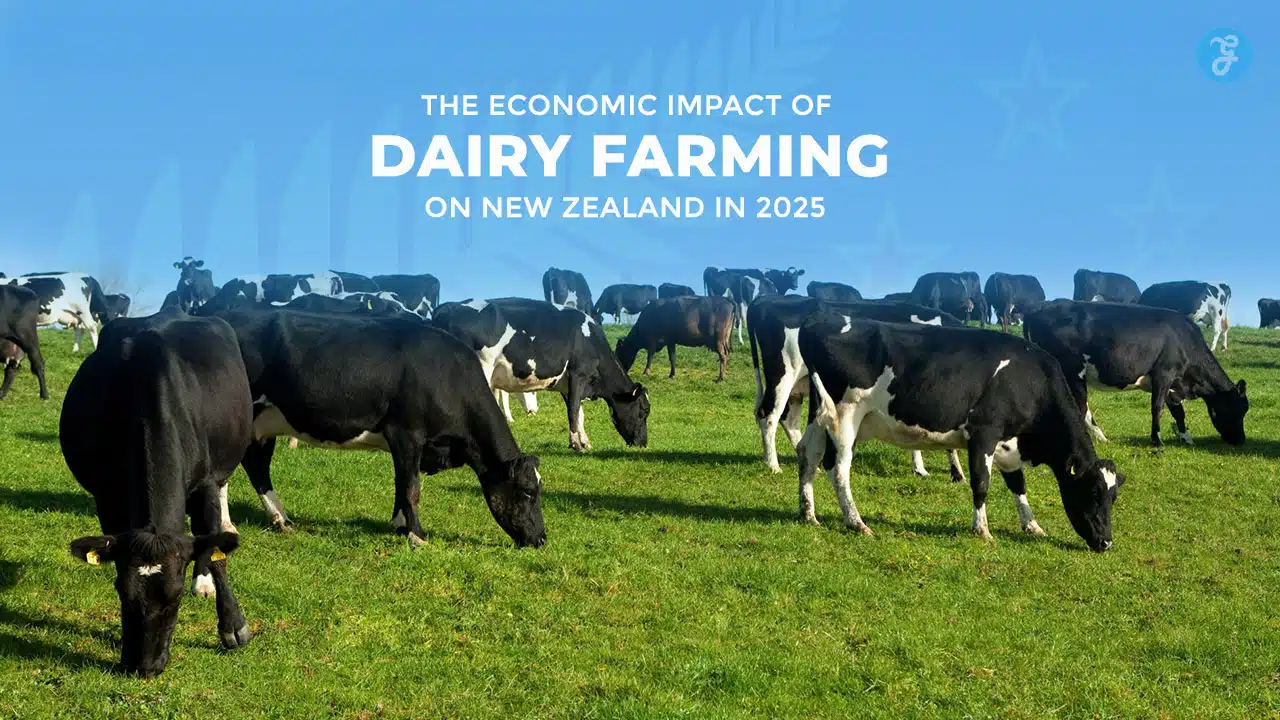
Dairy farming has long been a cornerstone of New Zealand’s economy, representing a significant portion of the nation’s agricultural exports and GDP. As a global leader in dairy production, New Zealand’s favorable climate, rich pastureland, and innovative farming techniques have given it a competitive edge.
The year 2025 marks a pivotal moment for this vital industry, as it navigates evolving challenges such as climate change and market volatility while seizing opportunities for technological advancements. With a focus on sustainable practices and export leadership, the economic impact of dairy farming on New Zealand is profound and far-reaching.
This article delves into the multifaceted economic impact of dairy farming on New Zealand, exploring its contributions, challenges, innovations, and future potential.
Economic Contributions of Dairy Farming
Direct Contributions
Dairy farming is a key driver of New Zealand’s GDP, contributing approximately $20 billion annually to the economy. This sector accounts for nearly one-third of the country’s total exports, making it a linchpin of New Zealand’s trade relationships.
- Employment Generation: Over 40,000 individuals are directly employed in dairy farming, with thousands more working in related sectors such as processing and distribution. Rural communities, in particular, benefit from job creation and economic stimulation, helping to prevent urban migration.
- Export Revenue: Dairy products like milk powder, butter, and cheese are exported to over 150 countries, with China, the United States, and the European Union being key markets. The consistent demand for high-quality dairy ensures a stable revenue stream, underscoring the economic impact of dairy farming on New Zealand.
| Key Export Destinations | Main Dairy Products | Revenue Contribution |
| China | Milk powder | $7 billion annually |
| United States | Butter, cheese | $3 billion annually |
| European Union | Specialty dairy products | $2 billion annually |
Indirect Contributions
Beyond direct financial input, dairy farming supports numerous industries and fosters economic growth:
- Supply Chain Impact: Industries like transportation, equipment manufacturing, and packaging thrive due to the demand generated by dairy farming. This creates a ripple effect, benefiting businesses across multiple sectors.
- Global Supply Chain Integration: As a global leader in dairy exports, New Zealand influences global market trends, driving demand for high-quality dairy products. This interconnectedness promotes economic resilience and stability, further emphasizing the economic impact of dairy farming on New Zealand.
| Industry Benefiting | Type of Support | Economic Contribution |
| Transportation | Logistics for exports | Boosts local freight services |
| Equipment Manufacturing | Dairy machinery production | Increased production demand |
| Packaging | Dairy product packaging | Growth in material suppliers |
Challenges Facing Dairy Farming in 2025
Environmental and Sustainability Issues
Environmental sustainability remains a pressing concern for the industry:
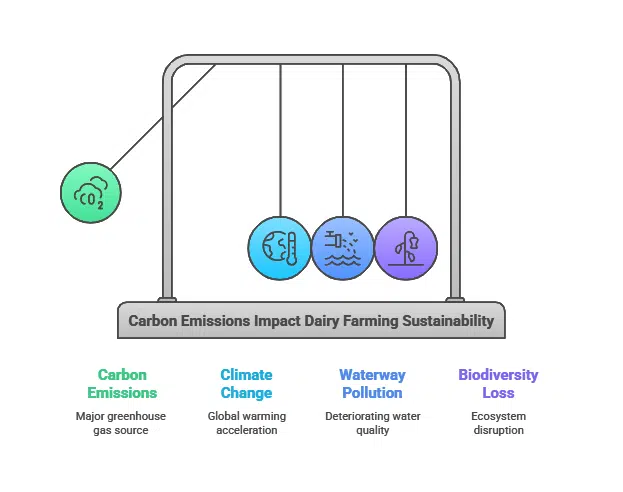
- Carbon Emissions: Dairy farming is responsible for 48% of New Zealand’s agricultural greenhouse gas emissions, posing significant challenges under global climate agreements. Reducing these emissions is a key priority for the sector.
- Water Usage: Intensive farming practices have led to waterway pollution and increased scrutiny from environmental groups. Programs promoting better irrigation techniques and waste management are gaining momentum to mitigate the environmental challenges linked to the economic impact of dairy farming on New Zealand.
| Environmental Challenge | Impact | Proposed Solutions |
| Carbon emissions | Climate change contribution | Implement methane-reduction strategies |
| Waterway pollution | Declining water quality | Adopt nutrient management plans |
| Biodiversity loss | Impact on ecosystems | Promote agroforestry practices |
Economic Pressures
- Price Volatility: Fluctuations in global milk prices directly impact farmers’ profitability. For instance, in recent years, global dairy prices have ranged between $2,500 and $4,000 per metric ton, making income prediction difficult.
- Operational Costs: Rising costs for feed, labor, and compliance with environmental regulations strain the sector, especially for smaller farms struggling to achieve economies of scale. These financial pressures highlight the delicate balance of maintaining the economic impact of dairy farming on New Zealand.
| Economic Challenge | Example | Solution |
| Price volatility | Unpredictable global market trends | Introduce price stabilization policies |
| Rising operational costs | Increased feed prices | Provide subsidies for essential inputs |
Opportunities for Growth and Innovation
Embracing Sustainable Practices
Sustainability is no longer optional for dairy farmers; it is essential for long-term success:
- Eco-Friendly Farming Techniques: Techniques such as rotational grazing, precision agriculture, and regenerative farming are gaining traction. These practices improve soil health, reduce emissions, and enhance overall productivity.
- Case Study: A Waikato dairy cooperative reduced water usage by 30% using advanced irrigation systems, showcasing the potential of sustainable practices. These efforts highlight how sustainability initiatives amplify the economic impact of dairy farming on New Zealand.
| Sustainability Practice | Benefit | Example in Action |
| Rotational grazing | Improved pasture quality | Adopted widely in Canterbury |
| Advanced irrigation systems | Water conservation | Waikato cooperative success |
| Regenerative farming | Enhanced soil health | Pilot programs in Southland |
Leveraging Technology in Dairy Farming
Technological advancements are revolutionizing the dairy sector:
- Artificial Intelligence (AI): AI-powered monitoring systems improve herd health and milk production efficiency, helping farmers detect issues early and reduce losses.
- Internet of Things (IoT): Smart sensors monitor soil health, optimize feed distribution, and reduce waste, leading to more sustainable farming practices. By integrating these technologies, the economic impact of dairy farming on New Zealand becomes more efficient and scalable.
| Technology | Functionality | Impact |
| Artificial Intelligence | Herd health monitoring | Early detection of illnesses |
| IoT Sensors | Soil and feed monitoring | Enhanced resource efficiency |
| Automation | Robotic milking systems | Reduced labor dependency |
A Comparative Analysis of Dairy Farming’s Impact
Comparing New Zealand to Other Leading Dairy Producers
New Zealand competes with countries like Australia, the Netherlands, and the United States in the global dairy market:
- Production Efficiency: New Zealand boasts one of the highest milk yields per hectare, reflecting its advanced farming techniques. By comparison, Dutch farms focus on high-value specialty products.
- Export Leadership: While countries like the Netherlands focus on high-value dairy products, New Zealand’s scale and quality make it a dominant exporter, cementing the economic impact of dairy farming on New Zealand’s global standing.
| Country | Focus Area | Global Market Share |
| New Zealand | High-scale exports | 30% |
| Netherlands | Specialty dairy products | 15% |
| United States | Mass production & diversity | 20% |
Regional Economic Impact Within New Zealand
The economic benefits of dairy farming vary across regions:
- Rural Areas: Regions like Waikato and Canterbury thrive economically due to high dairy production, with local businesses benefitting from the spillover effects.
- Urban Linkages: Urban centers benefit from job creation and secondary industries linked to dairy processing, such as food technology startups and logistics firms. These regional variations emphasize the localized economic impact of dairy farming on New Zealand.
| Region | Economic Contribution | Key Activities |
| Waikato | High production rates | Pasture-based dairy farming |
| Canterbury | Export hub | Processing and packaging facilities |
Policy and Governmental Support
Current Policies Impacting Dairy Farming
The New Zealand government plays an active role in supporting the dairy industry:
- Subsidies: Financial incentives help farmers adopt sustainable practices and manage costs.
- Regulations: Policies aimed at reducing carbon footprints and enhancing export competitiveness are in place, ensuring that New Zealand’s dairy products remain globally desirable.
Recommendations for Future Policy Improvements
- Support for Small-Scale Farmers: Providing grants and technical assistance can help smaller operations thrive in a competitive market.
- Incentives for Innovation: Tax benefits for investing in technology and sustainability can drive industry growth and encourage cutting-edge advancements, maximizing the economic impact of dairy farming on New Zealand.
| Policy Focus | Goal | Proposed Action |
| Support for small farmers | Economic equity | Introduce financial grants |
| Sustainability incentives | Environmental protection | Offer tax deductions |
Final Thoughts: Shaping the Future of Dairy Farming in New Zealand
Dairy farming’s economic impact on New Zealand in 2025 is undeniable. While the industry faces significant challenges, including environmental concerns and market volatility, it also has immense opportunities to lead through innovation and sustainability.
By leveraging technology, embracing eco-friendly practices, and fostering supportive policies, New Zealand’s dairy sector can continue to be a global powerhouse, driving economic growth and ensuring a sustainable future.
The economic impact of dairy farming on New Zealand will remain a defining factor in the nation’s prosperity and global reputation.