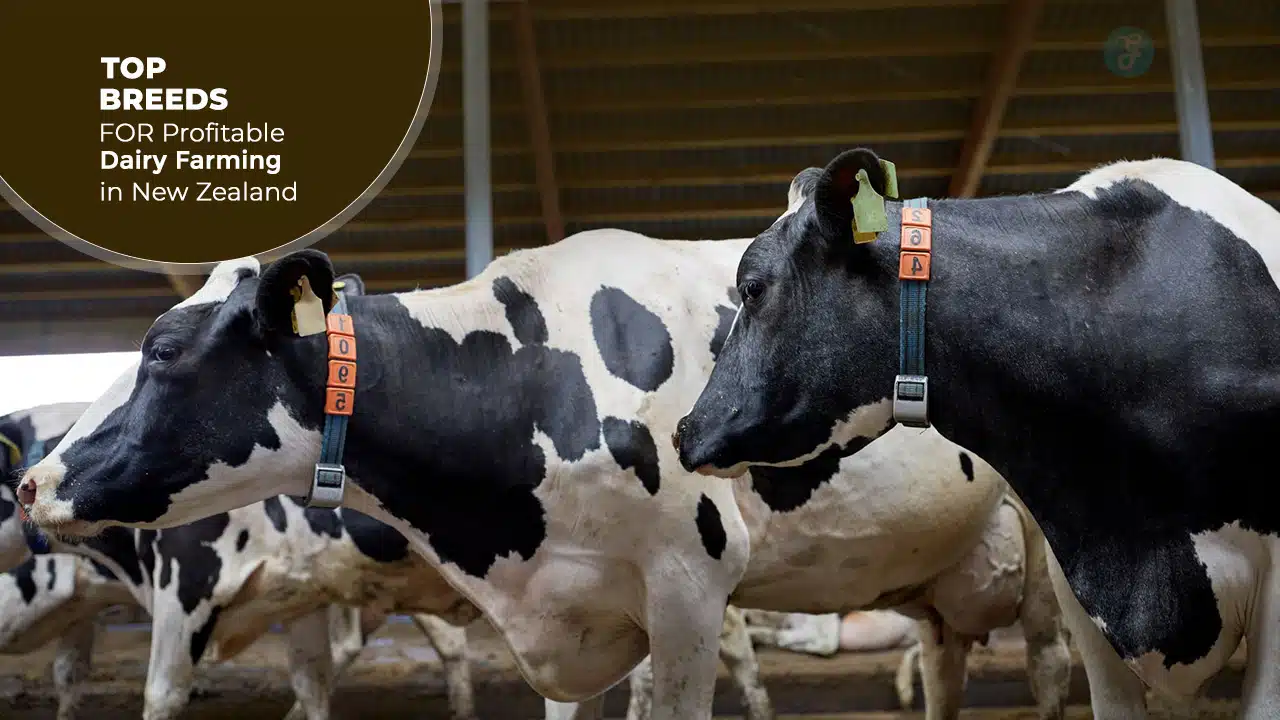
New Zealand is renowned for its thriving dairy industry, contributing significantly to the nation’s economy and global dairy exports.
Choosing the right dairy breed is one of the most crucial decisions a farmer can make, as it directly impacts milk production, quality, feed efficiency, and overall profitability.
This comprehensive guide explores the top 10 dairy breeds for profitable farming in New Zealand, offering valuable insights to help farmers optimize their operations.
Why Breed Selection is Crucial for Dairy Farming Success?
The success of any dairy farm depends largely on the productivity and efficiency of its herd. Different breeds have distinct characteristics that influence their adaptability, milk yield, and profitability.
Key Factors to Consider When Choosing a Dairy Breed:
- Milk Yield and Quality: Higher milk production and better fat/protein content ensure maximum returns.
- Feed Efficiency: Efficient feed-to-milk conversion reduces operational costs.
- Adaptability: Breeds that thrive in New Zealand’s diverse climates ensure consistent performance.
- Longevity and Health: Disease resistance and longer productive lifespans contribute to lower replacement costs.
- Purpose: Some breeds are dual-purpose, offering both milk and meat, while others specialize in milk production.
By focusing on these criteria, New Zealand farmers can make informed decisions that lead to sustainable and profitable dairy farming.
Top 10 Dairy Breeds for Farming in New Zealand
| Breed | Milk Yield (Liters/Year) | Butterfat (%) | Protein (%) | Feed Efficiency | Adaptability |
| Holstein Friesian | 9,000+ | 3.7 | 3.2 | Moderate | High |
| Jersey | 5,500–6,000 | 4.8 | 3.8 | High | High |
| Ayrshire | 6,500–7,000 | 4.1 | 3.4 | Moderate | High |
| Guernsey | 5,000–6,500 | 4.5 | 3.6 | Moderate | High |
| KiwiCross | 6,000–7,500 | 4.2 | 3.7 | High | High |
| Brown Swiss | 7,000+ | 4.0 | 3.5 | Moderate | High |
| Milking Shorthorn | 5,000–6,000 | 4.2 | 3.3 | High | High |
| Fleckvieh | 6,500–7,500 | 4.0 | 3.5 | Moderate | High |
| Normande | 5,500–6,500 | 4.4 | 3.6 | High | Moderate |
| Dairy Simmental | 7,000–8,000 | 4.0 | 3.4 | Moderate | Moderate |
1. Holstein Friesian
The Holstein Friesian is the world’s most popular dairy breed, known for its unparalleled milk production. These cows are large and require higher feed inputs, but their output makes them a top choice for commercial farming.
- Characteristics: Large frame, black-and-white coat.
- Pros: High milk yield, averaging over 9,000 liters annually.
- Cons: Higher feed requirements and susceptibility to certain diseases.
- Adaptability: Performs well in New Zealand’s temperate climate, especially with access to high-quality pastures.
| Key Metrics for Holstein Friesian | Details |
| Milk Yield | 9,000+ liters/year |
| Butterfat Content | 3.7% |
| Protein Content | 3.2% |
| Feed Efficiency | Moderate |
| Climate Adaptability | High |
2. Jersey
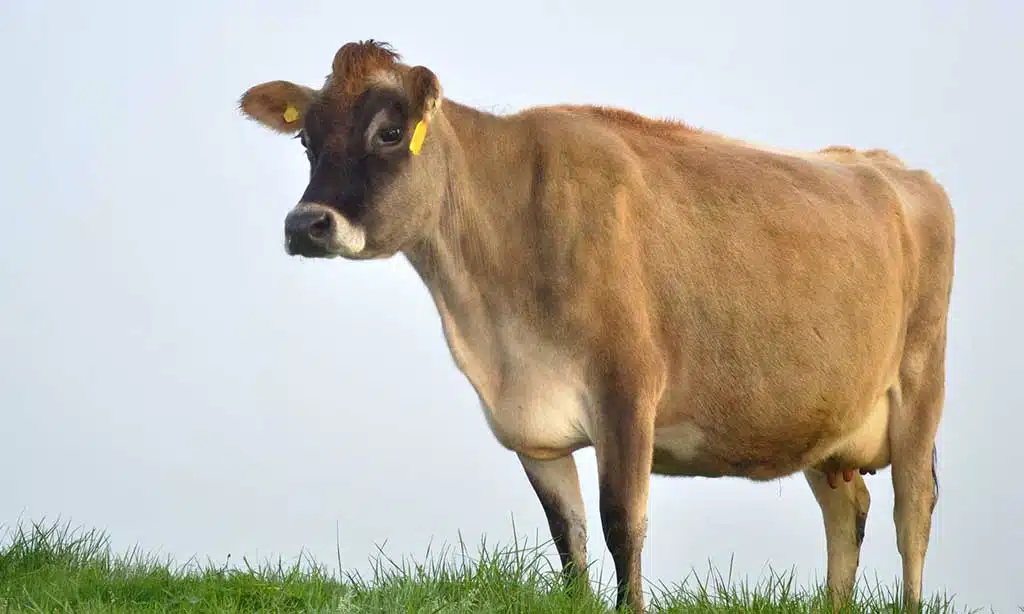
Renowned for producing milk with high butterfat and protein content, Jersey cows are a favorite among New Zealand farmers. Their smaller frame makes them cost-efficient to feed, while their milk commands premium prices in specialized markets.
- Characteristics: Smaller frame, light brown coat.
- Pros: Efficient feed conversion, low maintenance, and excellent fertility rates.
- Cons: Lower milk volume compared to Holsteins.
- Best For: Farmers targeting premium dairy markets.
| Key Metrics for Jersey | Details |
| Milk Yield | 5,500–6,000 liters/year |
| Butterfat Content | 4.8% |
| Protein Content | 3.8% |
| Feed Efficiency | High |
| Climate Adaptability | High |
3. Ayrshire
Ayrshires are appreciated for their resilience and adaptability to various farming systems. Their milk strikes a balance between quality and quantity, making them ideal for mixed farms.
- Characteristics: Medium-sized, reddish-brown and white coat.
- Pros: Robust health, moderate milk production with good quality.
- Cons: Slightly lower production levels than Holsteins or Jerseys.
- Adaptability: Thrives in hilly terrains and variable climates.
| Key Metrics for Ayrshire | Details |
| Milk Yield | 6,500–7,000 liters/year |
| Butterfat Content | 4.1% |
| Protein Content | 3.4% |
| Feed Efficiency | Moderate |
| Climate Adaptability | High |
4. Guernsey
Guernseys produce rich, golden-yellow milk that stands out for its high beta-carotene content. These cows are ideal for farms targeting premium dairy products and health-conscious consumers.
- Characteristics: Medium-sized, fawn-and-white coat.
- Pros: High-quality milk suitable for specialized dairy products.
- Cons: Moderate milk yield.
- Best Use: Farms focusing on niche markets for nutrient-rich dairy.
| Key Metrics for Guernsey | Details |
| Milk Yield | 5,000–6,500 liters/year |
| Butterfat Content | 4.5% |
| Protein Content | 3.6% |
| Feed Efficiency | Moderate |
| Climate Adaptability | High |
5. Brown Swiss
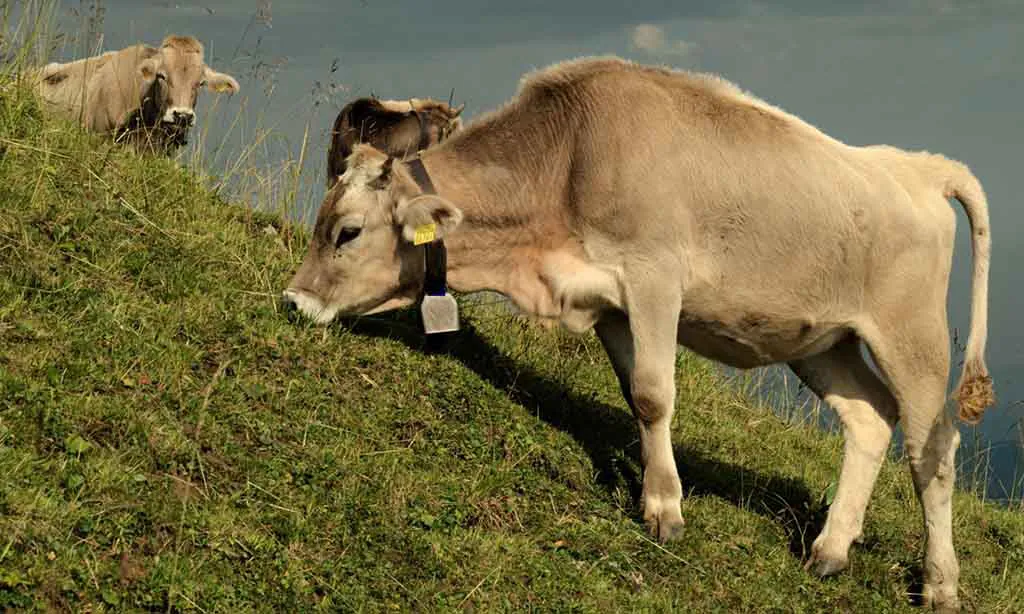
Known for their strength and longevity, Brown Swiss cows are ideal for long-term productivity. Their milk’s protein-to-fat ratio is excellent for cheese production, making them highly versatile.
- Characteristics: Large frame, brown coat.
- Pros: High protein-to-fat ratio, excellent for cheese production.
- Cons: Slower maturation compared to other breeds.
- Adaptability: Suited for both intensive and extensive farming systems.
| Key Metrics for Brown Swiss | Details |
| Milk Yield | 7,000+ liters/year |
| Butterfat Content | 4.0% |
| Protein Content | 3.5% |
| Feed Efficiency | Moderate |
| Climate Adaptability | High |
6. KiwiCross (Friesian x Jersey)
KiwiCross is a hybrid breed combining the best traits of Friesians and Jerseys. This crossbreed is highly popular in New Zealand for its adaptability, fertility, and balanced milk production.
- Characteristics: Variable coat color, medium-sized frame.
- Pros: Balanced milk production and butterfat content, good fertility.
- Cons: Inconsistent traits in offspring.
- Best For: Farms seeking versatility and adaptability.
| Key Metrics for KiwiCross | Details |
| Milk Yield | 6,000–7,500 liters/year |
| Butterfat Content | 4.2% |
| Protein Content | 3.7% |
| Feed Efficiency | High |
| Climate Adaptability | High |
7. Milking Shorthorn
Milking Shorthorns are dual-purpose, offering both milk and meat production. This versatility makes them an excellent choice for farmers aiming to diversify income streams.
- Characteristics: Medium frame, red, white, or roan coat.
- Pros: High resilience, adaptability to diverse climates.
- Cons: Moderate milk production.
- Ideal For: Farms seeking additional income from beef sales.
| Key Metrics for Milking Shorthorn | Details |
| Milk Yield | 5,000–6,000 liters/year |
| Butterfat Content | 4.2% |
| Protein Content | 3.3% |
| Feed Efficiency | High |
| Climate Adaptability | High |
8. Fleckvieh
Fleckviehs excel as dual-purpose breeds, combining high milk solids with strong health and disease resistance. They are particularly valued for their adaptability to mixed farming systems.
- Characteristics: Large frame, white and red coat.
- Pros: Excellent disease resistance, strong body structure.
- Cons: Slightly lower milk yield compared to specialized dairy breeds.
- Adaptability: Performs well in mixed farming systems.
| Key Metrics for Fleckvieh | Details |
| Milk Yield | 6,500–7,500 liters/year |
| Butterfat Content | 4.0% |
| Protein Content | 3.5% |
| Feed Efficiency | Moderate |
| Climate Adaptability | High |
9. Normande
Normandes are valued for their exceptional milk quality, ideal for butter and cheese production. Their adaptability to diverse climates makes them a reliable choice for artisanal dairy farms.
- Characteristics: Medium frame, white coat with dark patches.
- Pros: High feed efficiency, durable health.
- Cons: Requires specific management practices.
- Best Use: Farms specializing in artisanal dairy products.
| Key Metrics for Normande | Details |
| Milk Yield | 5,500–6,500 liters/year |
| Butterfat Content | 4.4% |
| Protein Content | 3.6% |
| Feed Efficiency | High |
| Climate Adaptability | Moderate |
10. Dairy Simmental
Dairy Simmentals offer a balance of milk and meat production capabilities. They are ideal for larger farms with abundant grazing resources and a focus on high milk solids.
- Characteristics: Large, muscular frame, white and red coat.
- Pros: High milk solids content.
- Cons: Needs ample grazing space and higher feed costs.
- Adaptability: Ideal for larger farms with abundant resources.
| Key Metrics for Dairy Simmental | Details |
| Milk Yield | 7,000–8,000 liters/year |
| Butterfat Content | 4.0% |
| Protein Content | 3.4% |
| Feed Efficiency | Moderate |
| Climate Adaptability | Moderate |
Key Considerations for New Zealand Dairy Farmers
Climate and Geographic Factors
New Zealand’s temperate climate supports year-round grazing. Choosing breeds that thrive in these conditions ensures maximum productivity.
Feed Availability and Costs
Efficient feed-to-milk conversion directly impacts profitability. Breeds like Jerseys and KiwiCross excel in this area.
Breeding Strategies
Hybrid vigor from crossbreeding enhances traits like fertility, health, and milk production. KiwiCross is a prime example.
Final Thoughts
Selecting the right dairy breed is a cornerstone of profitable dairy farming in New Zealand. By considering factors like milk yield, adaptability, and feed efficiency, farmers can optimize their operations. Whether you prioritize high milk production with Holstein Friesians or niche-market potential with Guernseys, aligning breed selection with farming goals ensures long-term success.
For best results, continually monitor herd performance and adapt strategies to evolving market demands.