

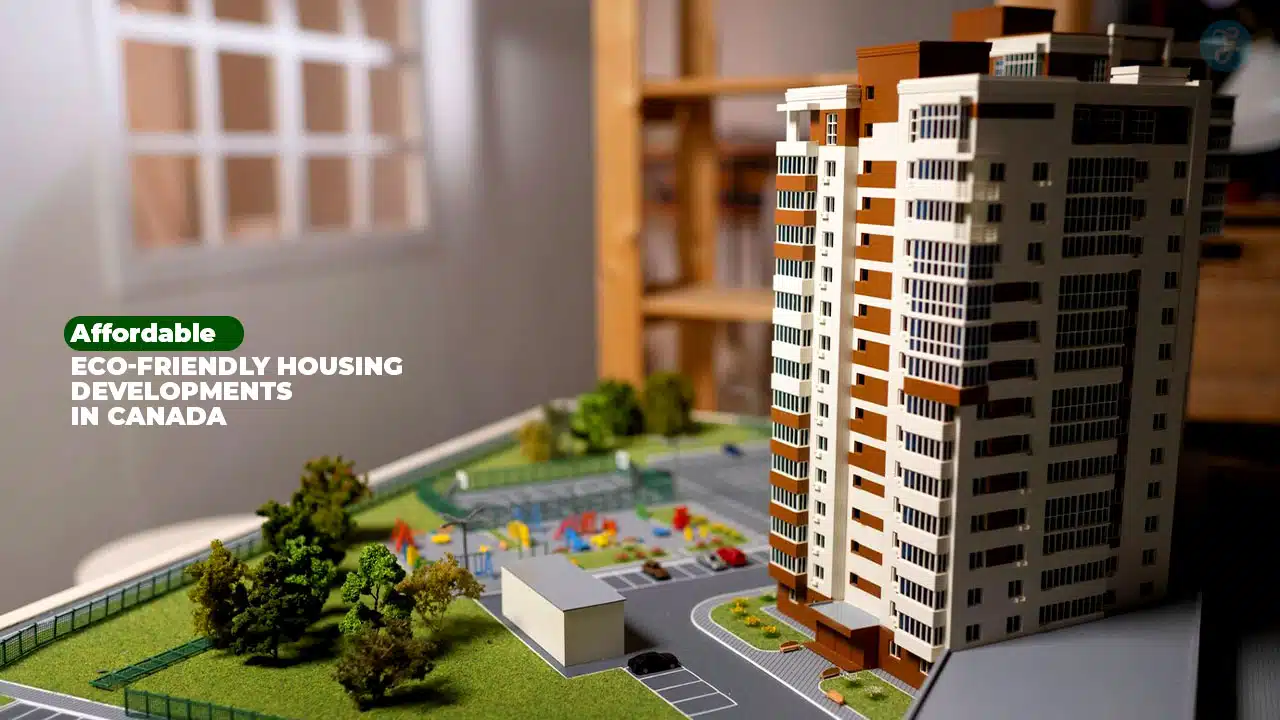
As climate change and rising living costs reshape our priorities, Affordable Eco-Friendly Housing Developments in Canada have emerged as a practical and sustainable solution. These innovative housing projects combine eco-conscious designs with cost-effectiveness, helping Canadians reduce their environmental footprint while saving on energy and maintenance expenses.
In this article, we’ll explore 10 of the most affordable and eco-conscious housing developments across Canada, highlighting their features, benefits, and locations.
Whether you’re a first-time buyer or looking to downsize, these options might inspire your next move.
The Importance of Eco-Friendly Housing
Eco-friendly housing goes beyond aesthetics; it’s about sustainability and efficiency. These homes are designed to minimize energy use, reduce carbon footprints, and improve indoor air quality.
Here’s why they matter:
- Environmental Impact: Green homes conserve natural resources through renewable energy and sustainable materials.
- Energy Savings: Features like solar panels and efficient insulation lower utility bills.
- Health Benefits: Improved air quality and reduced exposure to harmful chemicals benefit occupants.
As Canada pushes towards net-zero emissions, eco-friendly housing plays a critical role in building a sustainable future.
Eco-Friendly Housing Trends in Canada
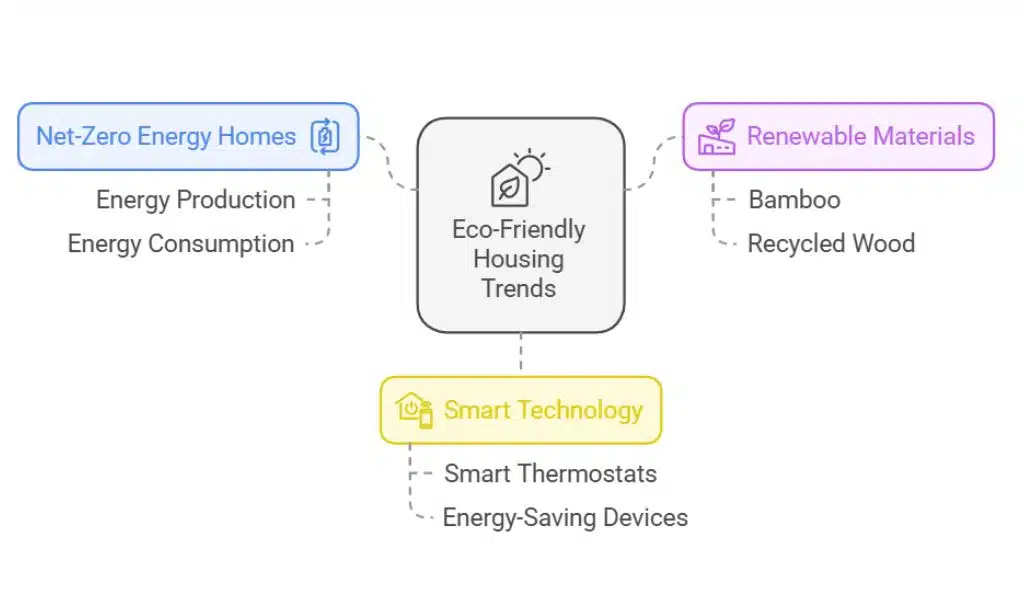
The green housing sector in Canada is growing rapidly.
Here are the major trends:
- Net-Zero Energy Homes: Houses producing as much energy as they consume.
- Renewable Materials: Using bamboo, recycled wood, and other eco-friendly materials.
- Smart Technology: Integrating energy-saving devices like smart thermostats.
Key Trends in Canadian Eco-Friendly Housing
| Trend | Description | Example Projects |
| Net-Zero Energy Homes | Homes balancing energy production and consumption | EcoTerra Homes |
| Renewable Materials | Sustainable materials like bamboo and recycled steel | Green Haven Estates |
| Smart Technology | Devices to optimize energy use | Westbrook Village |
Criteria for Selecting Affordable Eco-Friendly Housing
When considering an eco-friendly home, keep these factors in mind:
- Location: Proximity to urban centers and amenities.
- Certification: Look for LEED (Leadership in Energy and Environmental Design) or Passive House certifications.
- Cost Efficiency: Balance upfront costs with long-term savings.
Factors to Evaluate When Choosing Green Housing
| Criteria | Details | Importance |
| Location | Accessible, near public transport | High |
| Certification | LEED or Passive House | Very High |
| Cost Efficiency | Energy savings vs. initial investment | Medium |
10 Affordable Eco-Friendly Housing Developments in Canada
1. Green Haven Estates (Alberta)
The demand for Affordable Eco-Friendly Housing Developments in Canada has skyrocketed in recent years. This shift is fueled by increasing awareness of environmental issues and the financial benefits of energy-efficient living. Features like solar panels, smart insulation, and energy-saving appliances make these homes ideal for cost-conscious, eco-minded buyers.
- Features: Solar panels, rainwater harvesting, high-efficiency windows.
- Price Range: $250,000 – $300,000.
- Certification: LEED Certified.
Pros:
- Significant energy savings from solar panels.
- Lower water bills due to rainwater harvesting systems.
- High environmental sustainability.
Cons:
- Initial costs might be higher than conventional homes.
- Limited availability in some regions.
2. The Ridge at Strathcona (British Columbia)
This community combines scenic views with sustainable living. Timber construction and energy-efficient appliances make these homes a perfect eco-friendly option.
- Features: Recycled wood materials, energy-efficient lighting.
- Price Range: $300,000 – $350,000.
- Certification: Passive House.
Pros:
- Environmentally friendly construction materials.
- Energy-efficient lighting reduces electricity usage.
- Beautiful natural surroundings.
Cons:
- Prices may be higher than other green housing options.
- Limited options for customization.
3. Westbrook Village (Ontario)
Situated in Ontario, Westbrook Village features smart technology and community green spaces. These homes focus on creating a balanced lifestyle while reducing environmental impact.
- Features: Smart thermostats, solar heating, shared green areas.
- Price Range: $320,000 – $370,000.
- Certification: LEED Gold.
Pros:
- Advanced smart technology for energy efficiency.
- Access to community green spaces.
- Solar heating reduces energy bills.
Cons:
- Higher upfront costs for smart home technology.
- May not suit those seeking rural living.
4. Solar Heights Community (Quebec)
Located in Quebec, this development focuses on harnessing solar energy to power homes. With innovative designs, Solar Heights combines aesthetics with functionality.
- Features: Solar panel roofs, geothermal heating.
- Price Range: $280,000 – $330,000.
- Certification: Net-Zero Ready.
Pros:
- Significant energy efficiency with solar and geothermal systems.
- Aesthetic modern designs.
- Long-term cost savings on utilities.
Cons:
- Geothermal systems require maintenance.
- Limited availability outside Quebec.
5. Prairie Eco-Village (Manitoba)
This Manitoba-based project is an example of community-oriented green living. It features homes built with local, sustainable materials and a focus on reducing waste.
- Features: Greywater systems, community gardens, energy-efficient appliances.
- Price Range: $260,000 – $310,000.
- Certification: LEED Silver.
Pros:
- Promotes a sense of community with shared gardens.
- Sustainable use of water resources.
- Affordable pricing.
Cons:
- Limited to Manitoba residents.
- Smaller home sizes may not suit larger families.
6. Halifax Green Living (Nova Scotia)
Halifax Green Living offers a collection of townhomes designed to minimize environmental impact while maximizing comfort and affordability.
- Features: Energy-efficient insulation, smart home systems, rainwater harvesting.
- Price Range: $270,000 – $320,000.
- Certification: Passive House.
Pros:
- Excellent insulation reduces heating costs in colder climates.
- Smart systems improve convenience and efficiency.
- Affordable for first-time buyers.
Cons:
- Limited design options.
- Smaller yard spaces compared to detached homes.
7. Verdant Village (Saskatchewan)
This Saskatchewan community emphasizes sustainability and affordability through innovative construction techniques and renewable energy sources.
- Features: Wind energy integration, sustainable timber frames.
- Price Range: $240,000 – $290,000.
- Certification: LEED Gold.
Pros:
- Utilizes wind energy, reducing reliance on fossil fuels.
- Durable, sustainable timber construction.
- Relatively low pricing.
Cons:
- Limited availability of wind energy systems.
- May require upgrades for extreme weather conditions.
8. Atlantic Eco-Homes (Newfoundland and Labrador)
These homes are designed to withstand harsh weather conditions while maintaining eco-friendliness and affordability.
- Features: Triple-glazed windows, heat recovery ventilation.
- Price Range: $260,000 – $310,000.
- Certification: Net-Zero Energy Certified.
Pros:
- Energy-efficient features reduce heating costs.
- Built to endure extreme weather.
- Good for families seeking durability and sustainability.
Cons:
- Higher upfront costs for weatherproofing features.
- Limited to specific areas in Newfoundland and Labrador.
9. Forest Edge Eco-Community (New Brunswick)
This tranquil community blends natural surroundings with sustainable living. Homes are designed to reduce energy consumption while maintaining modern conveniences.
- Features: Solar heating, energy-efficient appliances, green roofs.
- Price Range: $250,000 – $300,000.
- Certification: Passive House.
Pros:
- Green roofs provide additional insulation and aesthetics.
- Solar heating reduces utility bills.
- Peaceful, nature-focused community.
Cons:
- Maintenance of green roofs can be costly.
- Remote location may not suit everyone.
10. Northern Lights Green Living (Yukon)
In the Yukon, this project highlights the potential of eco-friendly housing in colder climates, featuring energy-efficient designs tailored to the region.
- Features: High-performance insulation, solar water heating.
- Price Range: $270,000 – $320,000.
- Certification: LEED Platinum.
Pros:
- Tailored for extreme cold with high-performance insulation.
- Solar water heating lowers energy costs.
- Ideal for remote and sustainable living.
Cons:
- Limited availability due to remote location.
- May require higher maintenance costs in harsh climates.
Key Details of Eco-Friendly Housing Developments
| Development | Province | Features | Price Range | Certification |
| Green Haven Estates | Alberta | Solar panels, water recycling | $250k – $300k | LEED Certified |
| The Ridge at Strathcona | British Columbia | Timber construction, efficient lighting | $300k – $350k | Passive House |
| Westbrook Village | Ontario | Smart tech, solar heating | $320k – $370k | LEED Gold |
| Solar Heights Community | Quebec | Solar panel roofs, geothermal heating | $280k – $330k | Net-Zero Ready |
| Prairie Eco-Village | Manitoba | Greywater systems, community gardens | $260k – $310k | LEED Silver |
| Halifax Green Living | Nova Scotia | Insulation, smart systems, rainwater | $270k – $320k | Passive House |
| Verdant Village | Saskatchewan | Wind energy, timber frames | $240k – $290k | LEED Gold |
| Atlantic Eco-Homes | Newfoundland and Labrador | Triple-glazed windows, ventilation | $260k – $310k | Net-Zero Energy |
| Forest Edge Eco-Community | New Brunswick | Solar heating, green roofs | $250k – $300k | Passive House |
| Northern Lights Green Living | Yukon | Insulation, solar water heating | $270k – $320k | LEED Platinum |
How to Finance an Affordable Eco-Friendly Home
Government Incentives:
- CMHC Green Home Program: Offers rebates for energy-efficient housing.
- Provincial Rebates: Vary by province, supporting renewable energy installations.
Mortgage Options:
- Green Mortgages: Special loans for eco-friendly homes.
- Energy-Efficient Upgrades: Loans covering retrofit costs.
Financing Options for Green Housing
| Program | Details | Eligibility |
| CMHC Green Home Program | Rebate on energy-efficient homes | New home buyers |
| Provincial Rebates | Varies by province, e.g., solar panel grants | Homeowners in provinces |
| Green Mortgages | Lower rates for sustainable housing | Buyers of certified homes |
The Future of Affordable Eco-Friendly Housing in Canada
Canada’s green housing market is expected to grow significantly. Advancements in renewable technology, combined with government support, are driving this change.
Predictions include:
- Increased Availability: More affordable options across provinces.
- Innovative Designs: Adoption of smart home features and sustainable materials.
Takeaways
In conclusion, Affordable Eco-Friendly Housing Developments in Canada represent a vital step towards a sustainable and economically sound future. By investing in these innovative housing solutions, you can enjoy the benefits of reduced costs, enhanced living conditions, and a smaller environmental footprint.
If you’re ready to invest in a greener future, these housing developments are worth exploring. Let’s embrace a lifestyle that benefits both our wallets and the planet.





















