Navigating the digital tools available for primary education often leads administrators and parents straight to massive corporate ecosystems. However, a closer look at the market reveals that Small and Medium-sized Enterprises (SMEs) across the United States are developing highly focused, effective software for young learners. These independent studios are highly responsive to teacher feedback, often building platforms that prioritize direct academic intervention over broad corporate data collection.
How We Selected Our 15 Best SMEs for Elementary Learning Platforms in the USA
Finding developers that maintain independence while delivering curriculum-aligned results requires strict vetting. We filtered numerous companies to highlight those genuinely supporting primary education without corporate bloat.
-
Geographic Baseline: Operated and headquartered strictly within the United States.
-
Scale Limit: Verified as independent SMEs or registered non-profits, excluding subsidiaries of large conglomerates.
-
Curriculum Alignment: Direct mapping to state and national standards for primary education.
-
Data Security: Proven track records of protecting student data with strict privacy policies.
- Legacy Recognition: A small number of historically significant independent platforms are included even where ownership has recently shifted to a larger educational publisher, provided their original platform and team remain operational under the existing brand.
Understanding these foundational criteria sets the stage for exploring the distinct capabilities of each developer.
Evaluating the Top 15 elementary learning platforms USA
The following independent developers are actively reshaping how core subjects are delivered in primary classrooms. Here is our curated breakdown of the organizations driving this progress.
1. Boddle Learning
Tulsa-based Boddle Learning transforms math practice into an immersive 3D gaming experience. Recognizing that standard flashcards fail to capture modern attention spans, they built a platform where answering math questions unlocks gameplay. The system uses adaptive algorithms to identify learning gaps and seamlessly adjusts the difficulty.
Best for:
-
Engaging reluctant math students through gamified 3D environments.
Why We Chose It:
-
Integrates seamlessly with existing classroom rostering systems.
-
Highly effective adaptive algorithms pinpoint exact areas where students struggle.
-
Visual rewards keep motivation exceptionally high.
Things to consider:
-
The heavy gaming elements require active monitoring to ensure students are focusing on the math components.
The 2026 Edge:
-
New augmented reality capabilities that allow students to project math puzzles into the physical classroom space.
While gamified math drives high engagement, comprehensive differentiation requires tools that address multiple core subjects simultaneously.
2. eSpark Learning
Operating from Chicago, eSpark Learning delivers differentiated instruction for both math and reading. The platform curates third-party resources and proprietary activities, wrapping them in a unified interface. It relies heavily on play-based learning to keep early elementary students invested in their personal learning paths.
Best for:
-
Providing individualized learning pathways across multiple core subjects.
Why We Chose It:
-
Exceptional differentiation capabilities that serve diverse classroom skill levels.
-
Playful interface design that prevents academic fatigue.
-
Robust teacher dashboards that track progress effortlessly.
Things to consider:
-
Navigation relies heavily on visual cues, which may require brief training for the youngest users.
The 2026 Edge:
-
Generative audio features that create custom pronunciation guides for emerging readers.
Moving beyond standard literacy and numeracy, science instruction requires specialized interactive tools.
3. Legends of Learning
Based in Washington, D.C., Legends of Learning offers a massive library of curriculum-aligned math and science games. Their model is unique because they host mini-games created by independent developers all over the world, ensuring a constant stream of new content. Teachers can easily build playlists of games that match their daily lesson plans.
Best for:
-
Supplemental science and math instruction through varied, short-form gaming.
Why We Chose It:
-
Unmatched variety of game mechanics keeps students from getting bored.
-
Direct alignment with Next Generation Science Standards.
-
Teacher controls allow for precise timing and sequencing of content.
Things to consider:
-
Because games are made by different developers, the visual quality and interface vary from game to game.
The 2026 Edge:
-
Streamlined playlist creation that automatically matches games to specific state standard codes.
Sometimes educators require total control over the specific question content rather than relying on pre-built modules.
4. Boom Learning
Kirkland, Washington’s Boom Learning digitized the concept of task cards, creating a highly interactive, self-grading platform. Teachers can build their own digital decks or purchase decks created by other educators. The platform is highly favored by special education teachers for its clear, distraction-free interface and immediate feedback loops.
Best for:
-
Creating and distributing highly customized, self-grading digital task cards.
Why We Chose It:
-
Total flexibility for educators to design exactly what their students need.
-
Instant feedback mechanisms help students correct mistakes in real-time.
-
Massive marketplace of pre-made decks saves planning time.
Things to consider:
-
Building custom decks from scratch requires a time investment from the educator.
The 2026 Edge:
-
Enhanced accessibility tools including higher-contrast visual settings and better screen-reader compatibility.
Customization offers flexibility, but districts often require a unified system designed specifically to find and close missing foundational skills.
5. MobyMax
Headquartered in Pittsburgh, Pennsylvania, MobyMax is designed specifically to find and fix learning gaps across all K-8 subjects. Their diagnostic assessments are rigorously structured to pinpoint exact missing skills from previous grade levels. Once a gap is identified, the software automatically assigns targeted lessons to bring the student up to speed.
Best for:
-
Identifying and aggressively closing historical learning gaps.
Why We Chose It:
-
Comprehensive coverage of nearly every subject required in elementary school.
-
Highly accurate diagnostic testing that eliminates guesswork.
-
Built-in motivation systems including digital badges and certificates.
Things to consider:
-
The interface is highly functional but lacks the high-end polish of dedicated gaming platforms.
The 2026 Edge:
-
Predictive analytics that warn educators when a student is mathematically likely to fail an upcoming state standard.
When addressing those foundational skills, targeted, research-backed math intervention becomes absolutely critical.
6. Zearn
Operating out of New York, Zearn is a non-profit educational organization that built a top-rated math learning platform. They align directly with standard classroom math modules, providing digital lessons that mirror what teachers present on the whiteboard. Their platform emphasizes conceptual understanding rather than just rote memorization.
Best for:
-
Rigorous, conceptual math intervention directly aligned with core curricula.
Why We Chose It:
-
Exceptional instructional videos featuring real teachers breaking down complex concepts.
-
Prevents students from moving forward until they demonstrate true understanding.
-
Completely free for individual teachers to use.
Things to consider:
-
The strict progression system can frustrate students who want to skip ahead.
The 2026 Edge:
-
Improved bilingual support that fluidly switches between English and Spanish instruction.
Just as mathematics requires precise intervention, early literacy demands highly specialized, real-time feedback.
7. Amira Learning
San Francisco’s Amira Learning provides an AI-powered reading assistant that listens to children read out loud. Note that Amira was acquired by educational publisher Houghton Mifflin Harcourt in January 2024 and now operates as part of HMH’s broader literacy portfolio. Using advanced speech recognition trained specifically on young voices, it identifies precise decoding errors and provides immediate, micro-interventions. It functions as a digital reading tutor that scales across an entire classroom.
Best for:
-
Real-time reading fluency assessment and immediate decoding intervention.
Why We Chose It:
-
Unparalleled speech recognition tailored for diverse childhood dialects and speech patterns.
-
Saves teachers hours of time previously spent on manual running records.
-
Provides actionable data on specific phonetic struggles.
Things to consider:
-
Requires a quiet classroom environment and high-quality headsets to function perfectly.
The 2026 Edge:
-
Deeper integration with core phonics curricula to automatically assign offline practice materials based on reading errors.
Beyond foundational reading, capturing young imaginations requires high-energy, visually stimulating science instruction.
8. Generation Genius
Located in Los Angeles, Generation Genius produces high-quality, Hollywood-style educational videos for science and math. Built in partnership with the National Science Teaching Association, their platform pairs highly engaging videos with lesson plans, quizzes, and DIY activities. Note that Generation Genius was acquired by Newsela in February 2025 and now operates as part of Newsela’s product suite. It is designed to bring textbook concepts to life.
Best for:
-
Replacing dry science textbooks with highly engaging, standards-aligned video lessons.
Why We Chose It:
-
Production values rival mainstream children’s television programming.
-
Every video includes comprehensive, ready-to-use teacher resources.
-
Makes complex scientific phenomena accessible to early learners.
Things to consider:
-
It is primarily a content delivery system rather than an adaptive learning software.
The 2026 Edge:
-
Interactive video overlays that allow students to answer questions directly within the video player.
Interactive video content sets a great foundation, but turning review sessions into highly competitive events drives unparalleled classroom energy.
9. Gimkit
Developed in Seattle, Washington, Gimkit turns standard multiple-choice quizzes into fast-paced, strategic game shows. Students earn virtual currency for answering questions correctly, which they can then spend on power-ups or strategic advantages against their classmates. It creates an intensely engaging environment for reviewing material.
Best for:
-
High-energy, competitive classroom review sessions.
Why We Chose It:
-
Game mechanics encourage students to answer questions repeatedly, drilling the material.
-
Constant updates introduce new, highly popular game modes.
-
Created by a former high school student who truly understands student engagement.
Things to consider:
-
The competitive nature and fast pacing can be overwhelming for anxious test-takers.
The 2026 Edge:
-
Collaborative team modes that focus on class-wide goals rather than individual competition.
Building on that competitive energy, alternative review systems offer completely different game modes to prevent student fatigue.
10. Blooket
Also built in the USA, Blooket takes the quiz-game concept and applies it to various arcade-style game modes. Teachers host a game using a question set, and students answer on their own devices to participate in activities like running a virtual cafe, defending a tower, or digging for fossils.
Best for:
-
Disguising rote memorization and review behind addictive arcade-style gameplay.
Why We Chose It:
-
A wide variety of game modes ensures the format never gets stale.
-
Allows students to work at their own pace within the larger class game.
-
Easily imports question sets from other popular quiz platforms.
Things to consider:
-
The luck-based elements in some games mean the student with the most correct answers doesn’t always win.
The 2026 Edge:
-
Enhanced classroom management features allowing teachers to easily pause games and address the whole class.
While fast-paced review games suit upper elementary students, the youngest learners require much gentler digital environments.
11. Starfall Education Foundation
Based in Boulder, Colorado, Starfall is a non-profit organization that has been a staple in early childhood and lower elementary classrooms for years. Their platform focuses heavily on phonics and early math through simple, cheerful animations and songs. It is explicitly designed to be a completely safe, low-stimulation environment.
Best for:
-
Pre-K through second-grade students needing gentle phonics and basic math practice.
Why We Chose It:
-
Exceptionally clean interface completely free of advertisements or confusing menus.
-
Proven track record of helping children grasp basic phonetic sounds.
-
Highly accessible for children with special education needs.
Things to consider:
-
The content scope ends at early elementary, making it unsuitable for older students.
The 2026 Edge:
-
Updated graphical interfaces that maintain their classic charm while utilizing high-definition displays.
Once early literacy and numeracy are established, introducing computational thinking becomes a priority for primary educators.
12. Kodable
Operating out of California (with offices in Sunnyvale and San Diego), Kodable provides a comprehensive coding curriculum designed specifically for elementary students. It starts with completely text-free, logic-based puzzles for kindergarteners and slowly transitions them into writing real JavaScript and Swift code by the fifth grade.
Best for:
-
Introducing computer science and algorithmic logic to young children.
Why We Chose It:
-
Zero prior coding knowledge is required from the teacher to successfully run the program.
-
Seamlessly bridges the gap between drag-and-drop block coding and actual typed syntax.
-
Features a highly engaging narrative involving fuzzy alien characters.
Things to consider:
-
Navigating the later, text-based coding levels requires solid reading comprehension skills.
The 2026 Edge:
-
Integration of basic AI logic training, helping students understand how machine learning models make decisions.
Alongside computational logic, absolute fluency in basic arithmetic remains a non-negotiable pillar of primary education.
13. XtraMath
Seattle’s XtraMath is a non-profit dedicated exclusively to math fact fluency. The platform strips away all gamification and visual clutter, providing daily, timed practice sessions on addition, subtraction, multiplication, and division. It is highly efficient, usually requiring only ten minutes of a student’s day.
Best for:
-
Rapidly building automaticity and recall of basic math facts.
Why We Chose It:
-
Zero distractions ensure students are entirely focused on the math.
-
Adapts the specific facts presented based on the student’s previous recall speed.
-
Provides teachers with incredibly detailed grids showing exactly which facts a student has mastered.
Things to consider:
-
The timed aspect can induce anxiety for some students, though educators can adjust the settings.
The 2026 Edge:
-
Refined pacing algorithms that better detect when a student is guessing versus genuinely recalling a fact.
Just as math requires factual fluency, reading comprehension requires access to a vast library of leveled, high-quality texts.
14. ReadWorks
Brooklyn-based ReadWorks is a non-profit delivering a massive, free library of reading comprehension texts aligned to core standards. The platform allows educators to assign articles, vocabulary tasks, and comprehension questions digitally. It features a unique “StepReads” system, providing the exact same article at different reading levels to accommodate entire classrooms.
Best for:
-
Supplying high-quality, differentiated non-fiction and fiction texts for reading comprehension.
Why We Chose It:
-
The text library is meticulously curated and highly relevant to modern classrooms.
-
Built-in audio functionality allows struggling readers to hear the text read aloud.
-
Completely free for educators, supported entirely by donations and grants.
Things to consider:
-
The interface is highly academic and text-heavy, lacking the bright colors of standard edtech games.
The 2026 Edge:
-
Automated vocabulary highlighting that cross-references words a student has struggled with in past assignments.
Accessing leveled texts is the first step, but ensuring students are actively engaging with those texts requires dedicated comprehension monitoring.
15. Whooo’s Reading
Originally located in San Diego, Whooo’s Reading shifts the focus away from multiple-choice tests and encourages higher-order thinking through open-ended writing prompts. Note that Whooo’s Reading was acquired by K-12 publisher Savvas Learning Company in March 2023 and its AI technology is now integrated into Savvas’s broader product offerings. The platform uses AI to analyze student written responses, providing immediate feedback on their reading comprehension and writing mechanics.
Best for:
-
Encouraging deep reading comprehension through guided, open-ended writing responses.
Why We Chose It:
-
Forces students to articulate their thoughts rather than just guessing A, B, C, or D.
-
The proprietary AI scoring engine saves teachers immense grading time.
-
Integrates seamlessly with whatever physical books or digital texts the students are already reading.
Things to consider:
-
Younger students who struggle with keyboarding may find the written responses challenging.
The 2026 Edge:
-
Advanced sentiment analysis that helps identify if a student is genuinely connecting with the reading material.
An Overview Of elementary learning platforms USA
To simplify your decision-making process, we have compiled the core details of these independent developers into a quick-reference format below.
Overview Comparison
Reviewing these core metrics side-by-side provides a clear snapshot of the digital learning landscape.
| SME Developer | Headquarter Location | Core Focus Area | Pricing Model |
| Boddle Learning | Tulsa, OK | Gamified Math | Freemium |
| eSpark Learning | Chicago, IL | Math & Reading Pathways | Freemium |
| Legends of Learning | Washington, D.C. | Math & Science Games | Freemium / Paid |
| Boom Learning | Kirkland, WA | Interactive Task Cards | Freemium / Paid |
| MobyMax | Pittsburgh, PA | K-8 Gap Identification | Paid / District |
| Zearn | New York, NY | Conceptual Math | Free (Non-Profit) |
| Amira Learning | San Francisco, CA | AI Reading Fluency | Paid / District |
| Generation Genius | Los Angeles, CA | Video Science & Math | Subscription |
| Gimkit | Seattle, WA | Competitive Review | Freemium |
| Blooket | USA | Arcade Review Games | Freemium |
| Starfall | Boulder, CO | Phonics & Early Math | Free (Non-Profit) |
| Kodable | California | Computer Science | Freemium / Paid |
| XtraMath | Seattle, WA | Math Fact Fluency | Free (Non-Profit) |
| ReadWorks | Brooklyn, NY | Reading Comprehension | Free (Non-Profit) |
| Whooo’s Reading | San Diego, CA | Written Comprehension | Freemium |
Evaluating these choices naturally brings us to our primary recommendations for standard use cases.
Our Top 3 Picks and Why?
Narrowing down the field, three developers stand out for their exceptional contribution to primary education. Zearn remains the absolute gold standard for ensuring conceptual math intervention without charging individual teachers. ReadWorks provides an unmatched, completely free library of differentiated texts crucial for building strong readers. Finally, eSpark Learning offers the most balanced, play-based approach to simultaneously managing math and literacy pathways for young students.
How to Choose the Right elementary learning platforms USA by Yourself?
Selecting the right digital tools for your classroom or child requires matching the software to their specific academic needs and learning style. Reviewing these key factors will ensure a positive implementation.
The Selection Framework:
Identify the Goal: Determine if you are trying to close historical gaps, drill basic fluency, or introduce entirely new concepts.
Assess the Interface: Ensure the navigation matches the user’s age—kindergarteners need visual cues, while fifth graders can handle text menus.
Check the Feedback Loop: Look for software that explains why an answer is wrong, rather than just marking it incorrect and moving on.
Evaluate the Data: Ensure the teacher or parent dashboard provides actionable insights rather than just arbitrary points or scores.
Applying this framework directly to your specific needs allows you to match the right developer to your student using the metrics below.
Decision Matrix
Matching your specific priorities with the right developer ensures a successful digital learning environment.
| Choose This SME… | If You Prioritize… |
| MobyMax or eSpark Learning | Identifying missing skills and establishing personalized learning pathways. |
| Zearn or XtraMath | Focused, rigorous math intervention and fact fluency. |
| Gimkit or Blooket | High-energy classroom engagement and competitive review sessions. |
| ReadWorks or Amira Learning | Building reading comprehension and assessing real-time phonetic fluency. |
Before implementing any new software into a primary classroom, it is crucial to run through a rapid safety and usability check.
The Final Checklist
Running through this quick verification process guarantees you are utilizing safe, effective software.
-
Verify the developer holds strict privacy certifications and does not sell student data.
-
Ensure the reading level of the interface matches the target grade level.
-
Test the platform on the specific hardware your students use, such as older tablets or Chromebooks.
-
Confirm that the digital lessons map directly to your required state standards.
-
Check that audio instructions or text-to-speech tools are available for struggling readers.
Securing the Digital Foundation for Primary Education
Choosing software from independent American developers ensures that your classroom tools are built to support pedagogy, rather than solely generating corporate data. These fifteen SMEs demonstrate that educational technology, when built responsively and respectfully, serves as an incredibly powerful assistant for primary educators striving to meet the needs of every student.
Frequently Asked Questions (FAQs) About elementary learning platforms USA
Question 1: Do these platforms replace the need for physical textbooks?
Digital platforms are generally designed to supplement core instruction rather than replace physical texts entirely. However, platforms focused on reading comprehension and science videos often serve as highly effective, up-to-date alternatives to aging textbook material.
Question 2: How do independent SMEs protect student privacy better than large corporations?
Independent developers often rely on subscription models or district contracts for revenue, rather than data monetization. They strictly adhere to FERPA and COPPA guidelines, frequently minimizing the amount of personally identifiable information they collect in the first place.
Question 3: Can parents use these platforms at home, or are they only for teachers?
While many of these platforms are built for classroom rostering, several offer direct-to-consumer family plans. Non-profits focusing on early literacy and math fluency are particularly accessible for parents looking to support learning outside of school hours.
Question 4: Are gamified learning platforms actually effective for long-term retention?
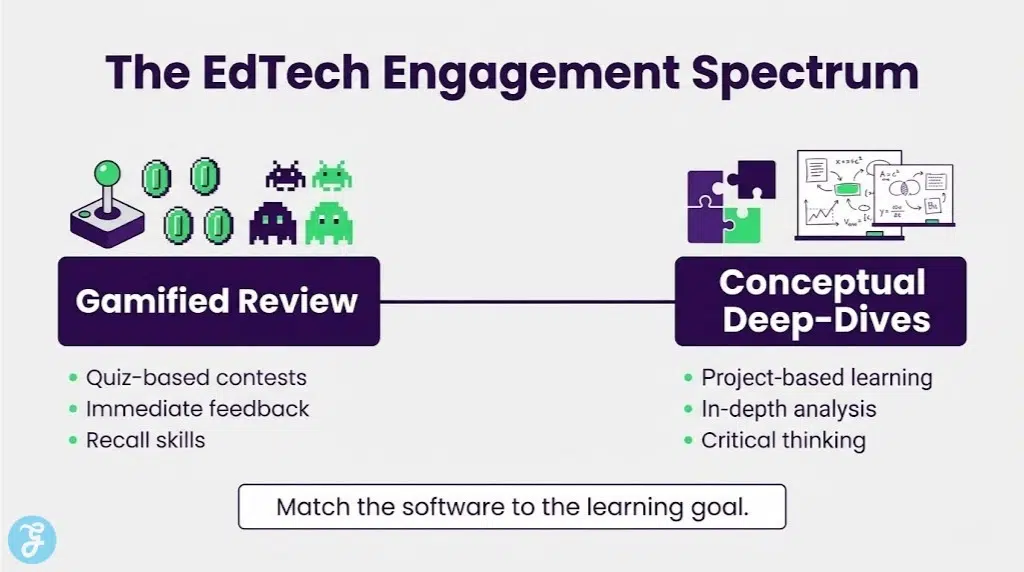
Gamification is highly effective for building automaticity and drilling review material because it encourages repetition. However, for teaching brand-new, complex concepts, structured instruction and conceptual modeling remain the necessary first steps before introducing game elements.
Question 5: How much time should an elementary student spend on these platforms daily?
Best practices suggest limiting targeted educational screen time to brief, highly focused sessions. For specific skills like math fact fluency or reading assessment, 15 to 20 minutes a day is often enough to see significant academic growth without inducing digital fatigue.