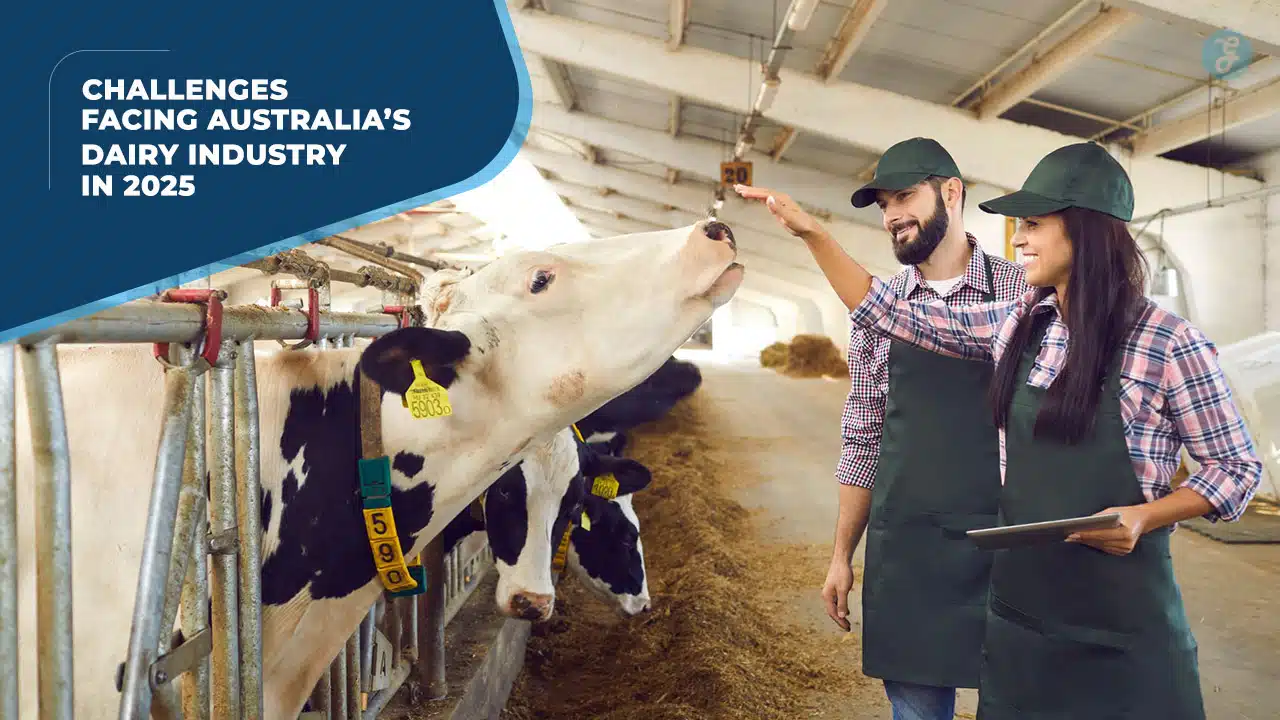
Australia’s dairy industry plays a vital role in the nation’s economy, contributing billions of dollars annually and supporting thousands of jobs across farming, manufacturing, and distribution.
However, this essential sector faces an array of challenges that threaten its sustainability and growth.
Understanding these dairy industry challenges in Australia is critical for stakeholders aiming to navigate the evolving landscape successfully.
This article explores the seven most pressing challenges facing the dairy industry in Australia in 2025 and offers insights into potential solutions.
Understanding the State of Australia’s Dairy Industry
The Australian dairy industry is a cornerstone of rural economies, accounting for over 9 billion liters of milk production annually and exporting high-quality products to markets such as China, Japan, and Southeast Asia.
The industry’s significance extends beyond its economic impact, as it also represents a way of life for many farming families.
Dairy farming not only ensures food security but also fosters regional development through job creation, infrastructure, and community growth.
Addressing dairy industry challenges in Australia is vital to maintaining this legacy and economic stability.
Why 2025 Is a Pivotal Year for Dairy Farmers
The year 2025 is marked by accelerated shifts in consumer preferences, intensifying global competition, and growing pressures from environmental changes.
With increasing scrutiny on sustainability practices and international trade dynamics shifting rapidly, stakeholders must prioritize innovation and resilience.
These factors make it essential for Australia’s dairy industry to adapt and innovate to overcome dairy industry challenges in Australia and remain competitive and sustainable.
Dairy Industry Challenges in Australia for 2025
1. Climate Change and Its Impact on Dairy Farming
Australia’s farmers are no strangers to extreme weather, but the increasing frequency and intensity of droughts have strained the dairy industry.
Higher temperatures reduce pasture growth, which leads to increased reliance on costly feed supplements. Water scarcity further compounds these issues, challenging irrigation efforts and overall productivity.
These climate-related dairy industry challenges in Australia demand innovative solutions.
Key Statistics:
- The average annual rainfall in major dairy regions has decreased by 15% over the past decade.
- Feed costs now account for up to 40% of production expenses during drought periods.
Example: During the 2019–20 drought, many dairy farms reported a 25% decline in milk yield due to poor pasture conditions and water shortages.
Extreme Weather Events
Unpredictable weather events, such as floods and bushfires, devastate infrastructure and disrupt milk production. Recovering from these disasters is financially and emotionally taxing for farmers.
Practical Insights:
- Investing in disaster preparedness plans and insurance coverage can mitigate risks.
- Establishing local support networks helps share resources during recovery.
Impact of Extreme Weather on Dairy Farming
| Event Type | Common Effects | Suggested Solutions |
| Drought | Reduced yields, higher costs | Drought-resistant crops, water recycling |
| Floods | Infrastructure damage | Drainage systems, flood-resilient structures |
| Bushfires | Loss of livestock, pasture | Firebreaks, emergency response systems |
2. Rising Production Costs
Fuel, Feed, and Fertilizer Prices
Volatility in global markets has driven up the prices of essential inputs like fuel, feed, and fertilizers. For instance, the global energy crisis has significantly increased transport costs, impacting profit margins.
Fertilizer prices, influenced by geopolitical factors, have risen sharply, adding to operational expenses. These cost pressures exacerbate dairy industry challenges in Australia for both small-scale and large-scale producers.
Labor Shortages and Wages
Attracting and retaining skilled workers remains a persistent issue, particularly in rural areas. Rising wages, combined with a lack of local talent, have forced many farms to operate understaffed.
Potential Solutions:
- Investment in automation to reduce dependence on manual labor.
- Government incentives to attract workers to rural areas.
Cost Contributors in Dairy Production
| Cost Factor | Percentage of Total Cost | Current Trend |
| Feed | 40% | Increasing due to drought |
| Labor | 25% | Rising wages, limited supply |
| Fertilizers | 15% | Price hikes due to shortages |
| Fuel/Transport | 10% | Volatile global energy prices |
3. Market Volatility and Global Competition

International milk prices are influenced by trade agreements, currency fluctuations, and shifts in global demand. Australian dairy farmers often struggle to compete with subsidized producers in Europe and the US.
The unpredictability of milk prices creates income instability, making long-term planning difficult. These economic dynamics are among the most pressing dairy industry challenges in Australia.
Competition from International Producers
Countries like New Zealand, known for their efficient dairy production, pose stiff competition in key export markets.
Australian farmers must differentiate through quality and innovation to maintain their market share.
Case Study: New Zealand’s Fonterra Cooperative leverages efficient supply chain practices and strong branding to dominate global markets.
Australian producers can learn from such models by focusing on unique selling points like grass-fed and organic certifications.
Key Export Market Challenges
| Market | Key Competitors | Challenges | Opportunities |
| China | New Zealand, US | Price competition, tariffs | Premium branding, quality focus |
| Japan | EU producers | Subsidized imports | Strengthen trade partnerships |
| Southeast Asia | Local dairy, NZ | Distribution inefficiencies | Regional marketing campaigns |
4. Sustainability and Environmental Regulations
The Australian government’s commitment to achieving net-zero emissions by 2050 places additional responsibilities on the dairy industry. Farmers are required to adopt practices that reduce methane emissions from cattle and improve energy efficiency.
These environmental demands add to dairy industry challenges in Australia, requiring innovative approaches to compliance.
Managing Waste and Water Usage
Efficient water use and waste management are critical for long-term sustainability. Implementing systems to recycle water and minimize waste is costly but necessary.
Strategies for Sustainability:
- Adoption of methane-reducing feed additives.
- Incentivizing renewable energy installations on farms.
Environmental Impact and Solutions
| Environmental Factor | Current Impact | Mitigation Strategy |
| Methane Emissions | High contribution to GHG | Feed additives, better herd management |
| Water Usage | Scarcity in drought regions | Recycling, efficient irrigation |
| Waste Management | Pollution from effluents | Biogas systems, composting |
5. Consumer Preferences and Dietary Shifts
Growth of Plant-Based Alternatives
The rise of plant-based milk alternatives, such as almond and oat milk, has affected traditional dairy sales.
Many consumers perceive these products as more sustainable and healthier options. Addressing these shifts in consumer behavior is key to tackling dairy industry challenges in Australia.
Demand for Organic and Ethical Dairy
Consumers increasingly value transparency and ethical practices in food production. This trend drives demand for organic dairy products, which require higher production standards and often come at a higher cost.
Practical Insights:
- Promoting the health benefits of dairy and sustainable practices can counter declining sales.
- Leveraging certifications like “grass-fed” or “organic” can attract niche markets.
6. Technological Adoption and Infrastructure Gaps
Cost Barriers for Small-Scale Farmers
While large-scale operations can afford advanced technologies like automated milking systems and precision farming tools, smaller farms struggle with the high upfront costs.
This digital divide highlights persistent dairy industry challenges in Australia.
Connectivity Issues in Rural Areas
Poor broadband access in rural regions hampers the adoption of digital tools and technologies that could improve farm efficiency.
Practical Solutions:
- Government grants to subsidize technology adoption.
- Investment in rural broadband infrastructure.
Technological Gaps and Solutions
| Technology | Benefit | Barrier | Suggested Solution |
| Automated Milking | Increased efficiency | High cost | Subsidies, financing options |
| Precision Tools | Resource optimization | Lack of technical expertise | Training programs |
| IoT Sensors | Real-time monitoring | Poor connectivity | Improved broadband access |
7. Trade Policies and Export Challenges
Australia’s dairy exports depend heavily on favorable trade agreements. Tariffs and regulatory barriers in key markets, such as China and the EU, can significantly impact profitability.
Managing these geopolitical shifts is one of the complex dairy industry challenges in Australia.
Export Logistics
Transportation bottlenecks, including port congestion and rising shipping costs, create additional hurdles for dairy exporters, particularly for perishable products.
Interactive Table:
| Challenge | Impact | Potential Solutions |
| Tariffs | Reduced competitiveness | Advocate for fair trade agreements |
| Shipping Costs | Higher export prices | Optimize supply chain logistics |
| Regulatory Barriers | Delayed shipments | Collaboration with policymakers |
Strategies to Overcome These Challenges
Collaboration Between Farmers and Policymakers
Governments and industry bodies must work together to create farmer-friendly policies that balance sustainability with profitability.
Subsidies, grants, and training programs can help farmers adopt new technologies and practices to address dairy industry challenges in Australia.
Leveraging Technology for Sustainable Farming
Automation, precision farming tools, and advanced analytics can optimize resources and improve yields.
Collaborative efforts between tech companies and farmers will ensure that innovations are accessible to all, including small-scale operators.
Marketing and Branding Australian Dairy Globally
Promoting Australia’s reputation for high-quality, grass-fed dairy can help maintain competitive advantages in international markets.
Building consumer trust through transparency and sustainability will further enhance global demand.
Takeaways
The challenges facing Australia’s dairy industry in 2025 are complex but not insurmountable.
By adopting innovative solutions, leveraging technology, and working collaboratively, stakeholders can ensure the industry’s long-term success despite dairy industry challenges in Australia.
The Road Ahead for Australian Dairy in 2025
The dairy industry’s resilience lies in its ability to adapt to change. With the right strategies and support, Australia’s dairy sector can overcome these challenges and continue to thrive as a global leader in dairy production.