

Artificial intelligence (AI) is one of the most talked-about technologies today. From self-driving cars and virtual assistants to advanced data analytics and automation, AI is reshaping industries and revolutionizing the way we live.
However, despite its widespread use, AI is often misunderstood, and numerous misconceptions have arisen about its capabilities, limitations, and potential dangers.
These myths not only mislead the public but can also hinder the responsible development and deployment of AI.
In this article, we’ll explore and debunk 10 of the most common misconceptions about artificial intelligence, providing a clearer understanding of what AI can and cannot do.
1. AI Will Replace All Human Jobs
The Misconception: Many people believe that AI will eventually replace all human jobs, leading to widespread unemployment. This fear is rooted in the idea that automation and intelligent machines will perform all the tasks humans currently handle.
Debunked: While AI is automating certain tasks, especially repetitive and data-driven processes, it’s not expected to eliminate all human jobs. Instead, AI will likely transform the workforce, changing the nature of many jobs rather than replacing them entirely.
AI excels at handling tasks like data processing, analysis, and pattern recognition, but it lacks the emotional intelligence, creativity, and critical thinking needed for many human jobs.
Reality: AI will complement human roles, enabling workers to focus on more complex, creative, and interpersonal tasks. In fact, the integration of AI is expected to create new job categories and industries, especially in fields like AI development, robotics, and AI ethics.
Example: In healthcare, AI assists doctors by analyzing medical images or diagnosing diseases, but it doesn’t replace the expertise and decision-making required by human professionals.
2. AI Can Think and Feel Like Humans
The Misconception: Some people believe that AI can think, feel, and experience emotions like humans. This misconception often stems from science fiction portrayals of AI as conscious, sentient beings capable of human-like behavior.
Debunked: AI, no matter how advanced, does not possess consciousness, emotions, or self-awareness. AI operates on algorithms and data to process information and complete tasks but lacks the subjective experience that characterizes human thought and emotion. While AI can simulate certain behaviors, like responding to questions in a conversational manner, it doesn’t understand the meaning or context behind its actions.
Reality: AI systems are excellent at pattern recognition and task execution but remain fundamentally different from human cognition. They are tools that follow predefined instructions without the ability to “feel” or have intentions.
Example: Virtual assistants like Siri or Alexa can respond to queries in a friendly tone, but they don’t “understand” your request in a human sense. They are simply processing language patterns and retrieving data based on algorithms.
3. AI is Only for Tech Giants and Large Corporations
The Misconception: AI is often seen as a tool reserved for tech giants like Google, Amazon, or Facebook, leading many to believe that only large corporations with massive budgets can harness its power.
Debunked: AI is becoming increasingly accessible to small businesses and individuals thanks to the rise of cloud-based services and open-source platforms. These tools allow businesses of all sizes to implement AI-driven solutions without requiring in-house expertise or significant capital investment.
Reality: AI is democratizing rapidly, with platforms like Google Cloud AI, Microsoft Azure, and Amazon Web Services offering scalable AI solutions for businesses of any size. Entrepreneurs, startups, and small businesses can leverage AI to optimize operations, improve customer service, and drive innovation.
Example: Small retailers can use AI-powered chatbots to provide 24/7 customer service, while local restaurants can use AI for personalized marketing campaigns based on customer preferences and behaviors.
4. AI is Always Objective and Unbiased
The Misconception: AI is often viewed as neutral and objective, with the assumption that it makes decisions free from human biases. This belief stems from the idea that machines, unlike humans, operate solely based on data.
Debunked: AI is only as unbiased as the data it is trained on. If the training data contains biases, whether related to race, gender, or other factors, the AI system will likely reflect those biases in its decisions. Additionally, the design of AI algorithms by humans can introduce unintended biases.
Reality: AI can perpetuate and even amplify biases present in its training data. This is why ethical AI development and continuous monitoring are critical to ensuring that AI systems are fair and unbiased.
Example: AI used in hiring processes has been found to discriminate against female candidates when trained on biased historical data. Similarly, facial recognition software has shown higher error rates when identifying people of color, largely due to biased datasets.
5. AI is Equivalent to Robots
The Misconception: A common misconception is that AI and robots are synonymous, leading people to believe that AI always manifests as physical machines, like humanoid robots.
Debunked: AI refers to the software and algorithms that allow machines to perform tasks that require intelligence, while robots are physical machines. AI can be used in robots, but not all AI systems are embodied in robots, and not all robots have AI.
Reality: AI can exist in purely digital forms, such as software, apps, or cloud-based systems. Many of the AI systems we interact with daily, such as search engines, recommendation algorithms, and virtual assistants, don’t have a physical form.
Example: AI-powered virtual assistants like Siri and Alexa are examples of AI that exist in software form, whereas industrial robots in factories may or may not use AI for specific tasks.
6. AI Will Eventually Take Over the World
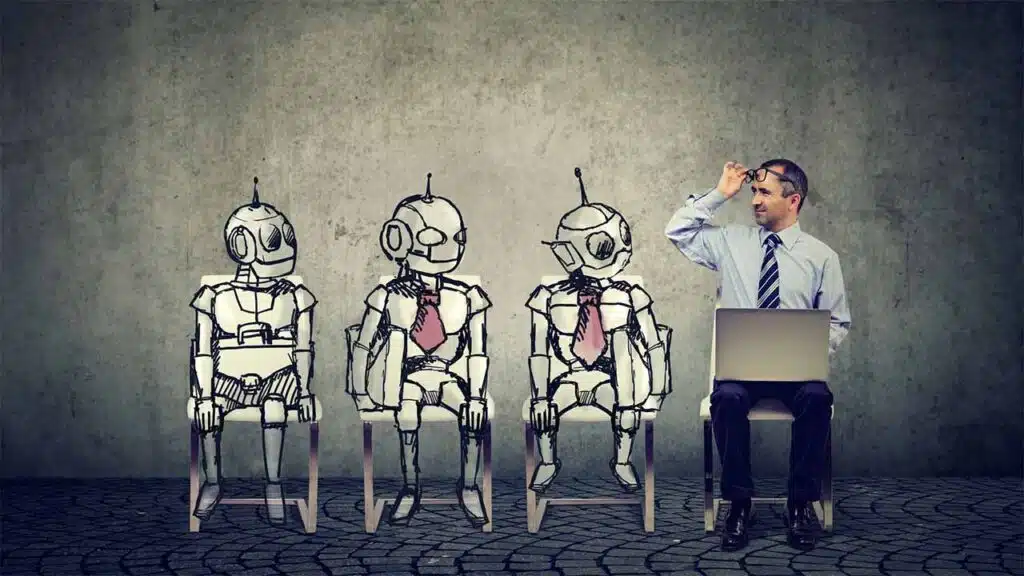
The Misconception: Popular culture, which frequently portrays AI as an existential threat to humanity, has a significant influence on this misconception. People fear that AI will surpass human intelligence and gain control over society, becoming an unstoppable force.
Debunked: Current AI operates within narrow parameters, known as narrow AI, which means it can only perform specific tasks for which it was trained. AI systems do not possess general intelligence, the type of intelligence that allows humans to reason, adapt to new situations, and understand abstract concepts.
Reality: We are far from developing general AI, and the AI systems we use today are designed for limited, specific tasks. While there are concerns about AI governance and ethics, AI does not have the capacity to “take over the world” in the foreseeable future.
Example: Self-driving cars may perform well in controlled environments, but they are far from possessing the general intelligence needed to navigate every possible scenario that human drivers might face.
7. AI Can Learn on Its Own Without Human Intervention
The Misconception: Many believe that AI systems are self-sufficient and capable of learning and evolving on their own without human input. This is often depicted in movies, where AI develops autonomy and makes decisions independently of its creators.
Debunked: While AI systems can learn through machine learning, they require human oversight, intervention, and data to function effectively. AI models need curated data, algorithmic adjustments, and periodic retraining to improve performance.
Reality: AI systems rely heavily on human engineers to build, fine-tune, and monitor their development. While AI can adapt to new data, it doesn’t have the ability to learn in the autonomous, self-sustaining way that humans do.
Example: Autonomous vehicles use AI to learn how to navigate roads, but human engineers must provide new data, refine algorithms, and intervene when the AI encounters unexpected challenges.
8. AI Will Make Human Creativity Obsolete
The Misconception: There is a growing concern that AI will surpass human creativity and take over fields that rely on innovation, such as art, music, and writing.
Debunked: AI can assist in creative processes, such as generating ideas or automating repetitive tasks, but it cannot replace the depth, emotion, and originality of human creativity. AI lacks the context, emotional experiences, and abstract thinking that drive genuine human innovation.
Reality: AI-generated content may mimic certain patterns or styles, but it lacks the nuanced understanding and emotional depth that comes from human experiences. Rather than replacing human creativity, AI can enhance it by acting as a tool for inspiration and collaboration.
Example: AI can generate music or art based on existing styles, but human musicians and artists use these tools to expand their creativity, not replace it. AI-generated content is often a starting point for human-driven refinement.
9. AI Is a Recent Invention
The Misconception: Because AI has only recently gained mainstream attention, many people assume that AI is a new invention, created in the last decade or two.
Debunked: Early pioneers like Alan Turing laid the groundwork for AI, which has been in development since the 1950s. The field of AI has evolved steadily over the past several decades, though recent advancements in computing power and data availability have accelerated its growth.
Reality: AI research has been around for more than half a century. The idea of machines exhibiting intelligence was first explored in the mid-20th century, and AI has been evolving through various stages, from symbolic reasoning to machine learning.
Example: One of the first serious attempts to determine whether a machine could exhibit intelligent behavior indistinguishable from a human was the Turing Test, which Alan Turing introduced in 1950.
10. AI is Only Useful in Tech Industries
The Misconception: People often think of AI as relevant only to tech companies or industries that specialize in software, data science, or hardware development.
Debunked: AI is being used across a wide range of industries beyond tech, from healthcare and agriculture to retail, education,
and manufacturing. AI’s versatility allows it to improve efficiency, decision-making, and problem-solving in nearly every sector.
Reality: AI has broad applications across various industries, offering solutions for tasks ranging from diagnosing diseases to optimizing supply chains and improving customer experiences. It is a critical tool for enhancing productivity and innovation in non-tech fields.
Example: In agriculture, AI is used for crop monitoring, precision farming, and predictive analysis to help farmers optimize yields. In retail, AI personalizes customer recommendations, manages inventory, and improves supply chain efficiency.
Conclusion
Misconceptions about artificial intelligence can distort public understanding and hinder progress in the field. By debunking these common myths, we gain a clearer, more nuanced view of AI’s true capabilities and limitations.
AI is a powerful tool that, when used responsibly, can enhance human capabilities, foster innovation, and improve our quality of life.
Understanding the truth about AI allows us to navigate its development with greater insight and less fear, ensuring that we can harness its benefits while mitigating potential risks.





















