

Have you ever walked into an old house and felt like you’ve stepped back in time? The wallpaper, the furniture, the knick-knacks on the shelves – they all tell a story of a different era. The 20th century was a time of rapid change, and nowhere is this more evident than in our homes. From the cozy, cluttered rooms of the early 1900s to the sleek, modern spaces of the 1990s, let’s take a nostalgic journey through the home trends that defined the last century.
1. The Rise of the Kitchen (1900s-1910s)
At the turn of the century, kitchens were starting to become the heart of the home.
Key features:
- Cast iron stoves replaced open hearths
- Iceboxes were common before electric refrigerators
- Sinks with running water became more widespread
- Hoosier cabinets provided all-in-one kitchen storage
Fun fact: The first electric toaster was invented in 1909!
2. Art Deco Glamour (1920s-1930s)
The Roaring Twenties brought a sense of luxury and glamour to home decor.
Art Deco elements:
- Geometric shapes and bold colors
- Mirrors and glass accents
- Chrome and other shiny metals
- Exotic wood veneers like zebra wood
Popular furniture: Club chairs, cocktail carts, and sunburst motifs
3. Colorful Kitchens (1950s-1960s)
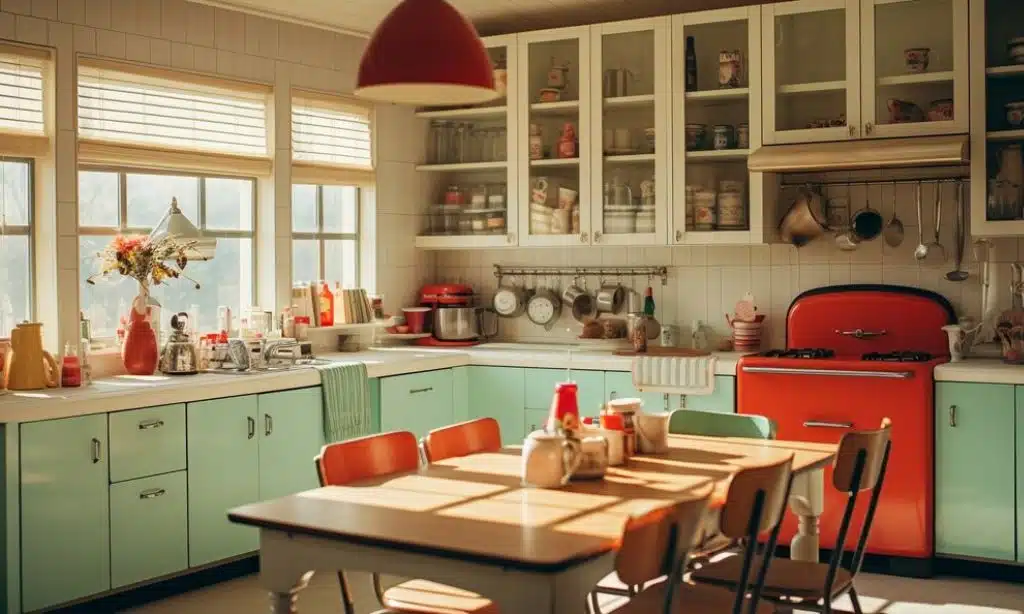
Post-war optimism led to bright, cheerful kitchens.
Color palette:
- Mint green
- Baby blue
- Soft yellow
- Pastel pink
New appliances:
- Electric refrigerators in matching colors
- Built-in ovens and stovetops
- Dishwashers became more common
Countertops: Formica in bright colors and fun patterns
4. Shag Carpets (1960s-1970s)
The groovy era brought us deep, plush carpets.
Shag carpet facts:
- Fibers were typically 1-2 inches long
- Often made from nylon or wool
- Popular colors: Orange, brown, green, and gold
- Raking was required to keep it fluffy
Pro tip: Use a special shag rake to restore the carpet’s fluff after vacuuming!
5. Wood Paneling (1960s-1980s)
Wood paneling brought warmth and texture to walls.
Types of wood paneling:
- Solid wood (expensive)
- Plywood with a veneer (more affordable)
- Faux wood made from pressed board
Styles:
- Vertical panels
- Wainscoting (partial wall coverage)
- Parquet patterns
6. Avocado Green Appliances (1970s)
The ’70s had a distinctive color palette for kitchens.
Popular appliance colors:
- Avocado green
- Harvest gold
- Coppertone
- Poppy red
Appliances that got the color treatment:
- Refrigerators
- Ovens and stoves
- Dishwashers
- Washing machines and dryers
7. Conversation Pits (1960s-1970s)
These sunken living areas were perfect for parties.
Conversation pit features:
- Typically 12-18 inches lower than the main floor
- Built-in seating around the perimeter
- Often circular or square in shape
- Filled with cushions and pillows for comfort
Famous example: The Miller House in Columbus, Indiana, designed by Eero Saarinen
8. Lava Lamps (1960s-1970s)
These groovy lights were a must-have for any hip pad.
How lava lamps work:
- A light bulb heats wax and liquid
- Warm wax rises, then cools and falls
- This creates a constant, mesmerizing motion
Invented by: Edward Craven Walker in 1963
Popular color combinations:
- Red wax in yellow liquid
- White wax in blue liquid
- Purple wax in clear liquid
9. Linoleum Floors (1950s-1960s)
Affordable and durable, linoleum was a homeowner’s dream.
Linoleum facts:
- Made from natural materials like linseed oil and cork dust
- Available in a wide range of patterns and colors
- Easy to clean and maintain
- More resilient than vinyl flooring
Popular patterns: Checkerboard, floral, and geometric shapes
10. Macramé (1970s)
This knotty craft added texture to ’70s homes.
Common macramé items:
- Plant hangers
- Wall hangings
- Room dividers
- Table runners
Materials used:
- Jute
- Cotton cord
- Leather strips
- Wooden beads for accents
11. Sunburst Clocks (1950s-1960s)
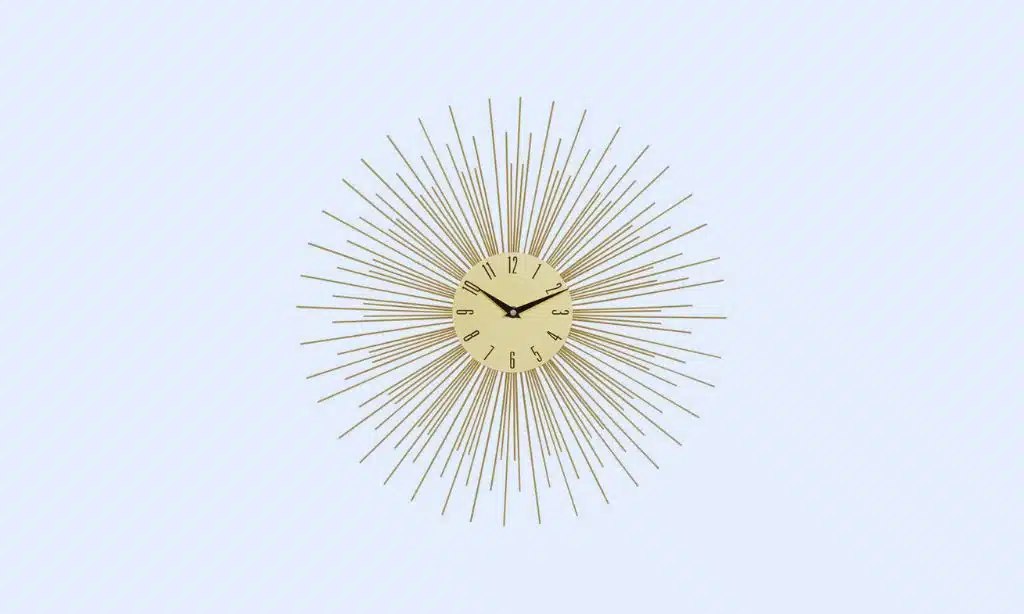
These timepieces were as much art as they were functional.
Sunburst clock features:
- Central clock face
- Radiating “rays” made of wood or metal
- Diameters ranging from 24 to 48 inches
- Often incorporated mixed materials
Designer to know: George Nelson, who created many iconic sunburst clock designs
12. Popcorn Ceilings (1950s-1980s)
Also known as “cottage cheese” ceilings, this texture was ubiquitous.
Why popcorn ceilings were popular:
- Hid imperfections in the ceiling
- Provided some sound dampening
- Was quick and cheap to apply
Application method:
- A mixture of paint and styrofoam or stucco was sprayed on
- Sometimes, glitter was added for extra sparkle
Note: Some older popcorn ceilings may contain asbestos. Always test before removing.
13. Plastic Furniture (1960s-1970s)
The space age brought new materials into our homes.
Iconic plastic furniture pieces:
- Panton Chair by Verner Panton (1967)
- Blow Chair by Paolo Lomazzi, Donato D’Urbino, and Jonathan De Pas (1967)
- Kartell Componibili storage units by Anna Castelli Ferrieri (1969)
Benefits of plastic furniture:
- Lightweight and easy to move
- Could be molded into unique shapes
- Available in bright, bold colors
- Easy to clean
14. Mixtape and Record Collections (1960s-1990s)
Music was a crucial part of home decor.
Ways to display music collections:
- Custom-built record shelves
- Tape racks that hung on walls
- Stereo cabinets with built-in storage
- Spinning record displays
Fun fact: The first commercially available cassette tapes were introduced in 1963
15. Chintz Fabrics (1980s)
Laura Ashley brought this floral fabric back in a big way.
Chintz characteristics:
- Floral patterns, often roses
- Glazed finish for a shiny look
- Used on everything from sofas to curtains to wallpaper
Color schemes:
- Pastel backgrounds with colorful flowers
- Rich, jewel-toned florals on cream backgrounds
16. Beanbag Chairs (1970s)
The ultimate in casual, comfortable seating.
Beanbag chair facts:
- Invented in 1968 by Italian designers
- Filled with polystyrene beads
- Often made of vinyl or leather
- Popular colors included bright orange, red, and purple
17. Waterbeds (1970s-1980s)
Sleep on water? It was all the rage!
Waterbed features:
- Vinyl mattress filled with water
- Heating element to keep water warm
- “Waveless” options to reduce motion
- Special frames to support the weight
Waterbed pros:
- Conforming support
- Temperature control
- Dust mite resistant
Waterbed cons:
- Heavy and difficult to move
- Risk of leaks
- High maintenance
18. Wallpaper Borders (1980s-1990s)
These decorative strips added a finishing touch to rooms.
Wallpaper border facts:
- Usually 6-7 inches wide
- Applied at the top of walls or chair rail height
- Themes included flowers, fruit, country motifs, and geometric patterns
- Often used in kitchens, bathrooms, and children’s rooms
Application tip: Use a plumb line to ensure your border is straight!
19. Vertical Blinds (1970s-1990s)
A modern alternative to curtains, especially for sliding glass doors.
Vertical blind features:
- Long, vertical slats that can be rotated for light control
- Often made of PVC, fabric, or wood
- Available in a wide range of colors and textures
- Could be drawn to one side for full window access
Popular in: Offices, apartments, and homes with large windows or patio doors
20. Inflatable Furniture (1990s)
The ultimate in lightweight, portable seating.
Inflatable furniture types:
- Chairs
- Sofas
- Ottomans
- Even beds!
Colors and finishes:
- Clear or translucent plastic
- Metallic and neon colors
- Some with glitter or confetti inside
Takeaway
As we look back at these 20th-century home trends, it’s clear that our living spaces have always been a reflection of our values, technology, and aspirations. From the practicality of linoleum floors to the whimsy of lava lamps, each trend tells a story about how we lived and what we thought was important.
Some of these trends, like conversation pits and avocado appliances, may seem quaint or outdated now. Others, like mid-century modern furniture and macramé, have found new life with younger generations. And who knows? Maybe shag carpets and waterbeds are due for a comeback!
As we move further into the 21st century, it’s fun to look back and appreciate the creativity and innovation of past decades. Whether you’re a fan of Art Deco glamour or ’70s bohemian style, there’s something nostalgic and comforting about these familiar trends. They remind us of childhood homes, grandparents’ houses, and a time when life seemed a little simpler.
So the next time you’re flipping through old family photos or visiting a vintage shop, take a moment to appreciate these blasts from the past. Who knows? You might even find some inspiration for your own home. After all, everything old becomes new again eventually!
























