In the early years of the creator economy, the ultimate goal for any US-based solopreneur was a high-margin digital download. Whether it was a $27 meal plan PDF, a Notion template, or a digital budgeting spreadsheet, the appeal was obvious: zero marginal cost and instant delivery. However, as we enter 2026, the digital gold rush has reached a point of total saturation.
With the explosion of AI-generated content over the last two years, the barrier to entry for digital products has essentially been eliminated. American creators are increasingly finding that while PDFs are easy to produce and sell, they are now viewed as commodity content. Buried in a cluttered “Downloads” folder, a digital file often fails to build the long-term brand loyalty required for a sustainable business in this new era. The response to this digital fatigue is a decisive pivot back to the physical world: a move toward authenticity and permanence that bypasses the legacy risks of the 20th-century publishing model.
The Inventory Trap
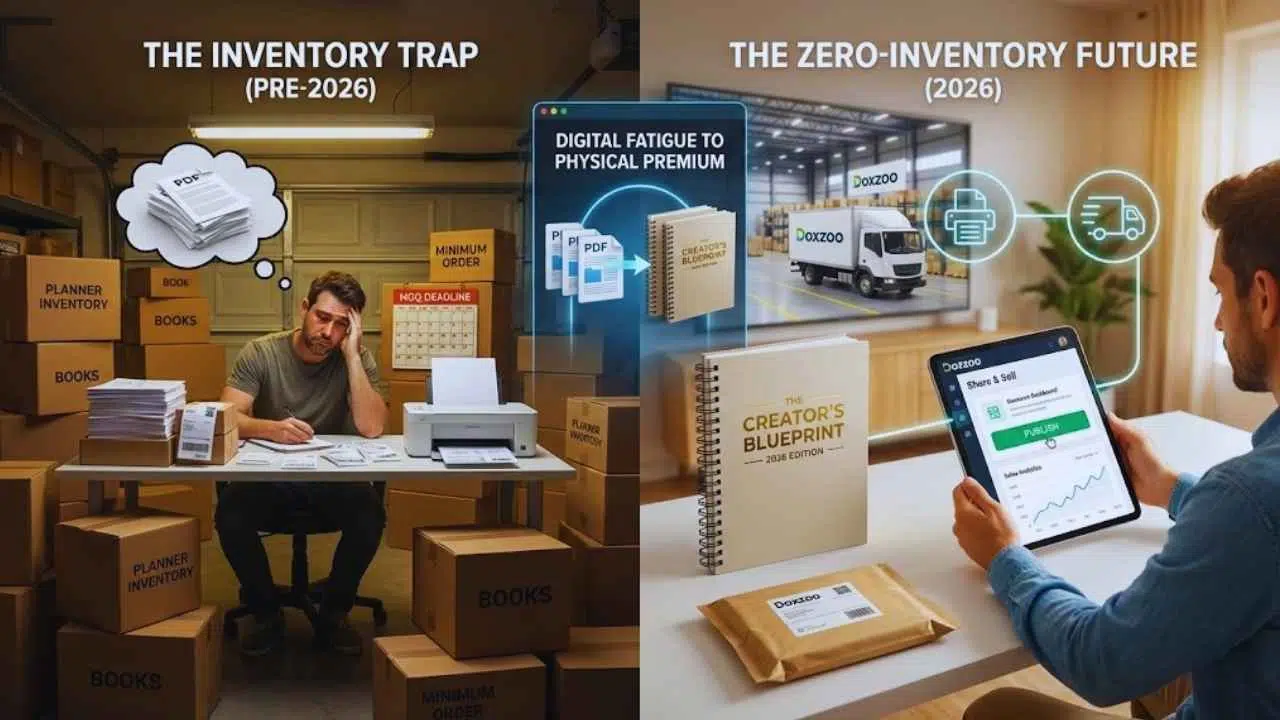
For years, the barrier between a creator and a physical product was the “Garage-Full-of-Books” syndrome. Traditional printing required US small businesses to commit thousands of dollars in upfront capital to meet minimum order quantities (MOQs). Once the pallets arrived, the creator became a part-time logistics manager. This meant navigating the rising costs of self-storage – which now averages over $125 per month for a modest 10×10 unit in many US metro areas – and the daily grind of packing Letter-size mailers.
Arguably, the biggest risk a small business faces in 2026 is not a lack of ideas, but a lack of liquidity. When creators tie up their cash in hundreds of Wire-O bound planners sitting in a warehouse, they lose the ability to pivot their marketing or invest in new content; they are essentially betting their business on a single inventory run in a fast-moving market.
Seamless Monetization
The breakthrough driving this pivot is the emergence of specialized direct-to-consumer fulfillment tools that bypass traditional marketplace friction. A prime example of this evolution is the “Share & Sell” feature from Doxzoo, which provides a streamlined and cost-effective solution to the heavy listing fees, transaction percentages and advertising costs found on platforms like Etsy or Amazon.
Paul Bennett, General Manager at Doxzoo, explains why they developed the Share & Sell feature as an expansion of their highly rated online printing and binding service in the US.
“We designed Share & Sell as a simple way for US-based creators, businesses and resellers to sell printed products online without the financial or administrative burden.
“By utilizing this feature, a creator simply uploads their workbook, cookbook, guide or training manual once and receives a dedicated link to share those saved products with their audience. When a customer purchases through that link, Doxzoo handles the entire process: printing on demand, professional binding and direct shipping. The creator doesn’t need a storefront, fulfillment center or any upfront production costs. They never have to hold inventory, pack orders or manage shipping logistics and, most importantly, they never have to pay for the production or fulfillment. The customer pays all printing, binding and shipping fees directly to Doxzoo at the point of sale, ensuring the creator’s only investment is the time spent developing their content. It effectively turns a professional, bound product into a liquid asset that scales automatically without any upfront capital risk.”
This “Zero-Inventory” approach protects critical cash flow while removing the administrative burnout that often kills scaling startups. It transforms the physical product from a logistical nightmare into a liquid asset that scales automatically with the creator’s audience growth.
Quality as a Brand Pillar
In a world where digital assets feel increasingly transient, physical products command a “Physical Premium”. Doxzoo’s internal insights suggest that approximately 10% of customers prioritize quality above all other metrics, including price. While this figure may seem small, it is a leading indicator that tangible products are experiencing a significant comeback. These customers aren’t looking for a home-printed stack of paper held together by a binder clip; they want a high-quality, retail-ready experience that feels like it belongs on a Barnes & Noble shelf. This segment of the market is poised for substantial growth as creators recognize the lasting value and higher margins of physical merchandise.
For example, a professionally bound workbook with a heavy-duty cardstock cover and Wire-O (spiral) binding doesn’t just look better on a desk, it functions better. For a fitness coach selling a 12-week transformation journal or a crafter selling a technical guide, the tactile experience of a physical book reinforces the authority of the teacher. In 2026, being tangible is a competitive advantage.
A meta-analysis conducted by researchers at Macquarie University highlights that physical print leads to better information retention and a deeper understanding of complex material compared to digital screens. In a marketplace where everyone is selling a $10 AI-generated PDF, the creator who offers a $45 professional, bound physical product instantly differentiates themselves as a premium, human-led brand.
The Future of Creator Liquidity
The shift toward zero-inventory physical products represents a maturation of the US creator economy. It is no longer just about the hustle of high-volume digital sales; it’s about building a professional brand that lives in the real world and survives the noise of the digital landscape.
By leveraging no-touch fulfillment, US solopreneurs are finally able to compete with major publishers on quality without the institutional risk. The end of the garage-full-of-books isn’t just a logistical convenience – it’s a strategic revolution that allows creators to stay lean, stay liquid, and stay in the hands of their customers long after the browser tab is closed.