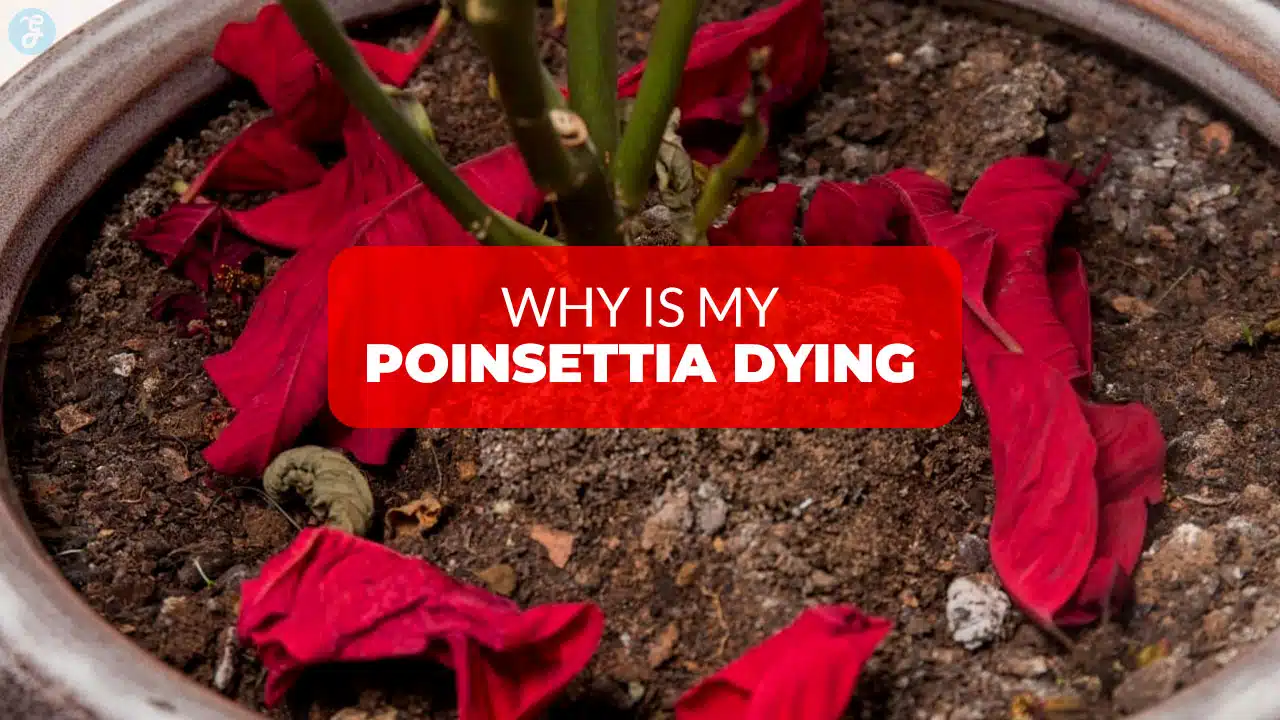
Have you watched your poinsettia’s bracts turn brown and fall? You might stare at drooping leaves, dry soil, and wonder, “Why Is My Poinsettia Dying?” Many houseplant fans face a wilting poinsettia plant right when they need its cheer.
Yellowing or falling leaves often mean root rot from soggy soil, so empty the saucer under the pot. This guide shows you how to adjust water with a watering can, boost light by a bright window, and keep the temperature steady.
You’ll learn to prune torn bracts with pruning shears and revive a dying poinsettia. You can bring it back.
Key Takeaways
- Check the top 1 inch of soil with your finger or a moisture meter. Water only when it feels dry. Water slowly until it runs out the bottom, then empty the saucer to stop root rot.
- Keep the air at 60°F–70°F and around 50% humidity. Move the plant away from cold drafts, heater vents, and sudden heat or cold spikes.
- Place the poinsettia in bright, indirect light by an east or north window. Turn it each week and use a grow lamp on cloudy days.
- Use sharp shears to cut off brown bracts and dead stems just above a leaf node. Toss the clippings into a compost pile to recycle nutrients.
- Use a pot with drainage holes and fill it with peat moss, perlite, and coarse sand. Feed monthly with a 10-10-10 water-soluble fertilizer at half strength.
Why is My Poinsettia Dying: Common Reasons

Too much water drowns the roots, and too little leaves them parched, making the foliage easy prey for disease. Cold drafts or heat spikes can knock a poinsettia off balance and invite pests and fungus.
Overwatering or Underwatering
Waterlogged roots often cause poinsettia wilting. Yellowing leaves may signal the issue. The drip pan under your container holds excess liquid. Empty that pan right after you water.
Soaked potting mix can lead to root rot and drooping stems.
Shriveled bracts and dry-to-the-touch foliage point to underwatering. Slip a finger into the top inch of potting mix to check moisture. Water slowly until drips appear from the drainage ports.
This approach keeps your poinsettia from dropping leaves.
Exposure to Drafts or Sudden Temperature Changes
Cool drafts can shock poinsettia leaves and make them lose leaves. Sudden changes in temperature stress the plant. Poinsettias are sensitive to temperature. Keep your poinsettia away from drafty doors, vents, and windows.
Place it near a bright window with indirect sunlight. Check the air with a temperature gauge. Aim for 60°F to 70°F.
Stress from sudden shifts in heat can weaken roots. Weak roots may start to rot at the base of the plant. Cut stems back to healthy tissue if you spot decay. Prune dead leaves to clear space for new growth.
Empty any saucer under the container to stop waterlogged roots. Water only after soil feels dry. This care can help save your wilting poinsettia.
Insufficient Light or Heat Stress
Insufficient light robs poinsettia of strength. Leaves on your poinsettia turn pale and drop. Place the plant in a well-lit window with filtered sunlight. A grow lamp can help on gloomy days.
Heat stress wilts the bracts and leaf edges. Poinsettia shrivels near drafty doors or heater vents. Move it to a spot with a steady temperature above 50 °F and below 70 degrees. A stable climate keeps it perky.
Tips to Revive Your Wilting Poinsettia
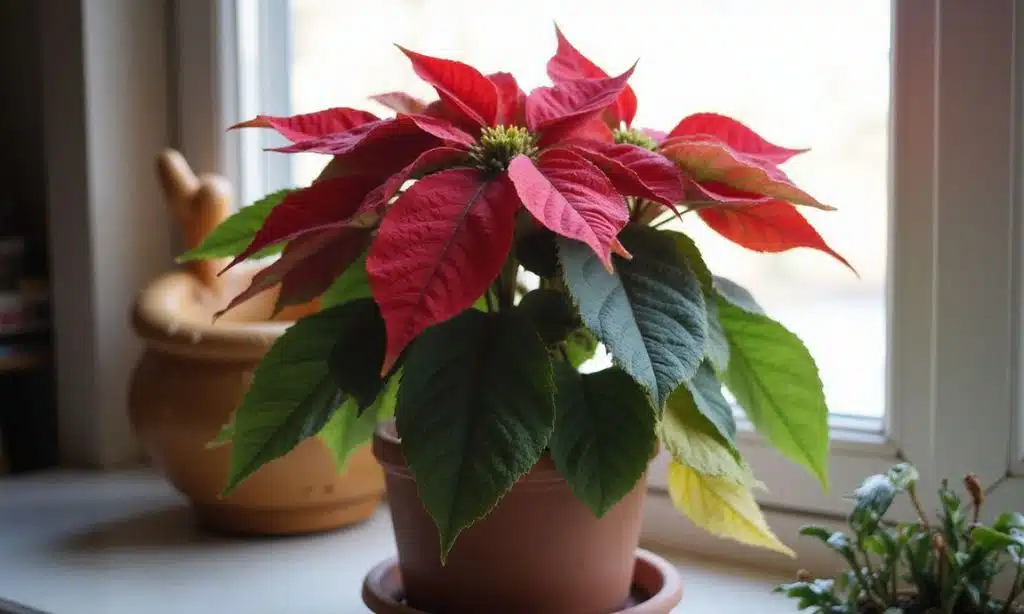
Trim brown leaves with bypass pruners and spark fresh buds. Check soil wetness with a tensiometer, then mix in water-soluble fertilizer.
Adjust Watering Practices
Yellowing or falling leaves often mean roots sit in too much water. Let the soil dry out completely before you water again. Test the top inch; if it feels dry to the touch, pour water slowly until it seeps through holes at the bottom for drainage.
Empty any water in the saucer right away to stop fungal diseases.
Pull the pot away from cold drafts or heater vents so the soil won’t dry too fast. Move the plant to a bright window with indirect sunlight to cut down on extra waterings. Use a moisture meter tool to check real dampness deep in the mix.
That meter helps you avoid overwatering your poinsettia while still giving it plenty of moisture.
Provide Proper Lighting and Temperature
Place your poinsettia in settings with bright, indirect light. An open living room near an east or north window works well. Rotate the pot weekly to increase its exposure. Tropical plants grow best above 10 °C and below 24 °C.
Keep the plant away from drafty doors or windows. Move it off vents that blow hot or cold air.
Heater vents may spit hot, dry air. A nearby humidifier or a quick mist can help. Aim to keep the air around the plant at about fifty percent humidity. A small room reaches this level in mild climates.
That step will keep leaves and flowers firm. It can prevent wilting or wrinkled leaves.
Prune Damaged Leaves and Encourage New Growth
Grab sharp shears and wear gardening gloves before you prune damaged leaves. Cut yellowing or fallen foliage at its base to free up room for new shoots. Inspect stems for rot and remove any soft, decaying sections with secateurs.
Toss clippings into a compost pile to recycle the nutrients.
Trim back existing stems just above a leaf node to create a bushier, fuller plant. Water thoroughly after pruning, then let the soil dry lightly between waterings. Set the pot near a bright window with indirect sun to spur growth.
If roots crowd the pot, repot into a wider planter filled with fresh compost and a well-draining mix.
Preventing Future Issues with Poinsettias
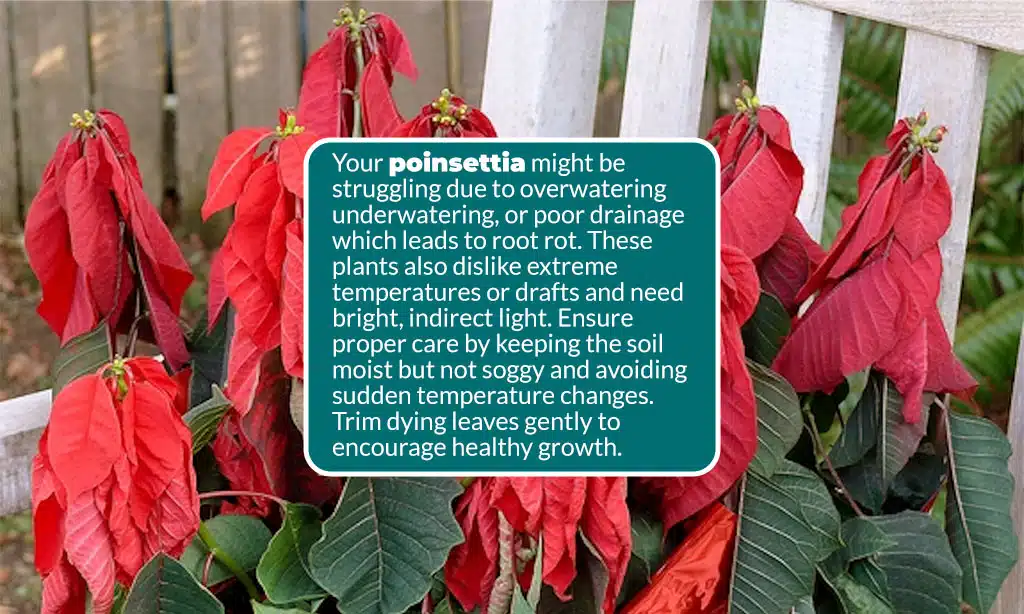
Mix vermicompost into fast-draining soil, use a moisture meter so you water only when dry, pick a warm spot with good airflow, and read on for more tips.
Maintain Consistent Care Throughout the Year
Empty the saucer under the pot after each thorough drink; this stops roots from drowning and stops you from overwatering your poinsettia. Stick a moisture gauge near the soil edge; it shows the amount of water your plant needs.
Set a room thermometer by the window, move the pot away from drafts or heater vents, and let it soak in gentle, indirect sunlight.
Feed your poinsettia with vermicompost in spring and summer; it builds strong stems and bigger blooms. Clip off lower leaves and dead tips with pruning shears; it clears room for fresh buds and a neat shape.
Make sure the pot has holes so excess water can drain freely; this prevents any rot from forming. A mild organic pesticide tames any pest, you can rest easy while your plant grows on.
Use Well-Draining Soil and Proper Fertilization
Poinsettias wilt if their roots sit in soggy soil. Pick a pot with holes and a saucer that you can drain. Fill it with a blend of peat moss, perlite, and coarse sand. Finger touch between waterings tells you when to irrigate.
Drain any excess water so yellow leaves do not signal drowning roots.
One way to revive your poinsettia is to feed it monthly with a 10-10-10 water-soluble fertilizer. Use a watering can to wet the roots first, then add the mix at half strength. This step helps them bloom on time and keeps them alive.
A soil tester can track pH and nutrients, so you can adjust treatment measures fast.
Takeaways
Give your poinsettia a second shot at life. You can use a soil moisture meter to dodge waterlogged roots. A gentle cut of the moldy stem removes pathogenic fungus. Bright windows and cozy warmth act like a spa day for this winter perennial.
Watch for bugs or unexpected pests and water with a simple drip setup. Your care will turn droop into bright bracts by Christmas.