Help wanted. Now hiring. Positions available. The reality is that businesses across industries need workers badly. The COVID-19 pandemic threw the labor market into flux, and while we’ve had years to rebuild, it’s been a struggle to steady the ship. From retail and restaurants to healthcare and hospitality, everyone feels the squeeze.
Warehouses aren’t immune to the stress, facing persistent labor shortages, high turnover, and increased pressure to do more with less. What’s an owner or facility manager to do? Robotic automation, once seen as futuristic, is now filling critical roles, especially in Goods-to-Person [GTP] fulfillment systems.
Let’s Talk About It: Robots Aren’t Here to Take All the Jobs
On the surface, it seems like a contradiction: warehouse labor is hard to find, so the answer is to eliminate labor? But in reality, robots aren’t replacing people. They’re replacing tasks that make hiring and retention difficult. Jobs that involve walking 12 miles a shift, lifting awkward packages repeatedly, or working in refrigerated zones are the hardest to staff—and the most likely to lead to injury or burnout. GTP systems powered by robotics shift the human role from “runner” to “problem solver.”
Humans focus on value-added tasks like quality control, exception handling, and system supervision. Robots handle the repetitive, non-cognitive movement of goods. The result? Fewer injuries, lower turnover, and better retention of skilled workers, especially in a labor market where people have more choices. Warehouse jobs aren’t disappearing. They’re evolving.
What Robots Do in a Goods-to-Person System
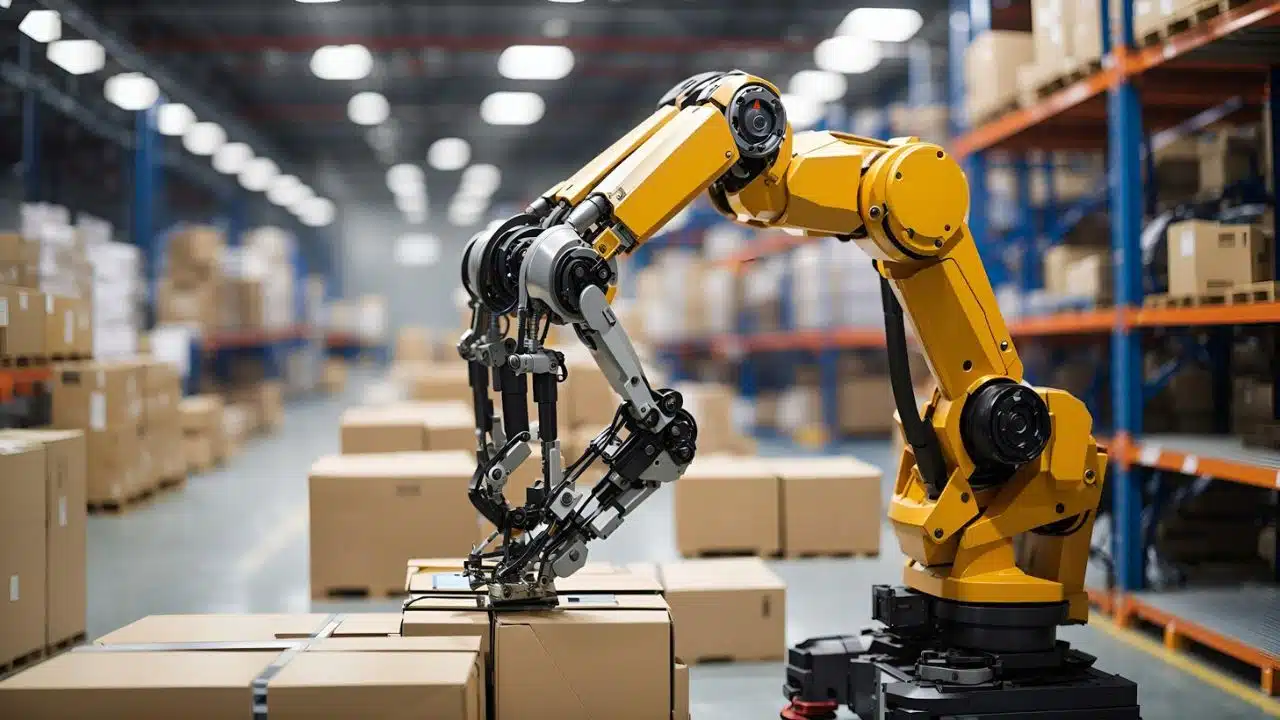
If robots aren’t replacing warehouse workers, what are they doing? In a GTP system, robots act as the muscle and motion behind the scenes, retrieving goods, transporting bins, and positioning items precisely where human workers need them. Instead of walking miles through aisles, employees stay at ergonomic workstations while automated systems deliver items to them with speed and precision.
Here are the main components of a GTP system:
- Shuttle Systems: These are the core drivers of high-density storage and retrieval. Small, fast-moving robots navigate vertically and horizontally across racking systems to pull totes or trays and bring them to a pick station. Modern shuttle systems can handle thousands of retrievals per hour and are scalable for operations of any size.
- Autonomous Mobile Robots [AMRs] and AGVs: In larger or more distributed fulfillment centers, mobile robots may ferry items between zones or replenish storage areas. These robots are guided by sensors and real-time mapping software, which helps them avoid collisions and optimize traffic flow.
- Automated Lifts and Conveyor Integration: Many GTP systems combine warehouse robots with high-speed lifts and conveyor belts to ensure goods flow smoothly across multiple levels and departments.
- Warehouse Management System [WMS]: Sitting at the heart of the operation, intelligent software directs the robots’ movements based on real-time order data, optimizing routes, storage utilization, and delivery timing.
Together, these robotic components create a fulfillment process that’s faster, more accurate, and far less dependent on human stamina or experience. Instead of racing through aisles or deciphering order sheets, workers operate in well-lit, ergonomically designed stations where everything is needed.
Ergonomics: The Overlooked Win of Robotics
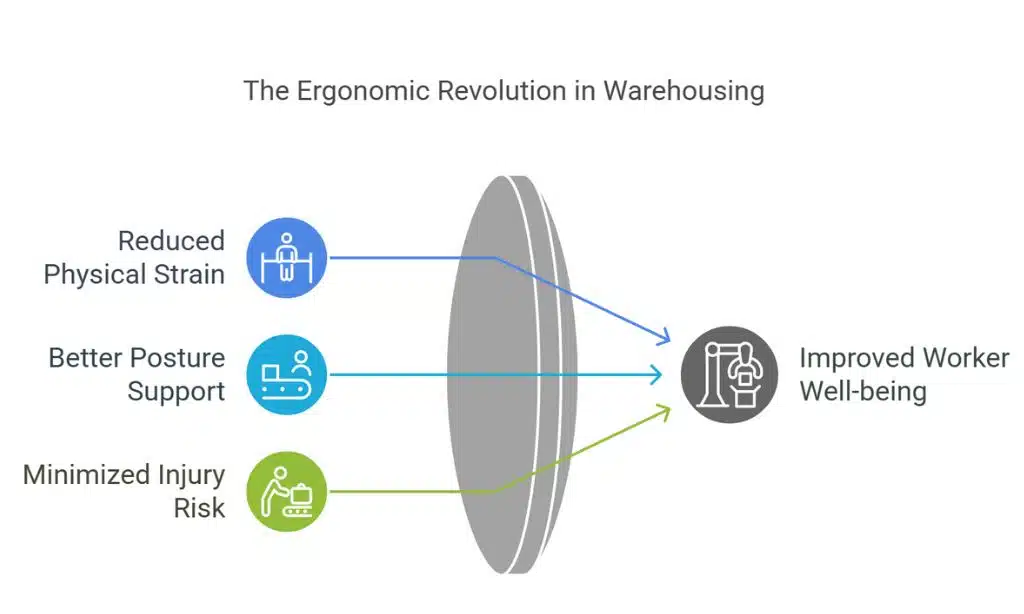
Efficiency may get all the headlines, but ergonomic improvement is one of the most transformative benefits of robotic GTP systems. In traditional warehouses, workers face constant physical demands, including walking long distances, lifting heavy or awkward items, bending to reach low shelves, and stretching to pick from high ones. Over time, these repetitive motions can lead to fatigue, injury, and high turnover.
GTP systems flip that script. Because goods are brought directly to the picker at the right time, height, and orientation, workers stay neutral and upright and interact with items in a controlled, consistent environment. This reduces physical strain, supports better posture, and minimizes the risk of repetitive stress injuries.
The proper logistics solutions partner will have an especially deliberate approach to ergonomics. Look for GTP workstations designed with human motion in mind:
- Products arrive at waist height to minimize bending and reaching.
- Visual cues and guided picking systems reduce cognitive load and decision fatigue.
- Lighting, noise levels, and user interfaces are optimized for comfort and clarity.
These improvements make for safer jobs and, most importantly, better ones. Workers are more focused, more satisfied, and more likely to stay. That kind of retention edge makes a difference in a tight labor market.
What a Modern GTP System Looks Like in Practice
You’ve seen the pieces. Now here’s what happens when they come together. In a high-functioning GTP fulfillment center, the technology serves as the system conductor. It’s all about the orchestration. Inventory moves where and when it needs to go, without wasted motion or human guesswork. The result is a fulfillment engine that’s faster, leaner, and smarter.
On the ground, the impact is felt, ASAP:
- Orders are processed faster, with fewer hands involved. Robotic shuttle systems retrieve totes in seconds, not minutes, and deliver them directly to a single touchpoint. Instead of walking aisles, employees can stay focused at their stations and fulfill more orders in less time.
- Inventory accuracy soars. Automated systems track every movement in real time, minimizing lost items, incorrect picks, and replenishment gaps.
- Employee training becomes radically simpler. Because tasks are standardized and ergonomically optimized, onboarding new workers takes days, not weeks. Visual cues and step-by-step guides embedded in the workstation make it easy for anyone to perform at a high level.
- System modularity supports growth. Whether you’re shipping 10,000 units or 100,000, modern GTP systems are designed to scale. You can add shuttle aisles, pick stations, or automation zones without rethinking your layout.
Ultimately, a well-designed GTP system changes the rhythm of fulfillment, making speed, accuracy, and workforce satisfaction the new melody.
The Competitive Edge: Why GTP + Robotics Is Becoming the Standard
The fulfillment economy can be unforgiving. Speed is expected, precision is non-negotiable, and labor stability is anything but guaranteed. Robotic goods-to-person systems can help companies keep up, and oftentimes, leap ahead, offering several competitive advantages:
1, Resilience in an unpredictable labor market
With automation handling repetitive and labor-intensive tasks, operations aren’t derailed by worker shortages, seasonal surges, or turnover. Human workers become system overseers and problem-solvers, not single points of failure.
2. Faster fulfillment with fewer errors
Robots don’t take breaks or misplace SKUs. GTP systems deliver consistent throughput 24/7, with precision that improves customer satisfaction and reduces costly returns.
3. Scalability without disruption
Modern GTP systems are modular by design. Businesses can scale throughput or storage capacity without reconfiguring their entire layout or retraining the workforce as a whole.
4. Lower total cost of ownership over time
While the upfront investment in robotics can be significant, the long-term payoff includes reduced labor costs, fewer workplace injuries, faster order cycles, and improved use of space. That adds up to a higher return on every square foot and every shift.
5. Readiness for AI and predictive logistics
GTP automation lays the groundwork for even more advanced technologies, from AI-driven inventory forecasting to real-time supply chain optimization. Robotics is the foundation. Intelligence is what comes next.
If you want your business to move beyond survival mode and into growth mode, warehouse automation is a great place to start.
Robotics Isn’t Optional—It’s Inevitable
Warehouse automation is no longer reserved for the most prominent players or the most futuristic facilities. It’s the new standard, especially in goods-to-person fulfillment, where precision, speed, and adaptability are everything. Instead of worrying about robots eliminating jobs, take a different perspective and see them as helping to eliminate inefficiency. They replace wear-and-tear with ergonomics, unpredictability with consistency, and manual strain with intelligent motion.
And as labor challenges persist, customer expectations rise, and product variety expands, fulfillment centers that invest in robotic GTP systems today will be well-positioned to succeed as the logistics industry becomes even more complex.