

Eight hundred years ago, Japanese tea masters realised a truth we have since forgotten: perfection is a trap. This ancient philosophy, known as Wabi-Sabi, teaches us that beauty thrives in the imperfect, the transient, and the incomplete. While our modern world burns out chasing a flawless digital facade, this wisdom evolved from 12th century Zen roots as early masters saw that “cracks” are where character lives. It is an 800 year old rebellion against the very standards currently ruining our mental health. We are trading our mental clarity for an obsession with ‘perfect’, yet the cure has been waiting in the rustic simplicity of the tea room all along.
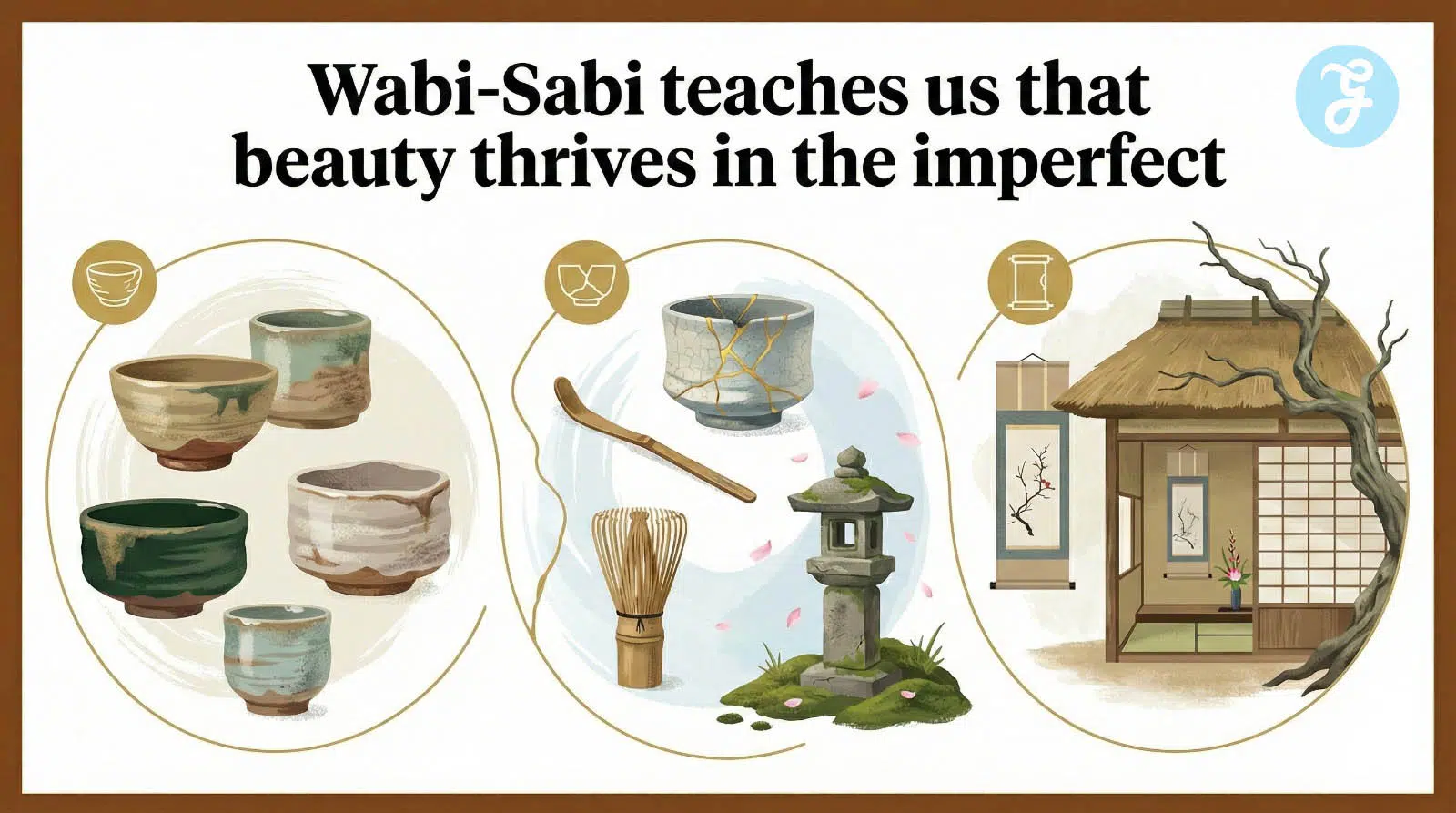
The Digital Mirror
We used to look at glossy magazines and know they were a lie. We understood that airbrushes and lighting rigs created those impossible standards. Now, the airbrush is in our pockets. It is in our bathroom mirrors. It is in the beauty filters that smooth our skin during a casual video call.
This constant retouching of reality has changed our brains. We have started to view our natural, unedited selves as a rough draft that needs fixing. We are living in a curated gallery of our own lives. The pressure to be flawless is no longer reserved for the elite. It is a daily requirement for the average person.
The Data of Despair
This is not just a feeling. The numbers tell a darker story. A landmark study by Thomas Curran and Andrew Hill found a staggering 33% increase in socially prescribed perfectionism since 1989. This is the specific, crushing belief that others expect us to be perfect.
This is a hidden tax on our collective mental health. It is the silent engine behind the global surge in anxiety and depression. When we set the bar at flawless, we ensure that every single day ends in a perceived failure. We are paying for this impossible standard with our peace of mind.
The Cost of Almost
There is a mathematical cruelty to perfectionism. Most projects reach 95% quality with a reasonable amount of effort. That final 5% is where the danger lies. That tiny sliver of perfect often demands 50% of our total energy.
It is the law of diminishing returns applied to the human soul. We exhaust our creative reserves chasing a finish line that does not exist. This obsession leads directly to burnout. We become so afraid of the almost that we stop starting altogether.
We have traded the joy of creation for the safety of the delete key. We are bankrupting our potential to pay for a polished facade. To find a way out of this trap, we must look deeper into the history of the tea masters.
The Tea Master’s Rebellion
To understand how we fix our modern burnout, we must travel back 800 years. It was shaped by Zen Buddhist thought in the Kamakura period. It did not appear overnight. It evolved slowly, reaching its clearest expression in the tea culture of the 15th and 16th centuries.
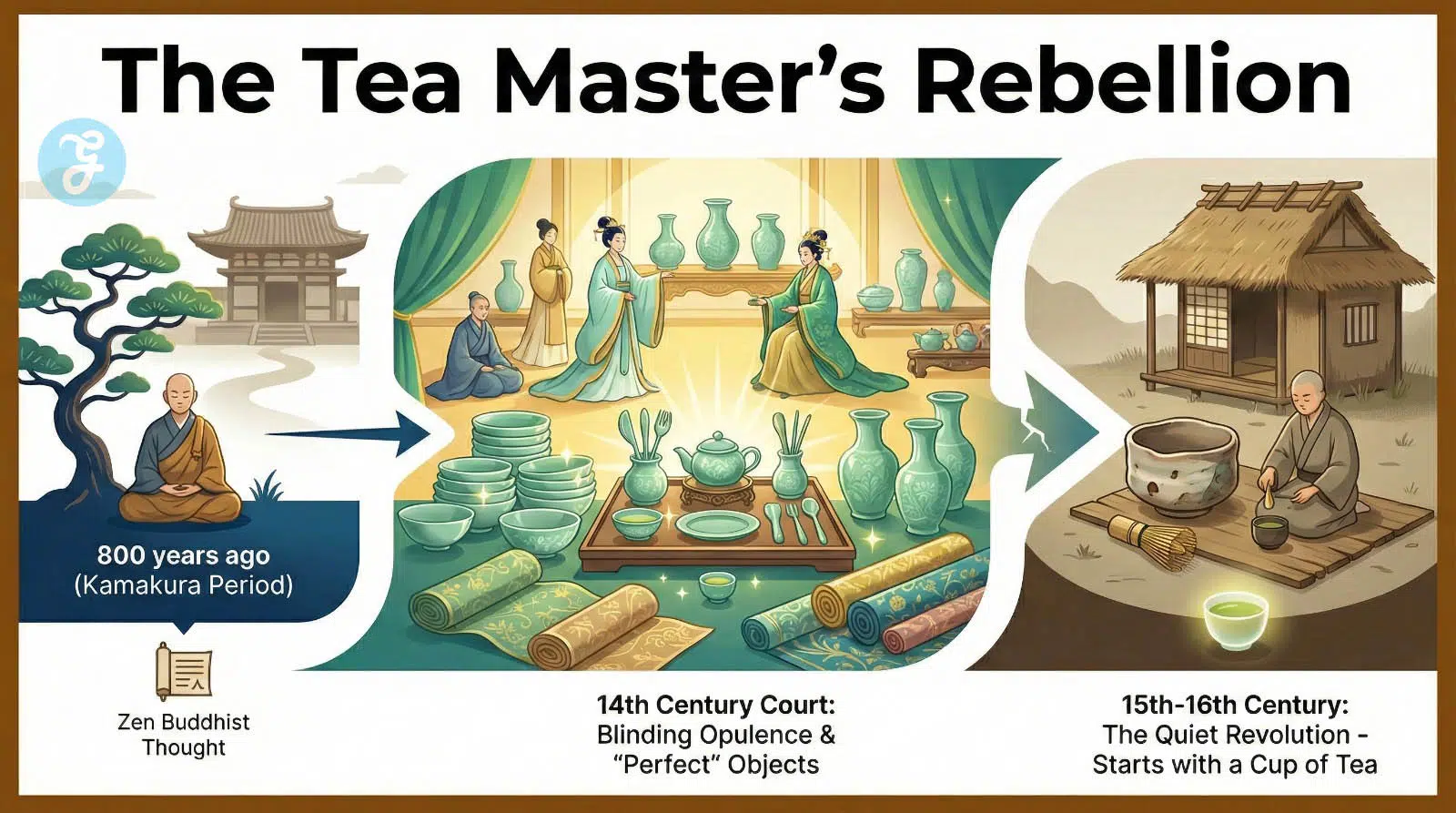 By the 14th century, the Japanese court had become a world of blinding opulence. The ruling class obsessed over “perfect” objects, importing flawless celadon bowls and pristine silk from China. Their tea gatherings were displays of extreme wealth and status. Everything was polished. Everything was symmetrical. Everything was expensive. Then came a quiet revolution. It did not start with a war. It started with a cup of tea.
The Mud and the Straw
The shift began when thinkers started to reject this cold perfection. They looked away from the gold and toward the earth. This was the birth of Wabi-Sabi. It was a mud and straw philosophy. It celebrated the rustic over the refined.
The movement found its greatest champion in the 16th century with a man named Sen no Rikyū. He was a tea master with a radical vision. Rikyū looked at the flashy, imported porcelain and saw something hollow. He began to host tea ceremonies in tiny huts made of humble materials. Instead of Chinese treasures, he used local pottery. He chose bowls that were slightly misshapen. He used wooden utensils that showed the grain of the tree. Legend says he once walked into a garden full of morning glories and plucked every single one. Inside the dim tea room, he displayed just one simple bloom. He wanted people to see that true beauty exists in a single, fleeting moment rather than in overwhelming abundance.
Defining the Untranslatable
We often try to define Wabi-Sabi as a single idea. It is actually two distinct concepts that merged over time.
Wabi is about inner richness. It is the choice to live simply. It suggests that when we strip away the clutter of “perfect” possessions, we find spiritual freedom. It is the quiet joy of a small room or a single flower.
Sabi is about the bloom of time. It is the beauty that only age can provide. Think of the patina on an old copper pot or the silver grey of a weathered fence. Sabi teaches us that wear and tear are not defects. They are the honest marks of a life well lived.
Together, they form a worldview that stands in total opposition to our modern upgrade culture. Perfectionism demands that we hide our age and replace our old tools. Wabi-Sabi asks us to cherish them.
The Wabi-Sabi Framework vs Modern Perfectionism
| Concept | Modern Perfectionism | The Wabi-Sabi Approach |
| Material Focus | Accumulating flawless, polished, and expensive status symbols. | Wabi: Paring down to essentials; finding inner richness in simplicity. |
| Passage of Time | Erasing age; viewing wear and tear as defects requiring replacement. | Sabi: Celebrating the patina; viewing weathering as honest marks of life. |
| Setbacks & Flaws | Hiding the breakages; living a curated, flawless digital facade. | Kintsugi: Illuminating fractures with gold; wearing scars as resilience. |
| Work & Goals | Chasing an impossible finish line; fearing the “almost” (Burnout). | The Unfinished: Accepting “B-plus work” and the messiness of trial and error. |
Nature as the Blueprint
Rikyū and the early tea masters looked to nature as their greatest guide. While they didn’t write modern manifestos, their philosophy can be distilled into three simple truths that our modern world ignores.
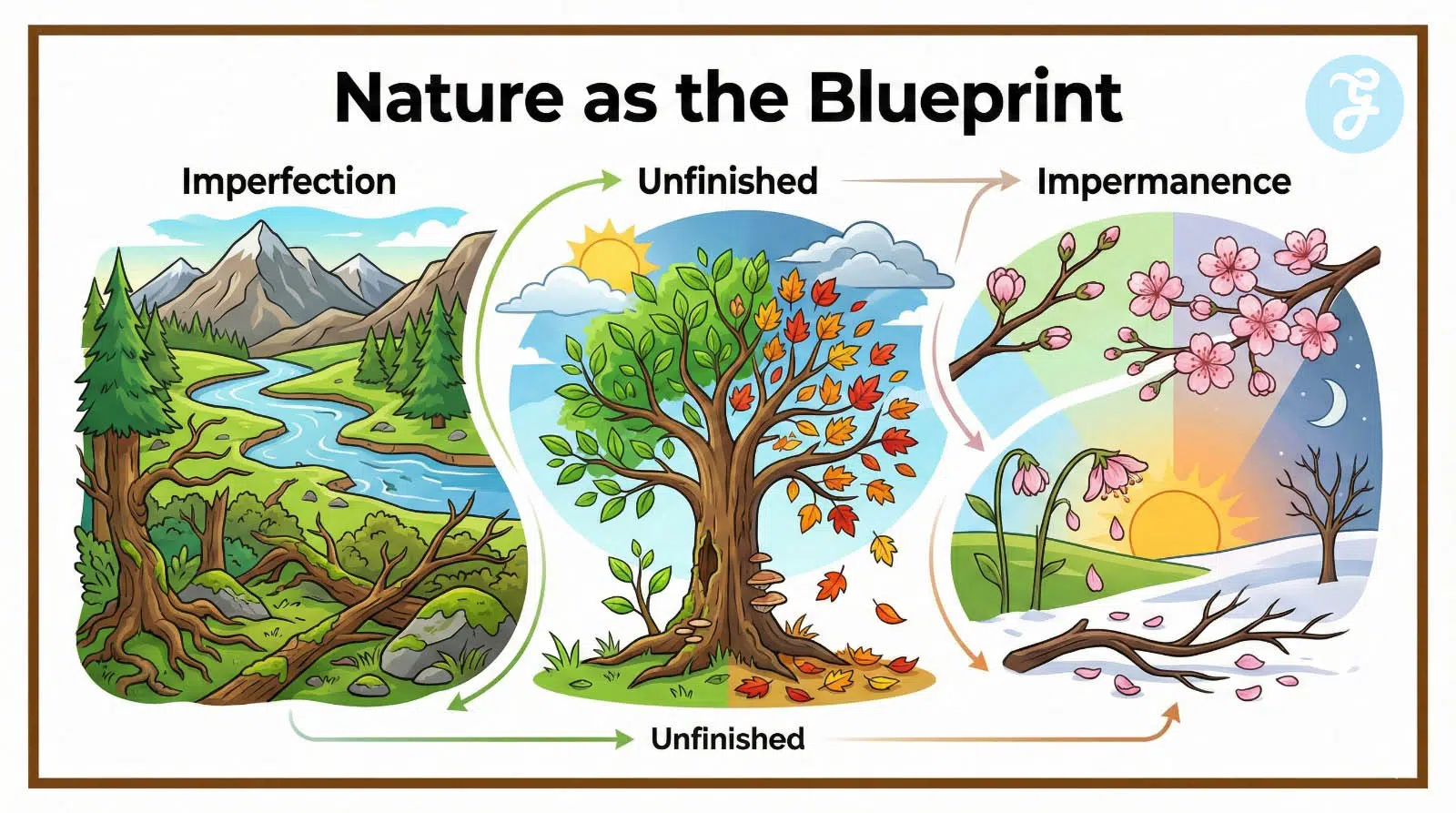 First, nothing is perfect. Look at a mountain range or a forest floor. There are no straight lines. There is no symmetry. Yet, the forest is breathtaking.
Second, nothing is finished. A tree is always growing, shedding leaves, or decaying. It is never in a final, static state. Our modern obsession with reaching the top or finishing a life goal is a myth.
Third, nothing is permanent. The seasons change. Flowers wilt. This is not a sad fact for the followers of Wabi-Sabi. It is what makes the moment valuable.
The Architecture of Imperfection
Wabi-Sabi is not a museum piece. It is a living, breathing framework for how we occupy space and time. In a world of sterile, mass-produced glass and steel, this philosophy offers a warmer alternative. It manifests in the objects we touch and the emotional baggage we carry.
Kintsugi: The Golden Scar
The most profound visual lesson of this tradition is Kintsugi. It is the Japanese art of repairing broken pottery with lacquer mixed with powdered gold. Most cultures try to hide a repair. They use clear glue to pretend the accident never happened. Kintsugi does the opposite. It illuminates the fracture. It treats the breakage as a vital part of the object’s history.
We must apply this to our own lives. Your “failed” startup is not a shameful secret. That “broken” relationship is not a waste of years. These are your golden joins. They make you more resilient and far more interesting than someone who has never known a setback. A person who has been broken and repaired carries a depth that “perfect” people simply cannot match. We are more beautiful not despite our scars, but because of them.
The Anti-Consumerist Angle
Perfectionism is the engine of modern consumerism. It convinces us that we need the newest phone, the whitest teeth, and the trendiest clothes. It demands constant “newness” because old things have flaws. Wabi-Sabi is a radical act of rebellion against this cycle.
It celebrates the patina. This is the subtle glow that comes to a wooden desk after decades of use. It is the way a favourite linen coat softens and fades over years of wear. These marks are not damage. They are the record of our days. When we embrace this, we stop being consumers and start being caretakers. We find peace in what we already own.
Workplace Wabi-Sabi
In the professional world, perfectionism is often a mask for fear. We polish a report for ten hours because we are terrified of being judged for a typo. This fear kills innovation. True creativity requires the messiness of trial and error.
Accepting “B-plus work” is a radical, productive act. It does not mean being lazy. It means knowing when a project is good enough to be useful. When we remove the crushing weight of “perfect,” we move faster. We take more risks. We allow ourselves to launch an imperfect idea and learn from its cracks. This is how progress actually happens.
The 800-Year-Old Cure
As we move deeper into 2026, the digital world is becoming increasingly artificial. AI can generate “perfect” faces and “perfect” prose. In this landscape, our human flaws are our only remaining currency.
The Unfiltered Life
We need to start living unfiltered. This means intentionally leaving cracks in our public personas. It means sharing the struggle, not just the trophy. When we show our real, unedited lives, we give others permission to do the same. This creates genuine connection. Perfectionism isolates us; Wabi-Sabi brings us together through our shared vulnerability.
Practical Steps

To heal, we must begin with two simple shifts.
First, we must pare down. Much of our stress comes from the clutter of high expectations. We try to be the perfect parent, the perfect employee, and the perfect friend all at once. Strip away the non-essentials. Focus on the few things that truly bring you inner richness.
Second, we must accept the “as is.” This is the ability to find beauty in a rainy afternoon that ruined your plans. It is the grace to look at an ageing body and see the wisdom of Sabi instead of a list of flaws.
The Imperfect Bowl
We must stop fighting the cracks. When we look back at those 800 years of wisdom, the message is clear. Our value does not come from our ability to stay brand new or remain flawless. It comes from how we handle the breakages.
Perfectionism is a finish line that keeps moving. It is a race you are designed to lose. Wabi-Sabi is the quiet realisation that there is no finish line at all. There is only the beauty of the here and now, cracks and all. Choosing the imperfect bowl is not a failure of taste. It is an act of courage. It is time to let the gold show through.






















