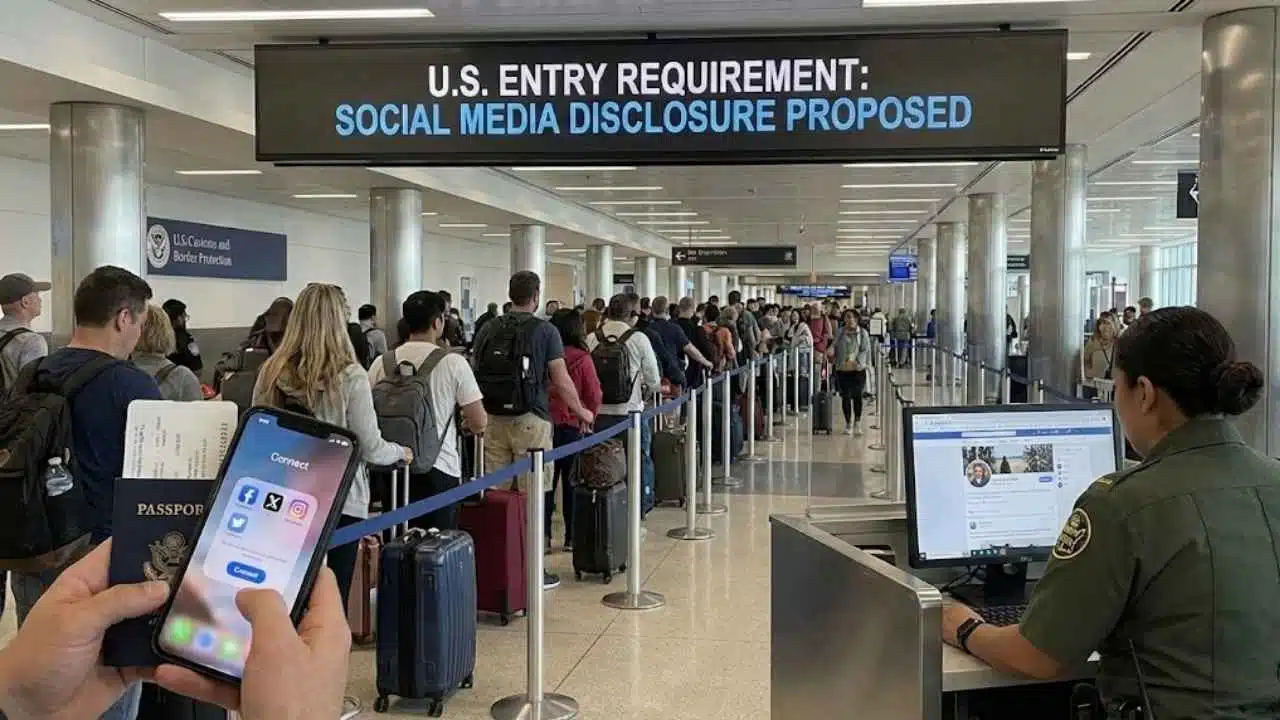
The United States is preparing a major shift in how it screens millions of foreign visitors each year. U.S. Customs and Border Protection has proposed new rules that would require travelers from 42 visa-waiver countries to provide extensive personal and digital information—including up to five years of social media history—before being allowed to enter the country. The proposal, published in the Federal Register on December 10, outlines a significant expansion of the Electronic System for Travel Authorization, known as ESTA, which currently allows eligible travelers to visit the U.S. for up to 90 days without needing a traditional visa.
Under the new proposal, social media disclosure—which previously was optional—would become a mandatory component of the application process. Travelers would need to list usernames used across major platforms during the past five years, even on accounts no longer active. In addition, applicants would be required to report all email addresses used within the last decade, phone numbers from the previous five years, and detailed biographical information about close family members, including parents, spouses, siblings, and children. This information would involve names, dates of birth, and current or most recent residences. The government argues that expanding the scope of data collection will improve identity verification and strengthen national security screening.
CBP plans to accept public comments for 60 days before deciding whether to move forward. If approved, the changes would be phased in gradually over the following weeks or months. Millions of travelers from countries such as the United Kingdom, Germany, France, South Korea, Japan, Australia, and others would be affected. The move reflects a broader U.S. effort to enhance digital-age vetting and signals a shift toward reviewing applicants’ online presence as a standard part of immigration and travel screening. Critics note that the scale of information being requested far exceeds what was previously considered necessary for short-term travel, raising questions about how the data will be reviewed, stored, and interpreted.
Visa Appointments Disrupted as Social Media Vetting Expands Globally
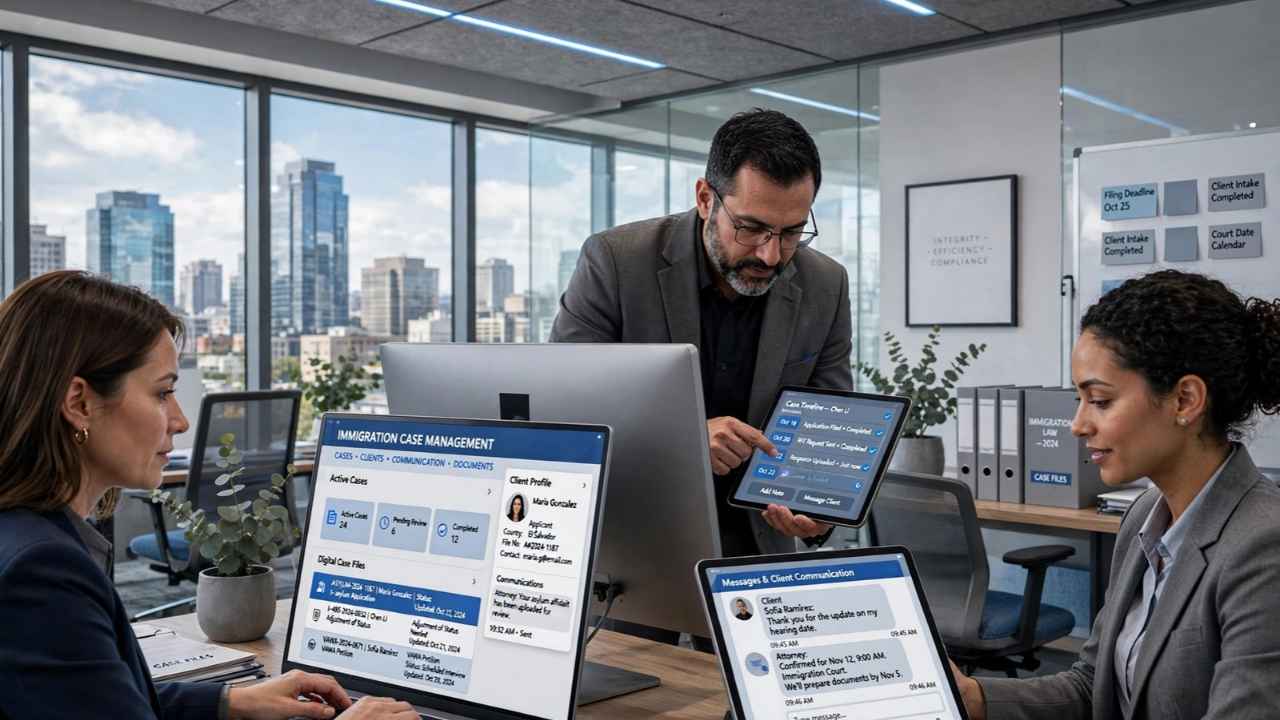
The announcement comes at a moment when U.S. consulates abroad are already struggling to manage the impact of another new social-media vetting rule. In India, one of the largest sources of U.S. work-visa applicants, consulates have begun canceling or rescheduling appointments for H-1B skilled workers and their H-4 dependent spouses. The disruptions stem from a new requirement that takes effect December 15, which obligates these applicants to allow U.S. officials access to five years of social media activity as part of their visa interviews.
Applicants who already completed biometric screenings—often weeks earlier—have been receiving sudden email notifications informing them that their scheduled appointments for December have been postponed, in many cases to March 2026. Such lengthy delays leave workers unable to report to new employers despite having job offers, while families who traveled abroad for the holiday season now face uncertainty over when they will be permitted to return to the United States. These postponements have created widespread frustration among workers, students, and dependents who depend on timely processing to maintain legal status, employment, and family stability.
According to an email from the U.S. Consulate in Chennai, the reduced appointment availability is due to “operational constraints” and the need to ensure that individuals seeking entry “pose no threat to U.S. national security or public safety.” Immigration attorneys report that consular posts throughout India are adjusting operations to accommodate the additional screening, which requires more time per applicant. Attorney James Hollis explained that consulates have “had to reduce the number of appointments each day,” leading to a backlog that could take months or even years to resolve.
The impact is particularly significant for Indian nationals, who represent more than 70 percent of all approved H-1B workers and nearly 90 percent of H-4 dependents. For many of these individuals, visa processing delays can disrupt employment contracts, academic terms, medical needs, travel plans, and financial obligations. The sudden appointment cancellations illustrate how deeply bureaucratic changes can affect highly skilled migrants whose contributions are essential to U.S. technology, healthcare, and research sectors.
Rising Privacy Concerns and Debate Over Free Speech Implications
As the U.S. government expands its use of social media in immigration decisions, legal experts, digital-rights advocates, and privacy organizations are sounding alarms about the potential consequences. Bo Cooper, an immigration attorney and former general counsel for the U.S. Immigration and Naturalization Service, described the shift as a “paradigm change” in how officials evaluate travelers. He emphasized that social media was once used primarily to verify specific pieces of factual information—such as confirming employment or detecting fraud. The new approach, however, opens the door for broad interpretation of a person’s online behavior, opinions, or associations, which could be used to deny travel based on discretionary policies rather than concrete security threats.
Civil liberties groups argue that there is little evidence demonstrating that mandatory social media screening has successfully identified terrorists or prevented attacks. Instead, they say such programs often lead to misinterpretation of jokes, satire, political statements, cultural expressions, or comments taken out of context. This can disproportionately affect individuals from countries where political dissent is common on social media or where online expression may be misunderstood by U.S. officials who lack cultural or linguistic familiarity.
Sophia Cope, a senior staff attorney with the Electronic Frontier Foundation, warned that the policy infringes on the privacy rights of millions of innocent travelers. She noted that requiring applicants to disclose their social media histories effectively exposes not just the applicant but also their friends, family members, colleagues, and followers. Even American citizens connected to foreign travelers could inadvertently have their posts or interactions reviewed. Cope emphasized that these practices pose risks to free expression, as people may censor themselves online to avoid jeopardizing travel opportunities or immigration benefits.
In addition, concerns persist about how long the U.S. government retains this information, how it is analyzed, who has access to it, and what safeguards are in place to prevent misuse. Privacy advocates warn that digital footprints can be ambiguous and subjective, making them unreliable indicators of character or intent. As scrutiny of online presence becomes a formal part of travel screening, people may feel pressured to delete posts, avoid political commentary, or restrict their personal expression across platforms.
Tourism Industry Warns of Economic Fallout and Travel Barriers
The proposed policies have also drawn strong reactions from the tourism and travel industries. A coalition of more than 20 global travel companies recently submitted a letter opposing related increases in visa fees and highlighting the cumulative effect of new screening burdens. Industry leaders worry that mandatory social media disclosure, combined with growing documentation requirements and rising costs, may discourage millions of potential visitors from choosing the United States as a destination.
Travel organizations point out that international tourism was already recovering slowly after pandemic-era disruptions, and additional barriers could suppress visitor numbers further. Lengthier application processes, invasive data requirements, and fears about privacy may lead travelers to opt for destinations with more straightforward entry procedures. These concerns are particularly acute ahead of major global events scheduled in the United States, including next year’s World Cup, which is expected to attract record numbers of international fans.
Experts warn that fewer tourists would have ripple effects on airlines, hotels, restaurants, small businesses, and local economies that rely heavily on foreign spending. The U.S. hospitality sector, still rebuilding from years of reduced travel, could experience lost revenue at a moment when it needs stability. Some industry representatives argue that while security is important, policies must balance protection with accessibility, especially for countries whose citizens pose low statistical security risks and contribute significantly to the tourism economy.
The broader debate now centers on whether the U.S. can maintain strong national-security measures without imposing disproportionate burdens on visitors and workers. As policymakers review public comments and consider revisions, advocates on both sides are pressing for solutions that protect the country while still welcoming global travelers. The coming months will determine whether these proposals become permanent features of the U.S. travel system or whether public response prompts further adjustments.