

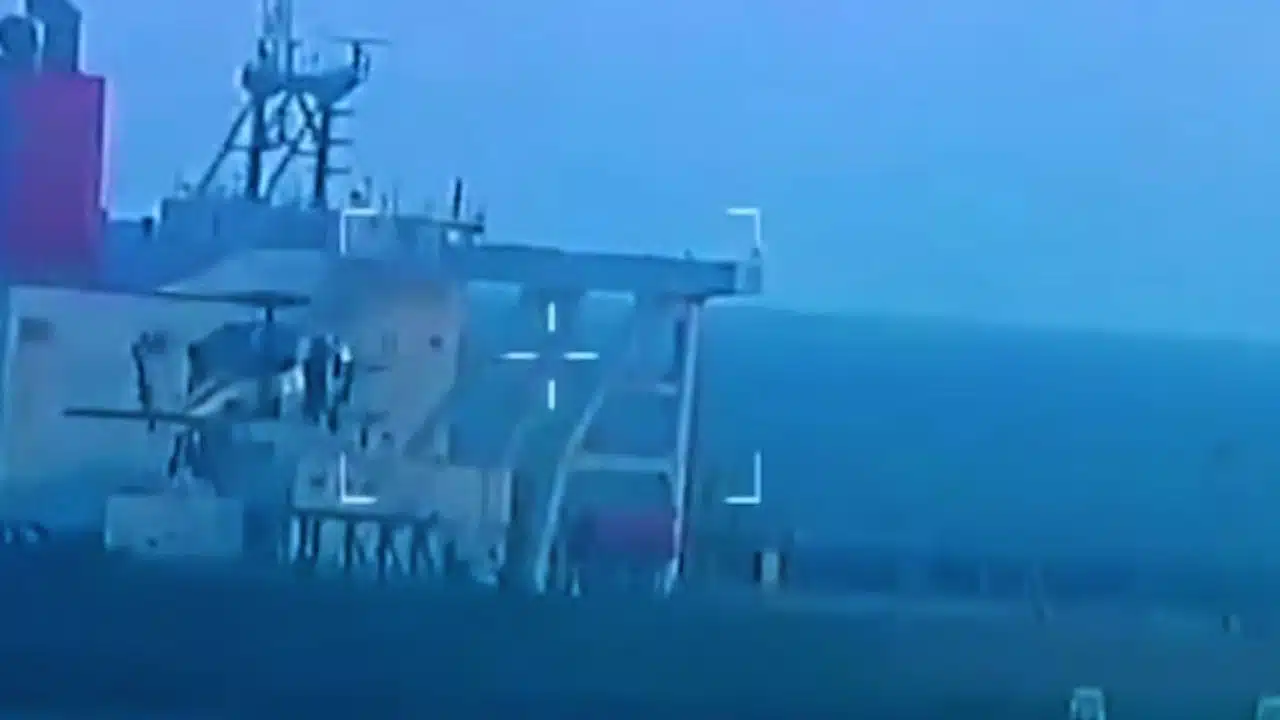
The United States has seized a sanctioned oil tanker off the coast of Venezuela, significantly heightening tensions between Washington and the government of President Nicolás Maduro. The operation, first reported by international media, involved U.S. forces intercepting the vessel in Caribbean waters as part of a broader effort to enforce sanctions aimed at restricting Venezuela’s ability to export crude oil.
Although U.S. officials have not publicly confirmed every detail, individuals familiar with the matter say the move represents one of the most assertive maritime enforcement actions taken so far. Venezuela’s state oil company, along with its information and oil ministries, did not respond to inquiries about the incident, while the White House declined to comment.
The seized tanker was reportedly transporting Venezuelan crude, a cargo increasingly difficult to move due to international sanctions and rising military risks. Maritime analysts note that insurance costs have surged as shipping companies add “war clauses” to their contracts, reflecting growing concerns about possible interceptions, delays, or confrontations involving U.S. military forces operating near Venezuelan waters.
Military Buildup: The Largest U.S. Deployment in Latin America Since 1989
The intervention follows months of intensified U.S. military presence throughout the Caribbean Basin. Nearly 10,000 American troops and 6,000 sailors are now deployed in the region, supported by at least eight warships, including the USS Gerald R. Ford, the world’s largest aircraft carrier. This buildup is part of a pressure campaign Washington describes as targeting organized crime, drug trafficking networks, and illegal arms smuggling—though regional governments and human rights groups argue the underlying motivations appear far more complex.
Only a day before the tanker seizure, 18 U.S. fighter jets conducted a coordinated flyover of the Gulf of Venezuela, a move widely interpreted as a show of force directed at Caracas. Since September, U.S. forces have carried out more than 20 strikes on vessels in the Caribbean and eastern Pacific, killing at least 87 people. American officials characterize these operations as counter-narcotics missions, but critics question the timing and scale, arguing that the actions increasingly resemble military coercion rather than strictly law-enforcement measures.
The sustained military pressure has fueled anxiety among neighboring countries, many of which rely on stable maritime routes for trade. Diplomats within the region warn that persistent displays of naval power risk miscalculations that could trigger broader conflict involving multiple nations.
Growing Pattern of Naval Interference in Regional Shipping
The recent seizure fits into a broader pattern of U.S. maritime actions that have disrupted sanctioned shipments to Venezuela. In November, the U.S. Navy destroyer USS Stockdale repeatedly obstructed the passage of the sanctioned Russian tanker Seahorse, preventing it from delivering fuel to Venezuelan ports. The destroyer maneuvered directly into the vessel’s path several times, forcing it to reverse course and ultimately abandon its mission.
Such operations have intensified Venezuelan concerns that Washington aims not only to enforce sanctions but also to restrict the country’s access to energy supplies and international trade. Economists warn that unpredictable maritime disruptions could discourage foreign shipping companies from operating near Venezuelan waters, strangling the nation’s already-weakened energy sector and further isolating its economy. The uncertainty has also rattled global oil markets at times, as analysts attempt to gauge whether continued U.S. naval activity could limit supply routes or spark retaliatory measures.
Regional Response and Legal Questions Intensify
Venezuela has publicly condemned the tanker seizure and called on OPEC members to intervene, arguing that the U.S. is attempting to exert control over the country’s oil reserves. President Maduro has framed the escalating conflict as fundamentally about energy resources rather than security or narcotics enforcement. Colombia’s President Gustavo Petro echoed that sentiment, saying that oil—not drug trafficking—is central to rising tensions.
Human rights groups and legal scholars have increasingly questioned the legality of U.S. military actions throughout the region. Critics argue that some operations appear to stretch the boundaries of international law, particularly when conducted in contested waters or without clear authorization. They warn that a growing reliance on military intervention sets a troubling precedent for handling geopolitical disputes.
As Washington continues its pressure campaign and Venezuela strengthens its diplomatic pushback, the region faces a moment of heightened uncertainty. The tanker seizure marks a new and more confrontational phase—one that could reshape maritime security, energy politics, and international relations across the Americas.






















