The fashion industry has a dirty secret hiding in plain sight: the vibrant colors and high-performance fabrics we wear every day are heavily reliant on toxic petrochemicals, heavy metals, and “forever chemicals” (PFAS). For decades, the global supply chain simply accepted this massive environmental cost as the price of doing business.
But in 2026, a radical shift is underway. By tapping into the power of microbes, seaweed, plant waste, and customized enzymes, UK biological fashion startups are brewing up a clean revolution directly in the lab. Innovators are treating the textile supply chain not as a chemical engineering problem, but as a biological opportunity.
To understand where the industry is heading, we need to look at the market dynamics driving this rapid and necessary growth.
Why UK Biological Fashion Startups Are Exploding Right Now

The sudden surge in biotech fashion companies isn’t just a fleeting trend; it is a forced market evolution. Strict new environmental regulations across Europe and the US are actively penalizing brands that use high-polluting synthetic dyes and non-biodegradable synthetics. At the same time, consumers are demanding total transparency, refusing to buy clothes treated with harmful chemicals that inevitably wash into local water systems and food chains.
The United Kingdom has become the undisputed epicenter of this shift. This dominance is heavily supported by world-class university spinout programs, particularly from institutions like Imperial College London, and a massive influx of venture capital looking for the next big climate-tech unicorn.
Investors and major fashion houses now realize that true sustainability doesn’t just mean recycling old plastic. It means engineering the toxic chemicals out of the supply chain entirely from day one.
The Regulatory Tsunami Forcing the Biological Shift
The transition to biological textiles is no longer a voluntary CSR (Corporate Social Responsibility) initiative; it is a legal requirement. Brands that fail to integrate these UK biological fashion startups into their supply chains will soon face crippling fines and market lockouts due to incoming, aggressive legislation:
The EU Strategy for Sustainable and Circular Textiles (2030)
This sweeping legislation dictates that all textile products placed on the EU market must be durable, repairable, recyclable, and, crucially, free of hazardous substances. Brands relying on toxic synthetic dyes will simply not be allowed to sell in Europe.
The REACH Restriction on PFAS
The European Chemicals Agency (ECHA) is actively moving to restrict over 10,000 per- and polyfluoroalkyl substances (PFAS), for outdoor and performance brands, finding biological, PFAS-free alternatives like those engineered by UK spinouts is now an existential deadline.
The UK Green Claims Code
The Competition and Markets Authority (CMA) is aggressively cracking down on “greenwashing.” Brands can no longer vaguely claim a garment is “eco-friendly” if the underlying chemical dye process destroys local waterways. Partnering with verified biotech startups provides the hard, biological data required to survive a CMA audit.
Here are the top players making that happen across the region.
Top 10 UK Biological Fashion Startups Leading the Clean Movement
These ten companies are completely rethinking how clothing is colored, treated, and manufactured, proving that biological solutions can scale to meet massive global demand.
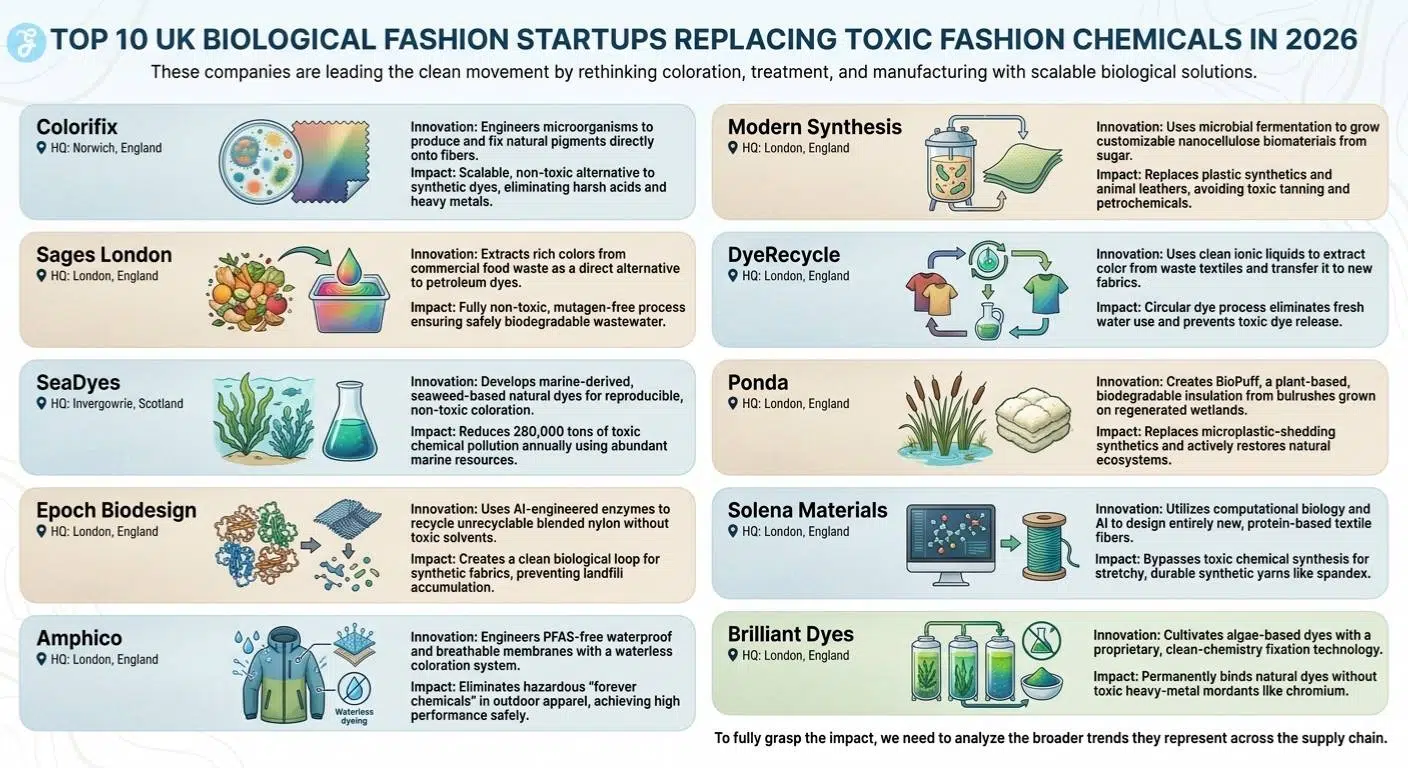
1. Colorifix
HQ Location: Norwich, England
Colorifix is replacing the heavily polluting synthetic dye industry by using synthetic biology to replicate nature’s exact color palette. Instead of using harsh acids and heavy metals for dye fixation, they engineer microorganisms to naturally produce and fix pigments directly onto textile fibers.
This matters because it offers commercial fashion brands a highly scalable, drop-in replacement that drastically cuts down on the toxic water pollution historically associated with clothing manufacturing.
2. Sages London
HQ Location: London, England
Sages London is pioneering natural, biochemical dyeing processes by using commercial food waste as their primary raw material. Their extraction technology pulls rich, stable colors from agricultural byproducts to act as a direct alternative to synthetic, petroleum-derived dyes.
They are vital to the industry because their fully non-toxic, mutagen-free process ensures that the resulting textile wastewater is safely biodegradable and free of chemical hazard.
3. SeaDyes
HQ Location: Invergowrie, Scotland
A spinout from the prestigious James Hutton Institute, SeaDyes is developing marine-derived, seaweed-based natural dyes. Their proprietary technology creates a reproducible, non-toxic alternative to standard petroleum-based coloration.
By utilizing abundant marine resources, they are actively targeting the reduction of the 280,000 tons of toxic chemical pollution the textile industry dumps into global waterways annually.
4. Epoch Biodesign
HQ Location: London, England
Epoch Biodesign tackles the chemical breakdown of existing toxic synthetics using breakthrough, AI-engineered enzymes. Their biological process recycles previously unrecyclable blended nylon textiles, breaking them down into base components without relying on the highly toxic industrial solvents traditionally required for chemical recycling.
This innovation matters because it finally offers a clean, biological loop for synthetic fabrics that would otherwise sit in landfills for centuries.
5. Amphico
HQ Location: London, England
Amphico is transforming the performance-wear sector by engineering PFAS-free waterproof and breathable membranes alongside a waterless coloration system. The outdoor apparel industry is notoriously reliant on hazardous “forever chemicals” for water resistance, making Amphico’s biological and recyclable alternative a massive disruptor.
They allow major brands to achieve high-tier garment performance without embedding long-lasting toxic risks into the environment.
6. Modern Synthesis
HQ Location: London, England
Modern Synthesis uses microbial fermentation to literally grow nanocellulose biomaterials from scratch. By feeding sugar to bacteria, they cultivate a customizable, strong polymer that acts as a direct replacement for plastic-based synthetic textiles and animal leathers.
This matters because it entirely circumvents the highly toxic chemical tanning processes of the leather industry and the petrochemical extrusion required for modern synthetics.
7. DyeRecycle
HQ Location: London, England
DyeRecycle uses innovative green chemistry, specifically clean ionic liquids, to extract color from waste textiles and seamlessly transfer it to new fabrics. This unique “circular dye” process eliminates the need for fresh water and prevents the release of toxic dye chemicals into the environment.
By using old clothes as the actual pigment source, they are helping brands hit dual goals: reducing chemical dye usage and increasing textile recycling.
8. Ponda
HQ Location: London, England
Formerly known as Saltyco, Ponda is replacing chemically intensive synthetic insulations, like polyester fill and polyurethane foams, with its proprietary BioPuff material. This is a completely plant-based, biodegradable insulation derived from bulrushes grown on regenerated UK wetlands.
They matter because they are effectively replacing microplastic-shedding materials with a biological alternative that actively restores natural ecosystems during its growth phase.
9. Solena Materials
HQ Location: London, England
Solena Materials utilizes advanced computational biology and AI to design entirely new, protein-based textile fibers. By engineering these fibers at a molecular level from non-petroleum feedstocks, they are building a fresh supply chain from the ground up.
This is a game-changer because it completely bypasses the toxic chemical synthesis historically required to create stretchy, durable synthetic yarns like spandex or nylon.
10. Brilliant Dyes
HQ Location: London, England
Brilliant Dyes specializes in cultivating high-quality, algae-based natural dyes for commercial apparel. Their core intellectual property revolves not just around growing the biological pigment, but around a proprietary, clean-chemistry fixation technology.
This allows their natural dyes to permanently bind to commercial fabrics without the toxic heavy-metal mordants, like chromium or copper, traditionally required to make natural dyes colorfast.
To fully grasp the impact of these companies, we need to analyze the broader trends they represent across the supply chain.
What These UK Biological Fashion Startups Tell Us
The emergence of these innovators reveals several major truths about the future of commercial apparel. Here are the four key takeaways:
1. Biology Outpaces Petroleum
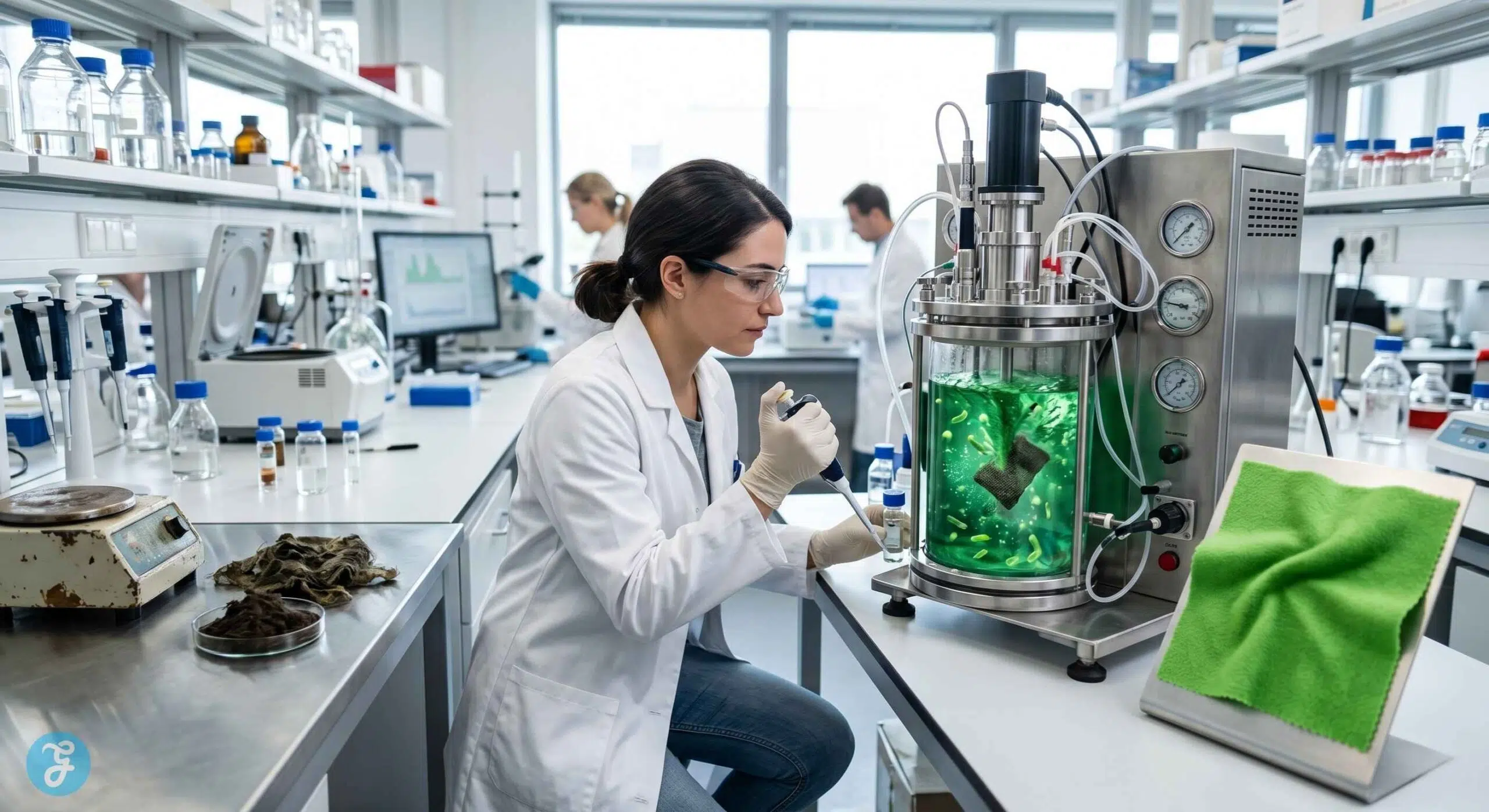
The era of relying on fossil fuels to color and coat our clothing is ending. These UK biological fashion startups are proving that lab-grown microbes and enzymes can achieve the exact same performance and colorfastness as traditional chemicals, without the ecological baggage.
2. Waste is the Ultimate Resource
Companies like Sages London and DyeRecycle highlight a massive shift toward circularity. Agricultural food waste and old garments are no longer trash; they are highly valuable, non-toxic feedstocks for the next generation of dyes.
3. Performance Without the Poison
For years, waterproof and breathable gear required toxic PFAS. Innovators like Amphico are proving that we do not have to compromise human and environmental health to create durable, high-performance outdoor apparel.
4. Decentralized, Local Production
By leveraging fermentation and locally grown biomaterials, these startups are showing that nations can create their own clean textiles domestically, reducing reliance on opaque, heavily polluting overseas chemical supply chains.
These lessons point to a completely redefined landscape for anyone involved in fashion commerce.
At a Glance: 2026 UK Clean Fashion Innovators
Here is a quick-scan summary of the ten UK biological fashion startups leading the charge against toxic textile chemicals.
| Startup | HQ Location | Core Innovation |
| Colorifix | Norwich, England | Microbial pigment engineering and dye fixation |
| Sages London | London, England | Non-toxic dyes extracted from commercial food waste |
| SeaDyes | Invergowrie, Scotland | Marine-derived, seaweed-based natural dyes |
| Epoch Biodesign | London, England | AI-engineered enzymes for toxic-free textile recycling |
| Amphico | London, England | PFAS-free waterproof membranes and waterless dyeing |
| Modern Synthesis | London, England | Lab-grown nanocellulose biomaterials via fermentation |
| DyeRecycle | London, England | Circular color extraction using clean ionic liquids |
| Ponda | London, England | Plant-based, biodegradable insulation (BioPuff®) |
| Solena Materials | London, England | AI-designed, non-petroleum protein textile fibers |
| Brilliant Dyes | London, England | Algae-based dyes with clean-chemistry fixation |
The Blueprint for a Clean Supply Chain
The transition away from toxic fashion chemistry is no longer a fringe sustainability goal; it is a core business necessity. For founders, the success of these UK spinouts proves that there is a massive market appetite for deep-tech biological solutions. The key is ensuring your innovation can act as a seamless, scalable drop-in for existing factory machinery.
For SMB buyers and procurement officers, the time to start testing and sourcing from these UK biological fashion startups is right now. Early integration of PFAS-free membranes and microbial dyes will future-proof your brand against incoming regulations and give you a powerful edge with conscious consumers.
Finally, for investors, the message is crystal clear. The next unicorns in the apparel sector will not be the brands selling the clothes, but the biotech firms holding the intellectual property that cleans up how those clothes are made.
To help clarify some of the technical aspects of this shift, we have gathered the most common questions regarding biotech in fashion.
A Note on Methodology: This selection reflects extensive market research, technical review, and analysis of recent funding data conducted by our editorial team. While these UK biological fashion startups are numbered for structural clarity, this list does not represent a strict commercial hierarchy or a definitive ranking. Each innovator featured here provides distinct, highly verified breakthroughs in eradicating toxic chemicals and decarbonizing the global apparel supply chain.
Frequently Asked Questions About UK Biological Fashion Startups
1. What exactly is synthetic biology in the context of fashion?
Synthetic biology involves redesigning organisms for useful purposes by engineering them to have new abilities. In fashion, this usually means programming microbes, bacteria, or yeast to naturally “brew” specific dye pigments or grow strong protein fibers, completely bypassing the need for petroleum-based chemical synthesis.
2. Are clothes dyed by UK biological fashion startups safe to wear?
Yes, they are exceptionally safe. The microorganisms used to produce the dyes are carefully controlled in lab environments, and the final extracted pigment is heavily purified before it ever touches a textile. These biological dyes are actually much safer for your skin than traditional synthetic dyes, which often contain harsh chemical residues and heavy metals.
3. Why is it so hard to replace PFAS in waterproof clothing?
PFAS (per- and polyfluoroalkyl substances) are incredibly effective at repelling both water and oil, making them the cheap, easy standard for outdoor gear. Replacing them is difficult because natural alternatives often struggle to match that extreme level of durability and breathability. However, startups are now successfully mimicking natural structures, like the water-repellent surface of lotus leaves, to achieve the same performance biologically.
4. Is lab-grown clothing scalable for fast fashion?
Scaling is currently the biggest hurdle. While the science works perfectly in a lab, brewing thousands of gallons of microbial dye or growing tons of nanocellulose requires massive fermentation infrastructure. However, with recent injections of venture capital, many of these UK biological fashion startups are actively transitioning from pilot programs to full commercial-scale facilities.