

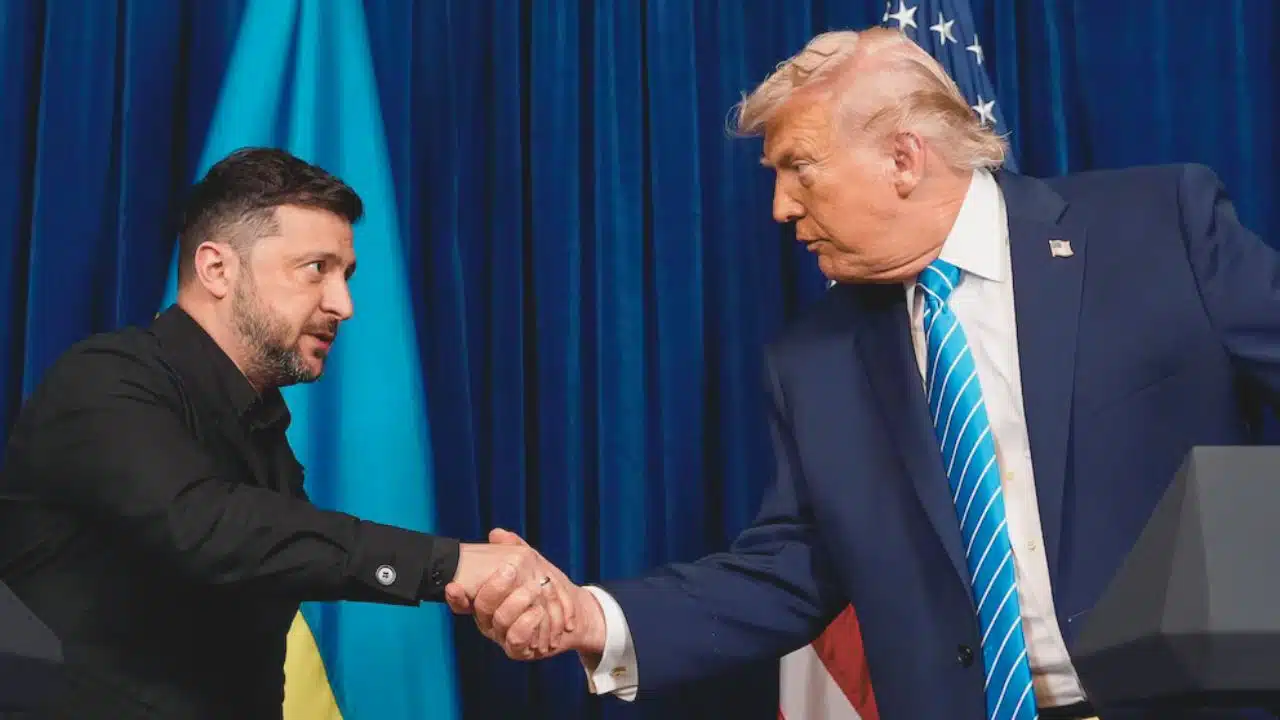
Russia and Ukraine are pressing competing narratives to influence the Trump Ukraine peace plan after U.S.-Ukraine talks in Geneva and a Trump-Putin call set up new working groups aimed at ending the war.
Why the Trump Ukraine peace plan matters now
Diplomacy has accelerated as President Donald Trump’s administration tries to turn parallel contacts—Kyiv-facing and Moscow-facing—into a single negotiating track that can produce a durable settlement. The immediate challenge is that both sides want Washington to adopt their sequencing: Ukraine wants security and sovereignty locked in early, while Russia argues that political decisions on disputed regions must come first.
The public signals from both capitals show a classic contest to frame what “peace” should mean, and what the United States should treat as non-negotiable. That framing battle matters because the U.S. role is not only diplomatic—Washington also shapes Europe’s posture, reconstruction planning, sanctions coordination, and the credibility of any future security arrangement.
Ukraine’s push: security, sovereignty, sequencing
Kyiv’s core message to Washington is that any agreement must protect Ukraine’s sovereignty and prevent a future invasion, not simply pause fighting. In the official readout of U.S.-Ukraine discussions, both sides emphasized that any future agreement must “fully uphold Ukraine’s sovereignty” and aim for a “sustainable and just peace,” language that aligns with Ukraine’s long-standing position on non-recognition of forced territorial changes.
Ukraine has also tied its diplomacy closely to Washington’s process, describing intensive work with the U.S. team on a peace framework and reporting progress on documents that are “fully agreed upon” or near final stages. In the same Ukrainian account, President Volodymyr Zelenskyy and President Trump were described as having discussed “all aspects” of the peace framework and agreed on the sequence of further steps.
For Ukraine, this sequencing is central: security guarantees first (or at least in parallel), then the hardest political questions. Ukrainian officials have used that approach to reassure the public and partners that negotiations are not a substitute for security, but a route to it.
Where Kyiv sees leverage
Ukraine’s leverage in talks often comes from keeping Western partners aligned around principles—sovereignty, reconstruction, and accountability—while seeking concrete security arrangements that outlast election cycles. That is why Kyiv has highlighted continued coordination with European partners as the negotiations advance.
Russia’s push: no temporary ceasefire, pressure on Kyiv over Donbas
Moscow’s message to President Trump, as presented in the Kremlin’s account of the leaders’ phone call, is that a temporary ceasefire backed by Ukraine and Europe would “merely prolong the conflict” and increase escalation risks. In that same Kremlin account, Russia argues that a “definitive cessation of hostilities” requires a “bold and responsible political decision” by Kyiv that aligns with Russian-American discussions, and it singles out decisions regarding Donbas as urgent.
The Kremlin’s framing aims to shape Trump’s view of what is “realistic” by putting responsibility on Kyiv for making political concessions before any pause in fighting. Russia also links a post-war future to economic opportunity, with the Kremlin account stating that Trump emphasized ending the war quickly and described “impressive prospects for economic cooperation” with both Russia and Ukraine once hostilities end.
Moscow’s goal in Washington
Russia’s near-term objective appears to be moving U.S. diplomacy away from a ceasefire-first approach and toward a package that addresses territory and political control questions early. That approach would also test whether the Trump administration is willing to accept Russia’s sequencing as the fastest path to a deal.
What Washington has put on record
The clearest public U.S. position in the available official record is the joint statement after U.S.-Ukraine talks in Geneva, which describes “meaningful progress” toward aligning positions and says the sides drafted an “updated and refined peace framework.” The statement also says the United States and Ukraine will continue intensive work on joint proposals and remain in close contact with European partners.
At the same time, the Kremlin’s account of the Trump-Putin call suggests Washington is also building a separate channel to structure negotiations through two specialized working groups—one focused on security and one on economic issues—with terms to be finalized “most likely in early January.” If those groups begin operating, they could become the operational engine of negotiations, but they also risk becoming a venue where Russia and Ukraine compete to lock in different definitions of “security” and “normalization.”
Key positions at a glance
| Issue | Ukraine’s publicly stated emphasis | Russia’s publicly stated emphasis | U.S. publicly stated emphasis |
| Core principle | Peace must uphold Ukraine’s sovereignty. | Temporary ceasefire would prolong the conflict. | Sustainable, just peace that upholds Ukraine’s sovereignty. |
| Sequencing | Work with U.S. team on a peace framework; agree next steps and sequence. | Kyiv must make a political decision on Donbas without delay. | Continue intensive joint work; presidents make final decisions. |
| Process design | Negotiations coordinated with partners and U.S. team. | Two working groups on security and economics proposed for early January. | Close contact with European partners; refined framework drafted. |
Timeline: the recent diplomatic arc
The available official readouts show a two-track push—U.S.-Ukraine alignment on a refined framework, and U.S.-Russia engagement on process mechanics and sequencing. These are the key dated markers visible in those statements.
| Date | Event | What was said publicly |
| Nov. 23, 2025 | U.S.-Ukraine meeting in Geneva | Talks “highly productive,” progress aligning positions, refined peace framework drafted, and emphasis on Ukraine’s sovereignty. |
| Late Dec. 2025 | Ukraine describes progress with U.S. team | Ukraine reports significant results with documents agreed or near final stages and agreement on the sequence of steps. |
| Dec. 28, 2025 | Trump-Putin phone call (Kremlin account) | Kremlin says Trump and Putin share skepticism about a temporary ceasefire and agreed to pursue two working groups (security, economic) with terms set in early January. |
Final thoughts
The next test is whether the U.S. process can reconcile two incompatible sequences—security-first versus political-concessions-first—without either side viewing the outcome as a trap. The proposed working groups could help by separating technical work (security arrangements, economic measures) from top-level political decisions, but only if both Kyiv and Moscow treat them as problem-solving forums rather than leverage points.
For readers tracking the Trump Ukraine peace plan, watch for three practical signals: whether the U.S.-Ukraine “refined framework” is expanded into implementable steps, whether the security working group has clear participation and deliverables, and whether talks with European partners stay synchronized rather than fragmented. The public record already shows all parties preparing for an early-January phase of intensified diplomacy, even as battlefield realities and domestic politics continue to shape negotiating room.





















