Have you been thinking about starting a company in Europe, only to feel overwhelmed by the details? With so many cities and opportunities available, choosing the right location can quickly become confusing. The pressure to make the perfect decision can be intense, especially when one wrong move might cost valuable time and money.
Here is the encouraging part. The United Kingdom currently leads the European startup ecosystems, with 28 startups ranked among the top 100 rising European startups in 2026. France and Germany follow closely, each contributing 23 startups.
This highlights an important reality: Europe’s startup landscape is thriving and becoming more diverse every year.
This guide breaks down what makes each major startup hub unique—exploring London’s financial strength, Berlin’s creative energy, and Paris’s leadership in deep tech. Take a moment, settle in, and explore everything needed to find the ideal startup destination.
What Makes a Strong Startup Ecosystem?
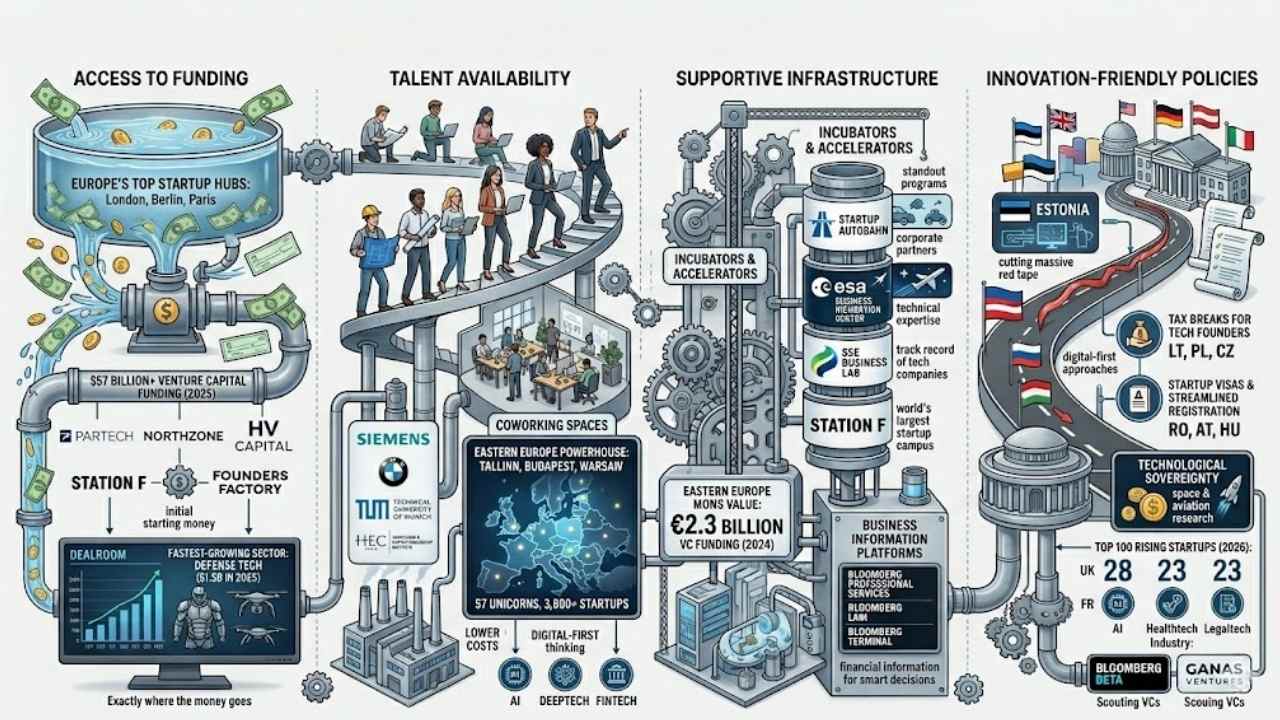
A strong startup ecosystem brings together four key ingredients. Money flows freely, talented people want to work there, support systems help founders succeed, and governments create rules that help businesses grow.
These elements work together like a well-oiled machine, turning your raw ideas into thriving companies that change industries.
Access to funding
Money flows like water in Europe’s top startup hubs. London, Berlin, and Paris attract venture capital firms that write big checks to founders with solid ideas. European startups raised over $57 billion in venture capital funding in 2025.
Investment funds like Partech, Northzone, and HV Capital hunt for the next big thing in these ecosystems. The UK leads with 28 startups among Europe’s top 100 rising startups in 2026, largely because founders there tap into deep pools of cash.
Getting money matters most when you first start out. Station F in Paris and Founders Factory in London offer much more than desk space. They connect you directly with people who fund startups.
Dealroom tracks exactly where the money goes. For instance, Dealroom reports that defense tech is Europe’s fastest-growing VC sector, hitting $1.5 billion in funding in 2025. If you are building defensetech or dual-use technologies, capital is highly accessible right now.
Talent availability
Top startup hubs across Europe attract world-class talent because they offer real opportunities for growth. London, Berlin, and Paris pull in engineers, designers, and founders from across the globe. These cities host companies like Siemens and BMW, creating reliable pipelines of skilled workers.
Universities such as the Technical University of Munich and HEC Paris Innovation & Entrepreneurship Institute produce graduates ready to build the next big thing. Coworking spaces in these hubs become natural gathering spots where talent meets talent.
Eastern Europe has emerged as a serious talent powerhouse. The region holds 57 unicorns and over 3,800 startups, meaning thousands of ambitious developers work there. Cities like Tallinn, Budapest, and Warsaw offer lower costs than Western Europe.
Young professionals in these regions grew up with digital-first thinking. This makes them natural fits for artificial intelligence, deeptech, and finance & fintech startups.
Great talent does not always live where you expect it to be. Sometimes you have to look where opportunity is building something real, like the rapidly growing tech hubs in Eastern Europe.
Supportive infrastructure
Startup hubs across Europe have built strong support systems that help founders succeed. Incubators and accelerators provide mentorship, office space, and connections to investors.
London, Berlin, and Paris lead the way with thousands of support programs available to founders. Eastern European startups received 2.3 billion euros in venture capital funding during 2024, showing how strong infrastructure attracts investment.
Here are a few standout infrastructure programs that can accelerate your growth:
- Startup Autobahn: A massive innovation platform in Germany connecting startups with corporate partners in the mobility sector.
- ESA Business Incubation Center: Perfect for space & aviation startups needing technical expertise and funding.
- SSE Business Lab: A Swedish incubator known for producing highly successful tech companies.
- Station F: The world’s largest startup campus located in Paris, housing thousands of entrepreneurs.
Infrastructure goes beyond just buildings and funding. Business information platforms make it easier for founders to launch their companies. Bloomberg Professional Services, Bloomberg Law, and the Bloomberg Terminal give startups access to the financial information they need to make smart decisions.
Innovation-friendly policies
Governments across Europe shape startup success through smart policies. The Financial Times ranked Europe’s leading start-up hubs as of February 26, 2025, and policy frameworks ranked high on the list. Countries like Estonia lead the charge with digital-first approaches that cut massive amounts of red tape.
Lithuania, Poland, and Czechia have all rolled out tax breaks for tech founders. France and Germany tie as second-largest contributors with 23 startups each among Europe’s top 100 rising startups. These nations understand that artificial intelligence, healthtech, and legaltech sectors need breathing room to grow.
Romania, Austria, and Hungary have jumped on board too, offering startup visas and streamlined business registration. Policy makers also tackle technological sovereignty head-on by funding research in space and aviation.
These moves matter because companies like Bloomberg Beta and Ganas Ventures scout locations where governments actually support entrepreneurs. The UK leads with 28 startups among the top 100 rising European startups in 2026, proving that strong policy plus market access creates winners.
Top European Startup Ecosystems in 2026
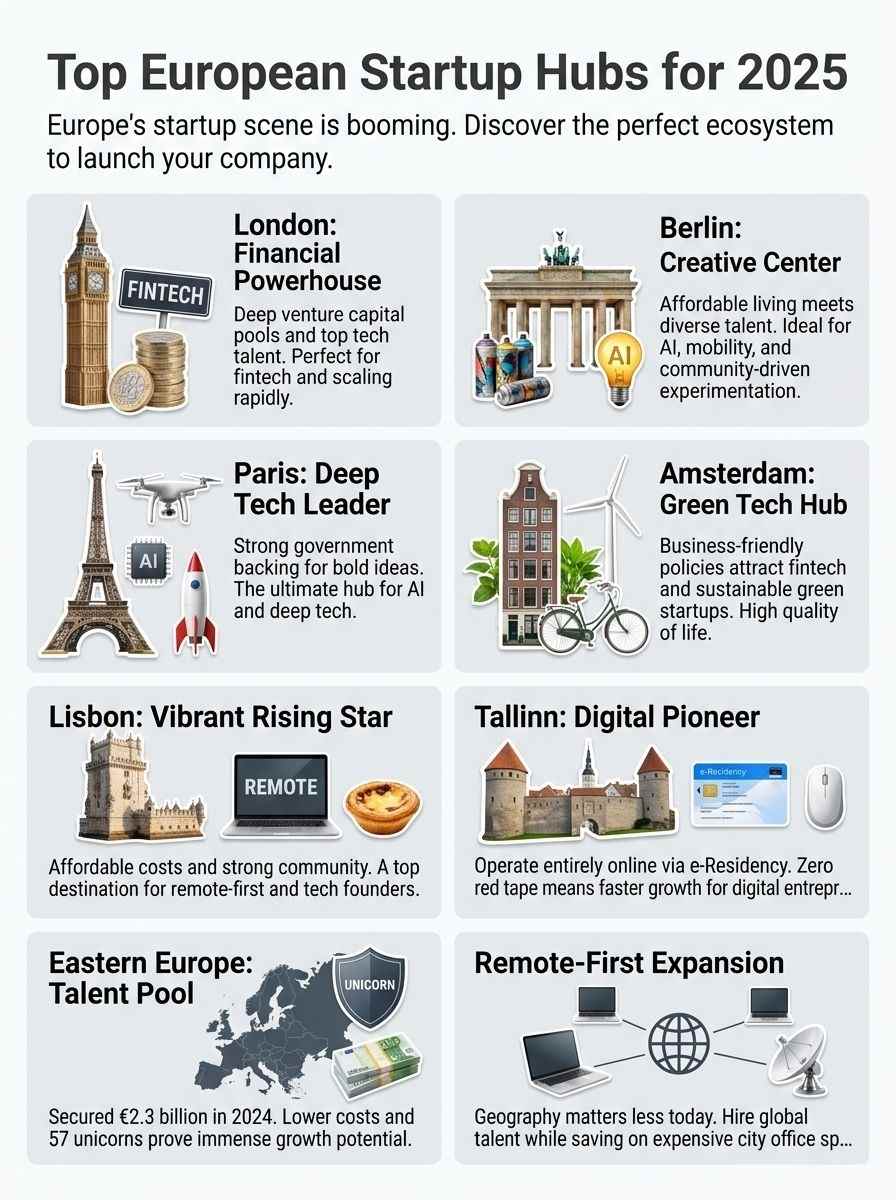
Europe’s startup scenes are booming right now. I am going to show you which specific cities are leading the charge.
London: The financial and tech powerhouse
London stands as the undeniable financial and tech powerhouse of Europe. The UK leads European startup ecosystems with 28 startups among the top 100 rising European startups in 2026. This dominance reflects London’s deep roots in finance & fintech, where Bloomberg L.P. and other major institutions shape market trends.
Access to funding flows freely here. In fact, UK startups and scaleups raised an impressive $23.6 billion in venture capital funding in 2025.
Here are the sectors seeing the most explosive growth in London right now:
- Finance & Fintech: Led by giants like Revolut reaching a $75 billion valuation in 2025.
- Artificial Intelligence: AI accounted for 33% of all UK VC investment in 2025.
- Enterprise Software: This foundational sector surged 25% to hit $9 billion in funding.
Talent availability remains exceptional, with skilled workers drawn to opportunities in cybersecurity, transportation & mobility, and physical AI. London’s startup ecosystem thrives because of its innovation-friendly policies and established global reputation.
The Financial Times released a ranking of Europe’s leading start-up hubs as of February 26, 2025, and London secured a top position. This combination of capital, talent, and infrastructure makes London the go-to destination for startups aiming to scale globally.
Berlin: A hub for creativity and innovation
Berlin stands as Germany’s creative powerhouse, attracting founders who want to build something totally different. Germany ties with France for the second-largest contributor to Europe’s top 100 rising startups, and Berlin captures much of that top-tier talent. The city offers lower costs than London or Paris, meaning your startup money stretches much further.
Founders here focus heavily on AI, deeptech, and transportation & mobility solutions. The startup community values experimentation over quick profits. You will find mentors, coworking spaces, and investor networks at every corner.
Entrepreneurs in Berlin benefit from a thriving culture that celebrates innovation and unternehmertum. The city hosts regular pitch events and hackathons where you meet other founders facing similar challenges. Access to funding flows steadily through local venture capital firms and international investors who watch Berlin closely.
This German hub proves that you do not need to be in the most expensive city to build something remarkable. The combination of affordable living, creative talent, and strong community support makes Berlin a serious contender for any new business.
Paris: The center of deep tech and AI startups
Paris stands as Europe’s absolute powerhouse for artificial intelligence and deeptech innovation. France ranks as the second-largest contributor to Europe’s top 100 rising startups with 23 companies in 2026. The city attracts founders who want to build serious technology, not just simple consumer apps.
Paris offers strong government backing and venture capital networks that fuel highly ambitious projects. A perfect example is the Paris-based company Mistral AI. In September 2025, Mistral secured a €1.7 billion Series C funding round, which nearly doubled its valuation to $14 billion and cemented its status as Europe’s leading AI contender.
Here is a quick comparison to help you weigh your options between the two biggest hubs:
| Feature | London Ecosystem | Paris Ecosystem |
|---|---|---|
| Top Performing Sector | Finance & Fintech | Artificial Intelligence & Deeptech |
| Venture Capital Focus | Enterprise software, banking, healthtech | Machine learning, quantum computing, advanced materials |
| Key Institutional Support | Founders Factory, London Stock Exchange | Station F, La French Tech, Eurazeo |
The ecosystem here favors founders with bold ideas and deep technical expertise. The city’s academic institutions produce top talent in computer science and engineering, feeding the startup pipeline directly. The French startup ecosystem demonstrates that Europe is home to nearly half of the top 100 emerging startup ecosystems globally.
Amsterdam: Sustainability and fintech leader
Amsterdam stands out as Europe’s premier sustainability and finance hub. The city attracts startups focused on green technology and digital banking solutions. Organizations like StartupAmsterdam connect founders with the investors, mentors, and resources they need to grow quickly.
The ecosystem thrives because it combines strong funding access with a talent pool that highly values innovation. Many finance & fintech companies choose Amsterdam for its business-friendly policies and incredibly central European location. The city’s commitment to sustainability means startups can build products that solve real environmental problems while making money.
Amsterdam’s fintech scene moves incredibly fast. Companies in transportation & mobility, space & aviation, and other sectors find excellent support here. The city hosts accelerators and venture capital firms that understand both traditional banking and cutting-edge technology.
Lisbon: Rising star with a vibrant ecosystem
Lisbon has become one of Europe’s most exciting startup destinations in recent years. The city attracts founders and investors who want significantly lower costs than London or Berlin. Portugal’s capital offers a strong community of entrepreneurs, affordable office space, and an amazing quality of life.
Startups in Lisbon focus on finance & fintech, transportation & mobility, and space & aviation sectors. The city hosts major global conferences, including the massive Web Summit, which brings intense global attention to local founders. Organizations like Startup Portugal provide excellent structural support.
Founders choose Lisbon for practical reasons beyond just the lifestyle appeal. Venture capital funding in Eastern Europe reached 2.3 billion euros during 2024, and nearby Lisbon captures part of this broader European investment wave. Marketing agencies, AI development teams, and fintech companies all operate very successfully from the city.
The ecosystem perfectly supports remote-first startups that hire talent from across Europe. Entrepreneurs find that the combination of lower expenses and strong connections makes the city a highly strategic place to launch.
Tallinn: A digital-first approach to startups
Tallinn stands out as Europe’s digital powerhouse, built entirely on a foundation of smart technology and forward-thinking policy. Estonia’s capital city has created something truly special. They have a government that runs almost entirely online, meaning startups face almost zero red tape.
Founders can register a business in minutes, not months. The city attracts entrepreneurs from across the globe who want to move fast and build big. You can start companies without ever setting foot in Estonia, a feature that draws talent from absolutely everywhere.
Tallinn’s support for digital entrepreneurs creates real advantages for founders building in finance & fintech, transportation & mobility, and artificial intelligence sectors. The city offers a thriving community of builders and serious scale-up support.
Tallinn proves that your physical location matters far less than having the right digital tools, smart policies, and a connected community working together.
Emerging Trends in European Startup Ecosystems
European startups are racing to build companies around artificial intelligence, deeptech, and sustainability solutions that solve real global problems. Entrepreneurs across the continent are also ditching traditional office spaces. They are launching remote-first operations that tap into talent pools far beyond their local city limits.
Growth in AI and deep tech sectors
Artificial intelligence and deeptech startups are completely taking over Europe’s startup hubs right now. Paris leads this charge as the center of deeptech and AI startups, attracting founders who want to build the next big thing. France and Germany tied as the second-largest contributors with 23 startups each among Europe’s top 100 rising startups in 2026.
These numbers show that AI is not just a buzzword anymore. It is the real deal driving massive investment and talent across the continent. London, Berlin, and other major hubs are all racing to grab a piece of this action.
Startups focused on deeptech are getting serious money from venture capital firms. For example, UK AI startups alone raised a record $7.9 billion in venture capital in 2025. This massive cash flow means founders have real resources to build products that actually matter.
This shift into specialized, technology-driven startups separates the leaders from the rest. It gives Europe a fighting chance against major global competitors in the US and Asia.
Increased focus on sustainability
Green goals now drive major startup decisions across Europe. Founders build companies that solve climate problems and aggressively cut waste. Eastern Europe’s startup ecosystem, valued at 243 billion euros with over 3,800 startups and 57 unicorns, helps lead this charge.
These companies focus heavily on solutions that reduce carbon footprints. Investors are prioritizing specific green verticals:
- Transportation & Mobility: Innovations in electric vehicle infrastructure and smart city transit.
- Space & Aviation: Developing cleaner, more efficient aviation technologies.
- Green Fintech: Creating financial tools dedicated entirely to funding sustainable projects.
Investors pour money into these ventures because they see profit and purpose working together. Sustainability has officially become a strict filter for investors. Startups in London, Berlin, and Paris fiercely compete to show their green credentials.
Bloomberg and BloombergNEF track these environmental shifts closely. The startup hubs in Europe now measure success not just by profit, but by actual impact on the planet.
Expansion of remote-first startups
Remote-first startups are completely reshaping Europe’s startup landscape in 2026. Founders no longer need to live in expensive cities like London or Berlin to build highly successful companies. Teams spread across multiple countries now collaborate seamlessly.
This massive shift cuts operational costs dramatically. Startups save thousands of dollars on office space and can hire the absolute best people regardless of their physical location. Eastern Europe’s startup ecosystem proves that amazing talent exists everywhere.
Europe’s top startup hubs now compete on totally different terms than before. London still leads with 28 startups among Europe’s top 100 rising startups, yet remote-first companies actively challenge the old model. Founders can build finance & fintech solutions from Lisbon or transportation & mobility startups from smaller cities.
This incredible flexibility attracts founders who value a healthy work-life balance and strong community. Remote-first startups in AI, deeptech, and sustainability sectors are proving that strict geography matters less than ever before.
Why Tallinn is a Unique Startup Hub
Tallinn stands apart because the government built digital systems directly into every single layer of society. This makes it incredibly simple for startups to operate without any bureaucratic red tape. Entrepreneurs here tap into the famous e-Residency program and access global markets from day one.
Benefits for e-Residents
Estonia’s e-Residency program gives digital entrepreneurs real, actionable power. You get full access to a complete digital business setup without ever leaving your home office.
Here are the top advantages of becoming an e-Resident:
- You can officially register and start a company online in just a few hours, saving weeks of frustrating paperwork.
- Your digital signatures carry full legal weight in Estonia, allowing you to sign binding contracts from anywhere in the world.
- You can open and manage your business bank account entirely remotely, operating like a true digital nomad.
- Tax filing happens through incredibly simple online systems, drastically cutting down the time you spend on annual accounting.
- Your company immediately qualifies for European Union benefits and legal protections, opening doors to massive continental markets.
Support for digital entrepreneurs
Tallinn actively leads the charge in supporting digital entrepreneurs across all of Europe. The city offers programs that let founders easily run businesses entirely online, no matter where they actually live in the world.
The local ecosystem provides several targeted support structures:
- Grants and Subsidies: Government funding initiatives help cover early development costs so you can reach the market much faster.
- High-Speed Infrastructure: Estonia’s digital framework ranks among Europe’s absolute best, enabling smooth remote-first operations.
- Tax Incentives: Favorable startup tax policies reduce operational costs, letting you reinvest profits directly into your team.
- Accelerator Access: Programs like Lanzadera and local pitch competitions give you direct visibility to major venture capital investors.
How to Choose the Right Ecosystem for Your Startup
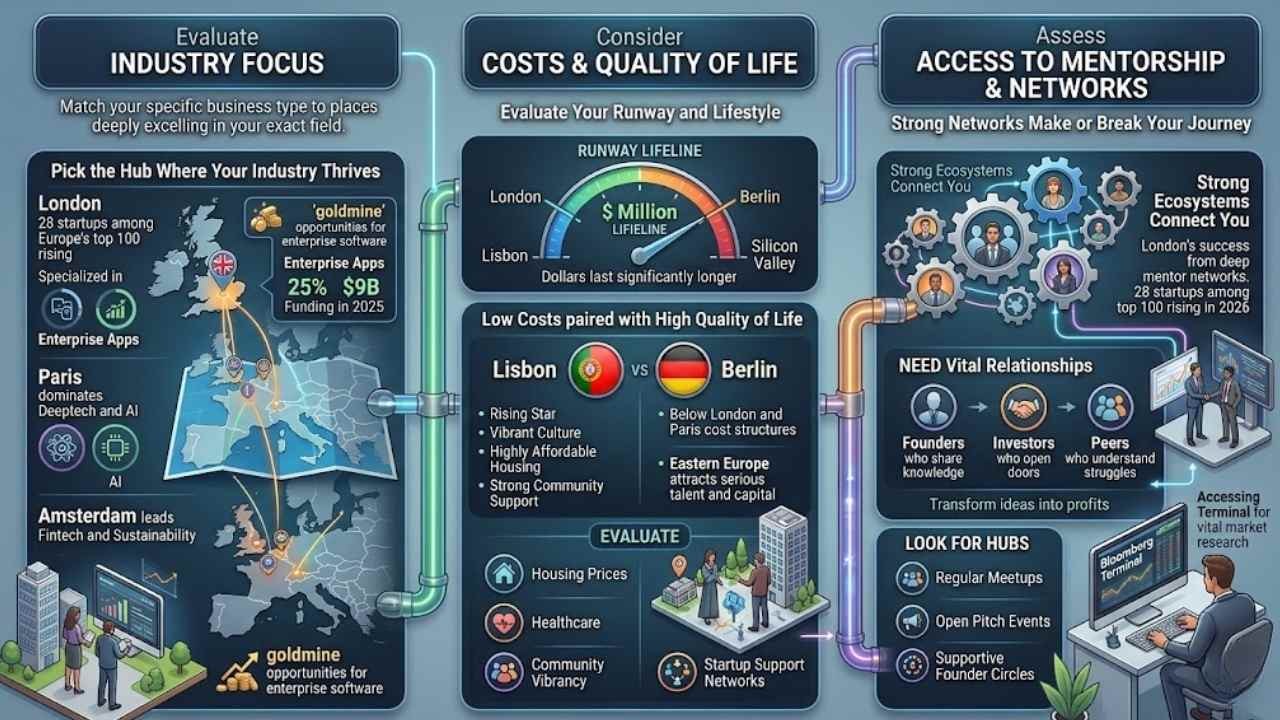
Picking the right startup home matters more than you probably think. You should start by matching your specific business type to places that already deeply excel in your exact field. You will want to compare living costs, standard salary levels, and tax rates across cities.
Evaluate industry focus
Your startup’s specific industry focus shapes absolutely everything. London leads with 28 startups among Europe’s top 100 rising companies, but those startups operate across many different sectors. Berlin and France each claim 23 startups, yet they excel in totally different areas.
You need to thoughtfully match your business to the right city. Paris heavily dominates deeptech and artificial intelligence ventures. Amsterdam strongly leads in fintech and sustainability projects. Pick the hub where your exact industry already thrives, not just any city with popular buzz.
Look at what each ecosystem does best before you make a commitment. For example, if you are building enterprise software applications, the UK is a goldmine. In 2025, enterprise apps surged 25% to raise $9 billion in funding in the UK alone. Your success depends entirely on finding a community that speaks your language and clearly understands your business model.
Consider costs and quality of life
Berlin and Lisbon offer startup founders a massive competitive advantage. They provide low living costs paired perfectly with a very high quality of life. Berlin’s cost structure sits well below London and Paris, letting founders naturally stretch their budgets further while building out their teams.
Lisbon has quickly emerged as a rising star with a vibrant culture, highly affordable housing, and strong community support. Eastern Europe’s startup ecosystem demonstrates exactly how cost-effective regions attract serious talent and massive capital.
Your runway is your lifeline. A million dollars in funding will last significantly longer in Lisbon or Berlin than it ever could in London or Silicon Valley.
Cost matters, but the daily quality of life shapes whether founders actually stay put. Cities like Amsterdam balance slightly higher expenses with an exceptional quality of life and access to top talent. You should carefully evaluate local housing prices, healthcare systems, and general community vibrancy alongside the available startup support networks.
Assess access to mentorship and networks
Mentorship and strong professional networks will absolutely make or break your startup journey. Strong ecosystems connect you directly with people who have successfully walked the path before. London leads European startup hubs with 28 startups among the top 100 rising European startups in 2026, and this success stems directly from deep mentor networks.
You desperately need founders who share their knowledge freely. You need investors who can open difficult doors. You need peers who truly understand your daily struggles. These vital relationships transform raw ideas into highly profitable companies.
Look actively for hubs that host regular local meetups, open pitch events, and supportive founder circles. For instance, you might want to check if a local hub provides access to a Bloomberg Terminal for vital market research. Talk directly to founders already operating in your target city to evaluate the quality of the advice you will likely receive.
Final Thoughts
Europe’s startup ecosystems offer very real opportunities for founders who know exactly where to look. The current data strongly backs this up. London actively leads with 28 startups in Europe’s top 100 rising companies, while France and Germany each contribute 23 startups that will shape tomorrow’s global markets.
You have learned that strong ecosystems need funding access, highly talented people, helpful infrastructure, and policies that genuinely welcome innovation. Berlin sparks amazing creativity, Paris pushes artificial intelligence completely forward, and Amsterdam aggressively champions fintech and sustainability.
Tallinn perfectly proves that smaller cities can easily punch above their weight with digital-first approaches. Picking the exact right ecosystem simply means matching your startup’s needs with what each specific city offers.
Your next step is very simple. Research the unique hubs that fit your vision, connect directly with founders already working there, and take immediate action on building your company in a place where it can truly grow.