
Buying a house in Italy’s carnival cities sounds exciting, doesn’t it? But it can also feel tricky. Property taxes, legal steps, and finding the right spot can confuse many buyers.
It’s easy to miss details or overspend if you’re not careful.
Italy is famous for its vibrant carnivals like Venice’s magical masks or Viareggio’s grand floats. These events make nearby homes highly sought after, boosting property value in these areas.
This creates both opportunities and challenges for buyers.
This blog offers 8 tips to make your property purchase in Italy easier. From setting budgets to understanding local rules, we’ve got you covered. Ready to learn more? Keep reading!
Key Takeaways
- Research carnival city neighborhoods. Prices vary, like €7,000–€9,000 per sq ft in Venice’s San Marco or €1,200–€1,800 in Ivrea outskirts.
- Plan a clear budget. Include taxes (2%-9% transfer tax), agent fees (3%), and notary charges (1%-2%). Check for repairs too.
- Work with experts. Hire local real estate agents and Italian property lawyers to handle paperwork and legal steps smoothly.
- Inspect homes carefully for cracks or issues. Check if the house follows local regulations to avoid big problems later.
- Get a Codice Fiscale before buying in Italy—it’s needed for contracts and payments during the process!
Research the Real Estate Market

Study how prices change in different areas, and don’t rush. Compare options to spot a good deal that fits your needs.
Understand property trends in carnival cities
Property trends in carnival cities often shift due to demand. Buyers flock to areas near famous events or attractions, raising prices in these spots. Venice and Viareggio are great examples of cities where housing markets heat up during festivals.
Prices can also vary based on the neighborhood’s charm or accessibility. Some areas appeal more to tourists, while others attract families seeking quieter streets. Properties closer to canals, piazzas, or parade routes typically cost more but bring better rental potential. Buying close to action can be costly but offers rewards if done wisely.
Compare prices across different neighborhoods
When buying a home in Italy’s carnival cities, comparing prices is like hunting for treasure. Each neighborhood offers a different vibe, cost, and set of perks. Here’s a quick glance at prices so you can keep your wallet in check while picking the right spot.
| City/Neighborhood | Average Price per Square Foot (€) | Why Choose It |
|---|---|---|
| Venice – San Marco | €7,000-€9,000 | Close to iconic landmarks, but tourist-heavy. |
| Venice – Cannaregio | €4,000-€6,000 | Quieter vibe, family-friendly, with scenic canals. |
| Viareggio – Seafront Area | €3,500-€5,000 | Beachfront views, ideal for vacation homes. |
| Viareggio – Inner City | €2,500-€3,500 | Cheaper but still close to festive attractions. |
| Ivrea – Historic Center | €2,000-€3,000 | Rich history with carnival charm. |
| Ivrea – Outskirts | €1,200-€1,800 | Budget-friendly, more space for your money. |
Watch for local quirks too. Venice properties often come with maintenance costs due to humidity. Seafront homes in Viareggio might need stormproofing. Weigh the pros and cons of each area before taking the plunge.
Set a Clear Budget
Buying a house in Italy means planning for every euro spent. Think about property taxes, repairs, and even insurance premiums before signing anything.
Account for taxes and additional fees
Taxes and extra fees can add up fast when buying property in Italy. Plan for these costs to avoid surprises.
- Pay transfer tax at the time of purchase. This varies between 2% to 9% of the market value, based on if it’s your main home or not.
- Budget for capital gains tax if selling later within five years—this can reach 26%.
- Include notary charges, which often cost around 1% to 2% of the sale price, plus VAT.
- Real estate agents usually charge a fee—often about 3% from both buyer and seller, excluding VAT.
- Add land registry fees for title registration; this ensures ownership is legally recorded.
- Property inspections may need funding before sealing a binding agreement with the seller.
- Don’t forget property insurance premiums to protect your new home from damages or disasters!
Consider renovation costs, if applicable
Old homes in Italy may need repairs. Fixing roofs, plumbing, or electricity can cost a lot. Check every corner for hidden issues before buying. Even small cracks can lead to big bills later.
Get estimates from local builders. Use these to plan your budget. A stitch in time saves nine” applies here—fixing problems early can save you money.
Choose the Right Location
Pick a spot that fits your lifestyle and goals. Think about how the area feels during and after carnival season.
Proximity to carnival venues and attractions
Living near carnival venues can add joy to your daily life. Festivals like Venice’s Carnival or Viareggio’s parade draw huge crowds and energy. Buying a property close by means easy access to events and activities, without long travel.
Consider noise levels during festivities before committing. Crowded areas may bring vibrant chaos but less peace. Think about rental potential too—properties close to famous events often attract tourists willing to pay in euros for short stays.
Accessibility to transportation and amenities
Good transportation makes life easier. Choose a property close to bus stops, train stations, or airports. It will save you time and stress during carnival seasons. Easy access to these options also increases the value of your investment.
Look for stores, hospitals, and schools nearby too. Walking distance to grocery shops or pharmacies is a big plus. Such amenities add comfort and convenience to daily living while boosting long-term appeal for future buyers or renters.
Work with Local Professionals
Finding help on the ground makes things smoother. An expert can save you time, money, and headaches.
Hire a reputable real estate agent
A local real estate agent knows the Italian property market well. They can help you find homes that match your budget and needs. Their advice saves time and prevents mistakes during the purchase process.
Agents also handle tricky paperwork, like land registry checks and contracts. Many speak English, making communication easy for foreign buyers. Pay their fee—usually 3% to 5% of the sale price—but know it’s worth it for smooth transactions.
Consult with an Italian property lawyer
Hire an Italian property lawyer early in the process. They will check land registry records, confirm ownership, and spot legal issues. This step protects you from bad surprises later.
A good lawyer explains taxes, local rules, and contract terms clearly. They ensure your property purchase in Italy follows all laws. Their help makes the process smooth and legally binding.
Inspect the Property Thoroughly
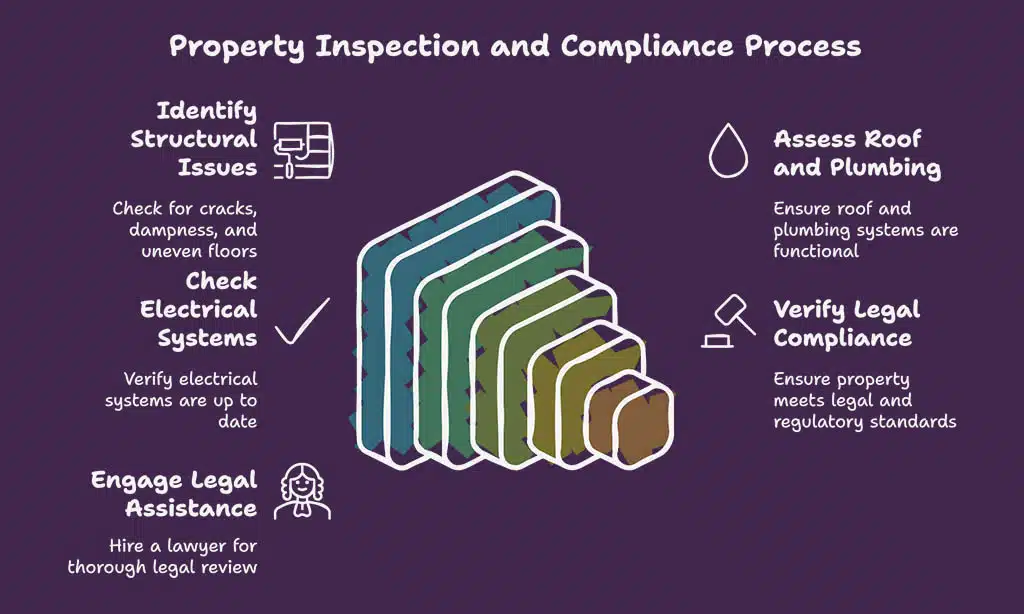
Check the house inside and out for any problems. Make sure it follows all Italian laws and rules.
Check for structural issues or needed repairs
Walk through the property carefully. Look for cracks in walls, damp spots, or uneven floors. These may hint at bigger problems like weak foundations or water damage. A property inspection can save you from costly surprises later.
Check if the roof is in good shape and plumbing works fine. Old properties in Italy’s carnival cities might need electrical updates too. Focus on repairs that could affect safety or increase future costs.
Verify property compliance with regulations
Check if the property follows local laws. Look at permits, zoning rules, and land registry records. This avoids future legal trouble.
Hire an Italian property lawyer to double-check everything. They ensure taxes, ownership papers, and building codes are correct. Keep an eye on safety features like wiring or fire exits during your due diligence process.
Understand the Legal Process
Buying a house in Italy means following strict legal steps. Get familiar with contracts, taxes, and documents to avoid surprises.
Learn about “Compromesso” and “Rogito” agreements
The “Compromesso” is the preliminary contract in an Italian property purchase. It holds both the seller and buyer to the deal, outlining key terms like price and deadlines. Breaking it can lead to penalties or legal disputes, so review it carefully with a property lawyer.
The “Rogito” is the final deed of sale signed before a notary. This document transfers ownership officially once you pay all required monies. The notary ensures the title is clear and records it in the land register for legal protection.
Obtain a Codice Fiscale for transactions
A Codice Fiscale is a tax code. You need it for buying property in Italy. It’s like a Social Security Number, but for taxes and contracts. You can’t sign purchase agreements or pay fees without it.
To get one, visit the local Agenzia delle Entrate or an Italian consulate if you’re abroad. Bring your passport and fill out a form. It’s quick, doesn’t cost much, and unlocks access to key steps in your property purchase process!
Plan for Additional Costs
Unexpected costs can sneak up on you, like hidden ghosts in a carnival crowd. Keep your wallet ready, as surprises often come with buying property.
Be aware of agent fees and notary charges
Agent fees can add up fast. Most agents in Italy charge 2-3% of the property price. Some selling brokers may have fixed costs instead. Always clarify this before signing anything.
Notary charges are mandatory and cover legal paperwork. They usually range from 1-2% of the house cost or higher for luxury homes like those in Lake Como. Include these costs in your budget early to avoid surprises later!
Include maintenance or homeowner association fees
Maintenance fees can add up fast. These cover shared spaces, like gardens or elevators in apartments. In some cases, they also include water or heating costs.
Homeowner association fees vary by property type and location. For instance, properties near major carnival cities may charge higher rates to keep areas clean during events. Factor these into your budget before buying a house in Italy.
Takeaways
Buying a home in Italy’s carnival cities can be rewarding. Start by knowing the market well and setting a smart budget. Location matters, so choose wisely based on your needs. Work with trusted local experts to help you through every legal step.
Inspect properties closely to avoid surprises later. These tips make the process smooth and stress-free.
Ready to find your dream spot? Take that first step today! Planning carefully now will save headaches later. A home here means more than walls; it’s about living Italy’s vibrant lifestyle daily!
FAQs
1. What should I know before buying property in Italy’s carnival cities?
You need to research the Italian real estate market, understand property taxes, and plan for maintenance expenses. Work with a local real estate agent who knows the area well.
2. How important is due diligence when buying a house in Italy?
Due diligence is critical. You must check the land registry, inspect the property carefully, and review all terms and conditions before making an offer.
3. Are loans available for foreign buyers in Italy?
Yes, loans are available, but you’ll need to meet specific requirements. Currency conversion and foreign exchange rates can also affect your payments over time.
4. Can older properties require restoration work?
Many homes may need property restoration if they’re historic or not well-maintained. Factor these costs into your budget during acquisition planning.
5. Did the financial crisis of 2008 impact Italy’s housing market?
Yes, it influenced sales and pricing trends across the Italian property market. However, opportunities still exist today if you approach purchases wisely!