

When someone says, “Please, no more stuff,” a decorative gift can feel like a problem to solve. They must find a place for it, use it, or pass it on. Even a digital voucher can become an errand if the business is far away or the balance barely covers a visit.
The best gifts for people who don’t want more clutter fit a life they already have. They get used, enjoyed, or put toward something the person has chosen. They also leave the recipient free to decide when and how to enjoy them.
The 12 ideas below range from small everyday favorites to practical help and memorable outings. Start with what the person has actually said they would welcome.
What makes a gift genuinely clutter-free?
Think first about what they already buy, where they already go, and which tasks they would welcome help with. Then ask whether the gift needs storage, maintenance, extra spending, or a date they cannot choose. A small bag of their usual coffee might pass that test; a six-month delivery of unfamiliar blends might not.
If they have asked for a particular gift, take the request seriously. If “no gifts” means exactly that, honor it. A thoughtful message or time together may be the better response.
12 gifts for people who don’t want more clutter
These gifts for people who don’t want more clutter offer a mix of everyday help and experiences they can choose. Use the clutter-free gift ideas as starting points, then match the details to the recipient.
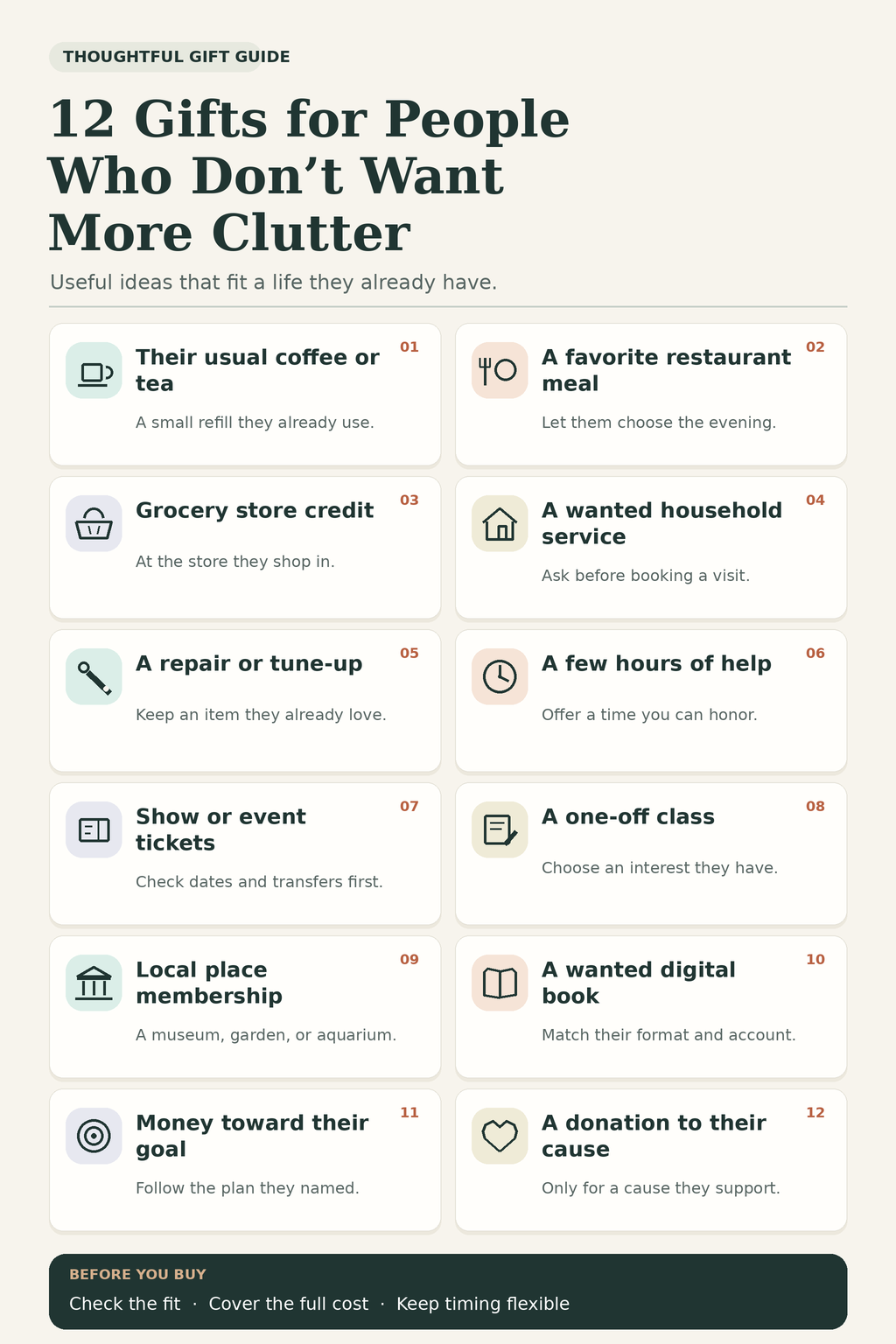
1. A small refill of something they already love
If they buy the same coffee beans each month, another small bag will find a use. The same goes for a favorite tea or a pantry ingredient they regularly replace. This works because you know the item belongs in their routine.
Buy a modest amount rather than a large assortment. Check dietary needs and storage space before sending food. Skip the elaborate basket if the basket itself will need a permanent home.
2. A meal at their favorite restaurant
A meal is a treat they can enjoy without keeping anything afterward. A credit for the neighborhood restaurant they return to is more personal than a voucher for a fashionable place across town. Give enough to cover a realistic meal, including unavoidable charges.
If you hope to go together, offer the invitation and let them choose the evening. Make the reservation after they say yes. That turns the gift into a shared meal without claiming a date on their calendar.
3. Credit at a grocery store they actually use
Groceries serve a different purpose from a restaurant meal: they take care of something the person would buy anyway. For someone who has asked for practical help, credit at their regular store gives them full control over what goes in the basket.
Check that the credit works the way they shop, whether in-store, online, or through delivery. A brief note can make the intention clear: you wanted to take care of an everyday expense, not choose another object for their home.
Learn more about eco-friendly gift ideas here.
4. A one-time household service they want
If a friend has said they keep putting off a car cleaning, paying for one detailing session addresses a real task. The same idea can work for laundry or a cleaning visit, but only when it is the help the person wants.
Let them approve the provider and choose the timing, especially if someone will enter their home. Confirm what the service includes and pay the full expected cost. An appointment they did not request can feel like an intrusion rather than a break.
5. A repair or tune-up for something they already own
Their favorite boots have worn heels, but they keep wearing them. A repair could be more welcome than a new pair you chose for them. A bicycle tune-up or a fix for a useful household item follows the same principle: improve something they already want to keep.
Ask before taking the item anywhere. Agree on a repairer, get a quote, and cover the work you have offered to pay for. The owner should decide if a costly or uncertain repair is still worthwhile.
6. A few hours of help they can actually book
“I can look after the dog on Saturday while you visit your family” is a gift with a shape. “Let me know if you need anything” is kind, but it leaves all the planning with the other person. Childcare, pet care, or a specific errand can give someone time back when you are a person they trust for that job.
Offer a time window you can reliably honor, then let them choose what is useful. If the plan involves a professional sitter or caregiver, get the recipient’s approval before booking one.
7. Tickets to a show or event they would choose
Tickets are a good choice when you know the performer, film, or team the person follows. An outing may be particularly appealing to someone who has asked for fewer things to own.
Check their availability before paying for a fixed date. Think about travel, accessibility, and whether they would want to bring someone. Some events restrict transfers or refunds, so read the ticket terms before buying in your own account. When the schedule is uncertain, a flexible option from a venue they like is more considerate than a seat they may be unable to use.
8. A one-off class tied to an existing interest
A friend who has talked about learning pottery might enjoy a single introductory session. Someone who already photographs birds might prefer a local wildlife workshop. The connection to their interest matters more than the novelty of the class.
Find out whether materials are included and whether the recipient can choose or change the date. A one-off session is easier to enjoy than a long course that adds homework to an already busy week.
9. Membership to a local place they already visit
Someone who spends free weekends at the botanical garden may make good use of a year’s membership. A museum or aquarium pass can work the same way for a regular visitor, especially if the attraction is close to home.
Look at when the membership starts, what admission it covers, and whether guests are included. Some begin on the purchase date, so buying months before the occasion can waste part of the term. If they are likely to visit only once, give a day pass instead.
10. One digital book or audiobook they want
If a reader has mentioned a title but has no room for another bookcase, consider the ebook or audiobook through a service they already use. A single wanted title is easier to get right than an unfamiliar library of content they must remember to explore.
Confirm their preferred format and account before buying. A gift membership needs an extra check: credits may expire, and subscriptions do not all end when the gifted period does. Some can renew unless the recipient turns renewal off. If those terms are awkward, stick to one book.
11. Money toward a goal they have named
If they have talked about saving for a trip or a course, a contribution lets them decide when to use it. Unlike a shop-specific voucher, money does not force them into a particular retailer or deadline.
The note makes it personal: “For the trip you’ve been planning.” Keep the goal theirs, and use this idea when a monetary gift suits your relationship and the occasion.
Learn more about the Christmas gift ideas here.
12. A donation to a cause they support
For a person who has specifically asked for charitable gifts, a donation can honor both their values and their wish for less stuff. Some organizations can send a digital acknowledgement, leaving no merchandise or certificate to store.
Choose a cause they support. Check the charity’s donation and notification options, and keep the gift one-time unless you intend to manage an ongoing commitment yourself. This choice works because the recipient asked for it; a donation to the giver’s favorite cause is a different gesture.
Before you pay for a voucher or membership
The value of a voucher depends on whether the recipient can use it without a struggle. Read the terms as carefully as you would for a purchase for yourself:
- Redemption: Does it work in the recipient’s location, account, and preferred way of shopping?
- Full cost: Will the amount cover a useful purchase or service without an unavoidable top-up?
- Timing: When does it start or expire, and who gets to choose the date?
- Changes: What happens if the recipient needs to transfer, exchange, or cancel it?
- Renewal: Will a membership stop at the end of the gift period, or could it charge them later?
Send the redemption details clearly and keep the receipt. The recipient should not have to chase you for a code or work out what the gift actually covers.
Frequently asked questions on gifts for people who don’t want more clutter
What should I give someone who says they want nothing?
Take the request at face value. If they mean no physical items, ask whether they would enjoy time together or practical help. If they mean no gifts of any kind, do not search for a loophole; a sincere message is enough.
Are gift cards good clutter-free gifts?
Yes, when the card is for a place the person already uses, and the amount covers something worthwhile. A narrow voucher for an unfamiliar business can sit unused, even though it takes up no physical space.
What is a low-cost gift that does not add clutter?
Bring one small favorite consumable, take care of an errand you can reliably complete, or plan a simple outing together. Knowing their preferences matters more than making the gift large.
Can a physical gift still be clutter-free?
Yes. Something they regularly use up, or a replacement for an item they asked to replace, need not become long-term clutter. The important part is knowing it is wanted and keeping the quantity manageable.
The Gift They Won’t Have to Make Room For
Pay attention to what they already use, what they keep putting off, and how they like to spend their time. The right gift might be their usual coffee, a repair for favorite boots, or a meal at a place they love.
Cover the real cost and let them choose the timing. That care makes the gift easy to enjoy. And if they have asked for no gifts at all, respect their wish. They will know you listened.