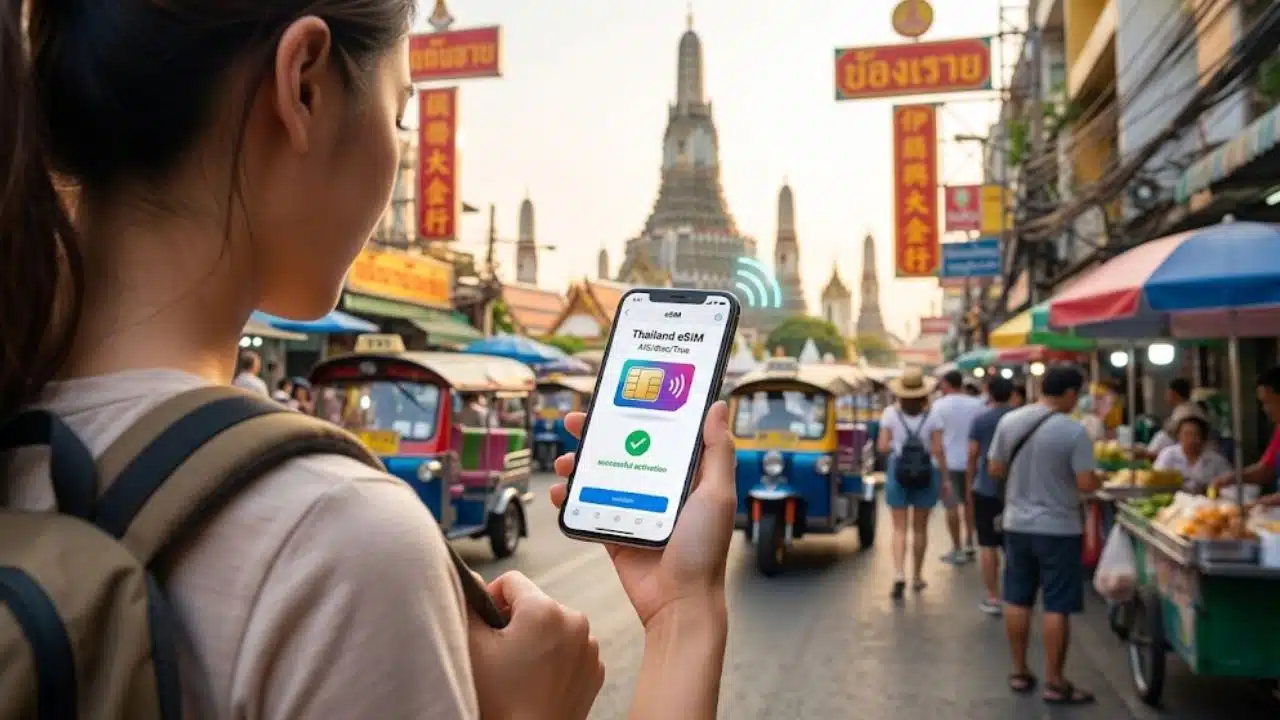
Thailand is one of those places where your phone quietly supports almost every part of the day. You use it to leave the airport, contact your accommodation, search for food nearby, check attraction timings, and find your way through new neighborhoods.
This matters even more when your itinerary has multiple stops. A trip that includes Bangkok, Phuket, Krabi, Chiang Mai, or island transfers usually comes with a lot of on-the-go decision making. When your connection is stable, those moments feel small. When it is not, they can slow the whole day down.
What do travelers actually use mobile data for in Thailand?
Most travelers are not using their data for anything unusual. They are using it for the things that quietly keep the trip moving. Maps, messages, booking confirmations, translation, train or ferry details, and local searches tend to come up all the time.
That is where a Thailand eSIM becomes more useful than expected. It is not only about having internet. It is about being able to check directions in the middle of the day, confirm a pickup, or message your hotel when plans change. Those are the kinds of things that happen again and again on a Thailand trip.
Why is a travel eSIM often the easiest option for Thailand?
A travel eSIM is usually easier because it removes a few steps right from the start. You do not need to depend on public Wi-Fi after landing, and you do not need to look for a SIM counter while also handling bags, transport, and check-in plans.
It also feels lighter than older setups. There is no pocket Wi-Fi device to carry, no physical SIM card to swap, and no extra chore once the journey has already started. That is why many travelers find an esim like Jetpac eSIM easier to travel with, especially when the trip includes more than one city or region. Jetpac not only provides transparent pricing and affordable data but also offers features where essential apps like Whatsapp, Google Maps, Uber keep working even when the data runs out, making it a good option amongst travellers.
What should travelers look for in a good Thailand data setup?
The best setup is usually the one that feels simple. Look for reliable coverage, easy activation, enough data for daily travel tasks, hotspot support if you may need another device online, and support that is easy to reach if setup goes wrong.
That matters when choosing an eSIM for Thailand because the point is not just to get connected. It is to stay connected without turning mobile data into another travel problem to solve. A setup that works quietly in the background is usually the one that fits the trip best.
Final Thoughts
Good connectivity makes Thailand travel easier in ways that only become obvious once the trip begins. When your maps, messages, and booking access are already working, you spend less time fixing small problems and more time enjoying where you are.