

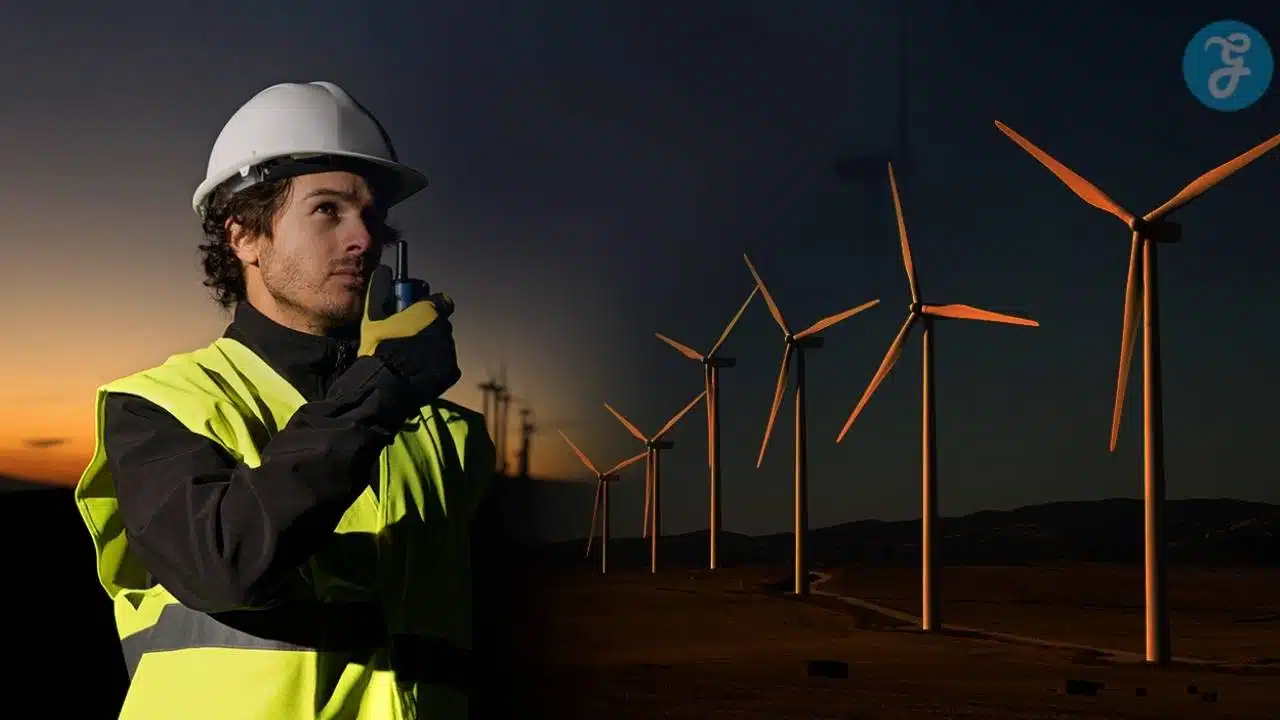
When you picture Texas, you probably see endless pumpjacks scattered across a dusty desert. You would not be wrong at all. But that classic image skips half of what makes the state an absolute powerhouse today. Texas does not just drill for crude; it catches the breeze better than anyone else in the country.
Today, the landscape is a fascinating mix of traditional fossil fuel extraction and massive renewable infrastructure. If this single state broke off into its own country, it would easily sit among the world’s top producers of both crude and clean electricity.
So, how did a place famous for wildcatters and massive refineries pivot to embrace towering white turbines? It was not by accident. The explosive growth of Texas oil and wind energy comes from a fierce mix of wild geography, smart engineering, an independent power grid, and a government that loves doing business. They saw wind not as a threat to petroleum, but as just another cash crop waiting to be harvested. Let us dig into the fifteen things you actually need to know about how this massive energy empire came to be.
The Dawn of the Oil Era in Texas
Before we look at the sky, we have to look underground. The foundation of Texas oil and wind energy dominance started deep beneath the dirt. The state sits on some of the richest rock formations on earth, giving it a head start that lasted well over a century. Early prospectors did not care about strict regulations; they cared about striking it rich and scaling up. That aggressive, fast-moving mindset built modern cities like Houston and set the stage for how the state handles all forms of power generation today.
1. Spindletop and the First Oil Boom
Everything kicked into high gear on a freezing January morning in 1901. A drilling crew working a muddy hill near Beaumont hit the absolute jackpot. The Lucas Gusher at Spindletop blew its top, shooting crude over a hundred feet into the sky. It flowed at roughly 100,000 barrels a day, and it took the crew over a week just to wrestle it under control. Before this exact moment, oil mostly lit lamps in homes, and Pennsylvania ran the industry.
Spindletop completely changed the math for the entire world. Suddenly, there was enough cheap fuel to run trains, power large ships, and eventually fill up millions of cars. This single well birthed corporate giants and brought thousands of roughnecks to the state looking for work. It proved high-volume production was a reality.
| Aspect | Detail |
| Location | Beaumont |
| Discovery Year | 1901 |
| Initial Output | 100,000 barrels daily |
| Major Impact | Proved mass production was possible |
| Cultural Shift | Birthed the Texas wildcatter culture |
2. The Permian Basin Massive Reserves
Spindletop started the massive party, but the Permian Basin kept it going for generations. Stretching across West Texas and bleeding over into New Mexico, this massive geological bowl holds ridiculous amounts of hydrocarbon-rich rock. Oil men originally found it in the 1920s, and it pumped reliably for decades to fuel the American economy.
By the late 1990s, folks whispered that the mighty Permian was finally drying up. They were entirely wrong about that. The oil was just stuck in tight shale rock that old drill bits could not crack. Once operators figured out how to extract it, the region exploded back to life. Today, the Permian produces more oil daily than many entire countries in OPEC, driving global energy markets single-handedly.
| Aspect | Detail |
| Geographic Area | West Texas and Southeastern New Mexico |
| Discovery Era | 1920s |
| Geological Feature | Stacked layers of sedimentary rock |
| Current Status | Highest-producing oil field in the US |
| Economic Value | Drives global crude pricing |
3. Technological Innovations in Fracking
Texas drillers hate leaving money in the ground. When conventional wells slowed down, they forced innovation to keep the crude flowing. A Texas businessman named George Mitchell spent years grinding away in the Barnett Shale near Fort Worth. He desperately wanted to crack the dense rock that held the trapped gas. By tweaking hydraulic fracturing, he finally cracked the code after years of failure.
His crews blasted a precise mix of water, sand, and chemicals sideways through horizontal wells. Fracking unleashed oceans of previously unreachable crude and natural gas across the state. It completely flipped the script on American energy independence and created an economic boom that lasted for years.
| Aspect | Detail |
| Key Pioneer | George Mitchell |
| Testing Ground | Barnett Shale |
| Core Technique | High-pressure water and sand injection |
| Drilling Style | Horizontal wellbores |
| Market Result | Reversed declining US oil production |
4. The Economic Engine of Houston
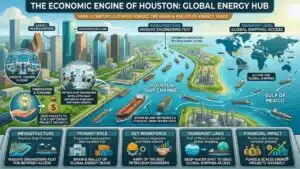
You cannot talk about Texas power without pointing straight to Houston. City leaders a century ago made a genius move when they dug out the massive Houston Ship Channel. This incredible engineering feat gave inland refineries a straight, deep-water shot to the Gulf of Mexico. Houston quickly morphed into the brain and wallet of the global energy trade.
Today, it hosts thousands of energy headquarters, massive trading floors, and an army of the best petroleum engineers on the planet. If you have a radical energy idea in Texas, Houston is exactly where you go to get it funded and built. The city provides the perfect mix of heavy infrastructure and deep pockets to scale any energy project instantly.
| Aspect | Detail |
| Infrastructure | Houston Ship Channel |
| Primary Role | Corporate headquarters and logistics hub |
| Key Workforce | Petroleum engineers and trade experts |
| Transport Links | Gulf of Mexico access for global shipping |
| Financial Impact | Funds major energy ventures globally |
5. Deregulation and Business-Friendly Policies
The Texas government mostly stays out of the way of businesses. The state handles oil and gas through the awkwardly named Railroad Commission of Texas. For over a century, the commission has treated massive production growth as its main job. They intentionally keep taxes manageable and push drilling permits through as fast as humanly possible.
Sure, this hands-off style draws heavy fire from environmental groups who worry about pollution. But from a purely economic standpoint, it worked perfectly. It created an arena where companies could take massive financial risks without fear. They could try crazy new drilling methods and scale up their operations without drowning in red tape.
| Aspect | Detail |
| Governing Body | Railroad Commission of Texas |
| Policy Stance | Pro-business and low regulation |
| Permitting Speed | Extremely fast compared to other states |
| Tax Environment | Heavily incentivized for operators |
| Primary Goal | Maximum economic output and job creation |
The Rise of Renewable Power
It blows minds that the undisputed king of crude is also the champion of clean power. But Texans approach wind differently than folks on the coasts. They do not build turbines just to save the planet; they build them to make serious money. The state realized early on that wind is just another incredible natural resource floating right above their heads. By treating clean power like a raw business opportunity rather than a moral obligation, the green side of Texas oil and wind energy exploded onto the scene.
6. Competitive Renewable Energy Zones (CREZ)
Wind is entirely useless if you cannot plug it into the wall. Back in the early 2000s, Texas had a very serious geographic problem. West Texas had incredible, relentless wind, but nobody lived out there to use the power. The big cities that desperately needed electricity were hundreds of miles away to the east. State lawmakers did something uncharacteristically massive to fix this exact issue.
They approved a seven billion dollar grid project called CREZ. They strung thousands of miles of heavy-duty power lines straight across the desert. Once those lines went live, it was like opening a massive floodgate for clean energy. Developers finally had a highway to sell their electricity.
| Aspect | Detail |
| Project Name | CREZ |
| Total Cost | Roughly 7 billion dollars |
| Core Purpose | Move power from empty plains to cities |
| Infrastructure | High-voltage transmission lines |
| Resulting Boom | Unlocked the modern Texas wind industry |
7. Favorable Geography and Wind Corridors
Mother Nature set West Texas up for absolute success. The geographic layout of the Panhandle is incredibly flat and mostly devoid of massive trees. Cold air drops off the Rocky Mountains and violently smashes into hot, wet air pushing up from the Gulf of Mexico. This specific weather collision creates a relentless wind tunnel right across the dusty plains.
Building offshore wind on the coast is a total nightmare of salt, rust, and incredibly high costs. But rolling out heavy turbine parts on flat, dry dirt roads in West Texas is fast, cheap, and highly efficient. The geography basically hands developers a perfect canvas to build massive power plants.
| Aspect | Detail |
| Key Region | The Texas Panhandle and West Texas |
| Weather Dynamics | Mountain air colliding with Gulf moisture |
| Terrain | Extremely flat and accessible |
| Construction Cost | Very low compared to offshore projects |
| Wind Consistency | High speeds especially during the night |
8. Federal Tax Incentives and State Support
Texas politicians love bashing the federal government, but they happily took federal money to build their wind empire. The federal Production Tax Credit gave wind companies a very solid financial safety net during the highly risky early years. But Texas did not just sit back and wait for handouts from Washington.
In 1999, Governor George W. Bush signed a landmark bill ordering the state to generate a baseline amount of renewable power. The industry hit those aggressive targets years ahead of the actual schedule. It proved that a slight nudge from the state could trigger billions in private spending. The combination of state mandates and federal tax breaks created the perfect storm for investors.
| Aspect | Detail |
| Federal Help | Production Tax Credit |
| State Action | 1999 Renewable Portfolio Standard |
| Key Figure | Governor George W. Bush |
| Financial Benefit | De-risked early investments |
| Industry Response | Met goals years ahead of schedule |
9. The Role of Landowners and Leasing
Almost all the dirt in Texas belongs to private citizens rather than the government. This specific quirk completely supercharged the wind boom across the state. Developers did not have to fight the federal bureaucracy for permits on public lands for years. Instead, they just drove up to a rancher’s front porch, offered them a fat check, and signed a private lease.
Turbines take up barely any actual ground space on a farm. A farmer can plant cotton or graze cattle right up to the heavy steel base. It is totally normal out west to see a noisy oil pumpjack and a sleek wind turbine sharing the exact same cattle pasture. This setup created a massive wave of passive income for rural families.
| Aspect | Detail |
| Land Ownership | Over 95 percent privately owned |
| Agreement Type | Direct leases with farmers and ranchers |
| Land Footprint | Very small per individual turbine |
| Agricultural Impact | Farming and grazing continue normally |
| Economic Benefit | Drought-resistant passive income for locals |
10. Rapid Technological Advancements in Turbines
Just like fracking completely changed the oil game, better engineering completely changed wind power. The first turbines built in the state were clunky, short, and relatively inefficient. Today’s models are absolute engineering giants standing hundreds of feet tall. Engineers stretched the towers much higher to catch the fast, smooth air currents way up in the sky.
They built the massive blades out of space-age composite materials so they spin easily even in a very light breeze. Because of these tech leaps, a brand new wind farm built today crushes the power output of an older facility. This makes the electricity incredibly cheap to generate and highly competitive on the open market.
| Aspect | Detail |
| Tower Height | Taller to reach smoother air currents |
| Blade Material | Lightweight composites for better spin |
| Efficiency | Captures more energy at lower wind speeds |
| Production Output | Exponentially higher than older models |
| Cost Impact | Drives down the wholesale price of power |
Integration, Challenges, and the Future Grid
Having unlimited crude underground and non-stop wind up top sounds completely perfect. But mashing them together into a working power system is a massive daily headache. Running the isolated grid is a constant high-wire act for engineers. You have to perfectly balance an unpredictable breeze with heavy machinery that takes a long time to turn on. Add in crazy weather, intense politics, and booming population growth, and managing Texas oil and wind energy becomes the hardest engineering job in the state.
11. The Independent ERCOT Grid
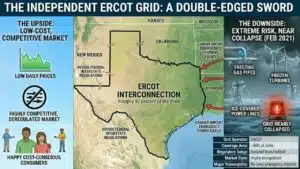
Texas absolutely does not like to share its toys. The state runs its own separate power grid, managed by a group called ERCOT. By cutting the wires at the state border, Texas completely dodges the federal officials who strictly regulate interstate electricity. This lone-wolf setup created a cutthroat, highly competitive power market that kept daily prices very low for years.
But isolation has a terrifying downside when things go wrong. When the catastrophic winter storm hit in February 2021, freezing gas pipes and turbines alike, Texas could not borrow emergency power from neighboring states. The entire grid nearly collapsed entirely, highlighting the extreme risk of total independence.
| Aspect | Detail |
| Grid Operator | ERCOT |
| Coverage Area | Roughly 90 percent of the state |
| Regulatory Setup | Avoids federal interstate regulations |
| Market Style | Highly deregulated and competitive |
| Major Vulnerability | Cannot import emergency power easily |
12. Balancing Fossil Fuels and Renewables
Wind is a very greedy energy source on the grid. When it blows hard, turbines dump crazy amounts of cheap power onto the wires, sometimes driving wholesale electricity prices to zero. But the wind suddenly dies, often right when the sun sets and millions of people turn on their televisions. That is exactly when natural gas power plants have to step up.
Grid operators constantly juggle this rapid transition every single day. They rely heavily on traditional gas plants to act as a heavy anchor, spinning up quickly the moment the wind stops. It is a highly stressful, minute-by-minute balancing act to ensure the lights never flicker across the state.
| Aspect | Detail |
| Wind Characteristic | Intermittent and weather dependent |
| Gas Characteristic | On-demand and highly dispatchable |
| Price Impact | Wind can drive wholesale prices to zero |
| Daily Challenge | Ramping up gas quickly when wind dies |
| Grid Requirement | Advanced forecasting and peaker plants |
13. Economic Impact and Job Creation
Energy money hits every single corner of the Texas economy. The classic oil and gas sector still cuts the biggest checks, employing hundreds of thousands of people from roughnecks in Midland to rich executives in Houston. But green power brought a whole new flavor of technical jobs to the state.
Texas currently hires more wind technicians and solar installers than anywhere else in the entire country. This two-sided economy strongly protects the state from total disaster. If global crude prices tank and drilling stops, the steady work of building and fixing green infrastructure keeps small-town economies from going completely broke. It is the ultimate financial safety net.
| Aspect | Detail |
| Fossil Fuel Jobs | Roughnecks, engineers, corporate staff |
| Renewable Jobs | Turbine technicians, solar installers |
| Rural Impact | Funds local schools via property taxes |
| Economic Strategy | Diversifies the state revenue streams |
| Market Resilience | Protects against oil price crashes |
14. Environmental Concerns and Sustainability
Nobody pretends this massive industrial machine is perfectly clean or safe. Fracking takes a very heavy toll on the local environment. Pumping oil requires millions of gallons of fresh water, which is incredibly hard to find in the dry western desert. Then there are the massive flares burning off excess gas, constantly pumping emissions straight into the sky.
Wind faces its own severe local backlash as well. Locals bitterly complain about the blinking red turbine lights ruining the dark night sky. Conservationists constantly worry about massive spinning blades hitting migratory birds. Finding a way to keep the lights on without completely trashing the landscape is an ongoing, bitter fight.
| Aspect | Detail |
| Oil Issue 1 | High water usage in desert regions |
| Oil Issue 2 | Flaring burns excess gas into the air |
| Wind Issue 1 | Visual pollution and blinking lights |
| Wind Issue 2 | Danger to migratory bird patterns |
| Future Goal | Balancing heavy output with conservation |
15. The Next Frontier: Solar and Battery Storage
The story definitely does not stop with just wind and crude. Texas is currently laying down millions of massive solar panels. The state gets blisteringly hot, and utility-scale solar farms are eating up cheap land rapidly. But the biggest game-changer right now is battery storage technology.
Developers are dropping shipping containers full of lithium-ion batteries right next to wind and solar farms. These giant batteries quietly soak up cheap, excess power during the day and shoot it back into the grid when demand spikes heavily at night. Storage is the vital missing link that will make Texas renewables practically unstoppable in the coming decade.
| Aspect | Detail |
| New Growth Sector | Utility-scale solar farms |
| Tech Game-Changer | Lithium-ion battery storage facilities |
| Storage Function | Holds cheap midday power for night use |
| Grid Benefit | Smooths out rapid price spikes |
| Market Outlook | Secures long-term energy dominance |
Final Thoughts
The real secret behind the massive success of Texas oil and wind energy is wonderfully simple. Texans generally do not care where the electricity actually comes from, as long as it creates good jobs and makes serious money. They took the relentless, aggressive spirit of the early oil wildcatters and pointed it straight at the open sky.
By mixing unbelievable natural resources with a government that refuses to slow down private business, they built a machine that dominates the American economy. Sure, the power grid has terrifying flaws, and the environmental fights are far from over. But as the rest of the world scrambles to figure out the exact future of power generation, Texas is already there. They are drilling the ground, catching the breeze, and cashing the massive checks.
Frequently Asked Questions (FAQs) About Texas Oil and Wind Energy
1. Why does Texas have its own power grid?
Texas established its own grid during the early twentieth century specifically to avoid strict regulations under the Federal Power Act. By ensuring that its electricity did not cross state lines, the state retained total control over its energy policies, wholesale pricing, and infrastructure development without Washington interfering.
2. How does wind energy affect electricity prices for Texas residents?
Wind energy generally lowers wholesale electricity prices across the board. Because the wind is completely free, turbines bid into the open market at very low prices. When wind generation is running high, it displaces more expensive fossil-fuel generation, driving down the overall cost of power on the grid at that specific time.
3. Are oil companies in Texas investing in wind and solar?
Yes, absolutely. Many traditional oil and gas giants clearly recognize the massive shift in global energy markets. They are actively investing billions into renewable projects, carbon capture technologies, and grid-scale battery storage to diversify their portfolios and ensure long-term profitability as the world transitions.
4. What happens to wind turbines when they get too old?
Decommissioning old turbines is a rapidly growing challenge. While the steel towers and copper wiring are easily recycled for cash, the massive fiberglass blades are incredibly difficult to break down. Currently, many old blades are cut up and buried in specialized landfills, though new recycling startups are aggressively trying to turn them into construction materials.
5. Did frozen wind turbines cause the 2021 Texas power crisis?
No. While some wind turbines did indeed freeze due to a lack of cold-weather packages, the primary cause of the catastrophic blackouts was the total failure of natural gas infrastructure. Wellheads froze solid, pipelines lost critical pressure, and traditional thermal power plants tripped offline entirely, causing a massive drop in power supply.
6. How do Texas landowners benefit financially from energy projects?
Since almost all land in the state is privately owned, energy companies deal directly with citizens. Landowners can sign highly lucrative lease agreements, allowing companies to drill for oil or erect wind turbines on their property. This arrangement provides farmers and ranchers with steady, drought-resistant passive income while still allowing them to work the land.






















