Decluttering your home isn’t just about tidying up—it’s about creating an environment that nurtures peace, clarity, and happiness. A clutter-free home reduces stress, enhances productivity, and fosters a sense of control over your surroundings.
Yet, decluttering can often feel overwhelming, especially if you’ve been putting it off for a long time. This guide provides detailed, actionable, and creative tips to help you declutter effectively while transforming your living space into a sanctuary of calm.
Why Decluttering Matters?
Clutter isn’t just physical—it affects your mental and emotional well-being too. Studies suggest that cluttered spaces can elevate cortisol levels, the stress hormone, leading to anxiety, reduced productivity, and even difficulty sleeping. A decluttered home is more than an aesthetic achievement; it’s a gateway to a healthier and more focused lifestyle.
Benefits of Decluttering
- Mental Clarity: A clean environment promotes clearer thinking.
- Reduced Anxiety: Less clutter equals fewer stress triggers.
- More Time: Finding items quickly saves time.
- Increased Productivity: Organized spaces enhance focus and efficiency.
- Improved Relationships: A decluttered space fosters harmony at home.
Let’s delve into 10 practical and creative tips for a stress-free home.
1. Start Small: Focus on Micro Decluttering Projects
Instead of tackling your entire home in one go, start with manageable spaces. Focusing on small, confined areas like a single drawer, a shelf, or a bathroom cabinet prevents overwhelm and sets the stage for success.
How to Start Small?
- Select a space you use daily, such as a kitchen drawer or a nightstand.
- Empty it completely and assess the items.
- Discard anything expired, broken, or unused in the last 6 months.
- Clean the space before reorganizing the remaining items.
By completing a micro decluttering project, you gain the momentum and confidence to tackle larger areas.
2. Implement the Four-Box Method
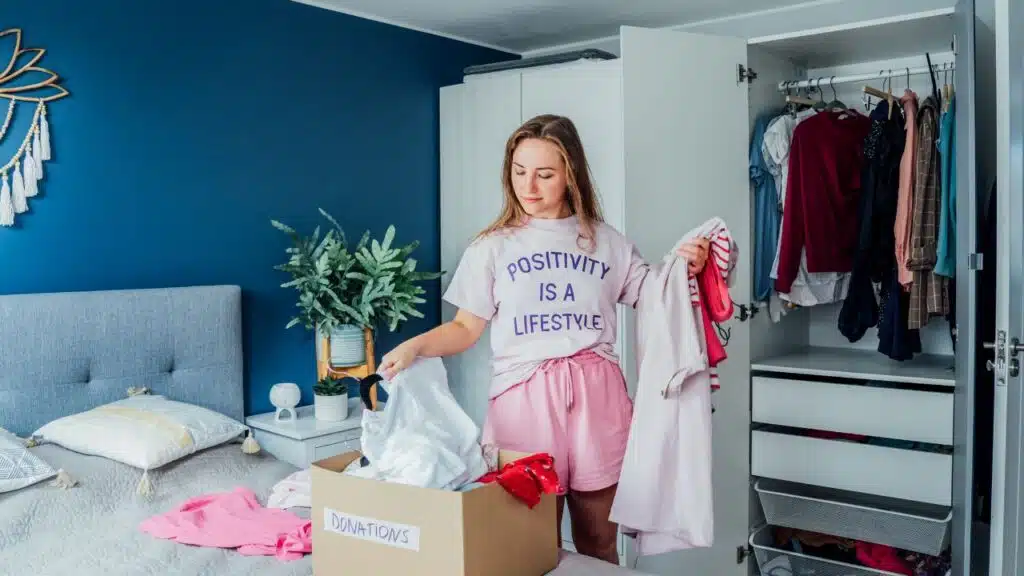
The Four-Box Method is one of the most effective ways to declutter systematically. This method ensures that every item in your home is assessed and dealt with appropriately.
How to Use the Four-Box Method?
Prepare four boxes labeled:
- Keep: Items you use regularly or have a meaningful purpose.
- Donate: Items in good condition that can benefit someone else.
- Trash: Broken, damaged, or expired items.
- Relocate: Belongings that need to be returned to their rightful place.
Work through each room one at a time and ensure all items fit into one of these categories. This method prevents procrastination and ensures clear decisions about what stays and what goes.
3. Adopt the “One In, One Out” Rule
To maintain a clutter-free home, it’s crucial to establish habits that prevent the reaccumulation of clutter. The “One In, One Out” rule is a simple but powerful strategy to achieve this.
Practical Applications
- When buying new clothes, donate or discard an old piece you no longer wear.
- For every new book, let go of one that you’ve already read or don’t plan to read.
- Apply the rule to other areas, such as kitchen gadgets or decorative items.
This rule encourages mindful purchasing and prevents your home from becoming cluttered again.
4. Digitize Paper Clutter for Long-Term Organization
Paper clutter—such as bills, receipts, manuals, and old documents—can quickly take over your space. Digitizing these items not only frees up space but also makes finding important documents easier.
Steps for Effective Digitization
- Sort: Separate essential documents from those that can be discarded or recycled.
- Scan: Use a scanner or mobile app to create digital copies. Apps like Adobe Scan and Google Drive are convenient and user-friendly.
- Organize: Store files in cloud services like Dropbox or Google Drive and create clearly labeled folders.
- Shred: Safely dispose of sensitive paper documents that you no longer need.
Digitization reduces clutter while ensuring your documents are secure and accessible.
5. Declutter by Categories Instead of Rooms
When you declutter by categories rather than rooms, you gain a comprehensive view of what you own and can identify redundancies.
Examples of Categories to Declutter
- Clothing: Gather clothes from all closets and assess them in one go.
- Books: Sort books from every room, keeping only the ones you love or will read again.
- Kitchen Items: Focus on tools, gadgets, or utensils that are rarely used or duplicates.
This approach, inspired by the KonMari Method, ensures you deal with clutter thoroughly and avoid shifting it from one room to another.
6. Use a Timer for Efficient Decluttering
Decluttering doesn’t have to be an all-day event. By working in short, focused bursts, you can make significant progress without feeling drained.
How to Use Timed Sessions?
- Set a timer for 15, 20, or 30 minutes.
- Choose a specific area to work on, such as a bathroom drawer or a stack of papers.
- Stop when the timer goes off, assess your progress, and plan your next session.
This method is particularly effective for those with busy schedules, allowing decluttering to become a manageable daily habit.
7. Repurpose or Upcycle Unused Items

Decluttering doesn’t always mean throwing things away. Sometimes, items can be repurposed or upcycled to serve new purposes.
Ideas for Upcycling
- Old Jars: Use mason jars for pantry storage or as planters.
- Furniture: Repaint or refurbish old furniture for a refreshed look.
- Fabric Scraps: Turn leftover fabric into cleaning rags or cushion covers.
Repurposing items not only reduces waste but also adds a unique, personal touch to your home.
8. Embrace the “12-12-12 Challenge” for Quick Wins
The 12-12-12 challenge is a fun, fast-paced way to declutter while involving the whole family. In this method, you identify 12 items to throw away, 12 to donate, and 12 to return to their proper place.
Why This Works?
- Encourages teamwork if done with family members.
- Provides a clear goal that’s achievable in a short time.
- Combines decluttering with tidying up.
This challenge is ideal for days when you need a quick decluttering boost.
9. Create a “Maybe Box” for Sentimental Items
Parting with sentimental items can be challenging. A “Maybe Box” allows you to take a break from making tough decisions without letting clutter accumulate in your space.
How to Use a Maybe Box?
- Place items you’re unsure about in a labeled box.
- Seal it with the date and set a reminder to revisit it in 3–6 months.
- If you don’t miss or use the items during that time, let them go.
This method helps you overcome emotional barriers to decluttering.
10. Shift Your Mindset to Embrace Minimalism
Minimalism isn’t about living with nothing—it’s about living with intention. By shifting your focus to quality over quantity, you can create a home that supports your lifestyle and values.
Minimalism Practices to Adopt
- Before purchasing something, ask yourself, “Do I really need this?”
- Use multi-functional furniture, such as ottomans with storage or foldable desks.
- Regularly audit your belongings to ensure everything serves a purpose or sparks joy.
Minimalism cultivates mindfulness and helps you maintain a clutter-free home effortlessly.
A Table of Decluttering Challenges and Solutions
| Challenge | Solution | Benefit |
| Overwhelmed by clutter | Start small and focus on one area at a time. | Builds momentum and avoids burnout. |
| Difficulty letting go | Use the “Maybe Box” or think about donations. | Eases emotional attachment. |
| Reaccumulation of items | Apply the “One In, One Out” rule consistently. | Prevents clutter from returning. |
| Lack of time | Use short, timed decluttering sessions. | Makes decluttering manageable and routine. |
Takeaways
Decluttering is more than a physical act; it’s a transformative journey that impacts your mental and emotional well-being. By incorporating these 10 creative tips, you can simplify your surroundings and create a stress-free home that reflects your values and lifestyle. Remember, every small effort counts, so start today and embrace the joy of a clutter-free life.