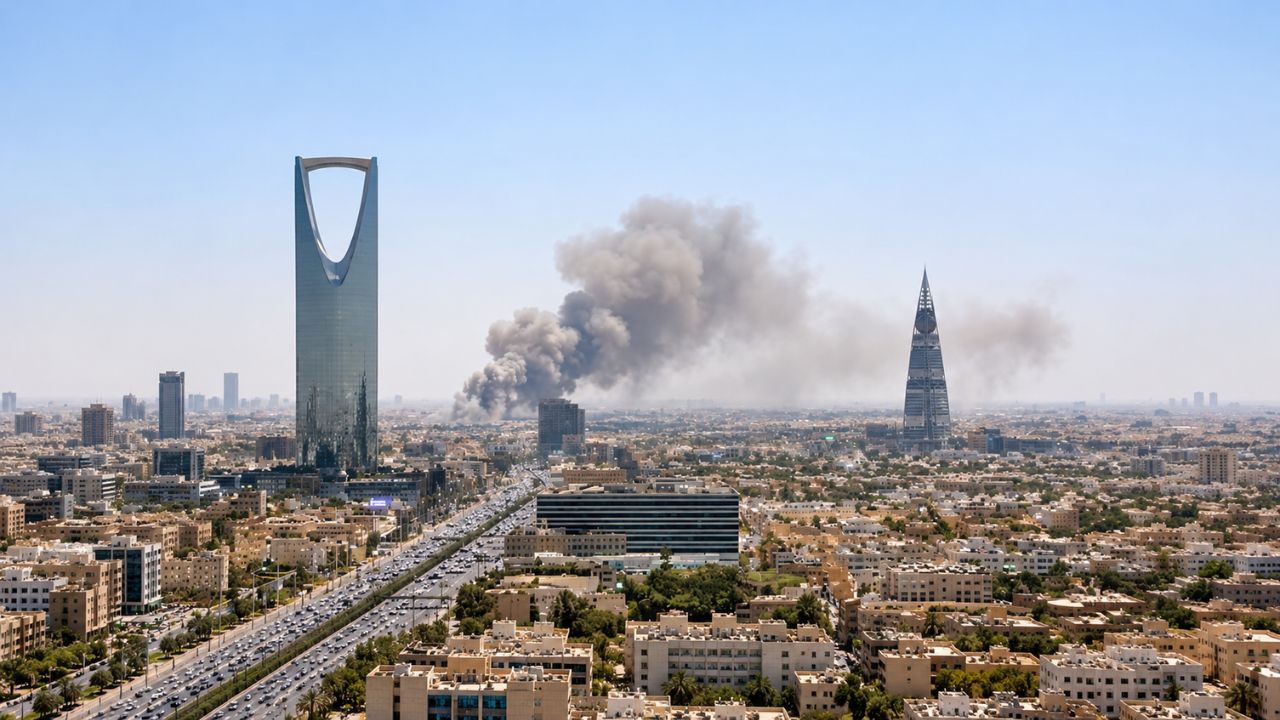
The Riyadh airport attack has left travellers facing another day of uncertainty. A strike on King Khalid International Airport on Saturday, October 10, killed 13 people and injured more than 300. The airport was hit again on Sunday, killing one more person and injuring 11. Among those caught in Saturday’s attack were Bangladeshis travelling for work and Umrah.
Flights have been cancelled, passengers have been stranded, and the airport remained closed into Monday. The question now reaches beyond when a departure board will start moving again: why has a renewed war in Yemen brought repeated strikes to one of Saudi Arabia’s busiest airports?
What happened at Riyadh airport?
Saturday’s strike hit a passenger area at King Khalid International Airport. Saudi authorities initially reported 12 deaths and 309 injuries. The reported death toll rose to 13 after India’s embassy said an Indian national injured in the attack had died on Sunday.
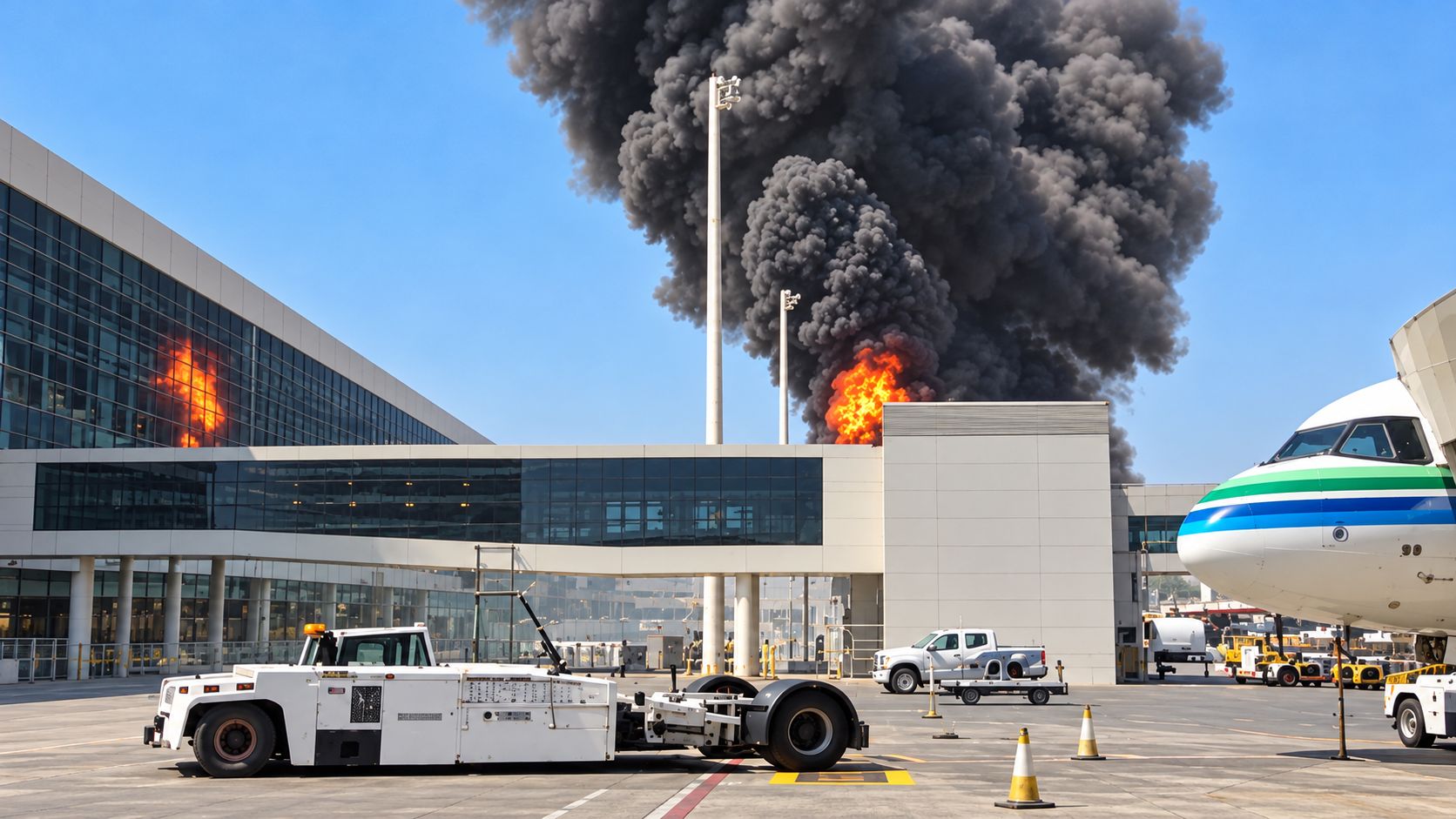
Sunday brought another attack. The Saudi-led coalition said an unidentified projectile struck Terminal 4 and started a fire. Saudi aviation authorities reported one person killed and 11 injured. They are separate casualties from Saturday’s strike.
These were part of a series of attacks on the airport during the week. Saudi air defences also reported intercepting a cruise missile near the airport on Sunday. The repeated strikes have made it difficult for airlines and passengers to plan around a single closure notice.
Who has claimed responsibility?
The Houthis, the armed movement that controls Yemen’s capital, Sanaa, claimed responsibility for Saturday’s strike on Sunday. They also claimed Sunday’s attack and renewed a warning to airlines, airport workers and travellers against using Saudi airports.
The group said it had attacked King Fahd International Airport in Dammam and two facilities belonging to Saudi Aramco. Saudi civil aviation authorities confirmed an attack at Dammam airport. The reported strikes on the Aramco facilities had not been confirmed by Saudi authorities or the company in the reporting available for this update, so they should remain described as Houthi claims.
The timing matters. Saudi Arabia has stepped up airstrikes against the Houthis while backing Yemeni government forces in renewed fighting. The Houthis present their attacks on Saudi Arabia as a response to that campaign. Their explanation does not lessen the danger to civilians using an airport.
Why has the war in Yemen reached Riyadh?
Saudi Arabia entered Yemen’s civil war in 2015 to support the internationally recognised government against the Houthis. A 2022 truce brought a period of relative calm, but fighting intensified again this year. Recent battles have included territory near the Bab el-Mandeb strait, a narrow passage at the southern end of the Red Sea.
That renewed fighting helps explain the escalation. As Saudi-backed forces press the Houthis in Yemen, the Houthis are striking targets inside Saudi Arabia. Riyadh’s airport has become one of those targets.
Iran supports the Houthis, and the Saudi-Yemen confrontation is unfolding amid a wider regional war involving Iran. But it would be a leap to say Iran ordered these particular airport attacks. The responsibility claims reported so far have come from the Houthis themselves.
UN Special Envoy for Yemen Hans Grundberg condemned the attacks on Saudi civilian infrastructure and warned that they make peace efforts harder. His warning points to the wider danger: each new strike can deepen the fighting that has already put civilians in Yemen and Saudi Arabia at risk.
How badly have flights been disrupted?
King Khalid International Airport suspended operations after Saturday’s strike. It remained closed on Sunday, and the flight closure was reported to extend through at least Monday, October 12. An earlier notice’s end time did not mean flights had resumed; the airport was struck again while passengers were waiting for clarity.
By Sunday, eight flights on the Dhaka–Riyadh route had been disrupted, affecting 2,951 passengers, according to aviation officials in Bangladesh. Biman Bangladesh Airlines suspended its BG339 and BG340 services on the route for October 11 and 12, with a further schedule update expected on Monday.
There are also passengers already in Saudi Arabia who need help getting to their next destination. Bangladesh’s expatriates’ welfare ministry said about 500 Bangladeshi passengers had been stranded in Riyadh. The Bangladesh embassy worked with airport authorities and airlines to arrange accommodation, food and alternative travel for affected travellers.
The disruption extends beyond Riyadh. The attack at Dammam airport and cancellations at other Saudi airports have complicated connecting journeys, including travel for Umrah pilgrims. Anyone due to fly should confirm the status of their specific flight with the airline before leaving for the airport.
What do we know about the Bangladeshi victims?
Bangladesh’s foreign affairs and expatriates’ welfare ministries have identified two Bangladeshis killed and 24 injured in Saturday’s attack. The two who died were Shahed Ahmed of Bogura and Nasrullah of Cumilla.
Shahed was returning to his work in Jeddah through Riyadh. Nasrullah was travelling to perform Umrah and was waiting to continue his journey to Jeddah. Their circumstances show why the passenger figures matter. People at the airport were trying to get back to work, reach their families or complete a pilgrimage.
Some of the injured Bangladeshis have required intensive care. Bangladesh’s embassy has been contacting hospitals and helping families obtain information about their relatives.
Could this become a wider crisis?
The immediate global risk is to civilians and aviation. The U.S. Federal Aviation Administration has advised American airlines to exercise caution when flying to or over Saudi Arabia, citing military activity and possible interference with navigation systems. That advisory is a warning about risk; it is not an announcement that all Saudi airspace has closed.
There are wider concerns as well. Fighting near the Bab el-Mandeb could affect shipping through the Red Sea, while attacks on airports and reported threats to energy facilities raise questions about regional transport and oil supplies. A threat to a facility, however, is not proof that oil production has been disrupted.
The United States has said it is considering whether to join Saudi strikes against the Houthis. No decision to do so had been announced in the reporting available for this update. Iran’s foreign minister, meanwhile, said Tehran was willing to help facilitate dialogue between Saudi Arabia and Yemen. Those are different possible directions for a conflict that is still unfolding.
What happens next?
I would watch three things: whether Saudi authorities confirm that the airport is safe to reopen, whether airlines can restore reliable schedules, and whether the fighting in Yemen escalates or moves toward talks. A posted closure deadline alone cannot answer the first two questions.
For families of those killed or injured, the urgent work is identifying victims, securing treatment, and getting clear information home. For travellers, it is a confirmed route to where they need to be. Those human needs should remain at the centre of an explainer about a war that has reached an airport departure gate.