
Pedestrian accidents can have devastating consequences, often resulting in severe injuries or even fatalities. When a pedestrian is struck by a vehicle, establishing fault is paramount to recovering compensation for damages. This process hinges on proving negligence, a legal concept that requires demonstrating that the driver acted carelessly and that their carelessness directly led to the accident and the pedestrian’s injuries. Navigating the complexities of a pedestrian accident case can be challenging, which is why many injured parties seek the help of a skilled personal injury lawyer San Fernando Valley. This article will explore the essential elements of proving negligence in such cases.
Understanding Negligence
Negligence, in legal terms, means a failure to exercise the care that a reasonably prudent person would exercise under similar circumstances. It’s essentially carelessness that results in harm to another. To win a pedestrian accident claim, the injured party [the plaintiff] must prove that the driver [the defendant] was negligent.
Elements of Negligence
There are four key elements that must be proven to establish negligence: duty, breach, causation, and damages.
1. Duty of Care
Every driver has a legal duty to exercise reasonable care when operating a vehicle. This includes a duty to be aware of their surroundings, obey traffic laws, and take precautions to avoid hitting pedestrians. This duty extends to all drivers, regardless of their personal feelings about pedestrians.
2. Breach of Duty
A breach of duty occurs when a driver fails to meet the standard of care. Examples of this can include speeding, running a red light, driving while intoxicated, or failing to yield to a pedestrian in a crosswalk. Any action or inaction that deviates from what a reasonable driver would do constitutes a breach.
3. Causation
Causation means that the driver’s breach of duty directly caused the pedestrian’s injuries. It’s not enough to simply show that the driver was negligent; the plaintiff must prove that the negligence was the actual cause of the accident. For example, if a driver ran a stop sign but the pedestrian walked into the street unexpectedly, the driver’s negligence may not be the direct cause of the accident.
4. Damages
Damages refer to the actual harm suffered by the pedestrian as a result of the accident. These can include physical injuries, medical expenses, lost wages, pain and suffering, and emotional distress. The plaintiff must provide evidence of these damages, such as medical bills, pay stubs, and testimony from doctors or therapists.
Proving Negligence in a Pedestrian Accident
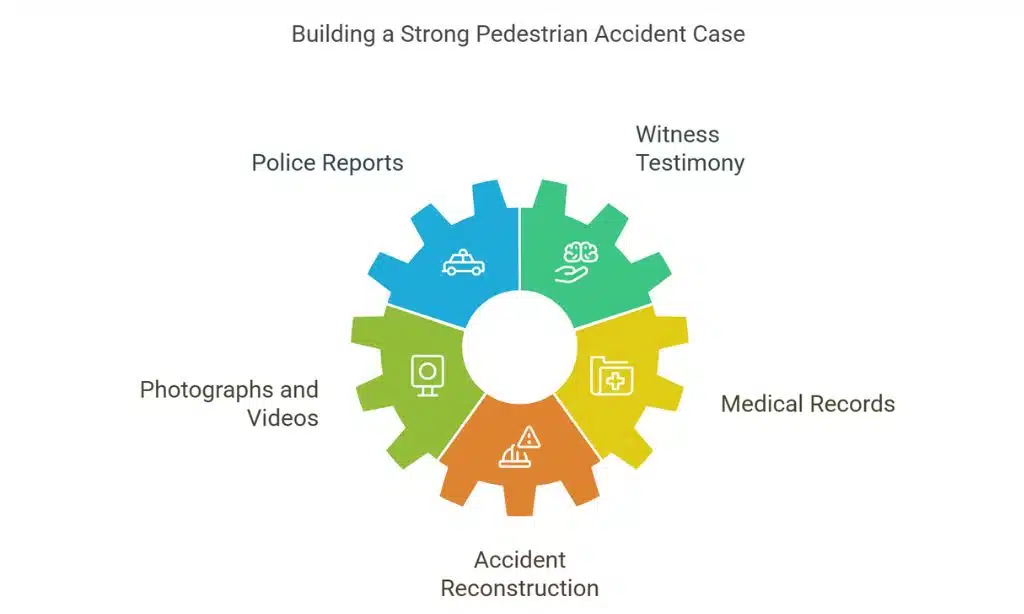
Building a strong case requires gathering compelling evidence. This may include:
- Police Reports. Police reports are a valuable source of information, containing details about the accident scene, witness statements, and the officer’s observations. It’s important to obtain a copy of the police report as soon as possible.
- Witness Testimony. Witnesses who saw the accident can provide crucial testimony about what happened. Their accounts can help establish the driver’s negligence and the sequence of events leading up to the collision.
- Photographs and Videos. Photographs of the accident scene, the vehicles involved, and the pedestrian’s injuries can be powerful evidence. Dashcam footage or videos from nearby businesses can also provide valuable insights into the accident.
- Medical Records. Medical records document the extent of the pedestrian’s injuries and the treatment they received. These records are essential for proving damages and establishing the long-term impact of the accident.
- Reconstructing the Accident. In some cases, it may be necessary to hire an accident reconstruction expert. These professionals use scientific methods to recreate the accident and determine how it occurred. Their expertise can be particularly helpful in complex cases where the cause of the accident is disputed.
Common Causes of Pedestrian Accidents
Understanding the common causes of pedestrian accidents can shed light on how negligence often plays a role. Some frequent factors include:
- Distracted Driving. Distracted driving, such as texting or talking on a cell phone, is a major cause of pedestrian accidents. Drivers who are not paying attention to the road are more likely to make mistakes that can lead to collisions.
- Speeding. Drivers who exceed the speed limit have less time to react to pedestrians in the road. Speeding also increases the severity of injuries in the event of a collision.
- Failure to Yield. Drivers have a legal obligation to yield to pedestrians in crosswalks and other designated areas. Failure to yield is a common cause of pedestrian accidents, especially at intersections.
- Driving Under the Influence. Driving under the influence of alcohol or drugs significantly impairs a driver’s judgment and reaction time, making them much more likely to cause an accident.
- Poor Visibility. Poor visibility due to weather conditions, such as rain or fog, can make it difficult for drivers to see pedestrians. Drivers must take extra precautions in these situations.
Determining Fault
1. Comparative Negligence
Some states follow the principle of comparative negligence, which means that fault can be shared between the driver and the pedestrian. Even if the pedestrian was partially at fault for the accident, they may still be able to recover some compensation.
2. Contributory Negligence
A few states adhere to contributory negligence rules. Under these rules, if the pedestrian is found to be even partially at fault for the accident, they may be barred from recovering any compensation.
3. Working with a Pedestrian Accident Lawyer
Proving negligence in a pedestrian accident case can be a complex legal process. A seasoned San Fernando Valley pedestrian accident lawyer can help you gather evidence, negotiate with insurance companies, and represent you in court if necessary. They can also help you understand your rights and the legal options available to you.
Conclusion
Pedestrian accidents can have life-altering consequences, leaving victims with severe physical injuries, emotional trauma, and significant financial burdens. Successfully proving negligence is essential to recovering the compensation you deserve for these injuries and losses. This compensation can cover medical expenses, lost wages, rehabilitation costs, pain and suffering, and other damages stemming from the accident. Understanding the elements of negligence – duty, breach, causation, and damages – is the foundation of a strong case. Gathering compelling evidence, from police reports and witness testimonies to photographs and medical records, plays a crucial role in establishing the driver’s fault.
Working with a qualified personal injury lawyer is invaluable in navigating the complexities of the legal system, negotiating with insurance companies, and representing you in court if necessary. A skilled attorney can also help you understand your rights, explore all available legal options, and ensure that your voice is heard. By taking these steps – understanding negligence, gathering evidence, and seeking legal counsel – you can significantly increase your chances of achieving a just and fair outcome. Remember, seeking legal counsel is not just important; it’s often the most decisive factor in securing the compensation you need to rebuild your life after a pedestrian accident. Don’t hesitate to consult with a qualified attorney as soon as possible after an accident to protect your rights and pursue the justice you deserve.