Have you ever walked into a gallery and felt completely confused by a blank canvas or a strange sculpture? I have definitely been there, asking myself if these pieces are actually art. You are definitely not alone in feeling this way. The power of modern art and how it’s challenging social norms breaks all the old rules about what a painting or sculpture should look like. It does not always show things exactly as cameras do. Instead, it asks you to think, feel, and question your surroundings.
I found a simple trick that completely changed my perspective on this subject. Once you see that artists use their work to push society forward, the confusion disappears.
These creators shake things up, make people slightly uncomfortable, and start conversations about who we are. Grab a cup of coffee, and let us go through it together. I will show you exactly why these strange shapes matter.
What is Modern Art?
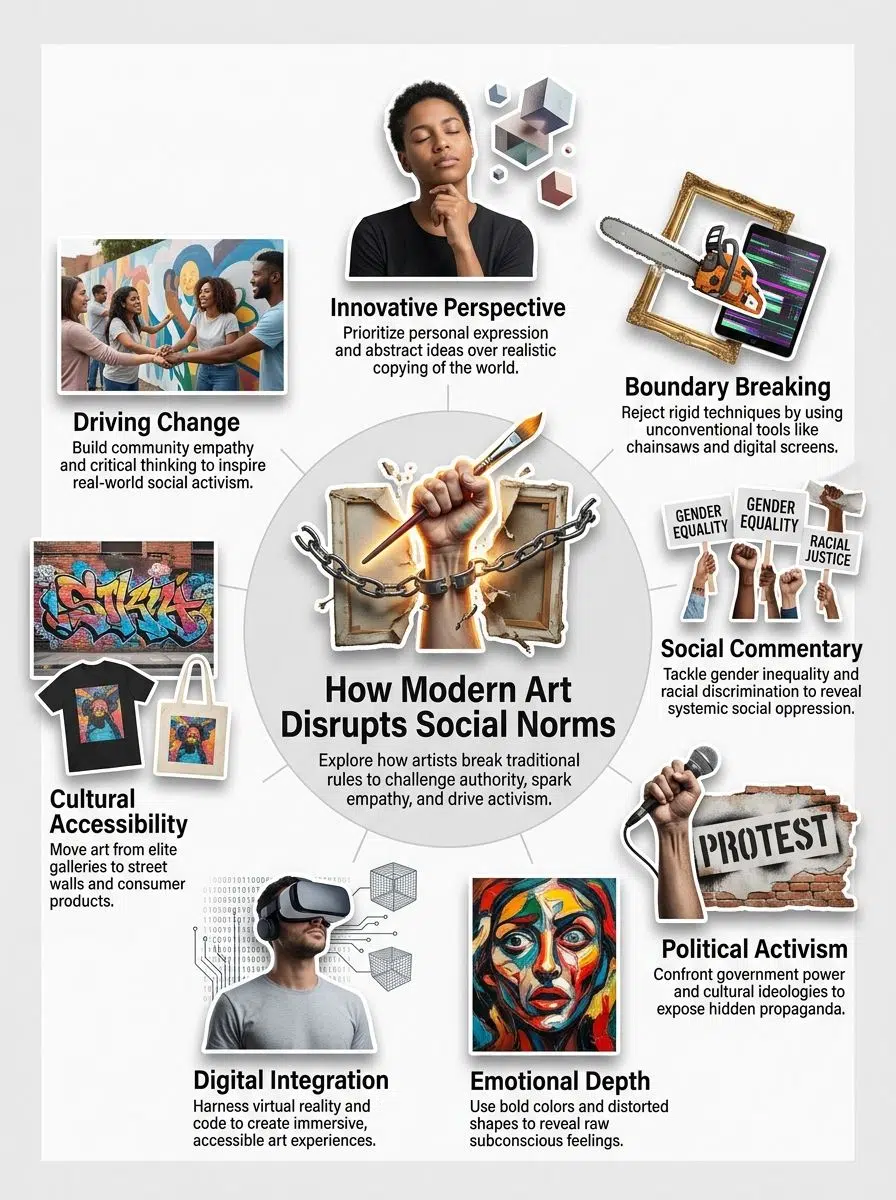
Modern art emerged in the late 1800s and early 1900s. Artists began rejecting traditional rules about how art should look and feel. They experimented with bold colors and strange shapes that never matched real life.
This movement gave creators the freedom to express themselves in brand new ways. Contemporary expression became the heart of this shift. It pushed painters and sculptors to break free from strict historical methods.
If you think all the important art happens overseas, think again. The United States remains the world’s contemporary art capital right now.
A 2026 Art Basel and UBS report shows the US accounts for roughly 44 percent of global art sales, generating about 26 billion dollars in 2025 alone.
Artists use abstract representation to share feelings and social messages. They do not just paint what their eyes see. This artistic freedom sparks cultural critique and opens doors for visual commentary on politics and identity. The movement transforms art from a simple decoration into a tool that challenges how we understand our surroundings.
Breaking Traditional Boundaries
Modern artists smash through the walls built by old school art schools. They grab new tools and fresh ideas that make traditional methods look stale.
Disruption of traditional techniques and perspectives
Artists today throw out the old rulebook entirely. They reject the rigid techniques that dominated art history for centuries. Paint drips become intentional expressions instead of simple mistakes.
Canvases get replaced with found objects, street walls, and digital screens. Sculptors carve with laser beams rather than chisels. These artists refuse to copy nature exactly as they see it. They break free from the demand that art must look realistic. Abstract representation takes center stage.
For a great example, look at Kelsey Merreck Wagner’s 2025 exhibition called “Found and Formed” in Raleigh, North Carolina. She weaves complex textiles entirely out of discarded plastic bags.
Here are a few ways artists disrupt normal techniques:
- Repurposed Trash: Turning daily plastic waste into gallery sculptures.
- Digital Integration: Using code to create shifting, interactive shapes.
- Intentional Damage: Tearing or burning canvas to show vulnerability.
- Public Surfaces: Painting directly on abandoned city buildings.
This disruption reshapes how we think about creativity. Artists experiment with unconventional materials to spark conversation. Expressionism explodes across galleries, showing raw emotions that realistic paintings never could capture.
Exploration of abstract and non-representational forms
Art washes away from the soul the dust of everyday life., Pablo Picasso
Abstract forms shatter what we usually expect to see on a gallery wall. Instead of painting a recognizable face or landscape, modern artists strip away the obvious details. They use shapes, colors, and lines to express feelings that words simply cannot capture.
This shift happened gradually, but it changed everything about how we look at a canvas. Picasso’s Cubist movement broke objects into geometric pieces. He showed multiple perspectives at once.
Viewers had to think differently. They had to feel the piece instead of just recognizing the subject. A 2025 study highlighted by the American Psychological Association found that looking at meaningful abstract art actively engages your brain’s default mode network. This is the area of your brain responsible for deep introspection.
Non-representational work opens doors to deeper personal interpretation. A splash of red might mean anger to one person and passion to another. This freedom transforms how audiences engage with contemporary expression. These aesthetic innovations prove that art does not need to look like reality to tell the truth.
Art as a Tool for Social Commentary
Modern artists wield their brushes, cameras, and installations as weapons against injustice. They speak truth to power through visual language that cuts straight to the heart.
Addressing issues like gender, race, and inequality
Artists today use their work to speak up loudly about gender, race, and inequality. They create pieces to highlight the struggles that society often ignores. Frida Kahlo painted her own face with bold strokes, claiming permanent space for women in art history.
Contemporary creators refuse to stay silent. They turn galleries and streets into active stages for social justice. Their work makes viewers stop and think about who gets power and who gets left out. Art becomes a direct mirror reflecting the unfair systems we face every day.
We see this powerful impact in the upcoming Museum of Modern Art retrospective of Ruth Asawa, spanning late 2025 to early 2026. Her intricate wire sculptures are visually stunning. They also deeply embody her experiences as a Japanese American and her lifelong dedication to social justice.
Her work shows exactly how marginalized voices claim space. A painting or sculpture about racial inequality hits you differently than a news article. It sticks with you long after you leave the room.
Challenging political and cultural ideologies
Modern art goes beyond personal identity to confront large political systems. Artists question government power and reject mainstream narratives that most people accept without thinking. They paint over billboards and create installations that force us to reconsider our beliefs.
Political activism through visual commentary is a powerful force. A great current example is the 2026 “The Body of Freedom” project hosted by the Center for Social Justice and Civil Liberties in Riverside, California.
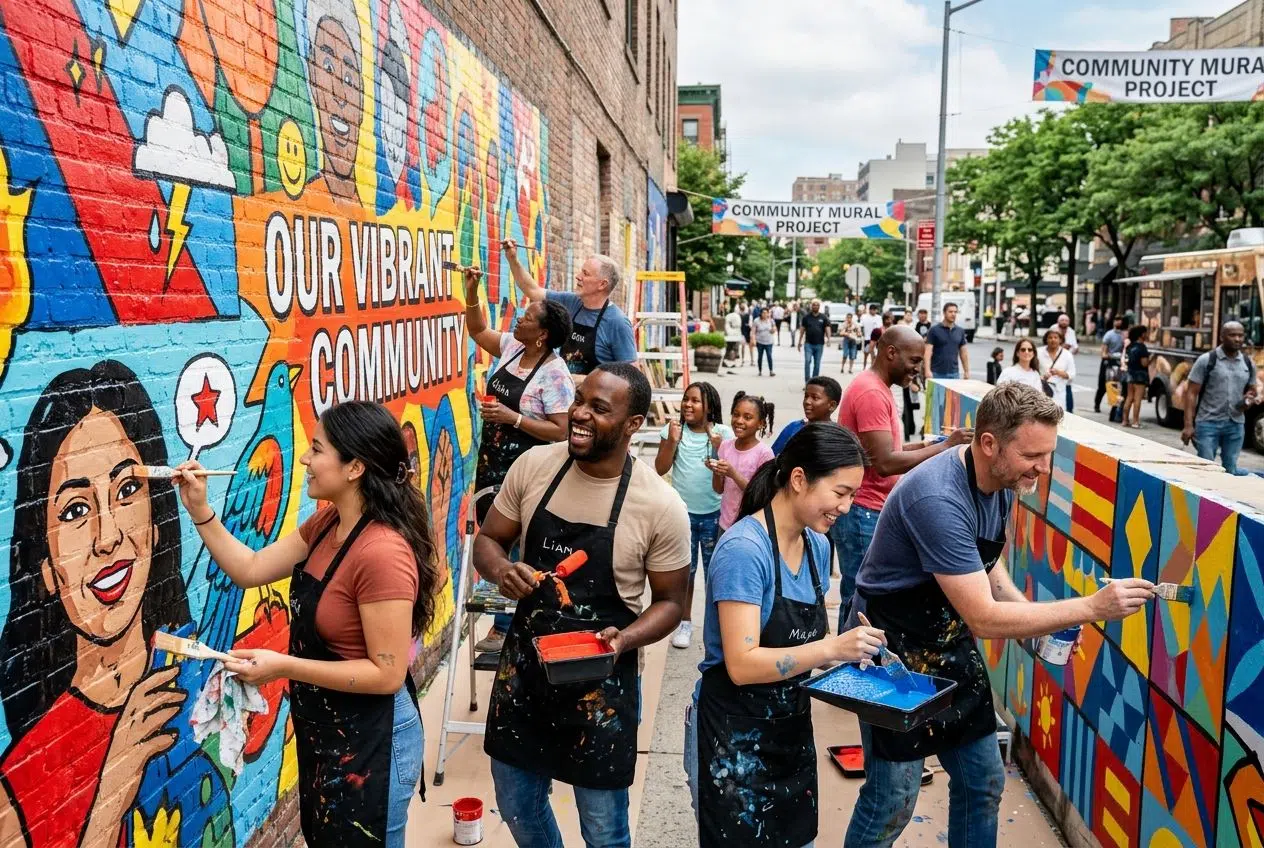
This expansive community project brings people together to tackle equity through papier-mache and mural painting. It proves that local, collaborative art can challenge broad cultural ideas.
Andy Warhol challenged consumer culture by repeating images of famous products. He showed how capitalism controls our thoughts and daily desires. Modern artists subvert traditional power structures by making art that speaks directly to corruption. They refuse to play by the rules set by large institutions.
Emotional and Psychological Impact of Modern Art
Modern art reaches deep into your mind and stirs feelings you never knew you had. Viewers walk away seeing their daily lives through fresh eyes.
Expression of internal emotions and subconscious ideas
Artists pour their deepest feelings onto canvas, paper, and city walls. They show us what lives inside their minds. Expressionism lets creators reveal raw emotions through bold colors and intense brushstrokes. This approach breaks free from showing things as they actually look.
Viewers stand in front of these works and feel something shift inside themselves. Artistic expression becomes a mirror for our own inner lives. We tackle feelings we struggle to name, like fear, joy, or confusion.
This connection has a measurable benefit for mental health. The United States visual arts therapy market reached nearly 1.95 billion dollars in 2025.
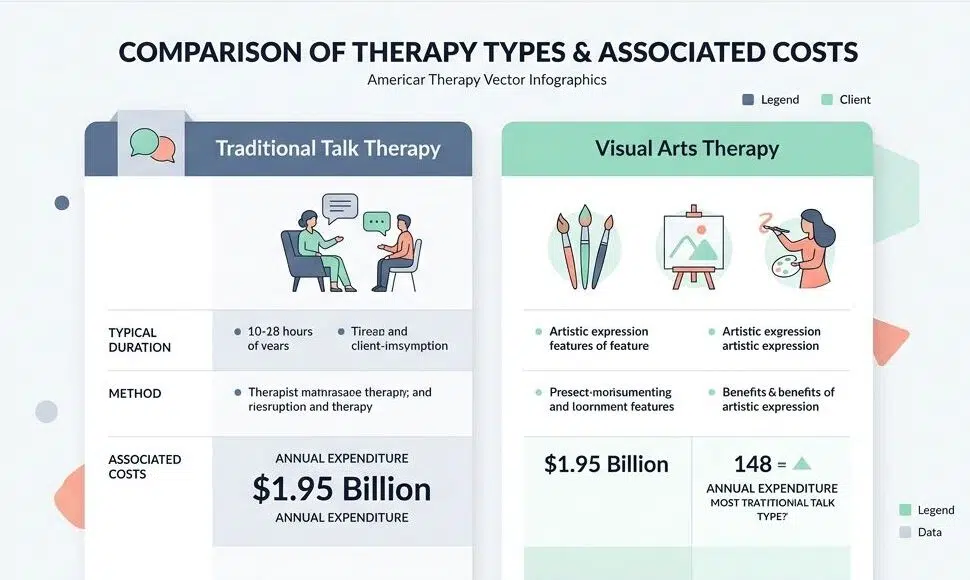
| Therapy Type | Primary Method | Best For |
|---|---|---|
| Traditional Talk Therapy | Verbal communication | Processing logical thoughts |
| Visual Arts Therapy | Creative expression | Reducing anxiety and exploring trauma |
Studies show that 75 percent of participants experience improved emotional regulation after consistent art sessions. When you see a painting that makes your chest tight, that is the artist’s subconscious speaking directly to yours.
Influencing how viewers perceive and interpret reality
Modern art literally shifts how we see the spaces around us. Traditional art showed us things as they appeared. Contemporary expression breaks that exact mold.
Picasso forced people to think differently about perspective and space. Viewers stopped accepting one single viewpoint as the absolute truth. They began to see reality as layered and complex.
Today, this shift in perception happens on a massive scale through immersive art. Industry reports project that over 40 million people will visit the United States immersive venues like Meow Wolf and ARTECHOUSE in 2026.
When you walk into a room filled with responsive lighting and digital storytelling, your brain works harder. You fill in gaps and make unique connections. Modern artists craft these experiences on purpose to challenge your cultural assumptions.
Innovations in Modern Art Techniques
Modern artists push boundaries by grabbing strange materials that shake up our expectations. They blend brand-new technology into their work.
Use of unconventional materials and methods
Artists today grab materials from everywhere. They turn daily trash into gallery treasures. This artistic freedom forces viewers to see environmental waste differently.
Here are a few ways creators are innovating with materials today:
- Recycled plastics: Artists collect discarded bottles to create visual commentary on consumer culture.
- Found object art: Abandoned items transform into pieces that critique social norms about waste.
- Installation art: Immersive spaces make viewers walk through the artwork instead of just observing it.
- Mixed media: Combining paint, photography, and sculpture breaks traditional boundaries.
- Performance art: Using the human body to challenge expectations about what a canvas can be.
- Textile repurposing: The 2025 “Torn and Woven” exhibition in San Diego highlights artists who use reclaimed threads to build eco-conscious sculptures.
These unique approaches demonstrate how material choices challenge our social norms.
Integration of technology and digital media
Beyond paint and canvas, artists harness technology to push limits even further. Digital tools and virtual reality become powerful weapons for cultural critique. They create immersive experiences you simply cannot ignore.
Technology opens doors that traditional methods cannot unlock. Programmers and visual creators collaborate to produce interactive installations. Digital art exhibitions actually held the largest market share of the immersive industry in 2025, accounting for over 34 percent of total revenue.
These tech-driven innovations reach millions online. They spread messages of social justice faster than ever before. The avant-garde movement evolves as artists integrate screens and code into their daily work.
Prominent Figures in Modern Art Who Challenged Social Norms
Artists like Pablo Picasso, Andy Warhol, and Keith Haring shattered old expectations. They refused to play by the established rules.
Pablo Picasso and the Cubist movement
Pablo Picasso shattered art like a mirror in 1907. His early work broke every rule the art establishment held sacred. He chopped up the human form into sharp angles. He showed multiple viewpoints on one flat canvas.
This radical approach to visual commentary made people deeply uncomfortable. That discomfort was exactly his point. Picasso refused to paint what the eye sees. He painted what the mind knows instead.
“Others have seen what is and asked why. I have seen what could be and asked why not.” , Pablo Picasso
His legacy remains incredibly powerful today. In the spring of 2025, the Gagosian gallery in New York hosted the massive “Picasso: Tête-à-tête” exhibition. Seeing over fifty rarely shown pieces in person proves that his fragmented vision still resonates with our modern lives.
Cubism became a weapon for cultural critique. His fragmented forms reflected the pure chaos of modern life. Picasso showed that art could be highly political without preaching a single word.
Andy Warhol and the rise of pop art
Andy Warhol transformed art in the 1960s by bringing popular culture straight into fine galleries. He painted soup cans and celebrities that everyday people recognized immediately. His work challenged the idea that art had to be difficult to understand.
Warhol used silkscreen printing to create multiple copies of the exact same image. This broke away from the traditional belief that a masterpiece must be a handmade original. Pop art made creative expression accessible to everyone, not just wealthy collectors.
His bold choices sparked fierce debates about what qualifies as real art. Warhol focused on themes that resonated with everyone:
- Fame: Portraits of celebrities like Marilyn Monroe.
- Consumerism: Paintings of everyday Campbell’s soup cans.
- Mass Production: Repeating the same image to mimic factory work.
His themes are seeing a major resurgence right now. The 2026 Art Basel and UBS Art Market Report notes a significant market shift back to established Postwar names like Warhol. His brilliant critique of how mass production shapes our identities is still highly relevant.
Keith Haring transformed street art into a powerful form of political activism. His energetic figures danced across subway walls and public buildings. He reached everyday people who might never step foot inside a museum.
Haring refused to keep his art locked behind velvet ropes. He painted murals for AIDS awareness campaigns and sparked conversations about social justice. His visual commentary spoke directly to marginalized communities.
“Art should be something that liberates your soul, provokes the imagination and encourages people to go further.” , Keith Haring
His foundation continues this exact mission today. In 2025, the Keith Haring Foundation remains highly active in funding public art and LGBTQ+ programs. You can even visit his 1987 collaborative mural, “We The Youth,” which still remains intact in its original Philadelphia location.
His fearless approach proved that artists can be incredible activists. He demonstrated that public engagement and activism naturally go hand in hand.
The Role of Modern Art in Transforming Society
Modern art sparks real change by making people think harder and feel deeper. Artists reshape our communities through bold visual statements.
Encouraging empathy and critical thinking
Contemporary art pushes you to step into another person’s shoes. Artists tackle identity politics and social justice through visual commentary that makes you feel something genuine. You actually pause to think about the underlying message.
This emotional connection transforms how you see your neighbors. A 2025 academic study from Penn State University found that pairing challenging artwork with the artist’s personal background story measurably increases empathy in students.
When you learn the context behind a piece, your brain engages differently. You become more willing to consider viewpoints that differ from your own. This mental flexibility ripples outward into your daily life.
Inspiring activism and cultural shifts
Modern art sparks real change in how people act. Creators who tackle social justice issues push viewers to stand up for what matters. Their work highlights inequality in ways that words alone cannot capture.
People see these installations and feel moved to take immediate action. Art becomes a giant megaphone for voices that need to be heard loudly. It drives change by:
- Highlighting ignored community struggles.
- Providing a rallying point for public protests.
- Funding charitable causes through auction sales.
Look at the Museum of Arts and Design’s 2025 exhibition, “Saya Woolfalk: Empathic Universe.” Woolfalk uses immersive installations to show how cultures can mix, clash, and eventually heal through shared understanding.
Artistic freedom is the true fuel that drives society forward. Artists are no longer just pointing out our problems. They are actively sketching out the solutions.
The Closing Thoughts
Art continues to push boundaries and spark conversations that truly matter. Creators today use their platform to address identity politics and cultural critique. They refuse to play it safe.
Instead, they shake things up through pure aesthetic innovation. This shift transforms how we see ourselves and our local communities. How Modern Art Is Challenging Social Norms is a vital question that keeps evolving every single year.
Artistic freedom fuels public engagement across our neighborhoods. The avant-garde movements of yesterday are the conversation starters of today. Art does not just hang silently on walls anymore. It lives in our hearts and inspires us to build a better future together.
Frequently Asked Questions (FAQs) on Power of Modern Art
Modern art challenges social norms by questioning traditional ideas about beauty, identity, and who gets to create art. Marcel Duchamp’s “Fountain” in 1917 was just a urinal signed “R. Mutt,” which forced people to rethink what could even be considered art. It flipped the script on who decides what has value in the art world.
2. Why do some folks find modern art confusing or odd?
People find modern art confusing because it breaks from the realistic portraits and landscapes they learned to recognize as “good art.” Works like Jackson Pollock’s drip paintings look random at first, but they’re meant to make you ask questions instead of just admire technique.
3. Can you give an example where modern art changed how society thinks?
Shepard Fairey’s “Hope” poster of Barack Obama in 2008 became an iconic symbol that energized millions of voters and showed how street art could shape a presidential campaign.
4. What makes modern artists so bold when tackling tough topics?
Modern artists are bold because they see their work as a tool for change, not just decoration. Chinese artist Ai Weiwei has used his installations to challenge government censorship, even when it meant getting arrested.