

If you look at the most successful companies in Scandinavia, you will notice they do things a bit differently than the rest of the world. They do not just hire people to follow instructions; they treat them as partners in the business. This unique approach is what locals call medbestemmelse, but it is known globally as the concept of Norway co-determination at work. It is a system where workers have a real say in how their company is run, from the breakroom to the boardroom. This is not some optional perk that a few nice bosses decided to offer. It is a fundamental right that is baked into the law and the very fabric of society.
As we move through 2026, the workplace is changing faster than ever with AI and remote work, yet these old-school principles of cooperation are more relevant than they have ever been. Whether you are moving to Norway for a job or just want to know why their economy is so stable, understanding this system is the key. It creates a high-trust environment where people feel safe to share their ideas without being afraid of their boss. When everyone feels like they are on the same team, the company usually ends up making more money and keeping its workers longer. Let’s look at the twelve specific facts that make this system work so well for everyone involved.
1: The Work Environment Act is the Legal Backbone
Everything starts with a law called the Arbeidsmiljøloven, or the Work Environment Act. This is the master rulebook for every office, factory, and store in the country. It does not just cover basic safety like fire exits and hard hats. It explicitly states that employees have a right to influence their own work situation. In the early months of 2026, this law was updated to include even stricter rules about how companies use technology to monitor their staff.
The law is designed to make sure that work is meaningful and that it does not wear people out physically or mentally. It assumes that the person doing the job actually knows the most about how to do it well. Because of this, managers are legally required to ask for input before they change how a job is done. If they do not, they are not just being a bad boss; they are breaking the law. This legal foundation ensures that Norway co-determination at work is not just a trend but a permanent part of the economy.
Protecting the Digital Workspace
In the 2026 version of the Act, there is a big focus on digital health. The law now says that if a company wants to introduce new software that tracks productivity, they have to talk to the workers about it first. They cannot just install it overnight. This keeps the relationship between the boss and the worker based on trust rather than constant surveillance.
| Legal Requirement | Description | Purpose |
| Section 4-2 | Right to participate in workplace design. | Ensures equipment fits the worker. |
| Section 12-1 | Right to information on company plans. | Prevents sudden, secret changes. |
| 2026 Update | Mandatory consultation on AI tools. | Protects workers from algorithmic bias. |
2: Participation is for Everyone while Co-Determination is Organized
It is common to hear people use the words participation and co-determination as if they are the same thing, but they really aren’t. Participation is what you do as an individual. You might have a meeting with your manager to talk about your personal goals or suggest a better way to organize your files. That is you participating in your own daily tasks. It is your right to be heard about the things that affect you personally every day.
Co-determination is much bigger and more organized. This is where the workforce speaks as a single group through their elected representatives. It is not just about your desk; it is about whether the company should sell off a department or move the headquarters to a different city. While every single person is expected to participate in their own small sphere, co-determination happens at the high levels where big decisions are made. This split ensures that both small details and big strategies are handled with employee input.
The Power of Collective Action
When employees act together through co-determination, they have a lot more leverage. A single worker might be ignored if they complain about a big company policy, but a representative speaking for 500 people cannot be ignored. This is why most Norwegians see their union or work council as a tool for professional growth rather than just a way to settle arguments.
| Type of Influence | Who Participates? | Focus Area |
| Individual Participation | The individual worker. | Daily tasks and personal goals. |
| Collective Co-Determination | Elected representatives. | Company strategy and mergers. |
| Consultation | Both staff and management. | Workplace safety and culture. |
3: Employees Have a Legally Mandated Board Seat
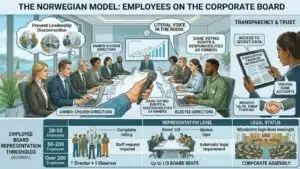
In many countries, the board of directors is a group of investors who only care about the stock price. In Norway, once a company reaches a certain size, the law says the workers must have a seat at that table. This is a very literal form of having a voice in the room where it happens. These employee-elected board members are not just there to watch; they have the same voting rights and the same responsibilities as the members chosen by the owners.
If a company has more than 30 employees, the staff can demand to have one representative on the board. If the company grows to more than 50 people, that number goes up to one-third of the total board seats. This means that when the board discusses cutting costs or expanding into a new market, there is someone in the room who knows exactly how those decisions will impact the people on the ground. It prevents the leadership from becoming disconnected from reality.
Beyond the Voting Power
Being on the board also gives workers access to the same secret financial information that the owners see. This transparency is huge because it builds trust. If the board says they cannot afford raises this year, the employee representative can see the bank accounts for themselves and verify if that is true. This stops a lot of the usual “us versus them” fighting that happens in other corporate cultures.
| Company Size | Representation Level | Legal Status |
| 30-50 Employees | 1 Director + 1 Observer. | Right must be requested by staff. |
| 50-200 Employees | Up to 1/3 of board seats. | Automatic legal requirement. |
| Over 200 Employees | Corporate Assembly representation. | Mandatory high-level oversight. |
4: The Three-Legged Stool of the Tripartite Model
The entire Norwegian economy stays stable because of something called the tripartite model. It is a three-way partnership between the government, the employers’ associations, and the trade unions. They all agree that a healthy economy needs both profitable companies and well-paid workers. Instead of fighting each other in the streets or in court, these three groups meet regularly to set the rules for the whole country. This national cooperation is a massive part of the Norway co-determination at work system.
The government provides the laws and the safety net, the employers provide the jobs and the innovation, and the unions ensure that the wealth is shared fairly. Because they all talk to each other, Norway avoids the massive strikes and social unrest that plague other countries. Everyone knows that if the economy succeeds, everyone gets a piece of the pie. In 2026, this model has been critical for managing the shift toward green energy, as unions help workers transition into new roles without losing their livelihoods.
National Level Influence
This isn’t just about what happens inside one office building. The unions in Norway are so large that they can sit down with the Prime Minister to discuss tax laws or child care. This gives regular workers a voice in how the entire country is run. It is a system built on the idea that social peace is more valuable than any short-term profit.
| The Three Pillars | Role in Society | Main Goal |
| The State | Lawmaker and mediator. | National stability and welfare. |
| Employers | Business owners (like NHO). | Profit and international competition. |
| Labor Unions | Worker representatives (like LO). | Fair wages and job security. |
5: The Shop Steward is the Most Important Link
The person who makes this whole system work on a daily basis is the tillitsvalgt, or the shop steward. This is an employee who has been elected by their co-workers to be their official representative. They are the bridge between the boss and the staff. In a Norwegian company, the relationship between the CEO and the head shop steward is often the most important relationship in the building. They talk constantly, not just when there is a problem.
The law and collective agreements say that the manager must consult the shop steward before making any big moves. This includes things like changing the working hours, moving the office, or planning for a reorganization. A good manager knows that if they have the shop steward on their side, the rest of the staff will likely support the plan too. It is a system of “no surprises.” By the time a big change is announced, the shop steward has usually already reviewed it and suggested ways to make it better for the workers.
A Career Path for Leadership
Being a shop steward is not just about arguing; it is a specialized role that requires training. Most unions provide extensive courses for their stewards in labor law, finance, and negotiation. This means that the person sitting across from the CEO often knows just as much about the business as the management team does. It creates a level playing field where real negotiation can happen.
| Role of the Steward | Daily Actions | Benefit to the Boss |
| Conflict Solver | Fixes small issues before they grow. | Less time spent on HR disputes. |
| Legal Advisor | Ensures the company follows the Act. | Avoids expensive lawsuits or fines. |
| Staff Voice | Collects feedback on new policies. | Higher “buy-in” from the employees. |
6: Safety Representatives Look After More Than Just Hard Hats
Every workplace in Norway with at least five employees must have a verneombud, which is a safety representative. For a long time, people thought this person was only there to make sure the fire extinguishers were full. But in 2026, their role has expanded to include the psychosocial environment. This is a fancy way of saying they look after the mental health and happiness of the workers. They are trained to spot signs of bullying, harassment, or extreme stress.
The safety representative has a unique power that you won’t find in many other countries. If they see a situation that they think is a serious danger to someone’s health, they have the legal right to stop all work immediately. They do not need to ask the boss for permission. This includes mental health dangers. If a team is being pushed so hard that people are starting to have breakdowns, the safety rep can step in and halt the project until a safer plan is made. This is a vital part of the Norway co-determination at work model because it puts human life above the deadline.
Managing Stress in the Modern Era
As work becomes more digital, the safety rep now looks for “digital stress.” They check if employees are being flooded with too many notifications or if they are being pressured to work during their commute. They act as a shield, ensuring that technology makes the job easier rather than just making it more intense.
| Safety Power | Description | Real-World Example |
| Right to Stop Work | Can halt operations if danger is present. | Stopping a construction site with no harness. |
| Psychosocial Check | Monitors stress and bullying levels. | Intervening in a toxic team environment. |
| HSE Planning | Must be involved in all safety plans. | Helping design a healthy office layout. |
7: Transparency is Mandatory for Meaningful Dialogue
You cannot have a say in a decision if you do not have all the facts. This is why transparency is central to Norway co-determination at work. Employers have a legal duty to provide information to employee representatives about the company’s financial status and its future plans. This isn’t just about sharing a brochure at the end of the year; it’s about sharing the real numbers, including the stuff that might be worrying.
When the workers know exactly how much money the company is making or losing, they can make better decisions. If they see that the company is struggling, they might agree to hold off on wage increases to save jobs. If they see the company is doing great, they can push for their fair share of the profits. This open-book policy removes the suspicion that management is hiding something, which is the biggest killer of productivity in most workplaces.
Financial Literacy for All
Because they get access to this data, many Norwegian workers end up becoming very financially literate. They understand how their daily work affects the company’s bottom line. This makes them more responsible and more likely to suggest ways to save money or find new customers. It turns every employee into a micro-manager of the company’s success.
| Information Shared | Frequency | Why it Matters |
| Quarterly Profits | Every three months. | Shows if the company is growing. |
| Investment Plans | Before major spending. | Shows where the company is heading. |
| Competitor Data | Regularly. | Helps workers understand the market pressure. |
8: The 2026 Shift in Boardroom Diversity
Norway was the first country in the world to require a 40% gender balance on the boards of public companies. In 2026, this rule has been expanded to cover a much larger group of private companies. This means that boards must now reflect the actual diversity of the people working in the company. This isn’t just about fairness; it’s about better decision-making. Research has shown that diverse boards are less likely to make risky or stupid mistakes because they look at problems from more angles.
The interesting part is that this rule also applies to the seats held by employees. If the staff gets to elect three people to the board, they have to ensure that both men and women are represented. This ensures that the co-determination process does not just become another “old boys’ club.” It brings fresh perspectives to the highest level of leadership and ensures that the needs of all workers, regardless of gender, are being considered during big votes.
Impact on Mid-Sized Businesses
The 2026 update means that even medium-sized businesses now have to follow these diversity rules. This has led to a massive wave of leadership training for women and underrepresented groups within companies. It is creating a pipeline of talent that is making the entire Norwegian business world more competitive on a global stage.
| Diversity Rule | Application | Result |
| 40% Gender Rule | Public and large private boards. | Prevents one-sided decision-making. |
| Employee Seats | Proportional gender balance required. | Diverse voices from the shop floor. |
| 2026 Expansion | Includes medium-sized firms. | Broadens the talent pool nationwide. |
9: Protection from Unfair Firing is Extremely Strong
One of the reasons workers feel comfortable speaking up in Norway is that they know they cannot be fired for no reason. Job security is a cornerstone of the whole system. An employer must have a very good, documented reason to let someone go. This could be because the person is not doing their job after many warnings, or because the company is literally running out of money and needs to downsize.
Before anyone is fired, there is a mandatory process that must be followed. The most important step is the drøftelsesmøte, which is a formal discussion meeting. The boss has to sit down with the employee and their representative to explain exactly why they are considering a dismissal. The employee then has the chance to defend themselves or offer a different solution. This process ensures that people are treated with dignity, even when things are not working out. It prevents bosses from being petty or making impulsive decisions.
The Right to Stay in Your Job
If an employee believes they were fired unfairly, they often have the right to keep working and receiving their salary while the court decides who is right. This takes away the employer’s ability to use the fear of poverty to silence workers. It ensures that the power balance stays level, even during a conflict.
| Firing Process | Requirement | Worker Right |
| Documented Warnings | Must show a history of the issue. | Right to improve performance. |
| Discussion Meeting | Must happen before the final call. | Right to bring a union representative. |
| Just Cause | Must be a valid business or conduct reason. | Right to sue if the reason is weak. |
10: The Right to Disconnect in a Hybrid World

As of 2026, the boundaries between the office and the home have been legally clarified in Norway. The rise of remote work threatened to make people feel like they were always on the clock. This is why many companies, through the process of co-determination, have established a right to disconnect. This means that unless it is a life-or-death emergency, you are not expected to read or answer emails once your workday is over.
This policy supports Norway co-determination at work in hybrid models because it was not just a rule handed down from the top. Workers and managers sat down together to define what “off-duty” looks like for their specific team. For some, it might mean no emails after 5 PM. For others with international clients, it might mean a rotating schedule. Because the workers helped write the rules, they are much more likely to respect them and feel respected in return.
Ending the Availability Trap
The goal is to stop the feeling that you have to be “always on” to get a promotion. When everyone agrees to the same rules about communication, the pressure disappears. People can actually relax on their evenings and weekends, which means they come back to work on Monday with much more energy and creativity.
| Disconnect Policy | Old Way | 2026 Hybrid Way |
| Email Expectations | Reply as soon as you see it. | Reply during stated work hours only. |
| Digital Presence | “Always Green” on Slack/Teams. | Status reflects actual availability. |
| Manager Behavior | Sending tasks on Saturday. | Using “Schedule Send” for Monday morning. |
11: Retirement is Now a Flexible Conversation
A major change that took effect in 2026 is that companies can no longer force people to retire just because they reached a certain age, like 67 or 70. The new law recognizes that people are living longer and staying healthier. If an employee wants to keep working and is still doing a good job, they have the right to stay. This has turned retirement from a “deadline” into a “conversation.”
This change was driven by the co-determination model at the national level. The unions and the government realized that losing all that experience was hurting the economy. Now, managers and older workers sit down to plan the final years of a career. They might agree on a “slow-down” period where the person works three days a week or takes on a mentoring role to train the younger staff. It is a more human way to handle the end of a professional life.
Keeping Wisdom in the Office
When older workers are not forced out, the company keeps all that institutional knowledge. They have someone who remembers how they solved a similar problem ten years ago. It also reduces the stress for older workers, who no longer have to worry about being suddenly “useless” once they hit a certain birthday.
| Retirement Aspect | Before 2026 | After 2026 |
| Upper Age Limit | Often set at 70 by the company. | Generally illegal to force retirement. |
| Worker Choice | Had to ask for an extension. | Can stay as long as they are fit for work. |
| Company Role | Focused on hiring young people. | Focused on multi-generational teams. |
12: How Norway Co-Determination at Work Creates a Better Office
Some people worry that all this talking and voting will make a company slow and lazy. In fact, the opposite is true. The Norwegian model is one of the most efficient in the world. When a company needs to make a big change, like switching to a new technology, it happens much faster in Norway because the workers already understand why it is happening. They don’t spend months resisting or sabotaging the change; they get to work making it happen.
The high level of trust means that managers do not have to spend all their time micro-managing their staff. They can give an assignment and trust that it will be done, because the worker feels a sense of ownership over the result. This creates a lean, fast-moving organization where information flows freely in both directions. In the end, Norway co-determination at work is not just about being fair—it is a massive competitive advantage in the global market.
The Economic Payoff
Norway has some of the highest productivity rates per hour in the world. This isn’t because they work the longest hours, but because they work the smartest. By involving everyone in the decision-making process, the company avoids making expensive mistakes that a disconnected boss might make. It is a system where everyone wins.
| Business Benefit | How it Happens | Long-term Result |
| Faster Change | No resistance from the staff. | Stay ahead of the competition. |
| Lower Turnover | People feel valued and stay. | Massive savings on hiring costs. |
| Higher Innovation | Ideas come from every level. | Constant improvement of products. |
Final Thoughts
At the end of the day, the Norwegian model proves that you do not have to choose between a successful business and a happy workforce. By giving everyone a seat at the table, you create a company that is resilient, innovative, and fair. The 2026 updates to the law show that this is not a static system; it is constantly evolving to handle new challenges like AI and an aging population.
If you are an employer, embracing Norway co-determination at work will give you access to the full creative potential of your team. If you are an employee, it gives you the dignity and security you need to do your best work. It is a high-trust, high-reward way of living that makes the Norwegian workplace one of the best in the world. Understanding these twelve facts is the first step toward thriving in this unique and productive environment.
Frequently Asked Questions (FAQs) About Norway Co-Determination at Work
1. Does co-determination apply to international companies with offices in Norway?
Yes, absolutely. If you operate in Norway, you must follow the Work Environment Act. It does not matter where your headquarters are located. You have to respect the rights of your Norwegian employees to have representatives and a safe environment.
2. Can I be fired for joining a union or asking for co-determination?
No, that would be highly illegal. Norwegian law strictly protects the right to organize. If an employer tries to punish a worker for union activities, they can face massive fines and the worker can be reinstated by a court.
3. Do small startups have to have a board representative?
The requirement for a board representative only starts once you have 30 employees. However, the smaller rules, like having a safety representative once you have five people, still apply. Even the smallest startup is expected to follow the principles of consultation.
4. Is the shop steward a full-time job?
In very large companies, the head shop steward might work full-time on union business. In smaller companies, they do their regular job and use a portion of their working hours for their representative duties. The company is required to pay them for this time.
5. How does this work for remote workers?
Remote workers have the same rights as office workers. They are included in the headcount for board representation and safety reps. In 2026, many safety reps now hold “digital inspections” to ensure remote workers have healthy setups.
6. What if I don’t want to participate in the company decisions?
Participation is both a right and a duty under the law. While you do not have to run for the board, you are expected to contribute to a healthy work environment and follow the safety rules that your colleagues helped create.























