
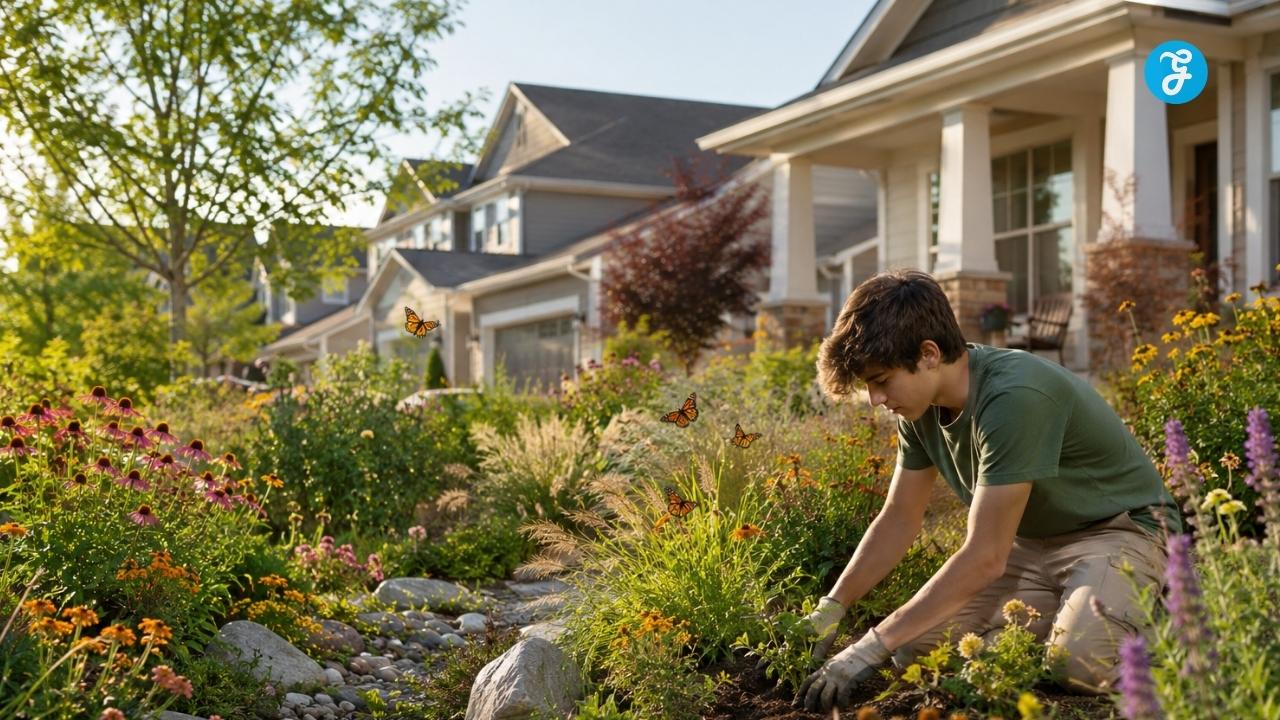
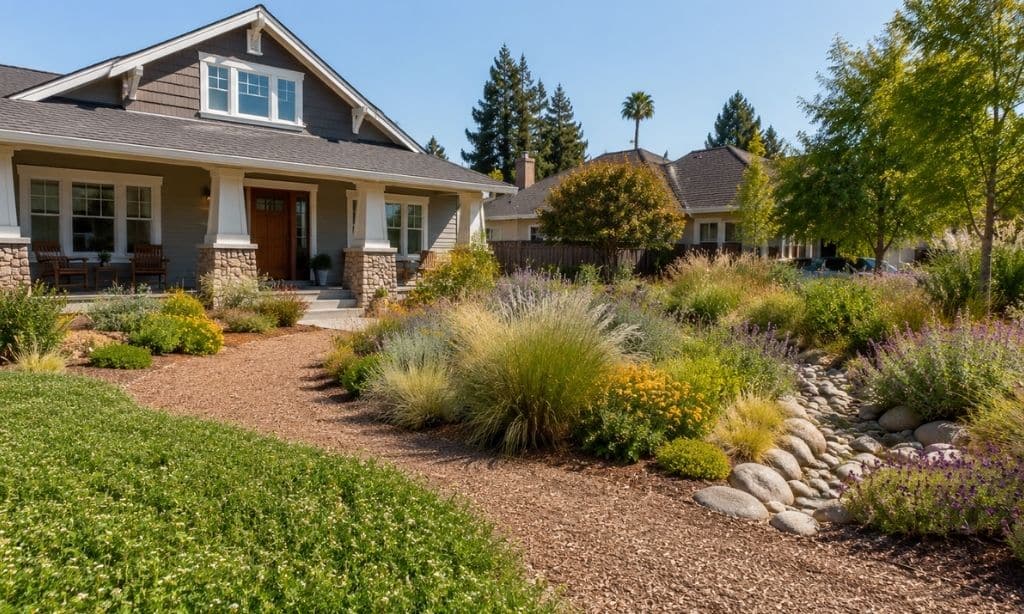
Across the United States, the trend of native plants replacing lawns is fundamentally changing how front yards look and function. Instead of maintaining thirsty bluegrass and fescue, homeowners are digging up these traditional turfs in favor of pollinator havens and clover. Consequently, drought-tolerant landscapes and rain gardens are quickly becoming the new suburban standard.
This shift represents much more than a simple aesthetic upgrade; it serves as a quiet re-definition of the American yard. Driven by growing conversations around water shortages and climate change, communities are increasingly concerned about collapsing bee populations alongside the rising cost of chemicals. In response, cities from California to Colorado have even begun offering financial incentives for turf removal. Ultimately, this movement transcends the desire for prettier flower beds, reflecting a deeper change in how families measure success and environmental responsibility in a hotter, drier country
The Fading Symbol of the 20th-Century Lawn
In the mid-twentieth century, the spotless green lawn became a stage for suburban order and conformity. A perfect grass rectangle signaled to neighbors that a family had mastered both nature and finances. This shared aesthetic spread alongside the suburbs, defining the American dream for decades. However, that rigid ideal is now wilting under the weight of historic droughts and high maintenance costs. Today, people are actively moving away from this water-intensive symbol, choosing wilder, smarter spaces that look beautiful without a constant soak.
The New Look of the Front Yard
That image is fraying now. In news clips and on local streets, you see brown patches and yellow edges. “No mow” front yards are appearing everywhere. Wildflower borders and micro-prairies are taking over. Some homeowners call it rewilding. Others just call it resilience. They are finding that these yards are cheaper and easier to manage. The front yard is no longer a static green carpet. It is a changing, living space.
A Shift in Values
Is this just a passing fad or a moral shift? It appears to be a change in how Americans think about land and labor. The lawn revolution shows a new sense of climate responsibility. People are questioning if a perfect lawn is worth the environmental price. They are trading the mower for a garden trowel. This is a visible change in suburban priorities. It reflects a desire to live in harmony with the local environment.
What the Perfect Lawn Actually Costs
The environmental bill for the American lawn is coming due. Maintaining a monoculture of grass requires an enormous amount of resources. These costs are often hidden behind a bag of fertilizer or the sheer labor of weekly maintenance. But the cumulative effect on the planet is massive.
Water and Chemicals
According to the EPA, U.S. lawns gulp down nearly 9 billion gallons of fresh water every day, amounting to trillions of gallons annually. In many households, outdoor irrigation accounts for more than half of all residential water use. This excessive consumption often happens because signals from neighbors matter more than water bills. Homeowners feel pressured to maintain a vibrant green carpet even when local reservoirs are at record lows.
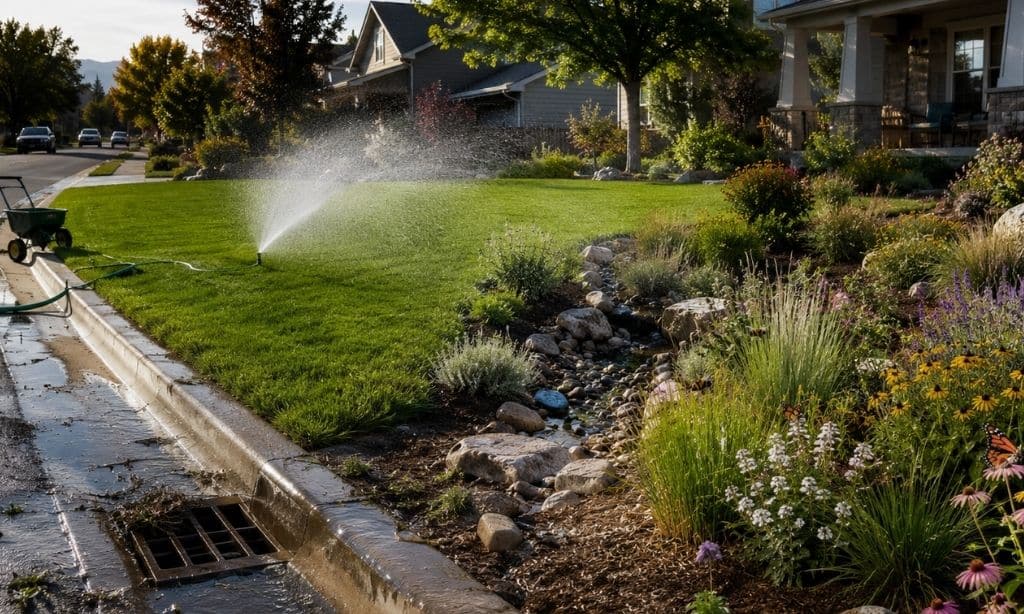
On top of the water waste, millions of pounds of pesticides and synthetic fertilizers go onto lawns nationwide. These chemicals do not stay on the grass. Rain washes them into storm drains, where they eventually pollute local waterways and harm aquatic life. Unlike native prairies, a standard lawn does little to store carbon in the soil. Utilities and water managers now see less room for such waste. In drought-prone regions, they are openly calling for the end of business as usual.
Pollinators and Biodiversity
As noted by the UN Food and Agriculture Organization, about 75 percent of global food crops depend on pollinators. Many of those bees and butterflies are in a steep decline. Native plants answer that crisis better than ornamental lawns. They offer the right nectar and pollen for local species. A diverse patch of native perennials can support more insect life than a monoculture lawn. When a yard is just grass, it is mostly a food desert for wildlife. Replacing it with native species turns the garden into a functional refuge.
Climate and Water Stress
The Southwest and the Front Range of Colorado are on the front lines. Cities there face mandatory water restrictions and tiered rates. There is public pressure to cut outdoor water use. That is why turf-removal programs are now standard tools. Homeowners no longer just worry about dying grass. They worry about violations and long-term scarcity. Native landscaping turns the yard from a liability into a form of adaptation. It is a practical response to a changing climate.
Urban planners now view the transition as a necessity for grid stability. When thousands of homes switch to native species, the peak demand on local water treatment plants drops significantly. This collective action delays the need for multi-million-dollar infrastructure upgrades, ultimately keeping utility rates lower for everyone in the community.
Policy, Money, and the Idea of Rewilding
Local governments are now putting money behind the movement. They realize that changing the American yard is a matter of public policy. Financial incentives are making it easier for homeowners to make the switch.
City and Utility Driven Rebates
Several cities have made it financially rational to remove turf. Through local municipal water rebate programs, residents in Tulare, California, can receive up to $3 per square foot. In Colorado, programs in Aurora and Denver pay over two dollars per square foot. These payments are often capped at thousands of dollars. The Santa Clara Valley Water District offers even more for large projects. These are no longer niche experiments. They are mainstream conservation policies. They help lower the upfront cost of a new garden.
Rewilding and Micro Prairies
Rewilding means reducing lawn area and letting native plants fill the space. In practical terms, it looks like smaller turf sections and larger borders. Landscape designers now use “climate-positive” as a selling point. The word rewilding is partly marketing, but it captures a real shift. Homeowners are learning which plants belong in their specific soil. They are learning how these plants support local life. It is an intentional move toward a more natural state.
Curb Appeal in a Climate Changed World
The old curb-appeal formula was simple. It required short grass and no bare soil. The yard had to look edited. The new formula is more complex. Layered perennials and bee-friendly flowers are signs of care. Trends like naturalistic gardening celebrate imperfection. A yard that looks different in every season feels more alive. It shows that the owner is paying attention to the world around them.
Neighbors, HOAs, and the Idea of Mess
Not everyone is ready for the revolution. There is still a tension between the old ideal of order and the new ideal of ecology. This conflict often plays out at the neighborhood level.
Pushback and Grass Enforcement
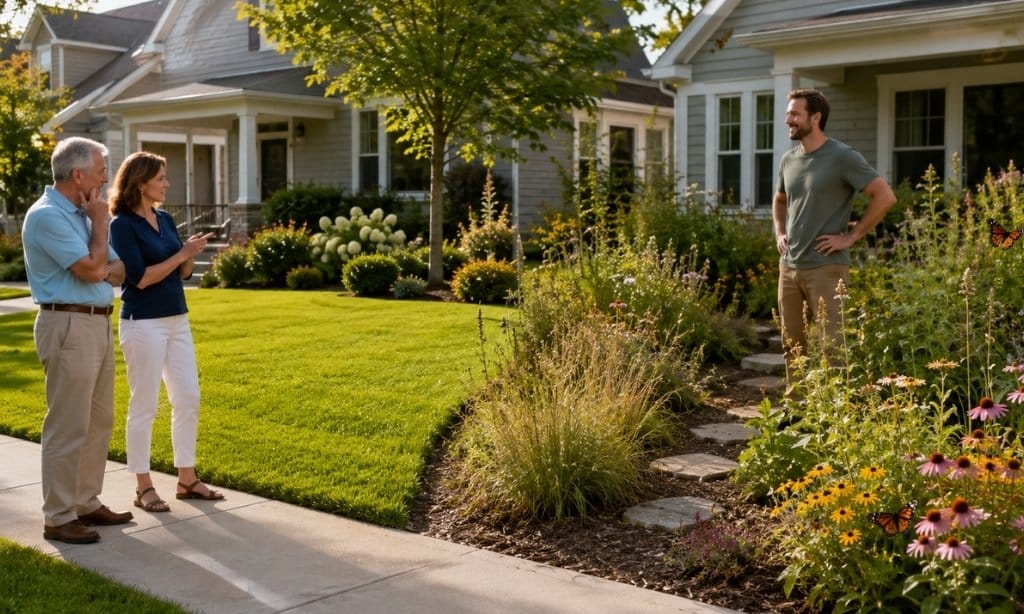
Some homeowner associations still enforce strict lawn rules. They treat tall native plants as messy or uncivilized. A yard that looks like a habitat can read as a sign of laziness. Local ordinances may still fine homeowners who let turf go wild. This pushback is a significant barrier for many. It creates a fear of conflict with neighbors. But even these groups are starting to feel the pressure of water scarcity.
Reframing Disorder as Stewardship
The key is how people read the space. A yard full of pollinators is not messy. It is functionally rich. It supports soil health and water infiltration. Aesthetic norms are catching up slowly to the environmental reality. When a homeowner plants for bees, they are making a statement about values. Beauty is no longer defined by sameness. It is defined by how well a space supports life.
The Native Plant Toolbox
Going native does not mean letting the yard go to seed. It involves using specific tools and designs to create a functional landscape. These methods are becoming more accessible to the average gardener.
Pollinator Gardens
Pollinator gardens are among the most visible tools. Many nurseries sell tailored mixes of native plants. These replace turf strips along walkways or in front yards. The goal is to support bees and butterflies with plants they actually use. A curated border can do more for wildlife than a sea of grass. These gardens bring color and movement back to the suburban block. They are a joy to watch throughout the year.
Rain Gardens and Stormwater Capture
Rain gardens are shallow depressions planted with native species. They capture runoff from roofs and driveways. This slows the water down and lets it soak into the ground. Utilities often reimburse homeowners for installing them. Cities want yards that absorb water rather than shedding it into storm drains. A rain garden cuts local flooding and filters pollutants. It is a beautiful way to manage a practical problem.
Clover and Alternative Lawns
Clover lawns are gaining traction as a low-maintenance option. They stay green longer and need less mowing. They also require fewer fertilizers. For many, they are a “lawn-lite” solution. These alternatives still look like grass from the street. However, they behave differently. They support more insects and tolerate drought better. They offer a middle ground for those not ready for a full meadow.
The Suburban Block as a Political Canvas
The choices we make in our yards have a social impact. They signal our beliefs to everyone who walks by. The front yard has become a place to showcase a new kind of status.
From Status Markers to Sustainability Markers
The old lawn was a sign of disposable income. It said the family had time and money to spend on mowing. It was a way of keeping up with the Joneses. The new native yard is a different kind of status marker. It signals environmental literacy and climate awareness. It shows a willingness to challenge suburban norms. A yard that looks unique is now seen as more thoughtful.
Neighborhoods as Quiet Protest
In a time of slow climate policy, a flowering yard can feel like a quiet protest. A bee-friendly border is a visible statement of care. It is a practical hedge against hotter summers. Cities that offer rebates are aligning with this shift. They are signaling that a good neighborhood no longer has to look uniform. They are rewarding people for being good stewards of the land.
Limits and Trade Offs
The transition is not without its challenges. There are economic and regional factors to consider. Not every yard can or should be a wild prairie.
Jobs and Industries
Lawn-care services and chemical suppliers stand to lose business. Many workers rely on mowing for their income. A shift to native plants can feel threatening to these livelihoods. Some companies are adapting by offering ecological landscaping. But the transition is uneven across the country. Not every worker has the training to manage complex native gardens. It requires a shift in the entire green industry.
Upfront Costs and Learning Curves
Native-plant yards can cost more at the start. Design fees and plant stock add up quickly. Some homeowners find it hard to choose the right species. They might struggle with the timing of planting. It takes time for these gardens to look established. The barrier to entry can be high for those on a tight budget. But the long-term savings on water and chemicals often make it worth the investment.
Regional Limits
In very cold or extremely dense urban areas, full replacement may not work. Shade and soil compaction shape what is possible. The trend is strongest in the West where heat is a daily reality. Even there, the lesson is not total eradication. It is about targeted reduction. Replacing the most visible and least used sections of grass is often the best approach. It balances function with the need for play space.
A Psychological Border Shift
Beyond the water bills and the bees, we are witnessing a change in the American psyche. For a century, the front yard served as a buffer zone. It was a space where homeowners proved they could suppress the wildness of the world. By keeping the grass short and uniform, families felt they were keeping chaos at bay.
The native plant movement suggests we are finally comfortable with a little mystery at our doorstep. We are moving from a culture of domination to one of participation. Instead of a yard that demands total submission, we are building landscapes that invite a conversation with the local climate. It is a sign that we are finally ready to belong to the land rather than just own it.
The Lawn as a Metaphor for Modern America
The lawn is changing from a symbol of control to a canvas for adaptation. As homeowners increasingly embrace eco-friendly lawn alternatives like clover and native wildflower borders, the traditional suburban street is being completely redefined. This shift values diversity over uniformity, prioritizing ecological function over aesthetic perfection. For many Americans, the yard is a small piece of how they live with a changing climate. This change is not happening in speeches; it is happening in front yards and rain gardens across the country. We are learning that a healthy yard is a wilder yard.