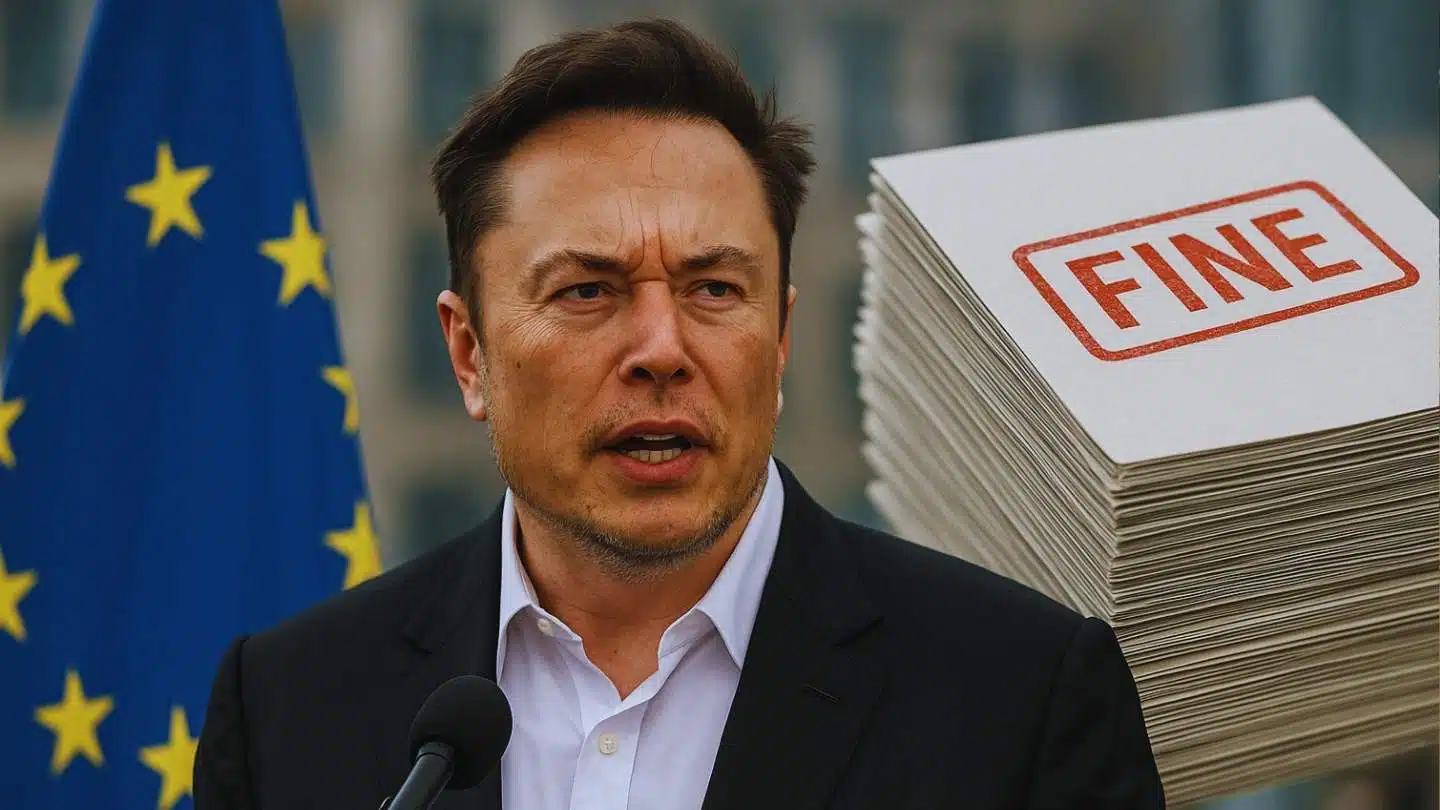
Elon Musk escalated his clash with European regulators after his social platform X was hit with a €120 million (about $140 million) fine under the European Union’s Digital Services Act (DSA). In a series of forceful posts, Musk argued that the EU has become an unaccountable bureaucratic structure and went as far as calling for the bloc to be “abolished.” He insisted power should return to individual member states, claiming that national governments are better positioned to represent citizens than supranational institutions in Brussels.
Musk’s reaction came shortly after the European Commission announced the first major enforcement action under the DSA, which aims to increase platform accountability, reduce systemic risks, and improve transparency. According to Musk, the penalty was “not just on X, but also on me personally,” a decision he described as “insane.” He vowed to pursue the individual officials involved, arguing that the ruling represents not only regulatory overreach but a direct attack on technological innovation and open debate.
The conflict marks one of the sharpest confrontations between a global tech CEO and the EU in recent years. Musk has repeatedly accused Brussels of stifling innovation through heavy-handed regulation. This new episode adds a geopolitical dimension, as the EU’s enforcement coincides with rising transatlantic tensions and political shifts in both the United States and Europe. Musk’s comments were amplified by his supporters on X, many of whom claim that regulatory pressure has become a tool to influence online discourse rather than a legitimate safeguard for users.
EU’s Allegations, Platform Obligations, and Rising Transatlantic Criticism
The European Commission’s investigation concluded that X violated transparency obligations in three significant areas. First, the platform’s paid blue-check verification system was deemed deceptive because it no longer provides meaningful identity verification. Regulators argued that this change risks misleading users about the authenticity of individuals, organizations, and public figures. Second, the Commission determined that X failed to meet basic advertising transparency standards, making it difficult for users to know who is behind ads or whether they are part of coordinated messaging efforts. Third, the company was found to have restricted researcher access to public data—access that is critical for studying misinformation, political messaging, and harmful content at scale.
These findings place X at the center of a broader debate over platform responsibility and user safety. EU officials emphasized that the enforcement is not related to political content moderation or speech restrictions, instead framing it solely as a matter of transparency and consumer protection. X now has 60 days to reform its verification system and 90 days to comply with advertising and researcher-access requirements or face additional fines that could amount to 6% of its global revenue.
The penalty has also triggered strong reactions in Washington. Senior members of the Trump administration accused the EU of targeting American companies and undermining U.S. interests. The Secretary of State labeled the fine as an attack on U.S. tech platforms, while other officials argued that unelected European regulators should not be allowed to influence how Americans communicate online. A senior diplomat went even further, suggesting that the EU’s behavior damages the trust required for military and strategic cooperation with the United States. Their comments signal a growing divide between U.S. and EU approaches to digital regulation, with the United States adopting a more hands-off model while Europe pushes for tighter oversight.
Political Ramifications, Global Reactions, and the Future of Tech Regulation
The dispute has implications well beyond X. European leaders, including those critical of Brussels’ centralized power, have weighed in. Hungary’s Prime Minister Viktor Orbán publicly supported Musk, arguing that EU institutions resort to fines when they cannot win public arguments. His comments reflect a larger debate within Europe about sovereignty, democratic accountability, and the future direction of the EU itself.
Meanwhile, analysts warn that the confrontation could shape future regulatory battles involving artificial intelligence, data protection, and platform governance. The DSA was designed to establish a global benchmark for platform transparency, and its enforcement against X is being watched closely by regulators in other regions. At the same time, Musk’s defiance may embolden critics of Brussels who believe EU institutions have exceeded their mandate.
As the compliance deadlines approach, X faces a pivotal moment: whether to align with EU requirements or intensify the legal and political fight. Either path will influence not only X’s operations but the broader relationship between Big Tech and governments worldwide. The episode underscores how deeply intertwined technology, politics, and sovereignty have become—and how digital platforms now sit at the center of global power struggles.