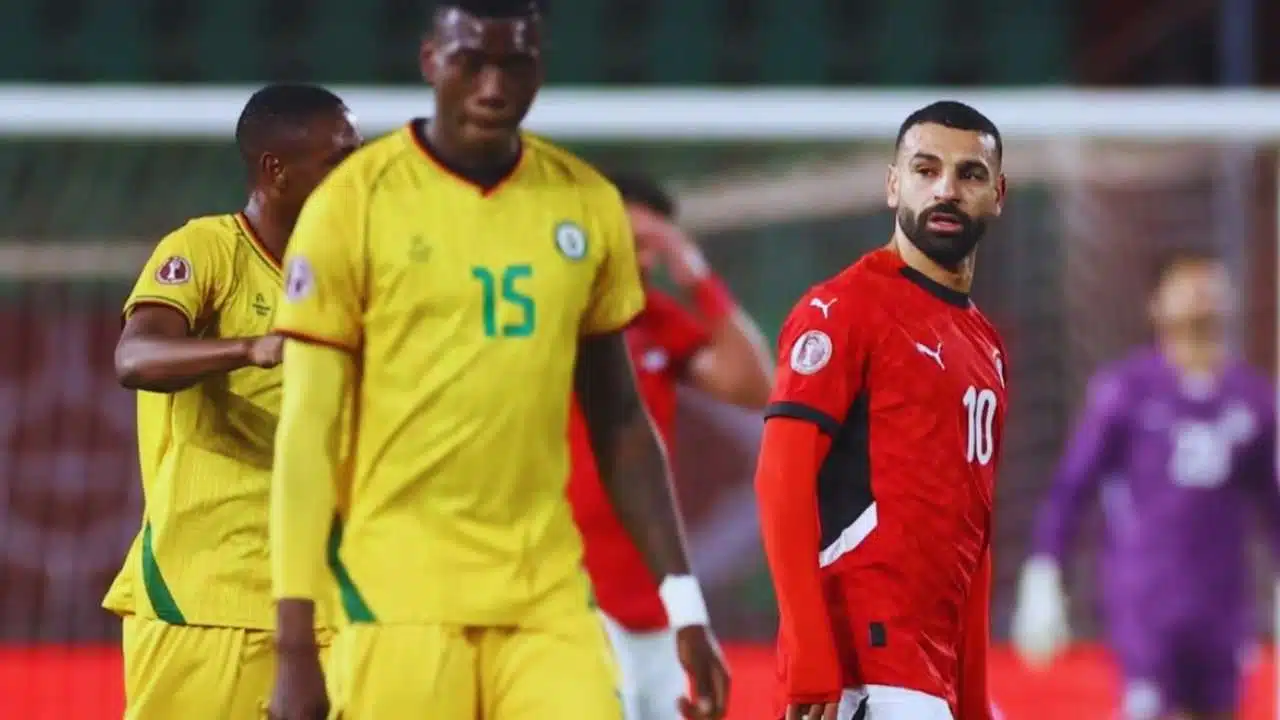
Mohamed Salah scored in stoppage time as Egypt came from behind to beat Zimbabwe 2-1 in Agadir on December 22, 2025, to begin AFCON 2025 with a dramatic Group B victory.
Match recap: Salah’s late finish completes Egypt comeback
Egypt opened their Africa Cup of Nations campaign with a win that felt routine for long stretches on the ball, yet anything but comfortable on the scoreboard.
For much of the match at the Grand Stade d’Agadir in Morocco, Egypt controlled possession, pinned Zimbabwe deep, and created chance after chance. But Zimbabwe struck first and held their lead into the second half, forcing Egypt to show patience, urgency, and composure to avoid a damaging opening-day slip.
Zimbabwe’s goal came in the 20th minute through Prince Dube, who punished a rare moment of space and made the most of an opportunity in the penalty area. The early lead changed the tone. Egypt’s passing grew faster, their wide players pushed higher, and the pressure became relentless. Zimbabwe responded by defending in numbers, keeping their lines tight, and trying to slow the rhythm wherever possible.
Egypt finally found the equaliser in the 64th minute through Omar Marmoush, whose finish gave Egypt a lifeline and reset the contest. From that moment, the game tilted even more heavily toward Egypt. Zimbabwe held on, defended their box with discipline, and relied on a busy goalkeeper performance to survive.
As the clock ran down, the match looked headed for a draw—until Salah delivered the decisive moment. In the first minute of stoppage time (90’+1), Egypt’s captain controlled the ball inside the area and fired a low left-footed finish to complete the comeback and secure three points.
It was the kind of opener that can shape a tournament: a heavyweight tested early, an underdog close to a statement result, and a star deciding it when the pressure peaked.
Goal timeline
| Minute | Team | Scorer | Score |
| 20’ | Zimbabwe | Prince Dube | Egypt 0-1 Zimbabwe |
| 64’ | Egypt | Omar Marmoush | 1-1 |
| 90’+1 | Egypt | Mohamed Salah | Egypt 2-1 Zimbabwe |
How Egypt dominated the game, and why it stayed close?
The match was a clear illustration of how tournament football can punish wastefulness. Egypt’s control was overwhelming in possession and territory, but Zimbabwe’s early goal meant Egypt needed more than dominance—they needed precision.
Key match statistics
| Stat | Egypt | Zimbabwe |
| Possession | 77.2% | 22.8% |
| Shots | 35 | 8 |
| Shots on target | 11 | 3 |
| Corners | 8 | 3 |
| Yellow cards | 2 | 2 |
| Saves | 2 | 9 |
The numbers show the story of pressure and resistance. Egypt’s 35 attempts and 11 shots on target reflect a team constantly arriving in the final third. Zimbabwe’s nine saves underline how often Egypt forced action inside the box and around it.
Still, the match did not turn into a comfortable win because Zimbabwe defended with compact shape and clear priorities. They did not chase possession. They focused on blocking central lanes, forcing Egypt wide, and protecting the penalty area. When they won the ball, they looked for direct outlets rather than building slowly.
For Egypt, the key challenge was breaking down a deep block without losing discipline. In these situations, a team can become impatient and start forcing low-percentage shots. Egypt did take efforts from range, but they also continued trying to create higher-quality chances through cutbacks, crosses, and quick passes around the box.
Marmoush’s equaliser mattered not only because it made it 1-1, but because it shifted Zimbabwe’s mindset. At 0-1, Zimbabwe could defend with the comfort of a lead. At 1-1, the fear of losing grew. They dropped even deeper, and the game became a wave of Egyptian attacks against a packed defensive line.
Salah’s winner arrived after that sustained pressure. The finish was calm and efficient—exactly what Egypt needed after long spells of control without reward. In tight group stages, one decisive action can be worth more than an hour of dominance.
What the win means for Group B standings and qualification?
Egypt’s late victory immediately shapes Group B, a pool that also includes South Africa and Angola. With four teams and only three matchdays, a slow start can quickly turn into a qualification crisis. Egypt avoided that scenario in the most dramatic way.
South Africa also won their opener, meaning two teams sit on three points after the first round of matches. Egypt are level at the top on points, and the group now carries an early sense of separation between the winners and the teams chasing.
Group B standings (after Matchday 1)
| Team | GP | W | D | L | GD | Pts |
| Egypt | 1 | 1 | 0 | 0 | +1 | 3 |
| South Africa | 1 | 1 | 0 | 0 | +1 | 3 |
| Angola | 1 | 0 | 0 | 1 | -1 | 0 |
| Zimbabwe | 1 | 0 | 0 | 1 | -1 | 0 |
AFCON’s group stage format adds another layer of strategy. The top two teams in each group advance automatically, and additional third-place teams can also progress, meaning every point can matter late in the group. For contenders, the target is usually clear: qualify early, then manage the final match with less pressure.
For Egypt, the key benefit of the late winner is not just the table—it is the breathing room it creates. A draw in the opener would have increased stress before facing strong opposition. A loss would have been a major setback. Instead, Egypt can approach the next match with momentum and a clear path to qualification.
For Zimbabwe, the result is painful but not hopeless. They proved they can stay organised and frustrate elite teams. The challenge now is psychological as much as tactical: converting a strong performance into points in the remaining fixtures.
AFCON 2025 context: Morocco host, Egypt’s ambitions, and the Salah factor
AFCON 2025 is being staged in Morocco from December 21, 2025 to January 18, 2026, with matches across multiple host cities and venues. The winter timing gives the tournament a different feel, arriving amid the global club season rather than during the northern summer.
Egypt arrived with a clear objective: contend for the title. They are historically the most successful national team in AFCON history with seven championships, and they are chasing another crown to add to that legacy. Their last AFCON title came in 2010, a gap that keeps the hunger strong for a country used to being at the top of the continent.
Salah is central to that ambition. He is one of the most recognisable African footballers of his era and has carried national expectations across multiple tournaments. Egypt have reached finals in the Salah era without lifting the trophy, and the pressure is often magnified for players who excel at club level.
This opener showed why coaches build tournament plans around decisive players. In group football, you can dominate and still drop points. A single moment—one touch, one finish—can change the entire tone of a campaign. Salah’s stoppage-time goal did exactly that, turning a frustrating night into a winning start.
Egypt’s strength, however, is not only Salah. Marmoush’s equaliser underlined Egypt’s growing depth in attack. In recent years, the team has needed other players to step up in key matches, especially when opponents design their entire defensive plan to limit Salah’s space. Marmoush’s impact offers Egypt another route to goals, which can be crucial against well-organised defences.
Zimbabwe’s performance also fits a wider AFCON pattern: teams that defend with discipline and strike on limited chances can trouble even the strongest sides. In a tournament setting, the underdog often aims to keep the game close until late. Zimbabwe executed much of that plan, and they were minutes away from a draw before Salah’s finish.
What’s next: Egypt’s remaining fixtures and the key tests ahead?
Egypt’s win sets up a crucial second group match against South Africa, followed by a final group fixture against Angola. In a tight group, Matchday 2 can be decisive. A second win often all but secures qualification. A loss can quickly undo an opener’s progress.
Egypt’s remaining Group B fixtures
| Date | Fixture | Venue | City |
| December 26, 2025 | Egypt vs South Africa | Grand Stade d’Agadir | Agadir |
| December 29, 2025 | Angola vs Egypt | Grand Stade d’Agadir | Agadir |
South Africa’s own opening victory means they will arrive confident and organised. That makes the December 26 match a potential first-place decider, or at least a major indicator of who controls the group. For Egypt, it will also be a test of balance: how to attack with ambition without leaving spaces that a disciplined opponent can exploit.
Angola, meanwhile, remain dangerous despite their opening defeat. In group stages, the final match can become a high-pressure scenario for teams still fighting for a top-two finish or the best-third-place route. Egypt’s aim will be to avoid turning Matchday 3 into a must-win.
For Egypt, there are clear lessons from the Zimbabwe match:
- Finishing must improve early in games. A team that creates as many chances as Egypt did will usually score, but tournament margins can punish waste.
- Patience matters against deep defences. The equaliser came because Egypt kept attacking with structure rather than desperation.
- Leaders decide tournaments. When the match demanded a moment of quality, the captain delivered.
For Zimbabwe, the path is also clear:
- They can compete tactically. Their compact defending worked for long stretches.
- They need to manage late phases better. Holding on against elite pressure requires concentration until the final whistle.
- They must turn performance into points. Even one draw in the next match could keep qualification hopes alive.
Egypt got what contenders need from an opener: a win, a late rescue, and momentum. But the performance also showed what they must sharpen if they want to go deep—because stronger opponents will punish mistakes more quickly and may not allow as many chances.