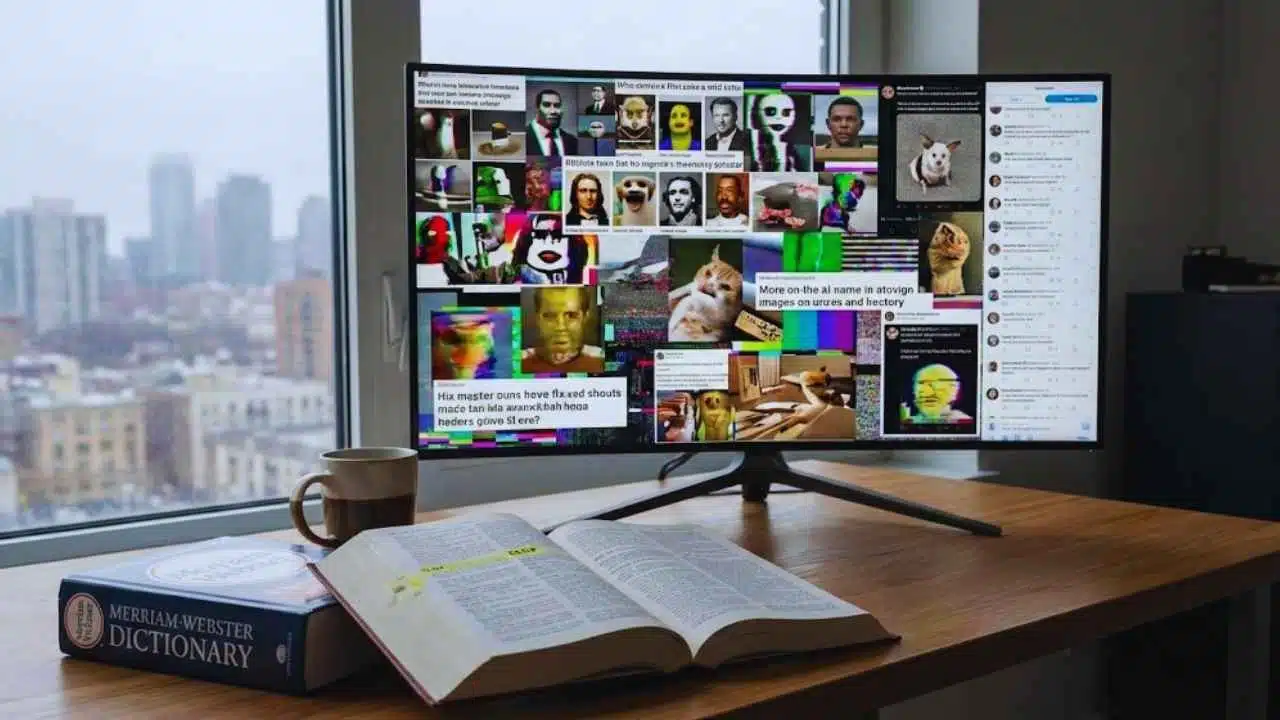
Merriam-Webster has named “slop” as its Word of the Year for 2025, highlighting growing public concern over the flood of low-quality, AI-generated content across the internet.
The dictionary publisher announced the decision on Monday, noting a sharp rise in searches for the word as people struggle to describe the increasing amount of synthetic, unreliable, and often misleading material online.
Originally used in the 1700s to describe soft mud or watery waste, slop has taken on a new digital meaning. Merriam-Webster now defines it as “low-quality digital content produced in large quantities, usually by artificial intelligence.”
According to Merriam-Webster president Greg Barlow, the word reflects a shared cultural frustration. “It’s such an illustrative word,” Barlow said in an interview with The Associated Press. “It’s tied to a transformative technology—AI—but it also captures how people feel about content that’s fascinating at first, then annoying, and sometimes just ridiculous.”
AI-Generated Content Is Flooding the Internet
The choice of slop comes as AI-generated material becomes increasingly common on social media platforms, search engines, blogs, and professional networks.
Research from Originality AI, which analyzes online text for signs of machine generation, shows how quickly this trend has accelerated. In a study of nearly 9,000 public LinkedIn posts published between 2018 and October 2024, researchers found that more than 54% of longer English-language posts now show indicators of AI authorship.
The biggest surge occurred in early 2023, shortly after the public release of ChatGPT, when AI-generated content jumped 189% in just one month. Similar patterns have been reported by universities and digital integrity groups studying AI’s impact on information ecosystems.
Experts warn that this volume of automated content makes it harder for users to distinguish between credible information, marketing spam, satire, and outright misinformation.
AI Video Tools Raise New Misinformation Risks
Text is not the only concern. AI-generated video has become a major flashpoint in the debate over digital trust.
Advanced video generators, including OpenAI’s Sora, have drawn attention for their ability to create realistic footage featuring people who never actually appeared on camera. Since its public release in late 2025, such technology has raised alarms among policymakers, educators, and media watchdogs.
Deepfake videos—especially those involving celebrities, politicians, or public institutions—pose risks ranging from reputational harm to political manipulation. Media researchers and civil rights groups have repeatedly warned that synthetic video could undermine public confidence if safeguards and labeling standards are not widely adopted.
One recent controversy involved the unauthorized use of a well-known children’s character in an AI-generated image shared online. The character’s publisher publicly objected, emphasizing that its brand values—kindness, empathy, and inclusivity—were incompatible with the violent imagery created by AI.
Why “Slop” Resonates With the Public
Despite the unease surrounding AI-generated content, Merriam-Webster sees the popularity of the term slop as a meaningful cultural signal rather than just a complaint.
Barlow described the word as “almost defiant.” “People want things that are real. They want things that are genuine,” he said. “When it comes to replacing human creativity, AI doesn’t always look so intelligent.”
Linguists and media scholars agree that language often evolves as society tries to process new technologies. By naming slop its Word of the Year, Merriam-Webster acknowledges a growing awareness that quantity does not equal quality, especially in the age of automation.
A Year of New Words and Cultural Reflection
The announcement follows the release of Merriam-Webster’s 12th Collegiate Dictionary, published in November 2025. It is the first new hardcover edition in more than two decades and includes over 5,000 new words and updated definitions, many related to technology, culture, and social change.
Last year’s Word of the Year was “polarization,” reflecting deep political and social divisions following the 2024 U.S. presidential election.
Other notable words gaining attention in 2025 include “touch grass,” “performative,” “gerrymander,” and “conclave,” each reflecting shifts in public discourse, online behavior, and political awareness.
What the Word of the Year Signals
Merriam-Webster’s annual selection is not just about vocabulary—it serves as a snapshot of how people experience the world.
In 2025, slop captures a defining tension of the digital age: the promise of artificial intelligence alongside widespread concern about authenticity, creativity, and trust. As AI tools continue to evolve, the word underscores a simple but growing demand from users—content that is human, meaningful, and worth their time.