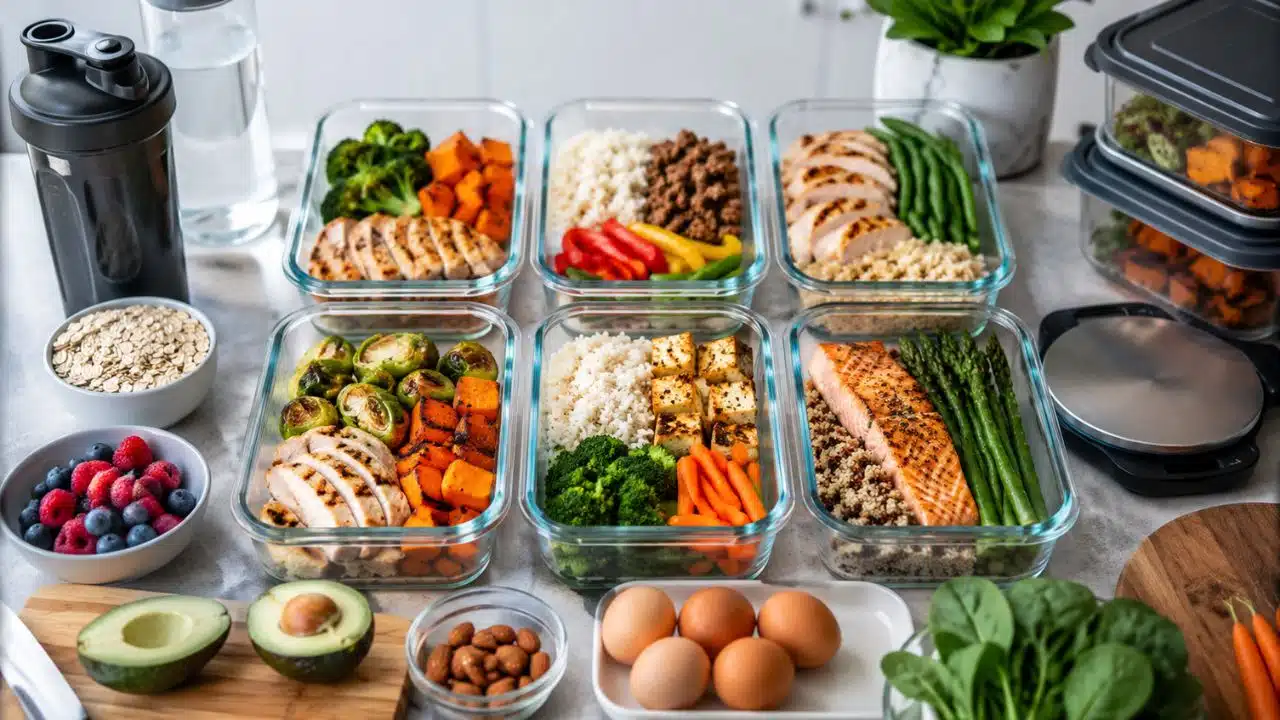
Meal prep gets frustrating when it becomes a row of dry chicken, plain rice, and containers nobody wants to open by Wednesday. That version of prep solves only one problem: food exists. It does not solve hunger, taste, recovery, schedule changes, or the fact that training days and rest days do not always need the same amount of food.
Good meal prep fundamentals are much more practical than most fitness content makes them look. You need enough protein to support training, enough carbohydrates to fuel harder work, enough fats to keep meals satisfying, and enough flexibility that one missed workout or one restaurant meal does not make the whole week feel wasted.
The point is not to build a perfect fridge. It is to make eating well easier when you are busy, tired, hungry, or coming home from the gym with no patience for cooking.
Start With What the Food Needs to Do
A grocery list helps, but it should not be the first step. First decide what the meals are supposed to support.
Someone trying to gain muscle usually needs meals that make it easier to eat enough total calories and protein. Someone trying to lose fat needs meals that control hunger without making every plate feel small. Someone training for football, running, CrossFit, cycling, or any high-output sport may need more carbohydrate around hard sessions than a casual lifter training three days a week.
The meals can look similar. The portions will not.
A simple fitness meal usually has four parts:
- A protein source
- A carbohydrate source
- Vegetables or fruit
- A fat source, dressing, or sauce that makes the meal enjoyable
That might be eggs, potatoes, spinach, and avocado. It might be chicken, rice, roasted vegetables, and yogurt sauce. It might be tofu, noodles, cabbage, and peanut-lime dressing. The structure matters more than the exact food.
Copying someone else’s container is where many beginners go wrong. Their meal may fit their body size, appetite, training load, budget, and schedule. It may not fit yours.
The Protein Target Should Be Clear, Not Extreme
Protein deserves attention, especially for people who lift weights or train hard. It helps repair and build muscle tissue and can make meals more filling during fat loss. But adding more protein endlessly is not a shortcut to better results.
For many active adults, a useful daily range is roughly 1.4 to 2.0 grams of protein per kilogram of body weight. A 70 kg person would land around 98 to 140 grams per day. That range is not a medical prescription. Some people may need a different target, especially during aggressive fat loss, high-volume training, older age, injury recovery, pregnancy, kidney disease, or other medical situations.
For regular gym-goers, the bigger improvement is often distribution. Three or four meals with a reasonable protein serving are usually easier than forcing one huge serving at dinner.
Useful protein options include eggs, Greek yogurt, skyr, cottage cheese, milk, chicken, turkey, fish, lean beef, tofu, tempeh, lentils, beans, chickpeas, edamame, and protein powder when normal food is inconvenient.
Protein powder is optional. It can help when breakfast is rushed, appetite is low, or total protein is hard to reach through food alone. It should not become a replacement for learning how to build normal meals.
Use Carbs Based on Training, Not Fear
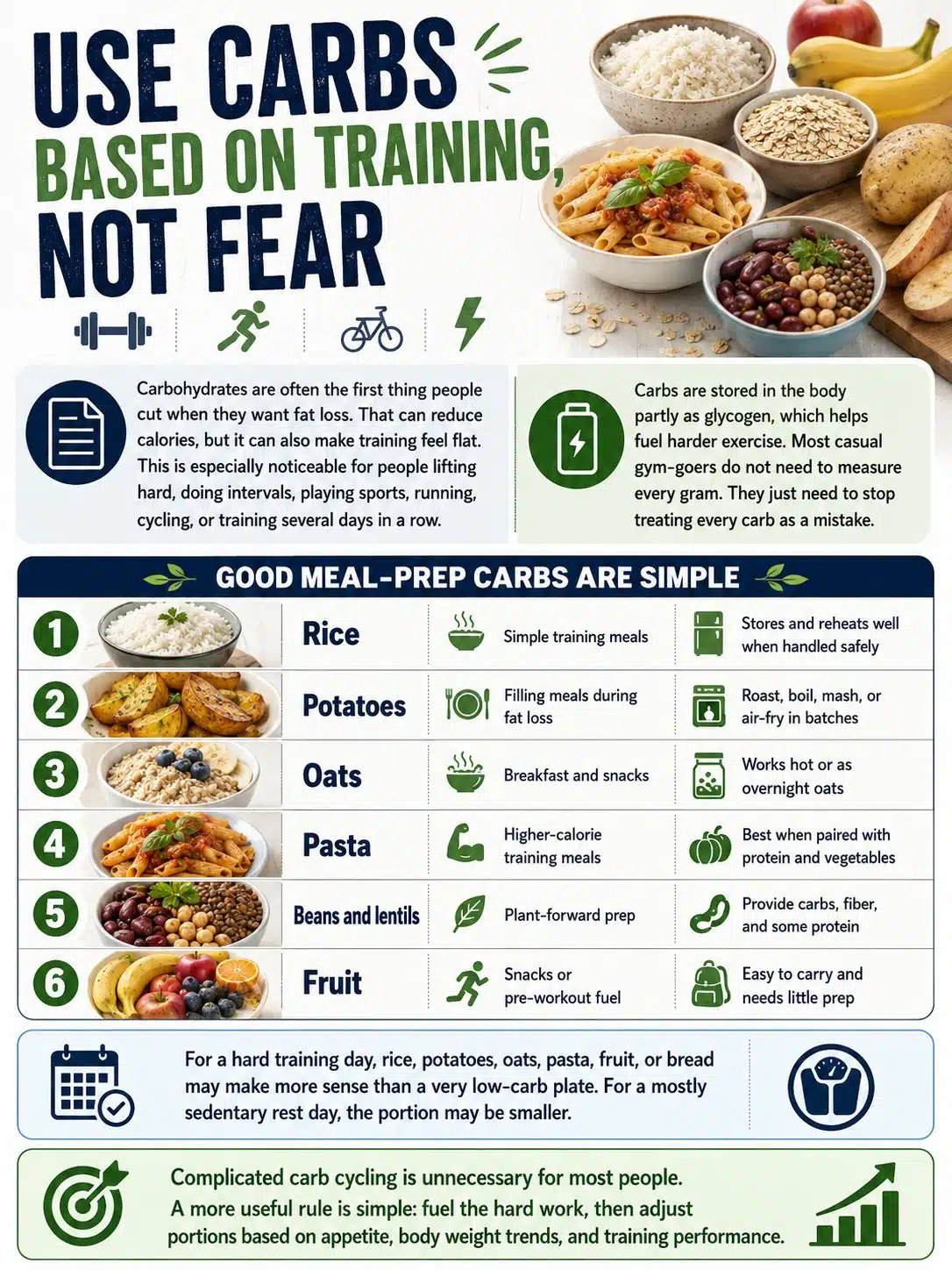
Carbohydrates are often the first thing people cut when they want fat loss. That can reduce calories, but it can also make training feel flat. This is especially noticeable for people lifting hard, doing intervals, playing sports, running, cycling, or training several days in a row.
Carbs are stored in the body partly as glycogen, which helps fuel harder exercise. Most casual gym-goers do not need to measure every gram. They just need to stop treating every carb as a mistake.
Good meal-prep carbs are simple:
| Carb Source | Useful For | Practical Note |
|---|---|---|
| Rice | Simple training meals | Stores and reheats well when handled safely |
| Potatoes | Filling meals during fat loss | Roast, boil, mash, or air-fry in batches |
| Oats | Breakfast and snacks | Works hot or as overnight oats |
| Pasta | Higher-calorie training meals | Best when paired with protein and vegetables |
| Beans and lentils | Plant-forward prep | Provide carbs, fiber, and some protein |
| Fruit | Snacks or pre-workout fuel | Easy to carry and needs little prep |
For a hard training day, rice, potatoes, oats, pasta, fruit, or bread may make more sense than a very low-carb plate. For a mostly sedentary rest day, the portion may be smaller.
Complicated carb cycling is unnecessary for most people. A more useful rule is simple: fuel the hard work, then adjust portions based on appetite, body weight trends, and training performance.
Fats Make Meal Prep Easier to Eat
Low-fat meal prep often tastes like punishment. A little olive oil, avocado, nuts, tahini, whole eggs, cheese, hummus, or a good sauce can make a container meal feel like real food.
The issue is portion size. Fats are calorie-dense, so they can quietly change the meal. A spoon of peanut butter is not the same as three heaping spoons. A drizzle of oil is not the same as oil covering the pan. A small handful of nuts is not the same as eating from the bag while cooking.
For fat loss, pre-portion oils, dressings, nuts, and sauces. For muscle gain, those same foods can help increase calories without making every meal huge.
Sauce is underrated. A plain chicken-and-rice meal becomes easier to repeat with salsa, yogurt garlic sauce, tahini lemon dressing, soy-ginger sauce, or a simple chili-lime mix. Keep sauces separate until eating if you care about texture.
Meal Prep Fundamentals That Fit a Real Week
The most common meal prep fantasy is cooking the entire week in one heroic session. It sounds efficient. In practice, by the fourth day the food may taste tired, plans may change, and food safety becomes more important.
A better approach for many people is partial prep.
Cook two anchor proteins. Prepare one or two carb bases. Wash or chop vegetables. Keep sauces separate. Then assemble meals in different combinations.
For example:
- Chicken, rice, roasted carrots, and yogurt sauce
- Chicken, potatoes, salad, and olive-oil dressing
- Lentils, rice, cucumber, and boiled eggs
- Tofu, noodles, frozen vegetables, and peanut-lime sauce
This gives variety without cooking from scratch every day.
If Sunday cooking feels too heavy, split the work. Prep Monday to Wednesday first, then do a smaller reset midweek. That usually produces better meals than forcing five identical lunches into the fridge and pretending you will be excited about the last one.
Portioning Without Turning Food Into Homework
Tracking calories and macros can be useful. Athletes, physique competitors, and people with specific weight goals may need that level of precision.
Beginners often do better with a simpler starting point.
For most meals, use a palm-sized protein portion, a fist-sized carbohydrate portion, plenty of vegetables or fruit, and a measured fat source. Larger bodies, harder training, and muscle-gain goals may need more. Smaller bodies, lower activity days, and fat-loss goals may need less.
Then adjust one thing at a time.
If workouts feel weak, add a carb serving before or after training. If fat loss has stalled for several weeks, check added oils, snacks, drinks, and weekend meals before cutting the main meals too aggressively. If night hunger is high, breakfast or lunch may be too light.
A scale can be useful, but it is not the only feedback. Training performance, appetite, waist measurement, energy, digestion, sleep, and how well the plan survives a normal week all matter.
Build Meals You Will Still Want on Day Three
Fitness meal prep fails when it ignores texture. Some foods hold up. Others become miserable quickly.
Good batch-cooking choices include chili, curry, stews, baked meatballs, shredded chicken, roasted potatoes, lentil dal, bean salads, overnight oats, boiled eggs, and cooked grains stored properly.
Foods that often disappoint include delicate salads with dressing already mixed in, overcooked fish, dry chicken breast, soggy wraps, and vegetables cooked so soft that reheating ruins them.
A few small choices help:
- Keep dressing away from salad leaves until eating.
- Store sauces separately from rice, potatoes, or noodles.
- Add crunchy toppings after reheating.
- Assemble wraps the night before, not five days ahead.
- Freeze extra portions before you get tired of them.
Meal prep should reduce friction. If the food feels like punishment, the system is poorly designed.
Food Safety Is Part of Fitness Nutrition
Unsafe meal prep can derail training faster than a missed protein shake. Cooked food needs to be cooled, stored, and reheated properly.
As a practical rule, refrigerate perishable foods and cooked leftovers within two hours. Keep the refrigerator at 40°F or below, or 4°C or below. Most cooked leftovers should be eaten within three to four days when kept refrigerated. If food needs to last longer, freezing is usually the safer option.
Use shallow containers so food cools faster. A giant pot of hot rice, soup, or curry placed directly into the fridge can stay warm in the center for too long. Divide large batches before storing.
Be especially careful with cooked rice, pasta, poultry, seafood, eggs, dairy-based sauces, and cut fruit. These are normal meal-prep foods, but they need proper handling.
Label containers with the cooking date. Tape and a marker are enough. Guessing on Thursday night is not a food-safety system.
A Practical Muscle-Gain Prep
Muscle gain usually requires a calorie surplus, consistent protein, and progressive training. The challenge for many lean or busy people is not knowing what to eat; it is eating enough without feeling stuffed all day.
A muscle-gain prep should include meals that are easy to finish and not too bulky.
One simple day might look like this:
- Breakfast: oats with milk, Greek yogurt, banana, and nut butter
- Lunch: rice, chicken or tofu, vegetables, and olive-oil sauce
- Snack: smoothie with protein powder, fruit, and milk
- Dinner: pasta or potatoes with lean meat, fish, eggs, beans, or tempeh
- Extra option: yogurt, trail mix, or a sandwich if calories are still low
For muscle gain, do not make every meal extremely high-fiber and low-fat. Vegetables still matter, but too much bulk can make it hard to eat enough. Liquid calories such as smoothies can help when appetite is low.
A common mistake is adding more protein while total food stays too low. Protein supports muscle growth, but it does not replace the need for enough total energy.
A Practical Fat-Loss Prep
Fat-loss meal prep should not feel like punishment. If meals are too small, bland, or repetitive, hunger usually pushes back.
A useful fat-loss plate often includes lean protein, high-volume vegetables, a moderate carb portion, and a controlled fat source.
One simple day might look like this:
- Breakfast: eggs or Greek yogurt with fruit
- Lunch: chicken, tofu, lentils, or fish with potatoes and vegetables
- Snack: fruit with yogurt, cottage cheese, or a protein shake
- Dinner: stir-fry, salad bowl, soup, or curry with measured rice or beans
The best fat-loss prep lowers decision fatigue. When a filling lunch is already ready, random grazing becomes less likely. Still, the plan needs room for real life. A diet that cannot survive one restaurant meal is too fragile.
Prep the foods that prevent impulsive eating first: protein, washed fruit, cooked potatoes, soup, chopped vegetables, and one satisfying sauce. Those items are often more useful than five perfectly portioned containers.
Pre-Workout and Post-Workout Meals Without Panic
For most people, the full day of eating matters more than rushing a shake within minutes after training. Timing can still help, especially if a workout happens early, late, or between meals.
Before training, many people do well with carbohydrates and some protein. Heavy fats and very high-fiber foods right before training may bother digestion, especially before running, intervals, or a hard leg session.
Good pre-workout options include:
- Banana and yogurt
- Oats with milk
- Rice and eggs
- Toast with turkey or tofu
- A smoothie if solid food feels heavy
After training, eat a normal meal with protein and carbohydrates within a reasonable time. That could be dinner, not a special supplement. If the next meal is several hours away, a shake, yogurt, or sandwich can bridge the gap.
People training twice a day, endurance athletes, and competitive athletes may need more precise timing. Most recreational gym-goers should fix consistency before worrying about perfect timing.
Supplements Should Fill Gaps, Not Replace the System
Supplements can help, but they should not become the center of meal prep.
Protein powder can fill a gap. Creatine monohydrate is one of the better-studied sports supplements for strength and power. Caffeine can improve alertness and training output for some people. Electrolytes may help during long sessions, hot weather, or heavy sweating.
None of these fixes a poor weekly food system. If meals are inconsistent, sleep is short, and training is random, supplements will not carry the plan.
Anyone with kidney disease, pregnancy, medication concerns, digestive disorders, a history of disordered eating, or a medical condition that affects diet should get individual guidance before making aggressive diet or supplement changes.
What to Buy for a Flexible Prep Week
A good fitness grocery list does not need to be expensive or exotic. It should give you mix-and-match options.
Proteins: eggs, yogurt, chicken, fish, lean meat, tofu, tempeh, beans, lentils, cottage cheese, protein powder if needed.
Carbs: rice, oats, potatoes, pasta, whole-grain bread, tortillas, fruit, beans, lentils.
Vegetables: frozen mixed vegetables, spinach, carrots, peppers, cucumbers, cabbage, broccoli, salad greens.
Fats and flavor: olive oil, nuts, seeds, avocado, tahini, cheese, hummus, salsa, herbs, spices, soy sauce, lemon, vinegar, yogurt-based sauces.
Frozen vegetables are underrated. They reduce chopping time, last longer, and make weeknight meals easier. Canned beans, canned fish, microwave rice, and pre-cut vegetables can also be reasonable tools when time matters more than ideal cooking.
The best grocery list is not the cleanest-looking one. It is the one that matches the week ahead.
Mistakes That Quietly Break Meal Prep
The first mistake is making meals too bland. Discipline is easier when the food tastes good. Use salt appropriately, acid, herbs, spices, and sauce.
The second mistake is prepping too much. Five identical lunches may look efficient on Sunday and feel depressing by Thursday.
The third mistake is ignoring snacks. Many people prep lunch and dinner, then lose control between meals because there is no planned option.
The fourth mistake is changing everything at once. A person who currently skips breakfast, buys lunch, and snacks at night does not need a perfect seven-day system. They may need two prepared lunches, a better breakfast, and a planned evening snack.
The fifth mistake is treating meal prep as a short diet phase. The real value is having repeatable defaults that can be adjusted when training, weight, appetite, or schedule changes.
A Simple Setup Path for Beginners
Start smaller than you think you need.
For the first week, prep only one protein, one carb, one vegetable, and one sauce. Use those for two or three meals. Keep breakfast and snacks simple. Do not try to redesign your entire diet at once.
A beginner-friendly setup could be:
- Boiled eggs or Greek yogurt for breakfast
- Chicken, tofu, lentils, or fish for lunch
- Rice, potatoes, or oats as the main carb
- Frozen vegetables or chopped salad
- One sauce you actually like
- Fruit, yogurt, or cottage cheese for snacks
After one week, review what happened. Did food go to waste? Did you run out too early? Did you skip the meals because they were boring? Did workouts feel better or worse? Adjust from there.
This review step is where meal prep becomes useful. Without it, you are just repeating a menu.
Final Thoughts
Meal prep fundamentals are not about perfect containers, strict menus, or copying someone else’s diet. They are about removing repeated decisions, making protein easier to hit, matching carbohydrates to training, keeping meals satisfying, and storing food safely enough that the plan can last beyond one day.
For muscle gain, meal prep should make eating enough easier. For fat loss, it should make hunger and impulse choices easier to manage. For performance, it should support training instead of leaving workouts underfueled.
Start with two or three prepared meals, not a complete lifestyle overhaul. Keep the food simple, add flavor, store it properly, and adjust portions based on real feedback. A meal prep system you can repeat for months will beat a perfect plan that collapses after one week.