Letter reversals in preschoolers can look more alarming than they are. A child writes d where b belongs, and the mistake seems to raise a question about reading before the child has even started reading independently. I understand the worry, but one backward letter tells us very little on its own.
When my nephew Fariz was six, I noticed occasional b/d mix-ups in his independent writing. I did not see the same problem when he read or traced letters, and he could spell comfortably. He was already past preschool. His experience made me want to understand what a similar mark on a younger child’s page might mean.
The short answer is reassuring: reversals often appear while children learn to write. The more useful question is whether the child is also struggling to learn letters, hear sounds in words, or make progress with appropriate teaching.
What a backward letter shows, and what it cannot show
In English, the familiar reversals involve lowercase b and d, or p and q. A child may also write a numeral facing the wrong way. These are visible mistakes in the form a child puts on the page.
That is different from calling a letter by the wrong name, having trouble linking it to a sound, or changing the order of letters in a word. A child might do more than one of these things, but I would describe each observation accurately before trying to explain it.
I would be particularly cautious about saying a child “sees letters backward.” Handwriting does not give us a window into exactly what the child saw. They might recognize a printed letter correctly and still have trouble recalling how to form it while writing a word. Copying, writing from memory, and reading place different demands on a beginner.
Why reversals can be part of learning to write
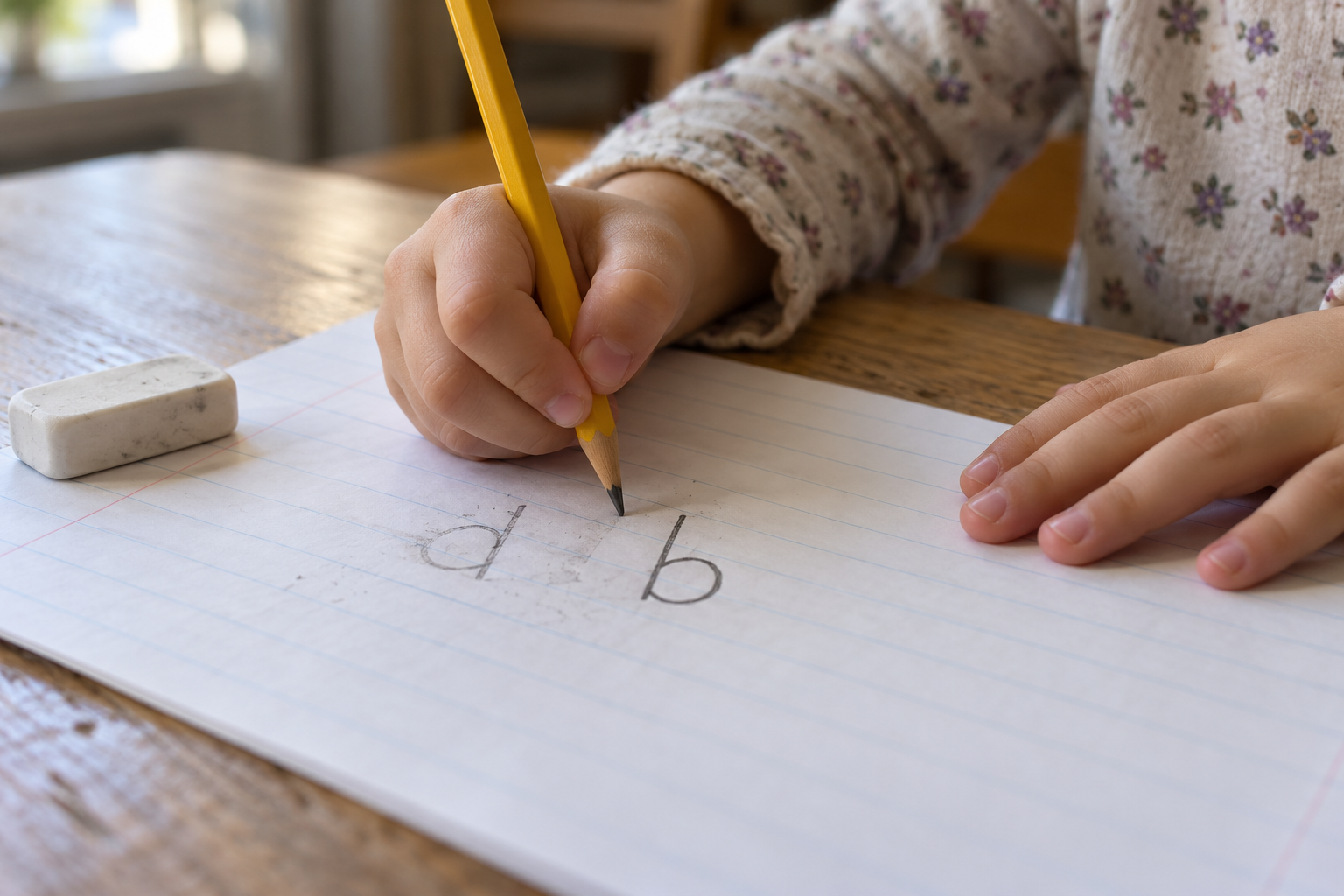
Most objects keep their identity when we turn them around. A toy car remains a car whichever way it faces. With letters, orientation can change the symbol altogether. A beginning writer has to learn and remember that distinction.
Some forms appear more prone to reversal than others. Researchers studying 130 children aged five to six found more reversals of certain left-facing letters, including d and J, than of right-facing forms such as b and C. They proposed that children were learning the orientation patterns they encountered in the Latin alphabet. It is a finding about a group, not an explanation for every child’s mistake.
Experience matters too. A preschooler who has only recently met lowercase b and d has had less practice with them than a child who has been writing both for months. I would want to know what the child has actually been taught before judging their progress.
An NHS children’s therapy service says letter reversals can be common up to around age seven. That is a broad guide, not a date on which a mistake suddenly becomes abnormal. An occasional slip at seven may still occur; concerns about several developing literacy skills at four deserve attention now.
The dyslexia question needs more than a writing sample
Dyslexia chiefly affects learning to read words accurately or fluently. Difficulties connecting speech sounds with letters, sounding out unfamiliar words, and spelling can be part of the picture. A reversed b does not establish whether those difficulties are present.
The study of 130 children offers a useful check on that assumption. When the researchers assessed reading about two and three-quarter years later, the children who became poorer readers had made more letter-writing errors overall. They had not been more likely to make reversal errors.
There is an important limit to that finding. The children were five or six at the first assessment, and 92 of the 130 had a history of difficulty producing speech sounds. I would not turn their results into an exact prediction for every three- or four-year-old. The study does, however, challenge the idea that reversals alone are a reliable warning sign.
It works the other way as well. A child can have a reading difficulty without writing letters backward. If letter names and sounds are not sticking, or a child is struggling with sound patterns despite appropriate opportunities to learn, the absence of reversals is no reason to dismiss the concern.
When I would pay closer attention
With letter reversals in preschoolers, I would look at the pattern across ordinary activities rather than count the backward letters on one worksheet. Does the child recognize the letter when it is printed? Can they recall its name or a sound they have learned? Does the mistake happen while copying, or mostly when writing without a model? What does their teacher notice over time?
| What I notice | What I would do next |
| Occasional reversals while letter names and sounds are gradually becoming familiar | Show the correct form calmly, give the child chances to use it, and watch their progress. |
| Reversals alongside persistent difficulty learning letters or sounds, noticing sound patterns or rhymes, or a history of speech or language concerns | Share specific examples with the teacher and ask whether an early literacy or language screening would be useful. |
| Broader trouble with letter formation, copying simple shapes, or managing writing tasks | Discuss the handwriting difficulty with the teacher or pediatrician so it can be considered on its own terms. |
A family history of significant reading difficulty is another reason to share what you are seeing. None of these signs confirms dyslexia. Together, they may tell a teacher or specialist what to examine more closely. Screening can identify a risk and guide support; it is not a diagnosis based on a backward letter.
For children learning English alongside Bangla or another language, the context matters. I would consider how long they have been learning English letters, the instruction they have received, and how their language and literacy skills are developing elsewhere. English b/d examples should not be treated as a universal test across writing systems.
Parents also need not wait until a particular birthday to ask for help. If several concerns are present, speak with the preschool teacher. A pediatrician can help with developmental or health questions, while an appropriately qualified learning or speech-language specialist can assess the relevant skills when needed.
How to respond to letter reversals at home
I would keep the response brief and calm. These steps help a child practise while giving parents a clearer picture of where the difficulty appears.
- Notice when the reversal happens: Keep a couple of examples from ordinary drawing or writing. Can your child copy the letter correctly but reverse it when writing without a model? Look for a pattern over time rather than repeatedly testing them or judging one hurried attempt.
- Choose one letter and show how to form it: If b is the troublesome letter, draw its straight line first and then add the rounded part. Say its name and the sound it makes in a familiar word such as ball. Ask your child to make one beside yours. A gentle demonstration is enough; every mark on the page does not need correcting.
- Move gradually from a guide to writing alone: Let your child trace or copy the letter, then return to it another time without the example in view. When they are ready, invite them to use it in a word they know. Tracing gives them a path to follow; writing from memory shows what they can recall without that help.
- Find the letter in everyday life: Point it out in a shared book, a name, or a word your child wants to write. Talk about the sound as well as the shape. Keep these moments playful and short so writing remains something they want to try.
- Share a continuing concern with the teacher: If reversals remain frequent, progress is limited, or you also notice difficulty with letter names, sounds, or other early skills, take your examples to the preschool teacher. Ask what they see in class and whether a closer look at those skills would help.
What I learned from Fariz’s writing
Fariz began practising letters at three through books, preschool activities, and tracing, including Alphabet Magic Trace & Phonics. The b/d slips I noticed came later, when he was six and writing independently. That difference between a guided activity and writing without a guide is why I pay attention to the task, not just the final letter.
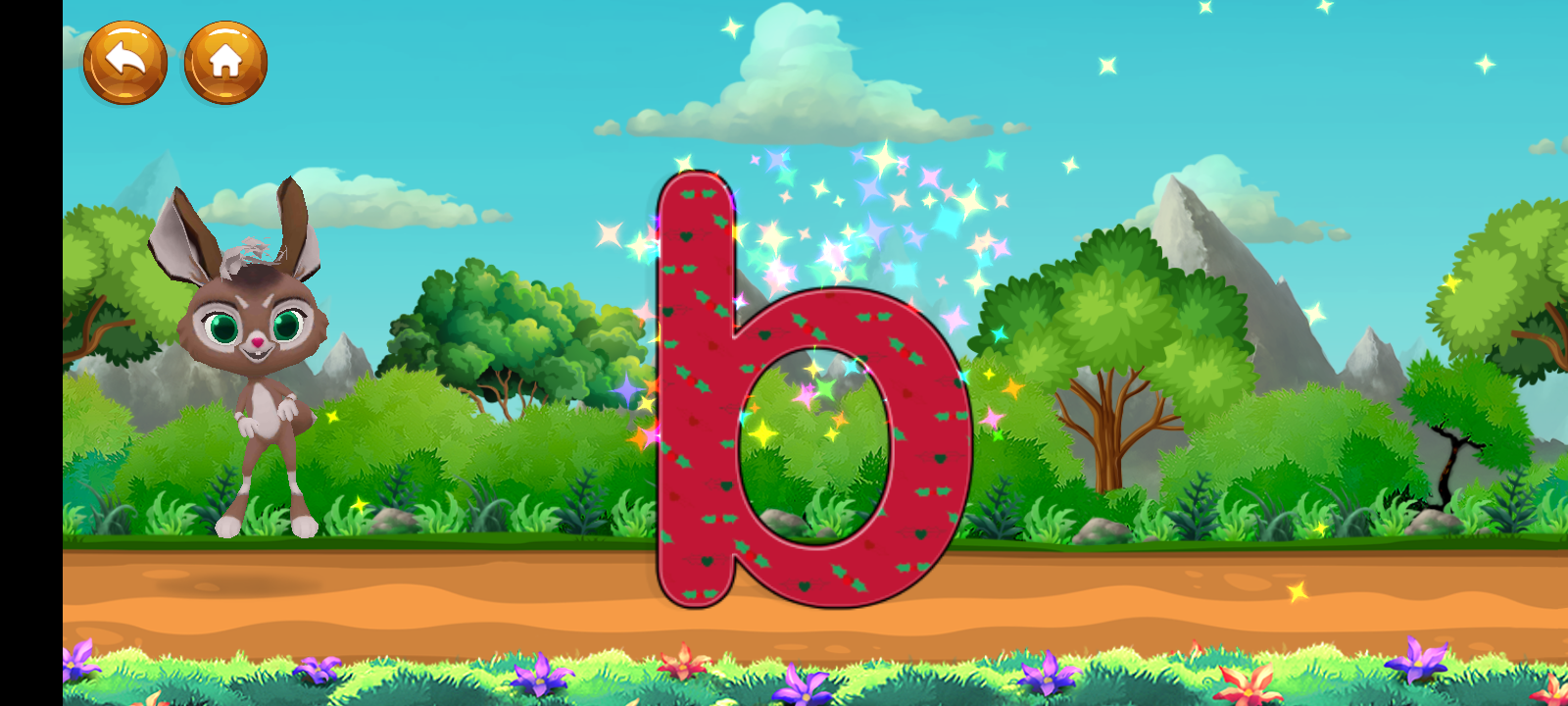
I corrected him and reminded him to check his work. He is seven now; the slips happen less often, and he increasingly tries to catch them himself. That is what I observed. I cannot say that a particular app or reminder caused the change, and his school-age experience cannot stand in for a preschooler’s development.
What I would tell a worried parent
If your preschooler writes a letter backward, take a breath and look at what they are learning around it. A reversal can be an ordinary part of early writing. Show the letter, keep practice manageable, and notice whether letter and sound knowledge grows.
If the concern reaches beyond letter direction, say so clearly to the teacher. You do not need to decide for yourself whether it is dyslexia before asking what support would help. The most useful response starts with the child and their progress, not with one imperfect b.
Frequently Asked Questions on Letter Reversals in Preschoolers
1. Should a four-year-old form every letter correctly?
Children’s experience with letters varies, especially with lowercase forms. An occasional reversal does not tell you enough. Ask what letters the child has learned and whether their knowledge is growing.
2. Are backward numbers a dyslexia sign?
Children learning to write may reverse numerals as well as letters. A backward number alone does not diagnose dyslexia. Discuss persistent concerns about writing, number learning, or other skills in their own context.
3. Does being left-handed cause mirror writing?
Research comparing matched groups of left- and right-handed five- to six-year-olds did not support preferred writing hand as the explanation for their spontaneous mirror writing. I would not change a child’s preferred hand to address reversals.
4. If my child traces a letter correctly, have they learned it?
Tracing gives them a visible path to follow. Try noticing whether they also recognize and write the letter without that guide when the task is appropriate for their stage of learning.
5. When should I ask about screening?
Ask when the child has difficulty across several early literacy or language skills, or is making little progress despite suitable teaching. Start with the preschool teacher and share concrete examples. You do not have to wait until age seven.