
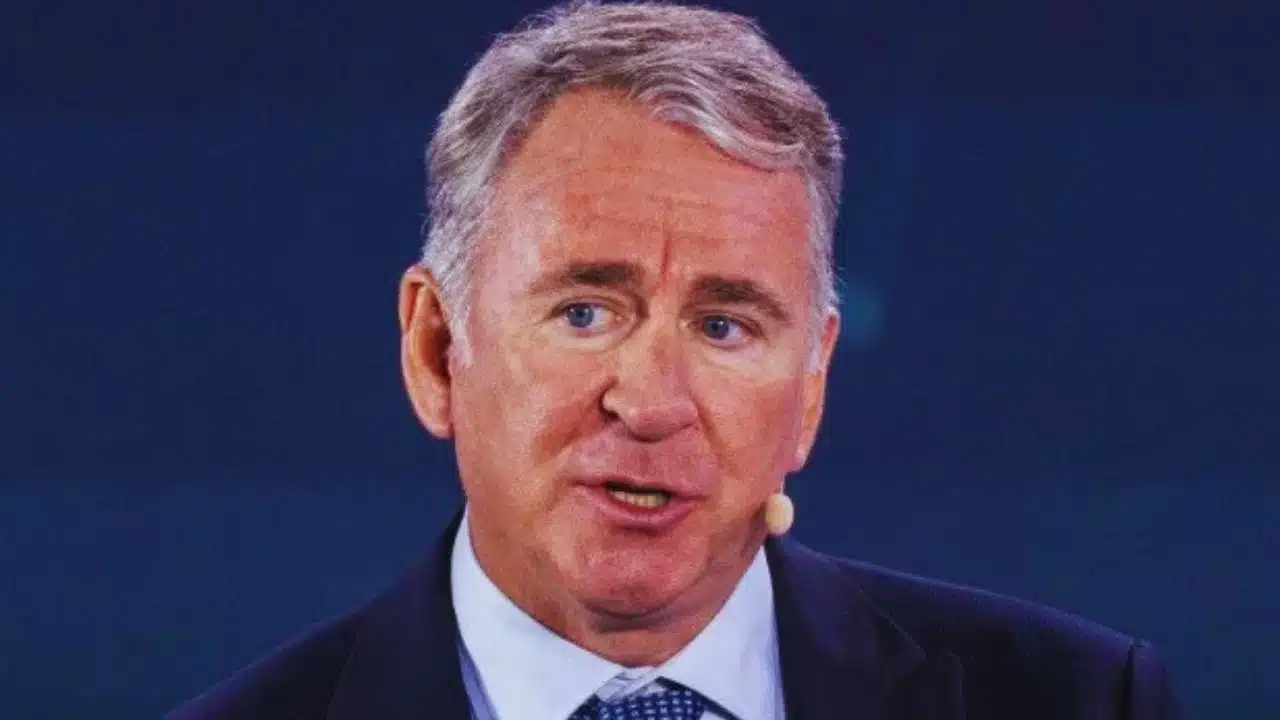
While many CEOs have chosen to remain quiet as President Donald Trump intensifies his attacks on the Federal Reserve, hedge fund billionaire Ken Griffin has openly voiced his concerns. Griffin, founder and CEO of Citadel, co-authored an opinion piece with economist Anil Kashyap in The Wall Street Journal, urging caution against politicizing the central bank. The intervention is notable because corporate leaders—particularly in finance—have largely avoided directly challenging the president, with most preferring either silence or muted defenses of the Fed’s independence.
The Risks of Political Pressure on the Fed
Griffin and Kashyap stressed that Trump’s strategy of publicly berating the Fed, threatening to dismiss governors, and pushing for looser monetary policy carries steep risks. They pointed to historical parallels, most notably the Nixon era, when White House pressure on the Fed in the 1970s led to delayed action against rising prices and eventually contributed to the prolonged crisis of stagflation.
According to Griffin’s warning, if the Fed visibly bends to political influence and allows inflation to climb unchecked, the consequences could ripple across the economy. Retirees depending on fixed savings would face eroded purchasing power, while long-term borrowing costs for mortgages, government bonds, and corporate financing could climb as investors demand higher premiums to offset perceived risk.
Inflation Pressures and Market Concerns
The White House has argued that Trump’s policies have effectively “tamed” the inflation surge that followed the pandemic. However, official projections suggest otherwise. Economists expect the August Consumer Price Index to show inflation rising 2.9% year-over-year, up from 2.7% in July and 2.5% the year before. Core inflation, excluding volatile food and energy prices, is projected at 3.1%. These figures indicate that price pressures remain persistent and could worsen if monetary policy is loosened prematurely.
Financial markets closely monitor the Fed’s credibility. For decades, the United States has benefited from a reputation for maintaining price stability, which keeps long-term interest rates relatively low. Griffin cautioned that this credibility is not infinite. If investors come to believe the Fed is bowing to political demands, confidence could erode quickly, resulting in significantly higher borrowing costs for both the government and households.
The White House’s Position
Despite these warnings, the Trump administration continues to push for rate cuts. Officials argue that if inflation were to reemerge, the Fed could simply raise interest rates again. Treasury Secretary Scott Bessent has even suggested stripping the Fed of its authority to regulate banks, claiming the central bank has drifted away from its core mission. Critics counter that such moves would undermine institutional independence and weaken the stability of the U.S. financial system.
The administration insists that lower rates are necessary to reduce costs for American families, stimulate economic growth, and sustain employment gains. Yet analysts point out that the Fed’s role is to set policy based on data, not political pressure, and that long-term credibility often depends on the ability to make unpopular but necessary decisions, such as tightening rates when inflation rises.
Why Griffin’s Critique Matters
Ken Griffin’s warning is significant not only because of his stature as one of the world’s most successful hedge fund managers but also because of his political background. Griffin has previously supported Republican candidates and acknowledged voting for Trump in the last election. His decision to speak out now signals deep unease about the direction of U.S. economic policy and the potential costs of undermining one of the country’s most important institutions.
His op-ed breaks from the general approach of corporate America, where many CEOs have tried to avoid direct conflict with Trump. Over the summer, several big-bank executives defended the Fed’s independence in broad terms but stopped short of criticizing the president. Griffin’s remarks go further, explicitly warning of financial instability and long-term economic pain if the Fed’s autonomy is eroded.
Broader Conservative Pushback
Griffin is not the only voice on the right to express concern. Conservative economists such as Doug Holtz-Eakin have also criticized Trump’s approach, arguing that constant attacks on the Fed, trade policies, and proposals for institutional changes are weakening confidence in economic governance. This growing unease within conservative circles highlights a split between political loyalty and respect for the independence of economic institutions.
Long-Term Risks of Eroding Credibility
Economists widely agree that central bank credibility is built over decades through consistent, data-driven policy decisions. Once that credibility is questioned, it can be lost quickly, with long-lasting consequences. Higher borrowing costs could weigh on economic growth, undermine fiscal stability, and reduce the government’s ability to respond to future crises.
Griffin and Kashyap’s warning reflects the delicate balance policymakers must maintain: the Fed needs to act independently to ensure long-term stability, even when its decisions—like raising interest rates—are unpopular. If the central bank is perceived as politically captured, the risks include not only higher inflation but also weakened trust in America’s broader economic system.
Ken Griffin’s decision to speak out against Trump’s handling of the Federal Reserve underscores the seriousness of the issue. By linking current events to historical lessons, Griffin warns that political interference in monetary policy could undo decades of credibility, increase inflationary risks, and raise long-term borrowing costs for both government and households.
His message serves as a reminder that strong economies depend on independent institutions. For the Fed to continue anchoring U.S. financial stability, it must be free to make tough, sometimes unpopular choices. The coming months will reveal whether Trump’s escalating pressure reshapes not only the central bank’s decisions but also broader investor confidence in America’s economic future.