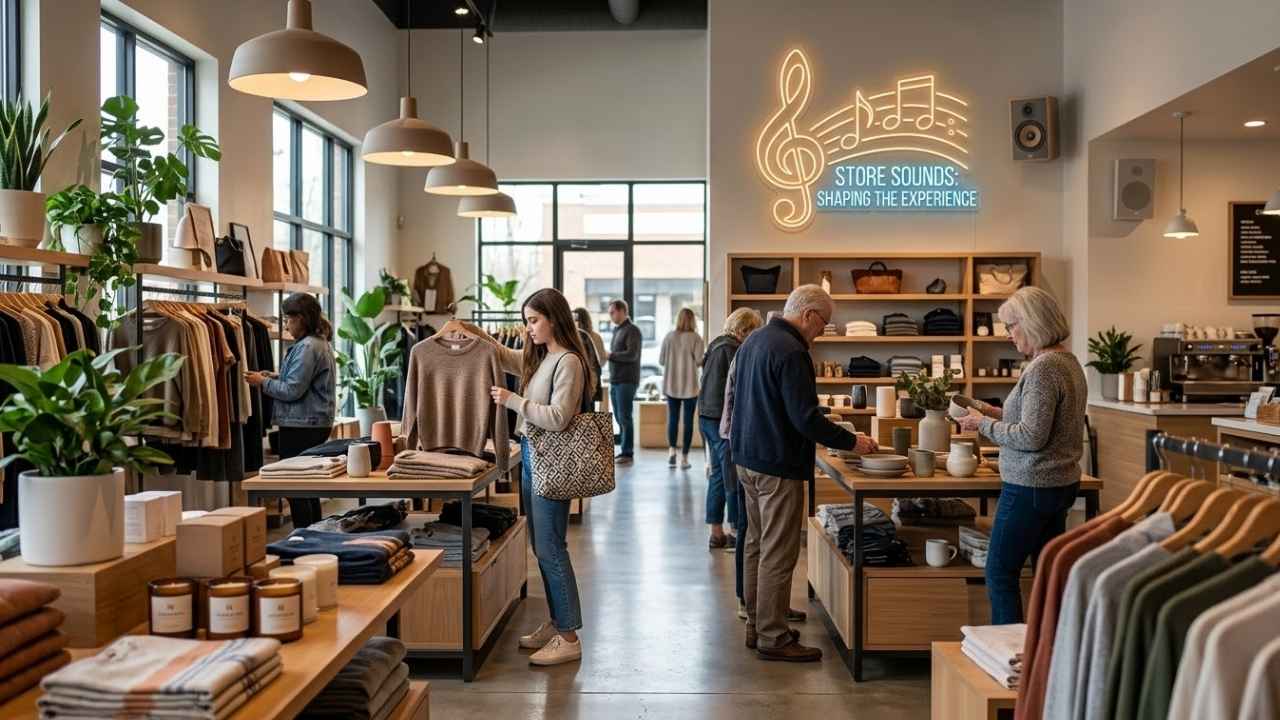
Walk into any well-run store and something is already working on you before you touch a single product. The lighting, the layout, the temperature. But one of the most overlooked tools in a retailer’s environment strategy is also one of the most constant: the music playing in the background.
Retail sound environments are not just about filling silence. When done well, they influence how long customers stay, how much they spend, and how they feel about what they’re buying. When done poorly, they create friction that shoppers can’t quite name but definitely feel.
Understanding how music for retail affects customer psychology and purchasing behavior is increasingly relevant for retailers who want every element of their environment working in the same direction.
How Music Changes Perceived Product Value
Price perception is shaped by more than the tag on the shelf. Research has consistently shown that the type of music playing in a store shifts how customers assess the value of what they’re looking at.
Classical music, for example, has been linked to higher spend in wine retail. Shoppers exposed to classical music selected more expensive bottles than those who heard pop or no music at all. The music didn’t change the product. It changed the context the customer brought to the product.
Softer, more sophisticated soundscapes signal quality. Louder, faster-paced tracks signal volume and energy. Neither is wrong. But each sets an expectation, and when the product on the shelf doesn’t match that expectation, customers feel a disconnect they often act on by walking out.
Energy Levels and Impulse Purchases
Tempo is one of the most studied variables in retail music research. Slower tempos encourage customers to slow down, browse longer, and consider more items. Faster tempos move people through a space more quickly, which can be useful during peak hours but may reduce basket size.
Impulse purchases tend to happen when a customer is relaxed enough to browse and engaged enough to notice. A mid-tempo, familiar playlist hits that sweet spot. It keeps energy up without creating urgency, and it keeps shoppers comfortable enough to linger.
Convenience stores, fast food, and high-turnover formats benefit from upbeat, high-energy tracks that keep foot traffic moving. Boutiques, beauty retailers, and home goods stores tend to see better results with slower, more atmospheric music that encourages dwelling and discovery.
Music and Demographic Alignment
Your playlist is, in effect, a message to your customer about who the store is for. When that message is clear, customers feel recognized and are more likely to stay. When it’s unclear or off-target, they feel like the store isn’t really meant for them.
A younger demographic drawn to a streetwear or activewear brand expects current music, heavy on hip-hop, electronic, or pop. A 40-plus demographic shopping at a home furnishings retailer might respond better to indie folk, acoustic, or light jazz. Neither genre is universally better; the question is whether it fits the people in the store.
Retailers that program music based on who their customer actually is, not just who they imagine the customer to be, tend to see better in-store engagement. This is especially relevant when the target customer is different from the team doing the programming.
Luxury vs. Lifestyle vs. Discount Environments
Not all retail environments want the same outcome from their music, and a one-size approach rarely works across formats.
Luxury retail is about exclusivity and experience. The soundtrack should reinforce that. Low volume, high quality, carefully curated. Think ambient, classical, or stripped-back acoustic. The music should feel considered, not commercial. Anything that sounds like a radio station undermines the premium feel.
Lifestyle brands, think athleisure, specialty coffee, or wellness retail, want music that expresses identity. Customers in these environments are buying into a culture as much as a product. The playlist should feel like something they’d actually listen to, which often means it’s more adventurous and less predictable than mainstream pop.
Discount and value retail operates on different priorities. The goal is often to move volume efficiently. Brighter, faster-paced music keeps energy levels high and supports the sense of deal-hunting activity. It’s a different kind of experience, but it still benefits from intentional curation rather than random background noise.
Why Mismatched Music Confuses Customers
Customers process their environment holistically. When the visual merchandising, product selection, pricing, and music all align, the experience feels coherent. When they don’t match, something feels off, even if the shopper can’t identify what.
A high-end clothing boutique playing heavy metal isn’t being edgy. It’s creating dissonance. A budget supermarket playing classical strings isn’t adding sophistication. It’s creating confusion. These aren’t hypothetical extremes; they reflect the kind of mismatch that happens when music is an afterthought rather than a strategy.
Research on sensory congruence in retail shows that when background music fits the store’s identity, customers spend more time browsing and rate the experience more positively. When it doesn’t fit, dwell time drops and customer satisfaction scores follow.
The mismatch problem is also common when stores rely on staff playlists or default streaming stations. These options hand over control of a critical customer touchpoint to chance. The result is a store that might sound great one hour and jarring the next.
Tying Music to Your Overall Merchandising Strategy
Retailers spend considerable time and budget on visual merchandising, store layout, lighting, and product placement. Music deserves the same level of attention because it operates through the same mechanism: shaping how customers feel while they shop.
A seasonal promotion that changes the floor display, window installation, and signage should also change the playlist. A rebranding that shifts the store’s visual identity should prompt a review of the audio identity too. These elements reinforce each other, and when they’re out of sync, the brand story becomes harder to read.
For multi-location retailers, consistency matters. Customers who visit multiple branches develop expectations about what the brand sounds like. Inconsistent music across locations fragments that experience and weakens the brand impression.
Sound Is Part of the Strategy
Sound is not a passive element of the retail environment. It actively shapes purchasing decisions, perceived value, dwell time, and how customers feel about the brand long after they leave the store.
Retailers that treat music as a strategic asset, rather than background filler, are better positioned to create consistent, compelling environments that support sales and build customer recognition. The question is not whether your store should have music. The question is whether the music you have is doing any of the work it could be.