
How To Ripen Papaya can stump home cooks when the fruit stays hard and green. You slice in, hope for soft, sweet flesh, and bite down on a bland, chalky core. That wasted fruit can leave you sad and hungry.
Fruit temperature is the most important factor in papaya ripening. You will learn to trap ethylene gas from a banana in a paper sack, store your papaya at room temperature, and slow ripening in the refrigerator.
This guide offers simple tricks for sweet, juicy fruit every time. Read on.
Key Takeaways
- Trap ethylene gas by placing unripe papaya in a paper bag with a ripe banana or apple. The fruit will ripen in 2–3 days at about 70°F.
- Check ripeness by color and feel: look for bright yellow skin and a gentle give near the stem. Avoid papayas that stay mostly green.
- Speed ripening on a countertop at 70–75°F with moderate humidity. Add a green banana or pineapple slice to cut wait time to 3–4 days.
- Slow ripening by moving ripe papayas to the refrigerator at 45°F. Store halves in sealed containers to limit air and odor.
- Use fully ripe papaya in salads, smoothies, or desserts. Try a Thai-style salad with chili and fish sauce or blend it with lime, mango, and coconut water.
How to Tell if a Papaya is Ripe

Press the rind near the stem, a soft spot shows Papain broke down starch. Spot a bright yellow rind and sniff the fruity ethylene scent, it hints the sugar is ripe.
Key signs of ripeness
Color tells the tale: green papaya stays firm, yellow skin hints at sweet flesh. Gently press near the blossom end; soft spots signal ripe fruit. You will spot small brown freckles too; they show papain action.
Feel flesh firmness change under your fingers. Climacteric fruit, like papaya, pumps out ethylene gas as it ripens. You may smell a mild, sweet aroma at 70°F or above. This rise in temperature and humidity speeds ripening, so check heat with a kitchen thermometer.
How to check texture and color
Look at the skin. It will shift from deep green to golden yellow. Some papayas show a few green patches while the rest glows. Aim for even yellow shade, a sign of a perfectly ripe and ready-to-eat papaya.
Avoid papayas that look mostly green; they are unripe. The full yellow tone tells you the ripening process has run its course.
Gently press near the stem. A ripe papaya will yield under light finger pressure. If it feels hard, give it a day or two at room temperature. Use a spoon to scoop a bit of pulp after you cut it.
The flesh should look vibrant orange and feel tender, not mushy. That soft pulp shows the enzymes have done their job. This climacteric fruit emits ethylene as its pulp softens.
How to Ripen Papaya Faster
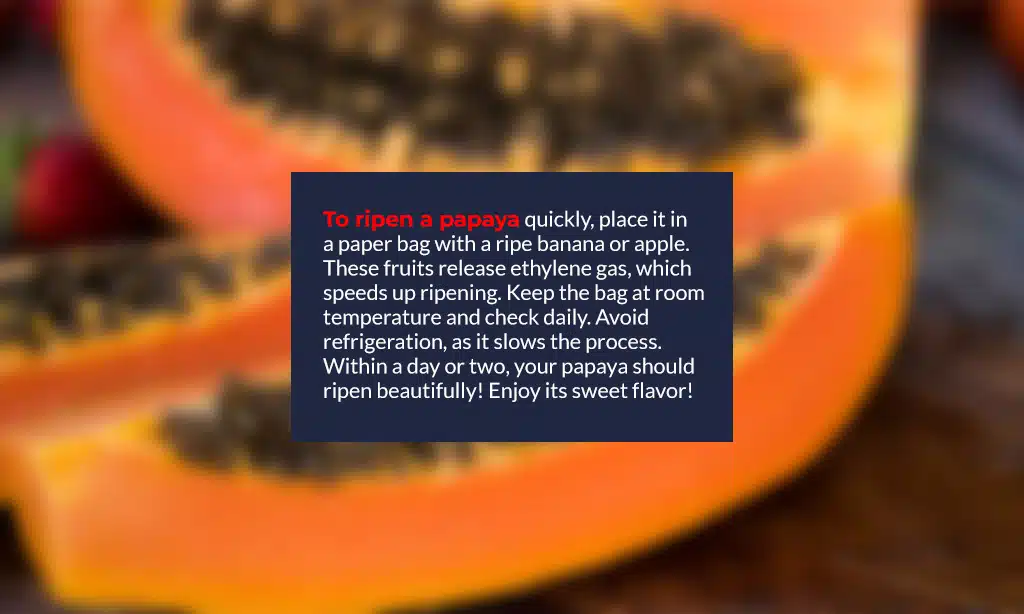
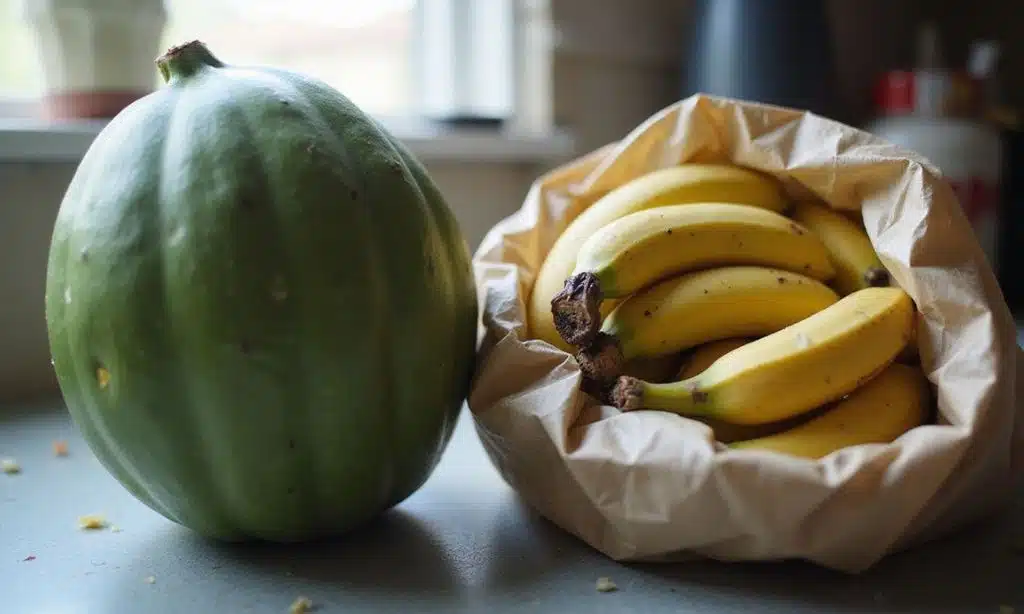
Seal unripe papaya in a paper bag with a ripe pome fruit; give it room in your pantry. The trapped ethylene gas from the climacteric food fast-tracks ripening, cutting wait time to just a few days.
Using a paper bag with ethylene-producing fruits
Place a half-ripe papaya in a paper bag with an avocado or apple. Fold the bag closed. Keep it on a shelf at about 70°F. Ethylene gas, a ripening hormone, builds up and speeds the process.
You should see yellow skin and soft spots in two to three days.
You can use this method soon after harvest. Check the bag each day. Press gently to feel give in the flesh. Move the papaya to the fridge when it reaches a slight yield. Set the temp near 50°F for partly soft or drop to 45°F when fully soft.
Cool air slows down further ripening.
Storing at room temperature
Unripe papaya fruits thrive at room temperature. Warm air near 70–75°F and moderate humidity help papayas continue to ripen. Researchers say fruit temperature matters most for sugar build-up and color change.
Place green papayas on a ventilated countertop or shelf. Slip a folded newspaper beneath them to trap ethylene gas. Add a green banana or pineapple slice to speed ripening in three to four days.
Watch skin shift from green to yellow as the flesh softens.
Some papayas never ripen once picked, so choose fruit that shows early yellow spots. Check for a gentle give at the blossom end. Avoid direct sunlight, which can toughen skin. Skipping cold drafts keeps temperature steady.
Use a room hygrometer or kitchen thermometer to track humidity and heat. Spot a golden hue, then move the fruit to 50°F for a partially ripe hold, or stash it at 45°F in the fridge to slow down the ripening process.
How to Slow Down the Ripening Process
Place the papaya in a cooling appliance to hold back ethylene. Let fresh air flow in a vented bin to keep enzymes on pause.
Refrigeration tips for ripe papayas
Fruit temperature is the most important factor in papaya ripening. Set your cooling unit at 45°F (7°C) once the fruit yields to gentle pressure. Store each half in a sealed container to limit oxygen and odor exchange.
Keep papayas in the storage compartment with a humidity control system. Refrigerate at low temperatures to preserve juiciness and slow down rot. A built-in thermostat and temperature sensor help you fine-tune refrigerator temperatures for climacteric fruits.
Ways to Use Ripe Papaya
Slice ripe papaya into wedges for a Thai-style salad, blend it with lime and yogurt in an immersion blender for a creamy smoothie, or pile cubed fruit and coconut shreds into a ceramic bowl—keep reading for more tasty ideas!
Smoothies, salads, and desserts
Store unripe papayas at room temperature, around 70°F, to speed their change. Brown bags lock in ethylene and raise humidity. This method ripens properly in 2 to 3 days. A fully ripe papaya shows a bright yellow skin and yields to gentle pressure.
Drop cooled pieces at 45°F into the blender with mango, lime juice, coconut water, and ice. Then serve the smoothie in a chilled glass.
Peel a half papaya lengthwise, scoop its seeds, and slice its flesh into cubes. Toss those chunks with chili, fish sauce, lime, and crushed peanuts for a green papaya salad. Add yogurt, honey, vanilla, and chopped mint in a bowl for a creamy dessert.
You can slow down further ripening by chilling leftovers at 50°F. Some fruits never ripen after harvest, so check firmness before serving.
Takeaways
You can watch green fruit turn gold in just days in a sealed sack with bananas. A ripe papaya will feel soft and have a sweet smell. Try placing it near a bowl of oranges to speed up ethylene action.
Place fruit on a shelf in a refrigerator to slow ripening. Serve bright slices with a squeeze of lime and a dash of chili. Enjoy fresh fruit that aids digestion and lifts your mood.
FAQs on How to Ripen Papaya
1. What signs show a tropical papaya is ripe?
Papaya is a tropical kind of fruit. Most papayas are picked green, then sold. A ripe papaya has soft, gold skin and a sweet smell. Tap it gently; the flesh tastes rich.
2. How do I ripen papaya at home in 3 to 4 days?
To ripen papaya at home, place it on the counter at room temperature. This will induce soft spots in 3 to 4 days. For a boost, trap it in a paper bag to hold the natural gas.
3. Will unripe bananas help my fruit ripen faster?
Yes, unripe bananas and papaya emit fumes that induce ripening. They act like a small team, working together. You may think they ripen better as a pair.
4. Should I cut the papaya in half lengthwise to ripen properly?
No, it stalls the process. The cut papaya loses its gas; it dries out. Keep it whole, let air flow around it, the skin gets soft all over.
5. What is the ripening phase of papaya?
Some guides on ripeness in viticulture focus on sugar levels, but papayas use a ripening phase. You look at the soft skin, and you smell a sweet note. It is a climacteric plant event.
6. How do I use ripe papaya in regional cooking or curry?
Chop it for a quick, convenient food snack; it adds a sweet twist. Toss it in curry for contrast and taste that warms you. You can also mash it for a salad; it aids digestion and looks bright.