You know how this feels. You’re standing in a store aisle, holding a product with a bright green leaf on the label. The word “sustainable” catches your eye. You want to do the right thing for the planet.
But here’s what we’ve learned from watching this space closely.
According to a 2024 report by Capgemini, 52% of consumers now believe organizations are greenwashing their initiatives, up sharply from just 33% one year prior. That jump tells us something important. The gap between what companies say and what they actually do is widening, and people are noticing.
We’ve spent considerable time researching how brands use buzzwords like “carbon neutral” and plaster nature imagery on packaging just to appear responsible, even when their actual practices don’t align. A 2024 RepRisk study found that approximately 60% of fashion brands’ sustainability claims are unsubstantiated or misleading.
That’s the core problem with greenwashing.
So we’re going to walk you through seven practical red flags that help you spot greenwashing. Each sign explains what false environmental claims look like in the real world and gives you clear ways to recognize them during your next shopping trip.
These patterns become easier to identify once you understand the tactics companies use.
How To Identify Greenwashing: 7 Red Flags
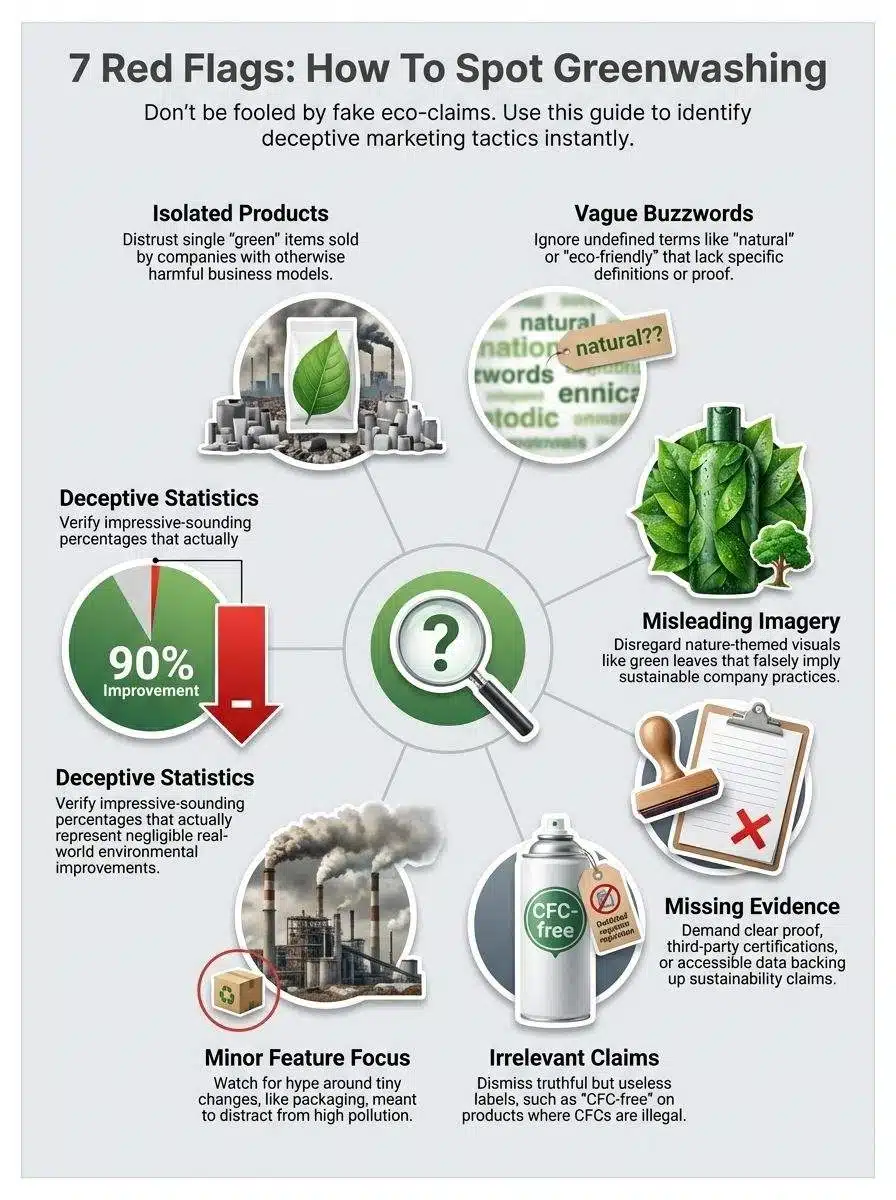
Companies deploy specific tactics to make their marketing sound more sustainable than their operations truly are. We’ve identified the key warning signs that consistently appear across industries, from fast fashion to food products.
Understanding these patterns helps protect both your wallet and the environment.
What Does Vague or Undefined Language Mean in Green Claims?
Vague language means using terms like “eco-friendly,” “natural,” or “green” without clear proof or specific measurements. According to the UK’s Competition and Markets Authority, these buzzwords have no legal definition and can be easily misinterpreted by consumers.
Many brands scatter these words across packaging without backing them up.
We often see claims that sound impressive but provide zero facts about actual environmental impact, greenhouse gas reduction, or net-zero targets. A 2021 sweep of EU websites revealed that 42% of green claims couldn’t be substantiated, with most being exaggerated, false, or potentially qualifying as unfair commercial practices.
Research from KPMG found that 76% of over 2,000 respondents believe false or misleading sustainability claims are the clearest example of greenwashing.
Some fast fashion companies label clothing as “sustainable” with nothing concrete behind it. No recycling data. No supply chain transparency. No certifications from credible groups like the Sustainable Forestry Initiative or Forest Stewardship Council.
This type of marketing exploits people who genuinely want to support the natural environment.
The Federal Trade Commission warns that labels using unclear wording are usually red flags. If we spot language that doesn’t explain how products actually reduce carbon dioxide pollution, save energy, reuse resources, or cut waste through verified results, it’s time to question those sustainability claims.
How Can Misleading Imagery Trick Consumers?

Nature-based imagery creates an illusion that a company prioritizes sustainability when their actual operations tell a different story. We see trees, rolling hills, or animals on packaging and instinctively assume the product helps the planet.
Marketers understand this psychology and exploit it deliberately.
Research shows battery-farmed eggs are frequently shown with pastoral scenes, even though the farming methods remain unchanged. Brown paper bags for coffee beans and earth-tone color schemes work the same way. These visual cues trigger our environmental values without requiring any real corporate change.
- Green color palettes with no environmental action behind them
- Images of forests, oceans, or mountains unrelated to actual conservation efforts
- Fake eco-logos designed to mimic legitimate certifications
- Nature scenes on products from polluting industries
Some brands redesign packaging with green elements while still polluting water and air or relying on fossil fuels in the United States. Terms like “planet-friendly,” “renewable energy,” or “compostable” appear everywhere but don’t always match the truth about reducing emissions.
These tactics exploit our genuine desire to support climate change mitigation without delivering actual progress toward net-zero commitments or meaningful ESG goals.
Why is Transparency and Evidence Important in Eco Claims?
We need verifiable facts to distinguish real sustainability from clever marketing. According to a 2024 study, only 36% of CEOs report having measurement tools in place to quantify their sustainability efforts, and just 17% use those measurements to optimize results.
That gap is telling.
When a company claims to be “sustainable” or “eco-friendly,” it must provide concrete proof. This includes annual sustainability reports, specific CO₂ emissions data, or measurable numbers on energy-efficient projects. Companies such as H&M must offer real evidence, not just appealing advertising or buzzwords.
Without proof, we face misinformation and false claims that hide harmful practices like air pollution or burning fossil fuels.
Research from RepRisk shows that 85% of investors report greenwashing is a greater problem than it was five years ago.
Trusted brands publish Environmental, Social, and Governance reports. They display certifications from legitimate organizations like Fairtrade and B Corp. This transparency helps eco-conscious consumers verify if a product is genuinely recyclable or working toward net zero commitments, rather than spreading greenwashing myths.
We check for these details before supporting products that claim to reduce emissions or fight climate change. Brands without clear information may be concealing practices that undermine our collective environmental goals.
What Are Irrelevant Environmental Claims and How to Spot Them?
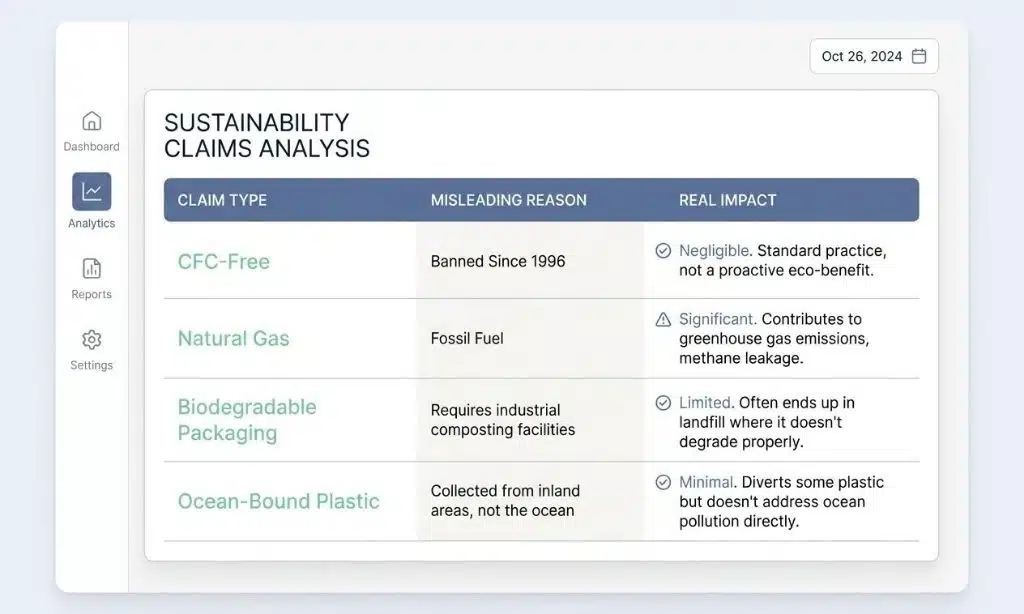
Some brands highlight true but meaningless achievements. They might advertise a product as “CFC-free,” even though CFCs have been banned in the US since 1996.
This claim adds zero value today.
Companies often point to minor wins while ignoring major environmental harm. For example, they’ll emphasize recyclable packaging on energy-hungry appliances that consume non-renewable electricity and produce substantial carbon emissions. This selective disclosure distracts from their overall environmental footprint.
| Irrelevant Claim Type | Why It’s Misleading | Real Impact |
|---|---|---|
| “CFC-Free” | Already banned since 1996 | No competitive advantage |
| “Recyclable box” for high-emission product | Ignores product’s actual footprint | Minimal net benefit |
| “Made with natural gas” | Natural gas still pollutes heavily | Fossil fuel emissions remain |
We spot these tricks by checking if the claim matches the actual environmental impact. If a company labels itself “green” for using natural gas while ignoring total emissions, it’s likely concealing bigger harm elsewhere. According to data from multiple industries, firms accused of greenwashing suffer an average 1.34% decline in consumer trust.
Trade-off sins appear frequently. Some firms talk about one clean feature while hiding pollution in their supply chain or food system. Fake certifications pop up too, many issued by industry groups rather than bodies like the FTC. We need clear proof on net-zero emissions and carbon accounting before trusting any marketing claims as truly sustainable or environmentally friendly.
How to Recognize Overemphasis on Minor Green Features?
Companies magnify small “green” changes to make products appear better for the environment than they truly are. We see labels boasting “50% more recycled content,” which could mean an increase from just 2% to 3%.
That difference is negligible, but it sounds significant at first glance.
Some companies switch to brown paper bags or add green leaves on packaging and declare themselves “sustainable” without making real policy changes inside the business. According to research from the Changing Markets Foundation, a 2021 investigation into major fashion brands found that 60% of sustainability claims were misleading, with H&M being among the worst offenders at 96% of claims not holding up.
- Watch for percentage claims that lack context about the starting point
- Question visual changes that aren’t backed by operational improvements
- Look for isolated product lines marketed as eco-friendly while the rest of the business remains unchanged
- Check if certifications come from independent third parties or self-created labels
We need to be skeptical of claims like “made with plants” when there’s only trace plant material present. Many brands focus on recyclable or compostable packaging while selling products that still generate pollution or increase plastic pollution overall.
Coca-Cola Life marketed itself as eco-friendly, yet the main product line maintained its harmful environmental impact and kept its high emissions footprint. We need concrete proof that these features address real global warming potential instead of distracting us from larger environmental problems like carbon footprint and unmet reduction targets.
What are Misleading Comparisons or Statistics in Green Marketing?
Misleading comparisons show up constantly in green marketing. A product might claim “50% more recycled content” when the actual change is minimal, like moving from 2% to 3%.
That tiny jump doesn’t meaningfully reduce climate change impact or cut greenhouse gases.
Some brands use claims like “100% recyclable packaging” while skipping a crucial detail. Most cities lack the infrastructure to actually recycle that material type. Other marketers compare current products with outdated options just to appear greener, which the FTC considers false or misleading claims.
According to a 2024 study, in September Keurig Dr Pepper was charged by the US Securities and Exchange Commission with making inaccurate recyclability statements and agreed to pay a $1.5 million civil penalty.
We notice terms like “zero-emissions vehicle” without supporting proof, clear numbers, or verified ways to offset carbon produced. Research shows that 68% of US executives admit their companies are guilty of greenwashing, suggesting these misleading statistics are widespread and often intentional.
Trustworthy sustainable brands provide specific metrics and third-party verification. Greenwashers deliberately avoid those details and hope shareholders won’t file complaints about concealing facts on emissions reduction. Always look for transparent reporting and solid evidence before trusting statistics about clean energy or carbon offsetting projects meant to address climate change.
Why Do Isolated Eco-Friendly Products Indicate Greenwashing?
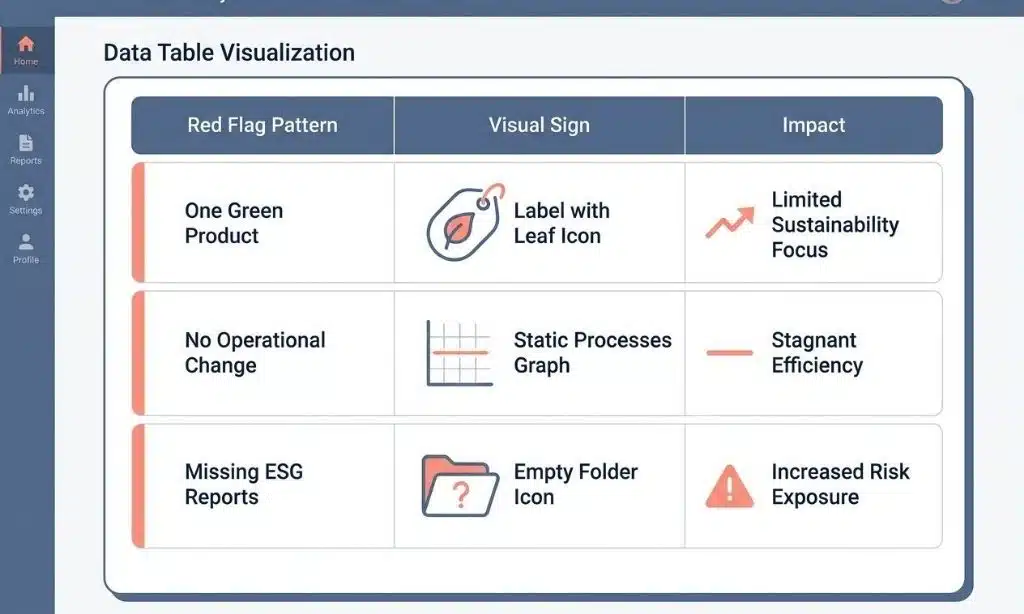
Companies often release a single “green” product to create an eco-friendly impression while most of their business remains harmful. We see this pattern repeatedly with major brands.
One token product doesn’t reflect genuine commitment.
Take Coca-Cola’s introduction of Coca-Cola Life. The company positioned this single drink as sustainable while maintaining operations that make it one of the world’s worst plastic polluters. According to Break Free From Plastic’s reports, Coca-Cola has been named a top plastic polluter for multiple consecutive years.
In August 2025, Italy’s competition authority fined Shein €1 million for misleading environmental claims, finding that sustainability messaging was “vague, generic, overly emphatic, and in some cases misleading. ” The regulator specifically noted that Shein’s greenhouse gas reduction targets were contradicted by actual emission increases in 2023 and 2024.
| Red Flag Pattern | What It Looks Like | Why It Matters |
|---|---|---|
| One “green” product line | Small collection labeled sustainable | Distracts from majority of harmful products |
| No company-wide changes | Business operations remain unchanged | Indicates lack of genuine commitment |
| Missing sustainability reports | No annual ESG disclosure | Prevents verification of broader impact |
Chief executive officers may talk about being “green,” but if only one project receives attention, we should exercise caution. Without comprehensive details, third-party certification, or transparent reports, these isolated eco-friendly claims are significant red flags.
Smaller firms whose entire mission centers on sustainability often provide more confidence than large corporations offering just one “better” product among many unsustainable options.
Final Words
We’ve covered seven clear red flags to spot greenwashing in action. From vague language and nature pictures to missing proof and weak claims, each signal helps us verify whether companies’ promises about reducing emissions actually hold up.
These tools save time and strengthen our choices.
Based on current data, this skill matters more than ever. According to recent enforcement trends in the US, greenwashing cases are expected to increase throughout 2026 as state attorneys general coordinate investigations and new regulations take effect. Our careful evaluation can push companies toward genuine change, making the world cleaner through consistent consumer pressure.
Are we checking for specific facts before picking eco-friendly products?
If we want additional tools or trusted guides, organizations like the Federal Trade Commission or third-party certifications offer solid resources to explore. Every purchasing decision counts. Let’s use what we know, ask direct questions, and make greener living clear for everyone, starting with our very next purchase.