

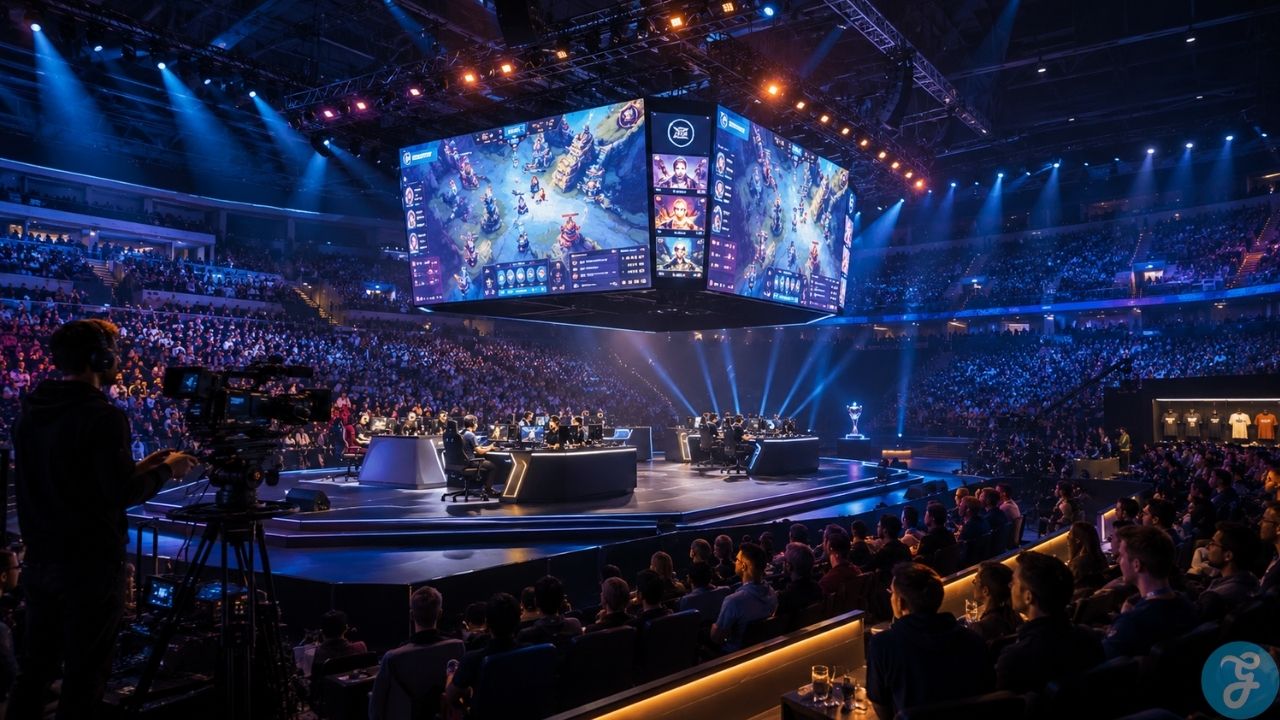
The global competitive gaming industry attracts hundreds of millions of viewers to digital streams and packed stadium events. While fans tune in to watch elite players compete for multi-million dollar prize pools, executing these global spectacles requires massive operational expenditure. Stage production, arena leases, flight logistics, broadcast talent, and technical infrastructure represent substantial overhead costs for tournament operators.
To maintain profitability and scale operations, event organizers deploy multi-layered financial models. Understanding how esports tournaments make money requires examining both traditional sports-style monetization, such as sponsorship deals and physical ticket sales, and direct-to-consumer digital monetization unique to interactive gaming ecosystems.
B2B Revenue Models: How Esports Tournaments Make Money from Corporate Partnerships
Business-to-business (B2B) partnerships represent the majority of an esports tournament’s top-line revenue. Brand investments and commercial distribution agreements provide the capital foundation necessary to fund major events.
1. Corporate Sponsorships and Brand Advertising
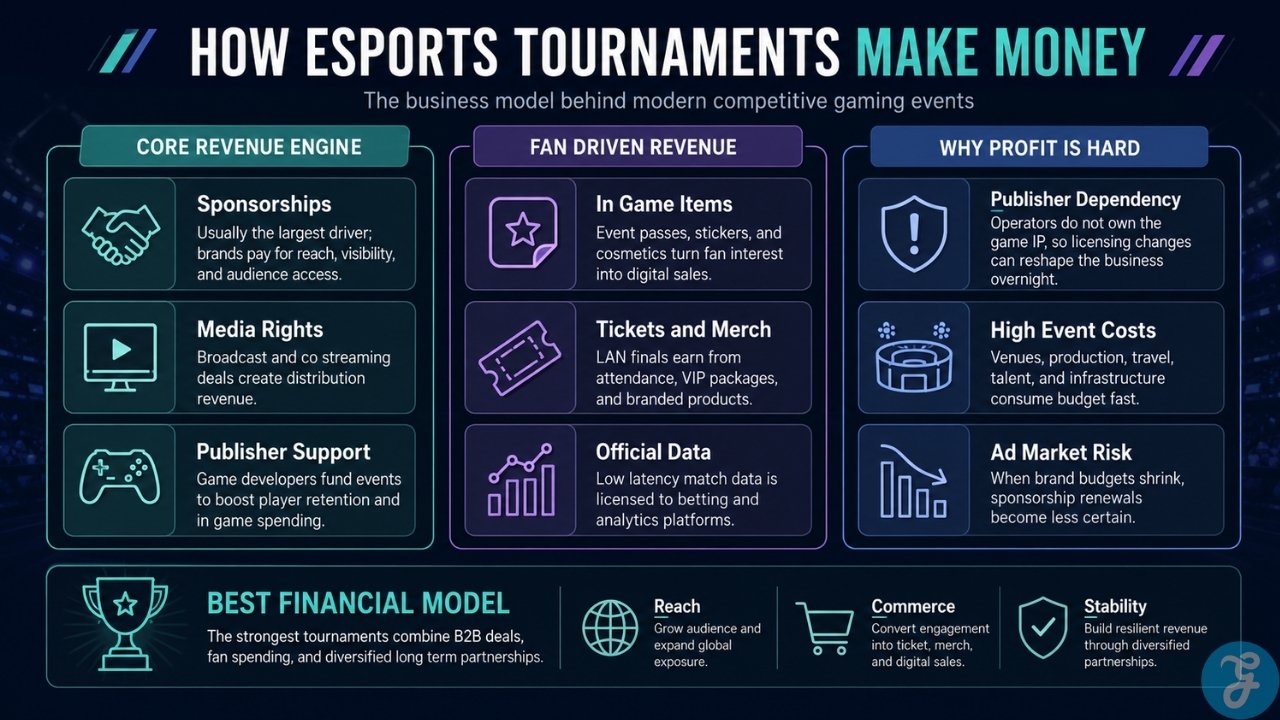
Sponsorship deals represent the single largest revenue source for esports tournament organizers, often generating over 40% to 50% of an event’s total income. Because esports audiences are notoriously difficult to reach through traditional linear television, global brands invest heavily to capture fan attention across live digital streams.
Sponsorships fall into three distinct categories:
-
Endemic Hardware Sponsors: Technology and gaming gear manufacturers (such as Intel, NVIDIA, Logitech, and Secretlab) supply event hardware in exchange for primary placement, product demonstrations, and technical entitlement rights.
-
Non-Endemic Commercial Partners: Global consumer brands—ranging from energy drinks (Red Bull, Monster Energy) and automotive manufacturers (Mercedes-Benz, Kia) to financial institutions and luxury labels—pay premium fees for stream overlays, arena signage, and custom broadcast segments.
-
Naming Rights and Title Sponsorships: Organizers frequently sell the naming rights for entire tournament circuits or physical stages (e.g., the Intel Extreme Masters series), securing multi-year guaranteed revenue.
2. Media Rights and Broadcasting Licensing Deals
Media rights involve licensing the exclusive or non-exclusive broadcasting privileges of a tournament to distribution platforms. Platforms like Twitch, YouTube Gaming, and regional television networks pay tournament operators licensing fees to secure high-tier competitive content that drives user engagement and platform watch time.
In recent years, organizers have expanded media rights monetization through official co-streaming permissions. Tournament operators license secondary broadcast rights to prominent gaming influencers, allowing them to watch and commentary-react to live tournament matches on their personal channels, reaching broader sub-audiences while sharing underlying ad revenue.
3. Game Publisher Grants and Financial Subsidies
Unlike traditional sports, where football or basketball belong to the public domain, every esports title is the proprietary intellectual property (IP) of a game developer (such as Riot Games, Valve, or Epic Games). Independent tournament organizers (like ESL FACEIT Group or PGL) must either obtain operating licenses or work under direct contract for publishers.
Publishers frequently subsidize independent tournament organizers through direct cash grants or production budgets. Developers view major tournaments as high-impact marketing vehicles that boost active player counts, retain users, and drive long-term microtransaction sales inside the game software.
Direct Fan Commerce: How Esports Tournaments Make Money from Viewers
While B2B deals establish baseline stability, direct consumer monetization converts viewer engagement into active commerce.
4. Digital In-Game Items and Crowdfunded Prize Pools
One of the most lucrative monetization mechanisms in esports bridges the physical event with in-game digital purchases. Publishers and event organizers collaborate to release event-themed digital cosmetics, tournament passes, or team stickers directly inside the game client.
A percentage of these microtransaction sales is funneled back to the tournament operator and participating teams. Historically, events like Dota 2’s The International or Counter-Strike Majors have generated tens of millions of dollars in secondary revenue through Battle Passes and digital team stickers, with a portion funding the tournament prize purse and the remainder retained as organizer revenue.
5. Physical Ticketing and Arena Merchandise
For offline (LAN) finals hosted in major venues, physical ticket sales provide an immediate liquidity injection. Tournament operators sell multi-day weekend passes, general admission seating, and high-tier VIP packages that offer premium viewing angles, exclusive meet-and-greet sessions with professional teams, and limited-edition event merchandise.
Additionally, physical merchandise booths located inside the arena arena sell tournament-branded apparel, commemorative jerseys, poster art, and physical collectibles directly to attendees.
6. Real-Time Data Rights and Betting Analytics
The rapid growth of regulated sports betting has created an additional revenue stream: official event data feeds. Tournament organizers hold the rights to ultra-low-latency real-time match data.
By partnering with specialized data distribution agencies (such as GRID or Bayes Esports), tournament operators license live, frame-by-frame match metrics directly to sportsbooks and analytics platforms. This data powers live odds generation, in-play wagering, and statistical tracking tools.
Industry Hurdles Impacting How Esports Tournaments Make Money
Despite generating diverse revenue streams, tournament organizers navigate distinct business constraints that complicate sustained profitability.
IP Dependency and Publisher Restrictions
Tournament operators do not own the underlying software of the games they broadcast. If a publisher alters its licensing terms, launches a competing first-party league, or revokes tournament hosting rights, an independent operator’s commercial model can be disrupted overnight.
High Operational Overhead for Physical Arenas
Leasing stadium venues, shipping broadcasting hardware globally, accommodating dozens of professional team rosters, and maintaining redundant high-speed server infrastructure require massive upfront capital investment. When economic conditions soften, venue costs and stream bandwidth expenses can quickly absorb profit margins.
Advertising Budget Sensitivity
Because sponsorships account for a significant percentage of total tournament revenue, event operators remain vulnerable to macroeconomic downturns. When corporate marketing departments trim promotional budgets, tournament sponsorship renewals are often among the first expenditures reassessed.
The Verdict
Answering how esports tournaments make money reveals a complex commercial structure that combines traditional sports business mechanics with modern digital ecosystems. By balancing major B2B sponsorships, media licensing, and publisher grants with fan-driven microtransactions, ticket sales, and data licensing, tournament organizers build the financial framework that powers global competitive gaming.
Frequently Asked Questions(FAQs) on How Esports Tournaments Make Money
Are esports tournaments profitable on their own?
Standalone tournament operations often run on tight profit margins due to high venue leasing and production costs. Most organizers achieve profitability by bundling multi-event circuit sponsorships, securing long-term media rights agreements, and sharing in digital microtransaction revenue streams.
Why do game publishers subsidize third-party esports tournaments?
Publishers treat esports tournaments as high-return promotional investments. Major competitive events maintain high community interest, keep active player bases engaged, and drive in-game digital store spending, offsetting direct event hosting subsidies.
How do online qualifiers make money compared to physical LAN finals?
Online qualifiers operate with significantly lower overhead because they eliminate arena leases, travel expenses, and physical staging costs. They monetize primarily through live streaming video advertisements, sponsor overlay placements, and channel subscription revenue.






















