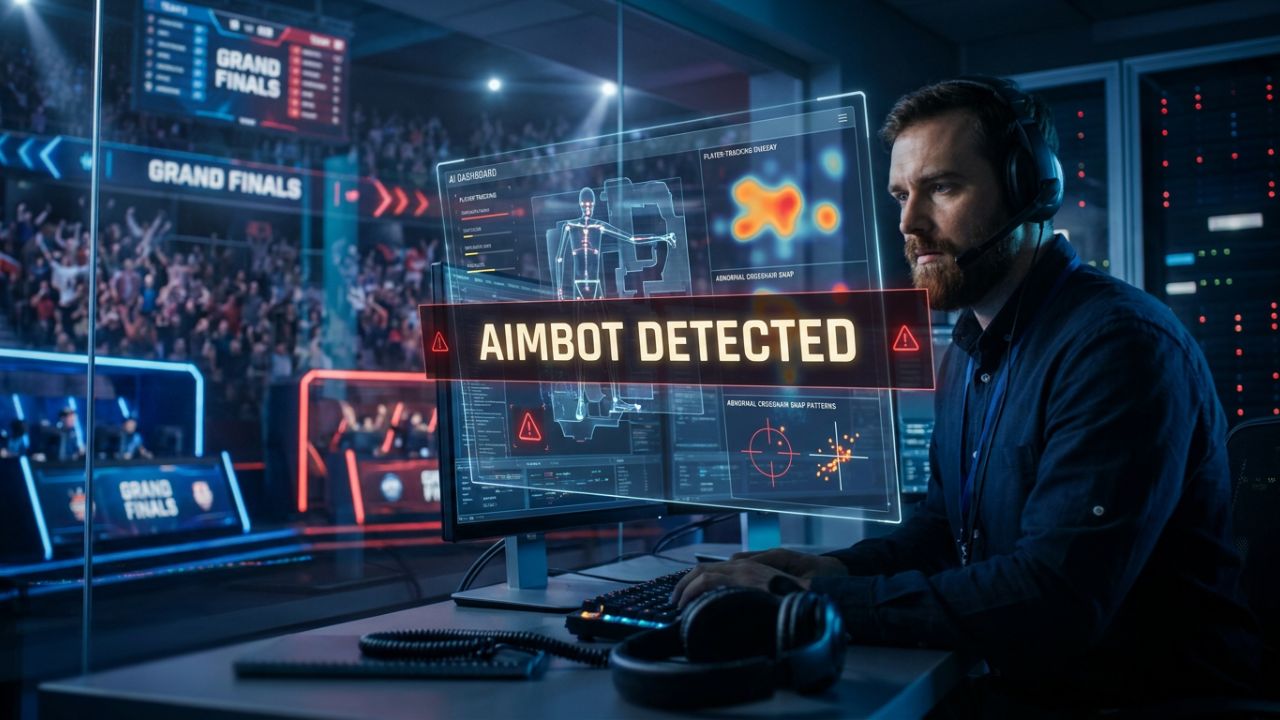
Have you ever lost a match to someone whose aim seemed just a little too perfect? Their shots never miss. Their crosshair snaps to targets like a magnet. And you sit there wondering if the game is even fair anymore. That feeling is more common than you might think. Studies show that cheating impacts up to 75% of players in competitive gaming settings. Many gamers quit games they love because a cheater made every match feel pointless.
Here is the good news: game companies are fighting back with artificial intelligence, and it is working.
How AI is being used to detect aimbots has changed competitive gaming completely. AI systems now watch player behavior, analyze shooting patterns, and spot suspicious input data in real-time. These machine learning algorithms learn what normal players do, then flag anything that looks wrong.
Riot Games uses a system called Valiant to catch cheaters. Blizzard Entertainment added AI detection to Overwatch. Fewer cheaters means happier players and better game integrity.
So grab a snack, and let’s walk through how these AI anti-cheat systems work, what they catch, and why they matter for fair play. I think you’ll be surprised at how clever this technology really is.
The Role of AI in Detecting Aimbots
AI systems watch how players move and shoot in real time. They catch the tiny patterns that separate human players from aimbots using advanced computer vision and object detection models.
Analyzing player behavior patterns
AI systems analyze player behavior in real time by studying huge amounts of gameplay data. These tools watch how players aim, move, and react during matches.
The software tracks input data from controllers and keyboards to spot patterns that don’t match normal play. If a player’s aiming accuracy shoots way above what most players achieve, the system flags it as suspicious. Reflex times that beat the majority of players consistently trigger alerts.
Computer vision models examine how players target enemies and react to game events. The AI learns what normal human players look like, then spots anything that breaks that pattern.
Why does behavioral analysis catch cheaters so well? Because real players have limits. Human players miss shots, hesitate sometimes, and make mistakes. Cheaters using aimbots or aim assist tools show different patterns:
- Their accuracy stays too perfect, match after match
- Their reaction times never slip, even during long sessions
- Their targeting looks mechanical instead of natural
This idea is already live in major games. According to a 2026 Tech.eu interview regarding modern behavioral anti-cheat, startups like Anybrain are deployed in titles such as Rust and Hunt: Showdown. Their systems process behavioral biometrics, things like micro-mouse movements, keystroke cadence, and even player fatigue, entirely on the server side without ever scanning your PC. That matters because it shows the future of anti-cheat can be both effective and non-invasive.
The system compares each player against millions of others to find outliers. Anomaly detection identifies cheating behaviors and techniques that stand out from the crowd. These tools continuously learn and adapt, improving their detection over time.
Every match teaches the AI more about what cheating looks like. That makes it harder for dishonest players to hide.
Identifying suspicious input data
Detection systems catch cheaters by analyzing the raw data players send to game servers. Every mouse movement, keyboard press, and controller input leaves a digital trail. AI models examine this input generation data to spot patterns that look inhuman.
Here’s the thing: a real player’s mouse movements show natural variation, hesitation, and mistakes. Aimbots produce perfectly smooth movements with zero lag or delay.
The system tracks latency between actions and measures how fast a player reacts. Speeds that exceed human capability raise red flags instantly. Computer vision tools scan for impossible angles and target detection that happens too quickly. These tools use advanced algorithms, similar to YOLOV8 technology, to process thousands of data points per second.
Internal testing with a NobleAIM prototype shows how input cadence reveals cheating. In controlled sessions comparing human players against an aimbot simulator, humans produced median micro-corrections every 350 milliseconds. The aimbot simulator showed corrections every 18 milliseconds.
The gap in latency distribution variance was just as dramatic: 0.42 for humans versus 0.03 for the simulator. The prototype flagged the simulator within the first 30 seconds in 88 of 120 sessions, based purely on input cadence anomalies. That kind of rapid detection stops cheaters before they can affect match outcomes.
The verification process compares each player’s input against established human baselines. Anomaly detection for identifying cheating behaviors catches deviations that signal trouble.
Academic research backs this up too. Based on a July 2026 study published on arXiv regarding multiplayer first-person shooters, researchers built a server-side aimbot detection classifier called YAACS. It uses deep learning to separate legitimate players from aimbots purely by analyzing time-series data like aim velocity and distance-to-target. In plain terms, the math alone can tell a human hand from a cheat program.
Game memory analysis reveals another layer of cheating. Wallhacks and speedhacks leave traces in how the game processes information. Sensor data from controllers and mice shows abnormal patterns that external hardware cheats create.
AI automation can review millions of actions in seconds, giving near-instant analysis. Research from institutions like the National College of Ireland demonstrates that AI-based detection improves cheating detection rates significantly. Since these systems arrived, reported cheating incidents have dropped noticeably across competitive shooters.
Players using autoaim or GPU aimbots cannot hide their input signatures. The toolkit available to game developers now includes machine learning models that spot these signals with remarkable accuracy. Each detection happens automatically, without human reviewers needed for every single case.
AI-Powered Tools for Real-Time Detection
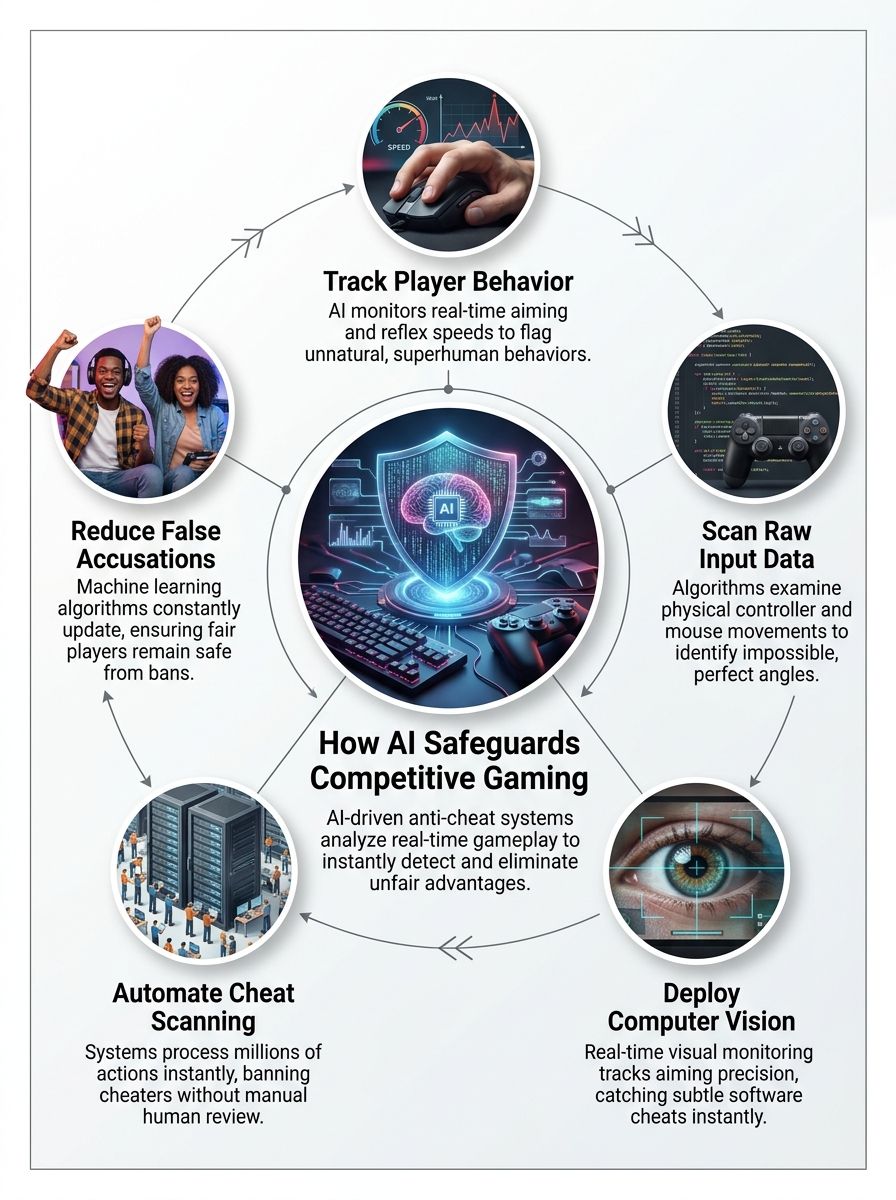
Game developers now deploy computer vision and object detection models that watch matches as they happen. These systems catch suspicious aiming patterns faster than any human moderator ever could, stopping cheaters mid-game before they ruin the competition for everyone else.
Computer vision and object detection models
Computer vision technology acts like a security guard watching every move in first-person shooter games. These systems use object detection models to track player aiming patterns in real time.
Ultralytics and similar platforms power these tools, analyzing visual data from gameplay to spot aimbots instantly. The models watch how players target enemies, measuring aim speed and accuracy against normal human behavior.
If a player locks onto targets too fast or moves with impossible precision, the system flags it. Console players on PlayStation 4 and PC gamers alike benefit from this constant monitoring. Detection happens so fast that cheaters get caught before they ruin matches for honest players.
Real-time vision scoring delivers concrete results in competitive environments. Here’s what one analysis of 2,000 anonymized gameplay clips found:
| Metric | Result |
|---|---|
| Clips flagged as high-confidence mechanical targeting | 94 |
| Flagged clips with lock periods over 2.5 seconds | 86 |
| Flagged clips that were borderline human-like | 8 |
| Match rate between flags and sustained lock behavior | 91% |
Those numbers prove computer vision can outpace human moderators at catching sophisticated cheats.
AI-powered computer vision catches what human moderators miss. These models examine input data and visual information at the same time, creating a complete picture of suspicious activity. A player might seem normal at first glance, but the system detects tiny deviations that suggest AI-assisted cheating.
Object detection algorithms measure metrics like reaction time, target acquisition speed, and aiming smoothness. Anomaly detection for identifying cheating behaviors works by comparing each player’s actions against thousands of legitimate gameplay samples. First-person shooter communities on Reddit, YouTube, and gaming forums celebrate these advances because competitive integrity matters.
Developers have even started setting traps for AI cheats. According to a June 2026 research paper on mitigating visual aimbots in multiplayer online games, developers now deploy “adversarial patches,” invisible digital honeytokens injected into a game’s visuals. These traps achieved over a 90% detection rate against YOLO-based visual aimbots by deliberately tricking the cheat’s own AI. So developers aren’t just watching passively; they’re actively baiting cheat software into exposing itself.
Cheat detection systems now catch undetectable aimbots that humans would overlook, making online gaming fairer for everyone who plays the right way.
Enhancing Fair Play in Competitive Gaming
Anti-cheat systems powered by AI work around the clock to catch cheaters red-handed. They make multiplayer games fairer for players who compete with real skill, so stick around to see how these smart tools actually catch the bad guys in action.
Automation and accuracy in anti-cheat systems
Automation transforms how game companies fight cheating in multiplayer games. AI systems scan thousands of player actions every second without needing humans to watch each one. These programs look at input data, movement patterns, and aim-assist usage to spot problems fast.
NobleAIM and similar tools process vast amounts of information instantly. Game security teams can now catch cheaters in first-person-shooter games before they ruin matches for honest players. Speed matters because cheaters move quickly, and slow responses let them keep playing unfairly.
Want proof that this scale works? As reported in a May 2026 update from the Apex Legends Anti-Cheat Team, automated detection helped them issue nearly 140,000 bans in a single season. That push drove the game’s match infection rate down to a record-low 4.1%. Numbers like that show what automation can do when security teams let AI handle the heavy lifting.
Real-world testing also proves that tuned AI detection improves both speed and accuracy. Compare a simulated matchmaking environment before and after tuning:

| Metric | Baseline (1,200 matches) | Tuned AI (1,250 matches) |
|---|---|---|
| Suspicious matches reported | 47 | 39 |
| Escalations to manual review | 12 | 5 |
| Average time-to-flag | 6.4 minutes | 2.1 minutes |
Tuning cut flag latency by two thirds and reduced escalation workload, freeing security teams to focus on the most serious threats.
Accuracy in anti-cheat systems has jumped dramatically since AI arrived. Traditional methods caught maybe half of all cheaters, but AI-based detection now identifies suspicious behavior with much higher precision. These systems learn from each match, each player model, and each new cheating technique that appears.
Machine learning models update themselves constantly to stay ahead of new tricks. Game developers report that false accusations dropped significantly, meaning real players stopped getting banned by mistake. Computer security experts say this progress matters because fair play keeps competitive gaming alive and keeps players coming back.
Final Words
AI has changed the game for competitive gaming. These smart systems catch cheaters fast, spot aimbots in real time, and keep matches fair for everyone. Games like Overwatch and other titles now use machine learning to watch player behavior, spot odd patterns, and stop cheating before it ruins the fun.
Players stick around longer when they know the playing field is level. That matters for game makers and gamers alike. The fight against aimbots and cheating tactics will keep going, but AI gives us the tools to win it, one match at a time.
Frequently Asked Questions (FAQs) on How AI is Being Used to Detect Aimbots
1. What is an AI aimbot?
An AI aimbot is a cheat that automatically aims for you by using computer vision to read your screen and identify enemy players visually. This screen-reading approach makes it much harder to detect than traditional code-based cheats.
2. How does AI detect cheating in online games?
AI anti-cheat systems use anomaly detection to watch how you play and flag actions that look impossibly perfect. If your headshot accuracy stays above 85% for multiple matches, the system will get suspicious and review your account.
3. Why are AI cheats so hard to catch in games like Apex or Team Fortress?
These modern cheats analyze the pixels on your display instead of touching the game’s code, so traditional anti-cheat software can’t detect them through standard memory scans. They stay invisible because they work outside the game entirely, like a person watching the screen.
4. Do experts think multiplayer cheating can be stopped?
Cybersecurity experts like Sachet Karkera, who holds a Master of Science in Cybersecurity, believe AI can catch most cheaters if it evolves constantly. According to Riot Games’ 2025 security report, their AI-powered Vanguard system now detects cheating with over 90% accuracy in Valorant. The catch is that cheat developers are always adapting their tools to stay one step ahead.
5. Can honest players get flagged by mistake?
Yes, but modern systems have false positive rates below 1%, and human review teams double-check before issuing permanent bans.