


Have you seen more hair strands than usual on your pillow, in the shower drain, or wrapped around your hairbrush? It’s an unsettling feeling, to say the least. But before you panic, know this: Some hair loss is normal. However, if you notice your hair thinning over time, that may signal a more serious issue.
In this article, we’ll explore the differences between hair shedding and hair loss, their causes, how to manage each condition, and when to seek professional help.
What is Hair Shedding?
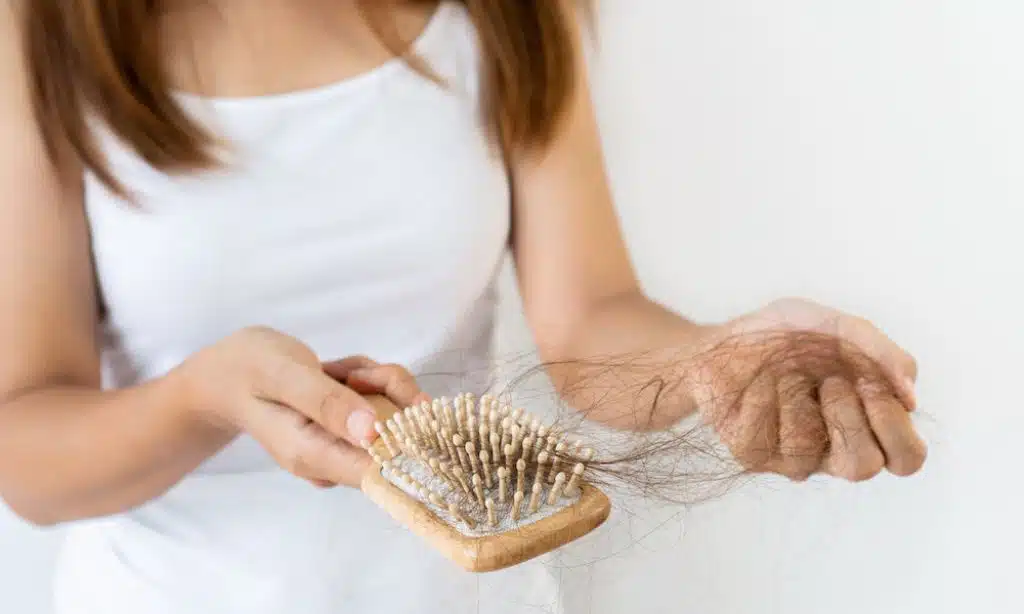
Hair shedding is a completely normal part of your hair’s natural growth cycle. In fact, most people shed 100 to 150 hairs a day without even realizing it.1 However, if you’re noticing more shedding than usual, it’s worth understanding why it happens.
The Hair Growth Cycle
Your hair goes through a continuous cycle that consists of three main phases:
- Anagen (growth phase): This active growth phase can last anywhere from two to eight years. The length of this phase determines how long your hair can grow.
- Catagen (transition phase): This is a short phase when hair growth slows, and the hair follicle begins to shrink.
- Telogen (resting phase): In this phase, hair is released from the follicle to make way for new growth. The telogen phase is responsible for the loss of around 100 to 150 hairs daily.1
Most hair shedding occurs during the telogen phase, which is entirely normal. However, some factors can cause more hair to enter this phase prematurely, leading to excessive shedding.
What Causes Excessive Hair Shedding?
Several factors can trigger excessive shedding:
- Stress: Both emotional and physical stress, such as recovering from an illness or surgery, can cause temporary hair shedding. This condition is known as telogen effluvium.
- Hormonal changes: Postpartum hair shedding is common due to hormonal fluctuations after childbirth.
- Nutritional deficiencies: A lack of essential nutrients can weaken hair and contribute to increased shedding.1
The good news is that hair shedding is typically temporary and resolves once the underlying cause is addressed.1
How to Manage Hair Shedding
If you’re dealing with excessive hair shedding, there are steps you can take to reduce it and promote healthier hair growth:
- Reduce stress: Stress management techniques like meditation, yoga, or even taking time to relax can help regulate your hair growth cycle.
- Improve your diet: Add nutrient-rich foods to your diet, including iron, zinc, biotin, and protein, to support hair health.
- Topical treatments: Hair loss treatments like minoxidil can stimulate new hair growth and reduce the appearance of thinning.
- Gentle hair care: Avoid tight hairstyles, harsh chemicals, and excessive heat to prevent further weakening of your hair.1
What is Hair Loss?
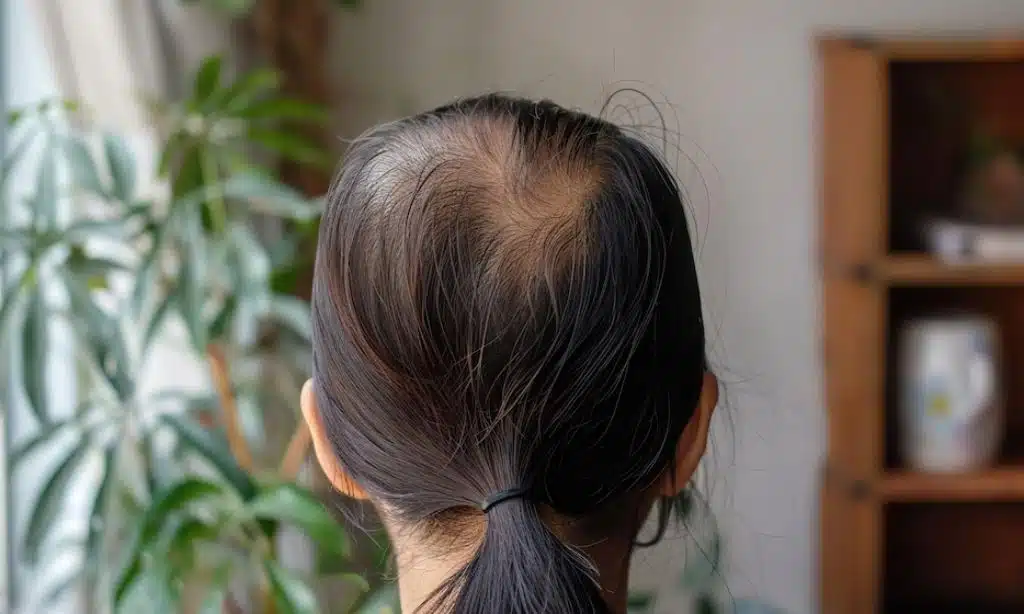
Hair loss is different from shedding because it involves a disruption to the hair growth cycle. When hair falls out and doesn’t grow back, it can lead to visible thinning or bald patches over time.2
Types of Hair Loss
Hair loss can occur for various reasons, but these are some of the most common types:
- Androgenetic alopecia (male or female pattern baldness): This genetic condition is the most common form of hair loss. It typically develops gradually, leading to a receding hairline in men or diffuse thinning across the crown in women.
- Alopecia areata: An autoimmune disorder where the immune system mistakenly attacks hair follicles, resulting in patchy hair loss.
- Traction alopecia: Hair loss caused by repeated tension on the hair and scalp, often due to tight hairstyles like braids, ponytails, or buns. Over time, this tension can weaken hair follicles and cause permanent damage if not addressed.
- Trichorrhexis nodosa: A condition where hair becomes brittle and breaks easily. This is often triggered by over-brushing, frequent heat styling, harsh chemical treatments, or even excessive scratching of the scalp.
- Medical conditions: Certain health issues, such as thyroid disorders, iron deficiency, and scalp infections, can lead to hair loss. Treating the underlying condition is often the first step to addressing this type of hair loss.3
Treating Hair Loss
While hair loss can feel overwhelming, early treatment can make a big difference. Options include:
- Minoxidil (Rogaine): Available over-the-counter, minoxidil is FDA-approved for androgenetic alopecia and stimulates hair regrowth.
- Prescription medications: Drugs like finasteride are designed to slow hair loss by targeting hormonal causes.
- Professional treatments: Procedures such as platelet-rich plasma (PRP) therapy, laser therapy, and even hair transplants can address more severe cases.3
If hair loss is caught early, these treatments can sometimes slow progression and even encourage regrowth.
When to See a Doctor
While occasional hair shedding is normal, certain signs indicate you should seek medical advice:
- Sudden or severe shedding: Losing clumps of hair or noticing a drastic change in volume.
- Bald patches: Uneven hair loss or thinning in specific areas of your scalp.
- Scalp issues: Persistent itching, redness, or pain.
- Family history of baldness: Early signs of genetic hair loss may benefit from prompt treatment.2
A doctor can perform tests, such as blood work or scalp analysis, to pinpoint the issue and recommend appropriate treatments tailored to your condition.
Conclusion
Hair shedding and hair loss are common concerns, but understanding the difference is key to finding the right solution. While shedding is typically temporary and resolves on its own, hair loss may require medical intervention to manage or reverse.
If you’re unsure about what’s happening with your hair, don’t wait — early action is always better. With hair loss medications and advanced therapies available, there are effective options to address both conditions.





















