
Artificial intelligence is reshaping how businesses approach decision-making. Advanced systems have become central to many industries, from predicting market trends to enhancing customer experiences. However, their effectiveness depends heavily on the data quality they process. Master Data Management (MDM) plays a crucial role here. Ensuring accuracy, consistency, and accessibility lays the groundwork for smarter and more reliable decisions.
What is MDM and Why Does It Matter?
Master Data Management establishes a single source of truth for an organization’s data. It organizes, consolidates, and governs information to eliminate inconsistencies and inaccuracies. But why is this critical?
When data across systems and departments is inconsistent, minor errors can lead to poor outcomes. For example, a duplicate customer entry can mislead sales forecasts. Effective management prevents such issues by streamlining data processes.
Another benefit is the elimination of silos. Fragmented data stored in separate systems makes it challenging to get a complete view. By integrating disparate sources, organizations can create a unified dataset. This also ensures compliance with increasingly strict privacy regulations, keeping information secure and organized. Together, these efforts enable more accurate, data-driven decision-making.
How Advanced Systems Leverage Reliable Data for Smarter Decisions
Intelligent systems rely on high-quality data to analyze patterns, generate insights, and make predictions. Clean, structured information is paramount in this process.
For instance, predictive analytics in retail can identify demand trends by examining past sales. However, inaccuracies such as duplicate entries or outdated information can distort results without proper oversight. Similarly, personalized recommendations depend on accurate customer profiles, which consolidated data ensures.
Industries like healthcare, supply chain, and finance already benefit from combining structured management with AI capabilities. In supply chain management, reliable data allows algorithms to optimize inventory levels and reduce delays. The results are not only smarter but also faster and more precise.
Emerging Trends in Integrating Data and Intelligence
The convergence of advanced decision-making tools and data management is driving significant innovation. One major development is the automation of governance tasks. Using machine learning, tools now identify and resolve quality issues without requiring constant manual intervention.
Another groundbreaking trend is the emergence of generative capabilities within structured management systems. These models, integrated with robust frameworks, enhance analytics and enable nuanced decision-making. Organizations can now leverage MDM generative AI to gain actionable insights from incomplete datasets, pushing the boundaries of what modern technologies can achieve.
Real-time processing is another area of rapid growth. Systems that update continuously allow decisions to adapt instantly, making them particularly useful in fast-moving sectors like e-commerce. Lastly, user-friendly platforms make it easier for non-technical staff to handle data, democratizing access to high-quality information.
The Role of Data Visualization in Decision-Making
Data visualization is becoming a cornerstone of decision-making, particularly when paired with reliable data and AI. Presenting complex information in a visual format, such as charts or interactive dashboards, helps decision-makers understand patterns and trends at a glance.
When combined with well-managed data, visualization tools provide actionable insights in a way that’s easy to interpret. For instance, real-time dashboards allow business leaders to monitor performance metrics and quickly respond to changes in customer behavior. By making insights more accessible, visualization enhances the speed and accuracy of decisions, particularly in data-intensive industries like finance and logistics.
The Ethical Dimension of AI and Data Integration
As decision-making tools evolve, ethical considerations are becoming increasingly critical. Data bias remains a pressing concern, as even unintentional errors can lead to unfair or inaccurate outcomes. For example, biased data can reinforce stereotypes in hiring decisions or skew predictions in credit risk assessments.
To address these issues, businesses must prioritize transparency in how models are trained, and decisions are made. Additionally, diverse datasets and regular audits can help reduce the impact of bias. Ethical AI is not just a regulatory requirement; it’s a business imperative. Organizations that adopt responsible practices build trust with their stakeholders and ensure fairer outcomes.
Challenges in Implementing Advanced Decision-Making
Despite its potential, integrating intelligent systems with structured data practices presents challenges. One major issue is ensuring consistent quality. Advanced models can only be as effective as the information they analyze, making accurate inputs vital.
Another obstacle is aligning various systems across an organization, which requires technical expertise and careful planning. Ethical concerns also arise. Bias within datasets can lead to unfair outcomes, highlighting the importance of transparency in model training and management practices.
These challenges, however, are not insurmountable. Regular audits, investment in skilled teams, and adopting scalable platforms can address technical and quality concerns. Focusing on diverse datasets and ethical frameworks ensures more equitable and reliable outcomes.
Preparing for a Data-Driven Future
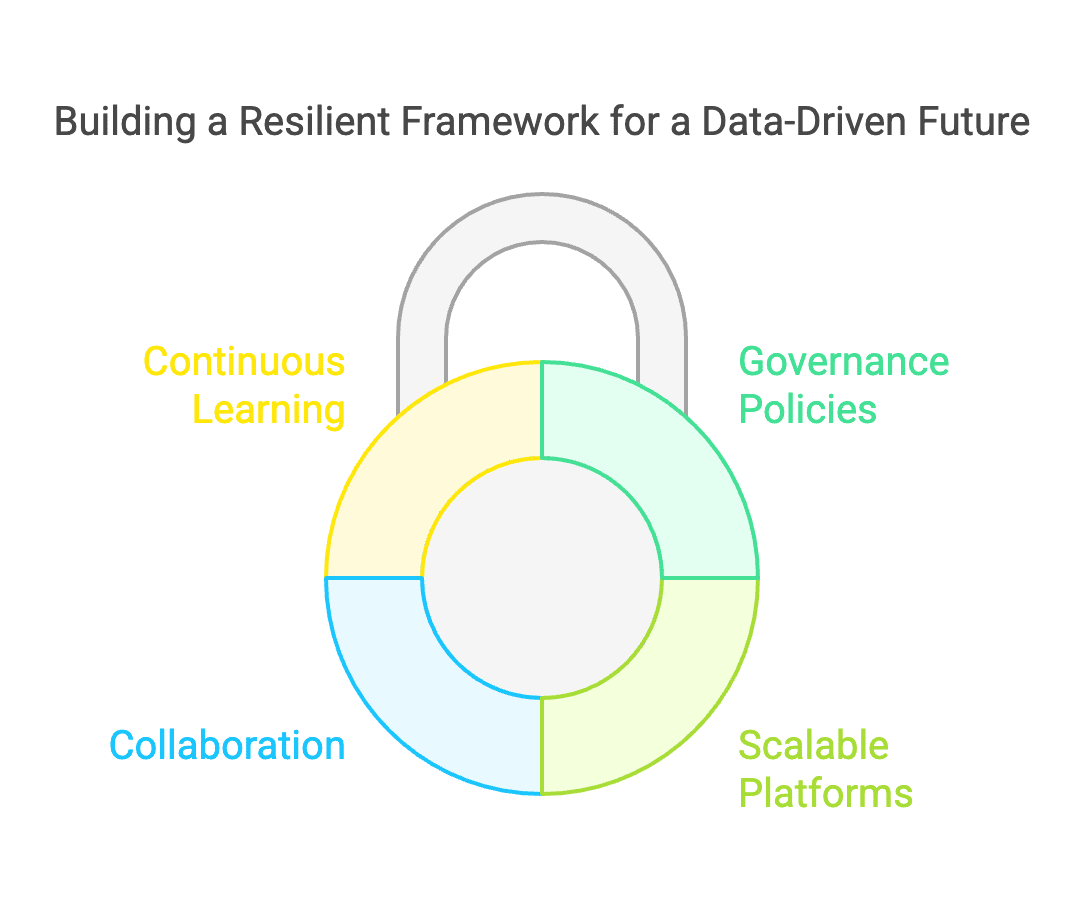
Businesses must prioritize well-organized information systems to thrive in an era where decisions increasingly rely on advanced tools. Here are steps to get started
- Establish Clear Governance Policies: Set data collection, storage, and use guidelines to maintain consistency and comply with regulations.
- Invest in Scalable Platforms: Choose solutions that can grow with the organization, particularly cloud-based, flexible options.
- Foster Collaboration: Encourage cross-functional teams to align technical efforts with business objectives.
- Commit to Continuous Learning: As technology evolves, ongoing training ensures teams remain prepared for new developments.
Conclusion: A Data-Driven Tomorrow
Integrating robust data management and intelligent systems is transforming the decision-making landscape. Clean, well-structured information empowers tools to deliver actionable and accurate insights. By embracing these technologies, businesses can position themselves for success in a data-centric future. Making strategic investments today ensures a competitive edge for tomorrow.